
Senior Living Roofing in Plano, TX
Home / Property Types We Roof / Senior Living Roofing
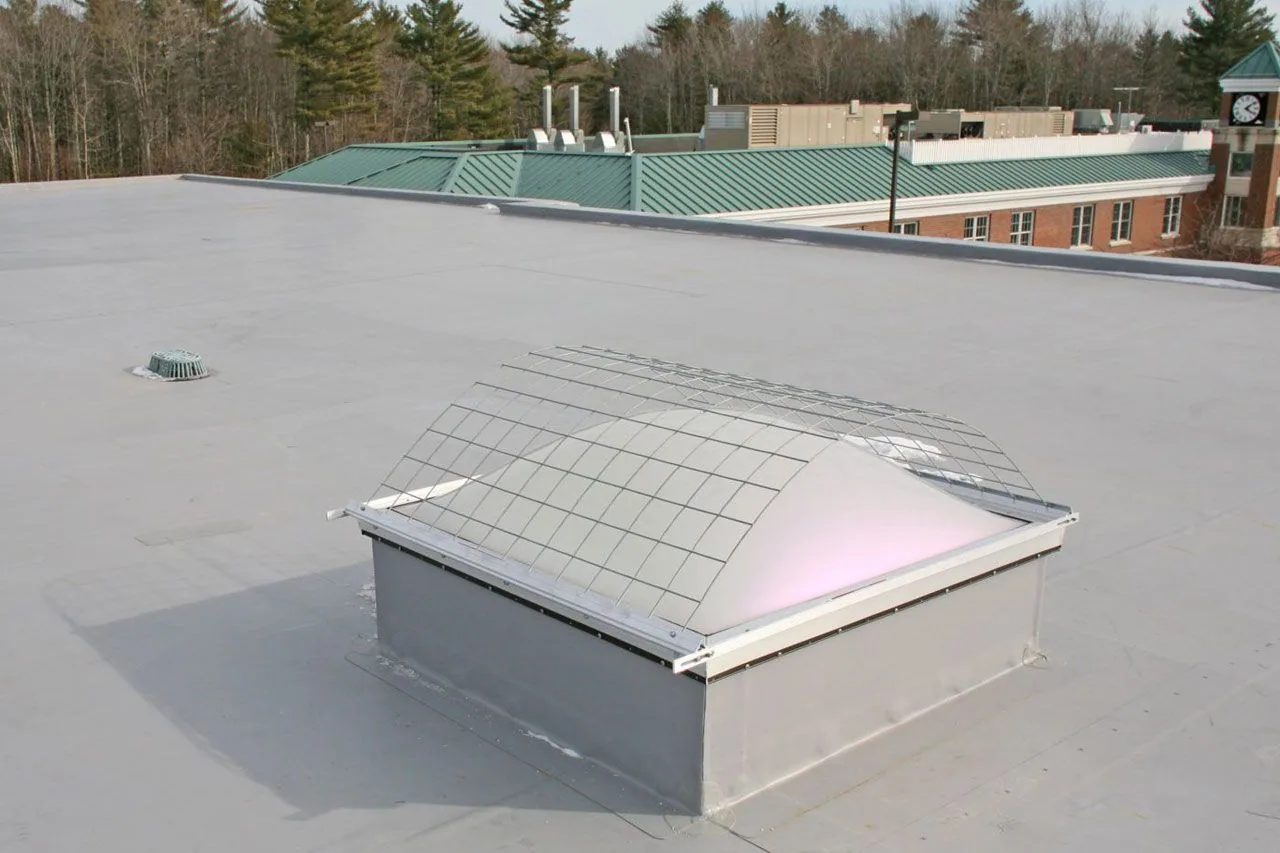
The March 2016 hailstorm in Plano left damaged skylights and dented roofs across the city, and it showed how much a careful inspection matters. For senior living, we price each confirmed problem area, plus the protection residents need below it, before anyone decides between repair and replacement.
Leaks in senior living buildings often show up along walls: parapets, the tall walls between wings and the spots where a lower roof meets the building. The flashing there is fastened into wood behind it, and if that wood has rotted, new flashing won't hold. At a community in Plano, TX we open the flashing where the leak shows up, check the backing and price what we find. Two bids can list the same length of new flashing and still describe very different work, depending on whether replacing rotted wood is included.
We start with the building's records: drawings, past repair invoices and notes on which rooms or hallways have had leaks. Those point us to the right area, but they can't reveal the condition behind the flashing today. Just as important is how the building runs. Residents may be in their rooms all day, some are sensitive to noise and odors, and hallways and exits have to stay clear. Your administrator and maintenance director know those needs, so we plan staging, work hours and air-intake protection with them rather than assuming a schedule.
Inspecting the wall flashing
Our flashing inspection follows the membrane up the wall to the top termination, whether that's counterflashing, a termination bar or the coping. We look for open laps, split corners, dried-out sealant and loose fasteners, and we check skylights and pipe penetrations nearby. A wet ceiling in a resident's room tells us where to start, but the water may be entering several feet away. If we need to open the flashing to see the wood, we mark the spot, plan it with your staff and patch it the same day.
If the nailer or sheathing is soft, it gets replaced before new flashing goes on. Wood blocking is usually part of our work; damaged masonry or framing may need a mason or an engineer first. We take photos while the wall is open, since the finished flashing will hide what was there. One bad section doesn't mean the entire wall is bad. We price what we actually opened and note other runs worth checking, so the estimate reflects real conditions instead of a guess about the whole building.
Moisture scans and what they miss
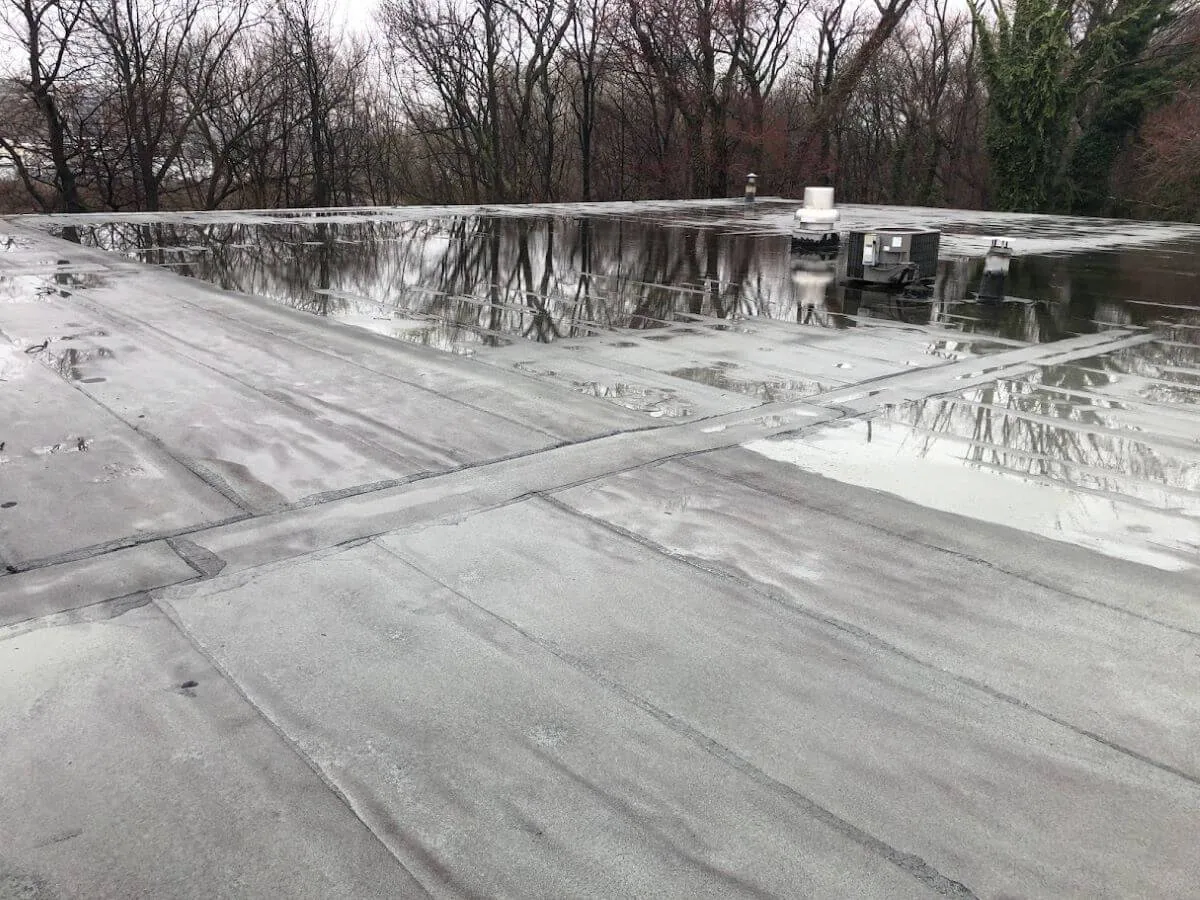
An infrared moisture survey is a quiet way to map wet insulation without cutting into the roof, which suits an occupied residential building. It's done at night, and results depend on the weather, the roof surface and nearby equipment. It also can't see wood behind wall flashing. We use the scan to choose where to take core samples and where to open the wall, confirm with a moisture meter and patch each test spot. Only then do we decide which insulation stays and which comes out.
We keep what we found separate from what caused it. A failed joint may need repair whether it was damaged by hail, aging sealant or a service tech's boots, and sometimes the evidence doesn't say which. When we aren't sure, we tell you. If deciding what to keep depends on an area we haven't opened, the estimate shows that as its own step. That helps when bids differ: one may include checking the backing before new flashing goes on, while another quietly assumes the backing is fine and leaves the work out.
What a complete wall repair includes
A complete commercial roof repair at a wall lists the old flashing and any wet insulation coming out, the rotted nailer being replaced, new base flashing and a secure top termination. The method depends on the roof. TPO and PVC are heat-welded, EPDM uses tape and primer, and modified bitumen or built-up roofs get compatible plies. Wood repair and flashing should appear together on the estimate. A coating may look cheaper on paper, but it doesn't replace rotten backing or a missing termination, and the leak usually returns.
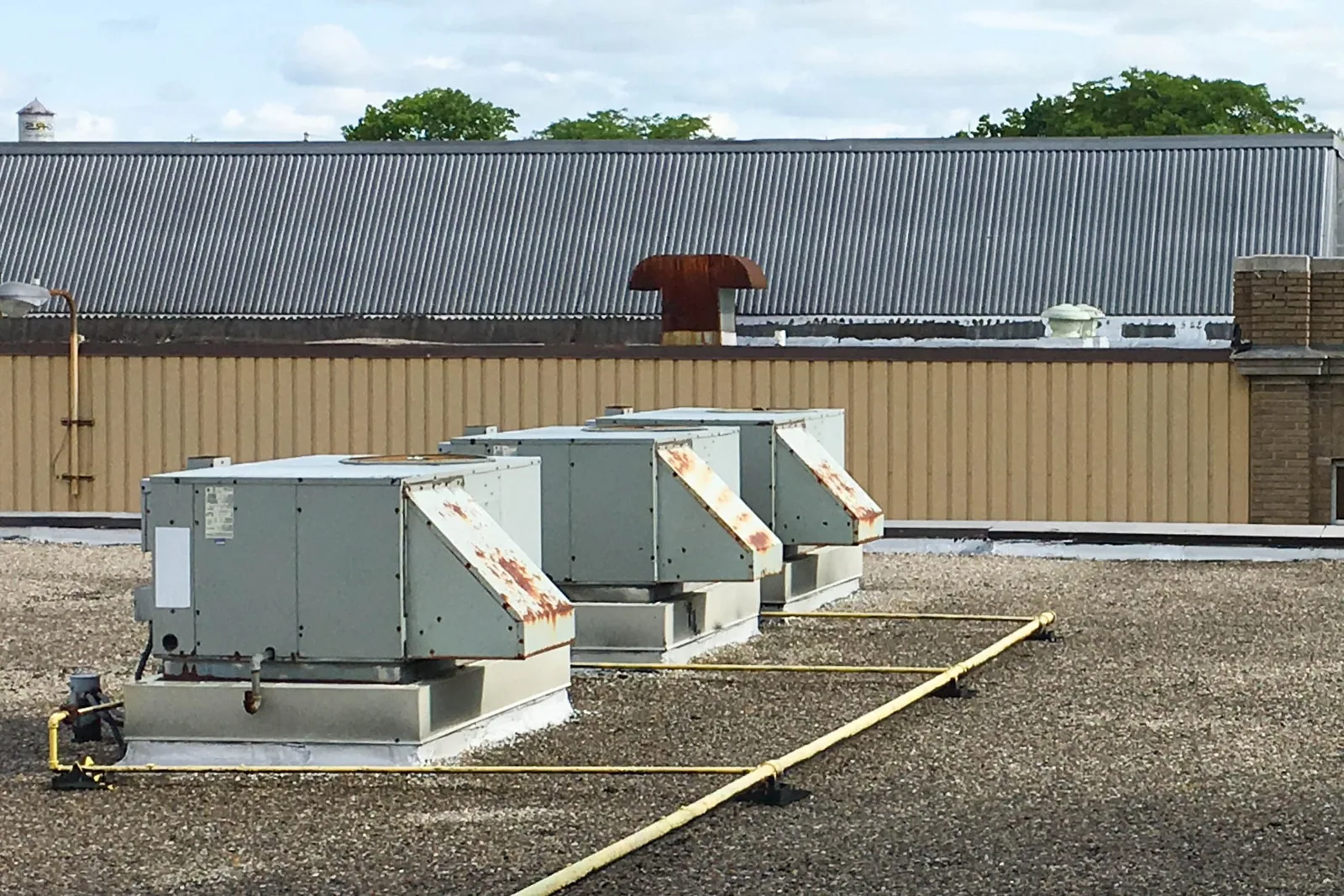
Senior living roofs often have rooftop HVAC, makeup air units and kitchen exhaust, and their rooftop curbs and supports can sit right at the wall we're repairing. If a unit has to be shut down or moved, your mechanical contractor handles it, and any structural change to a support gets an engineer's review. Shutting off air to a resident wing needs planning with your staff, especially in a Texas summer. A roof drain in the work area gets new flashing from us; the pipe below is a plumber's job. We list each trade on the estimate.
Protecting residents during the work
Senior living work is always roofing over an occupied building. Before we open anything, we walk the area below with your administrator or maintenance director. We go over the size of the opening, where material will travel and what's underneath: resident rooms, dining areas, nurses' stations or storage. Your team decides which rooms need to be vacated, protected or monitored, and whether air intakes near the work should be shut down to keep adhesive odors out. An inspection visit isn't approval to start; that comes from your staff.
If the wall opens up worse than expected, we stop and send photos with a revised price before cutting further. The revision lists the extra tear-off, wood and flashing. If the larger area now sits over different rooms, we go back to your staff so they can plan for those residents too. When a mason or mechanical contractor has to finish first, we install a temporary seal that keeps the building dry. A change order that just adds square footage doesn't cover any of that, so we write it out line by line.
Keeping a record of the repair
When the work is done, you'll get a record of the wall sections we repaired, photos of the backing before it was closed up, the wood we replaced and how the new flashing ties into the existing membrane. We note test cuts we patched and list any work still open for another trade, such as a mechanical reconnection or a plumbing repair. Areas we flagged but didn't open stay on the list with their locations. Maintenance staff turn over, and a clear record saves the next person from guessing what was done and what still needs a look.
We serve communities across Plano, including the Spring Creek Parkway corridor. Similar buildings share some concerns: apartment roofs also put residents under the work, and hospital roofs add stricter air-quality rules and around-the-clock operations. For your community, send us the address, where the leaks are showing up and who can meet us on site, and we'll start at that wall.
Commercial Roofing Questions
What should a complete wall flashing repair include?
Removal of the old flashing, replacement of any rotted wood behind it, new base flashing tied into the roof and a secure top termination. The estimate should also say which trades handle any equipment or plumbing work.
Can a moisture scan prove the wall backing is sound?
No. A scan helps find wet insulation in the roof, but it can't see wood behind wall flashing. We open a small section, check it directly and patch it the same day.
Who decides how residents are protected during the work?
Your administrator and maintenance staff. We walk the area with them and go over what we're opening and when. They decide which rooms are vacated, protected or monitored and whether nearby air intakes are shut down.
What happens if more damage turns up?
We stop, send photos and a revised price, and review the larger area with your staff before going further. If another trade has to work first, we leave a temporary seal to keep the building dry.
Schedule a senior living roof inspection
Tell us where leaks are showing up and who can meet our crew on site. We'll check the wall flashing and backing and plan the repair around your residents.

Request a Roof Assessment in Plano
Tell us about the building, the roof and what you are seeing. Send a request or call 555-555-5555.