
Commercial Roof Repair in the Spring Creek Parkway Office Corridor
Home / Service Areas / Spring Creek Parkway Office Corridor
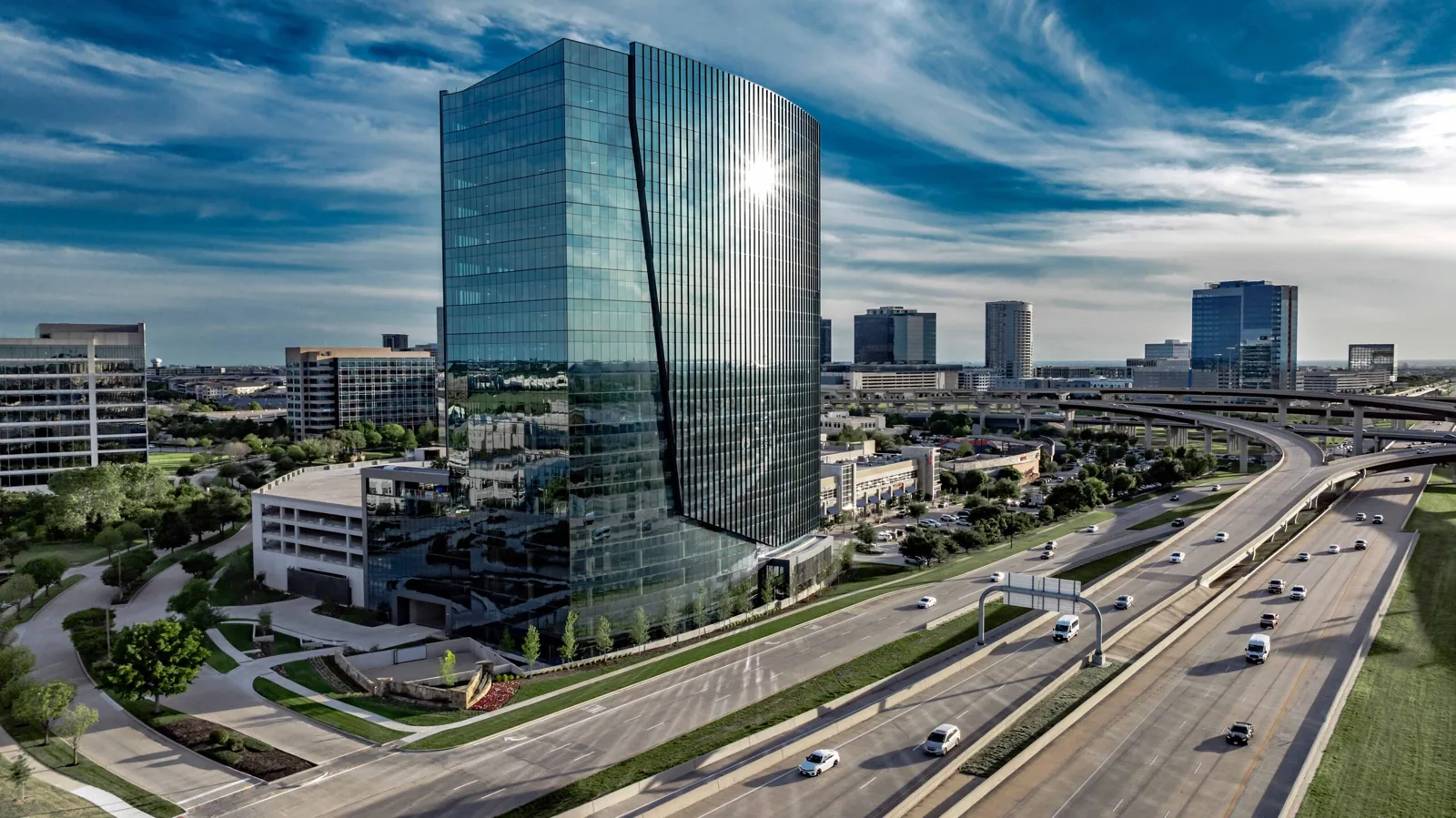
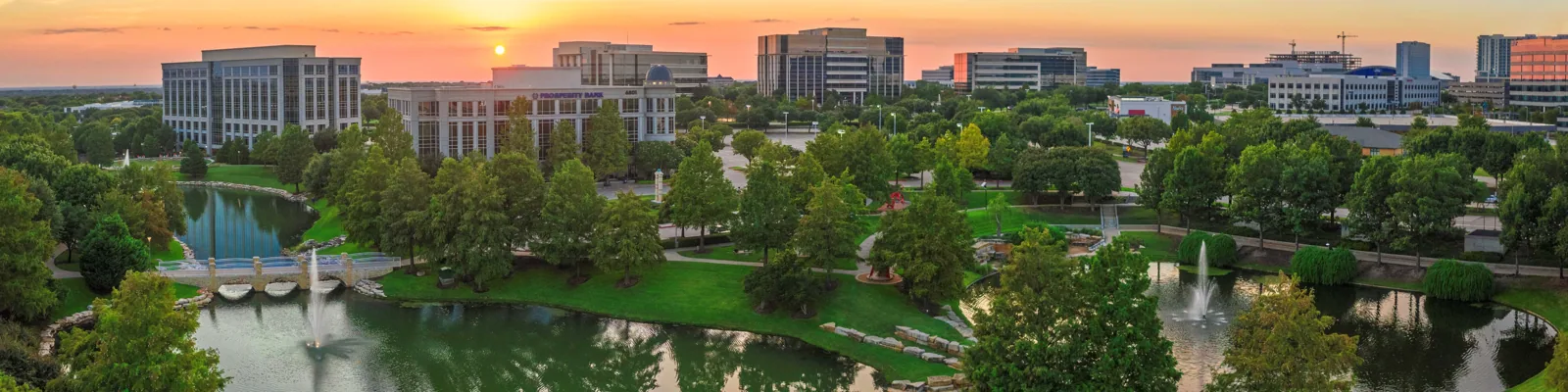
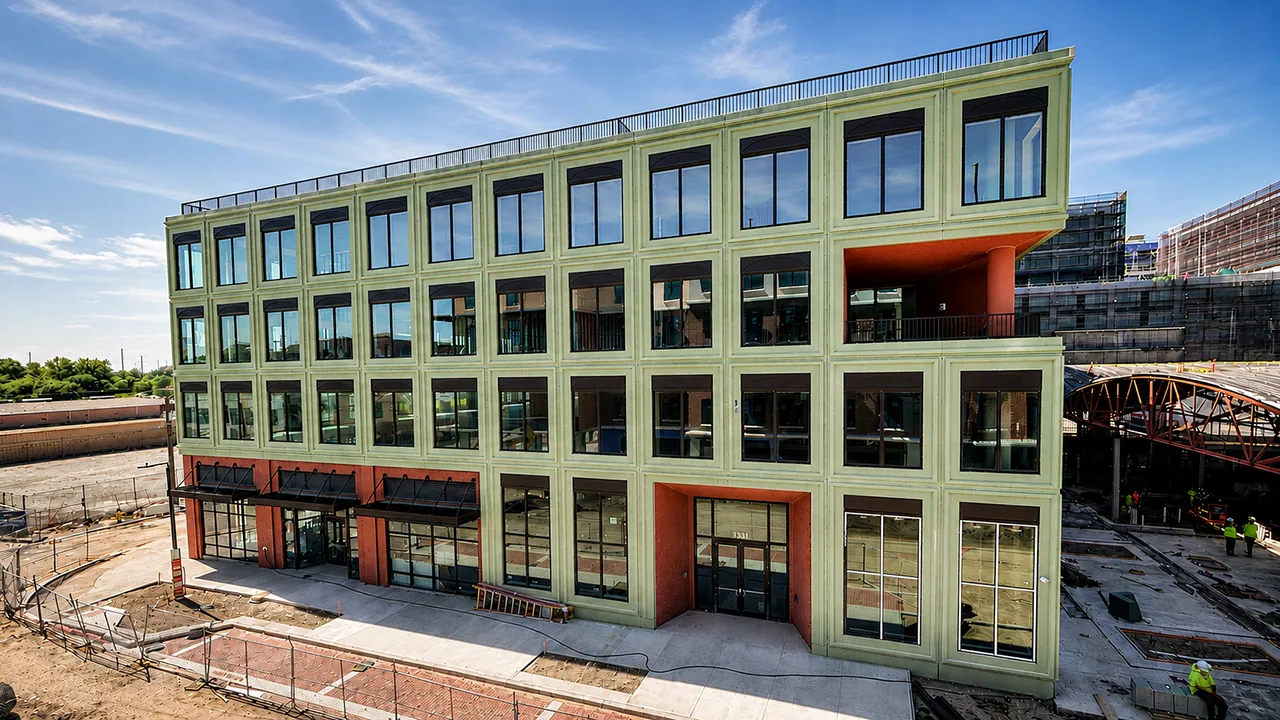
Spring Creek Parkway runs through the heart of Plano, lined with office buildings, medical offices and campuses, including Collin College's Plano campus. Many of the office buildings along the corridor are two to four stories, with roofs reached through a single interior hatch and parking lots that fill up early. Getting a roofing crew and materials up there without disrupting tenants takes planning.
Our crews also work in Granite Park and Frisco. On every job along this corridor, we plan access first, then the repair, and we put both in the price.
Office roofs here also see a steady stream of service visits from HVAC, telecom and window-cleaning contractors. All that foot traffic wears on the membrane, and new equipment adds new penetrations. Many of the leaks we trace on this corridor start at a detail someone else touched.
Plan the route to the roof first
On a mid-rise office building, the route to the roof can drive the whole schedule. Is the roof hatch inside a tenant suite or a mechanical room? Can materials go up the elevator, or do we need a lift outside? Where can the crew park when the lot is full by 8 a.m.?
We work these questions out with your property manager before the job starts. If materials need to go through the building, we protect floors and elevator walls. If a lift is needed, we pick a spot that does not block fire lanes or main entrances. If roof access goes through a tenant space, we arrange it with the tenant ahead of time.
The access plan goes into the proposal. A repair that needs an exterior lift costs more than one with easy hatch access, and you should see that before you approve the work.
Tie each finding to a spot on the roof
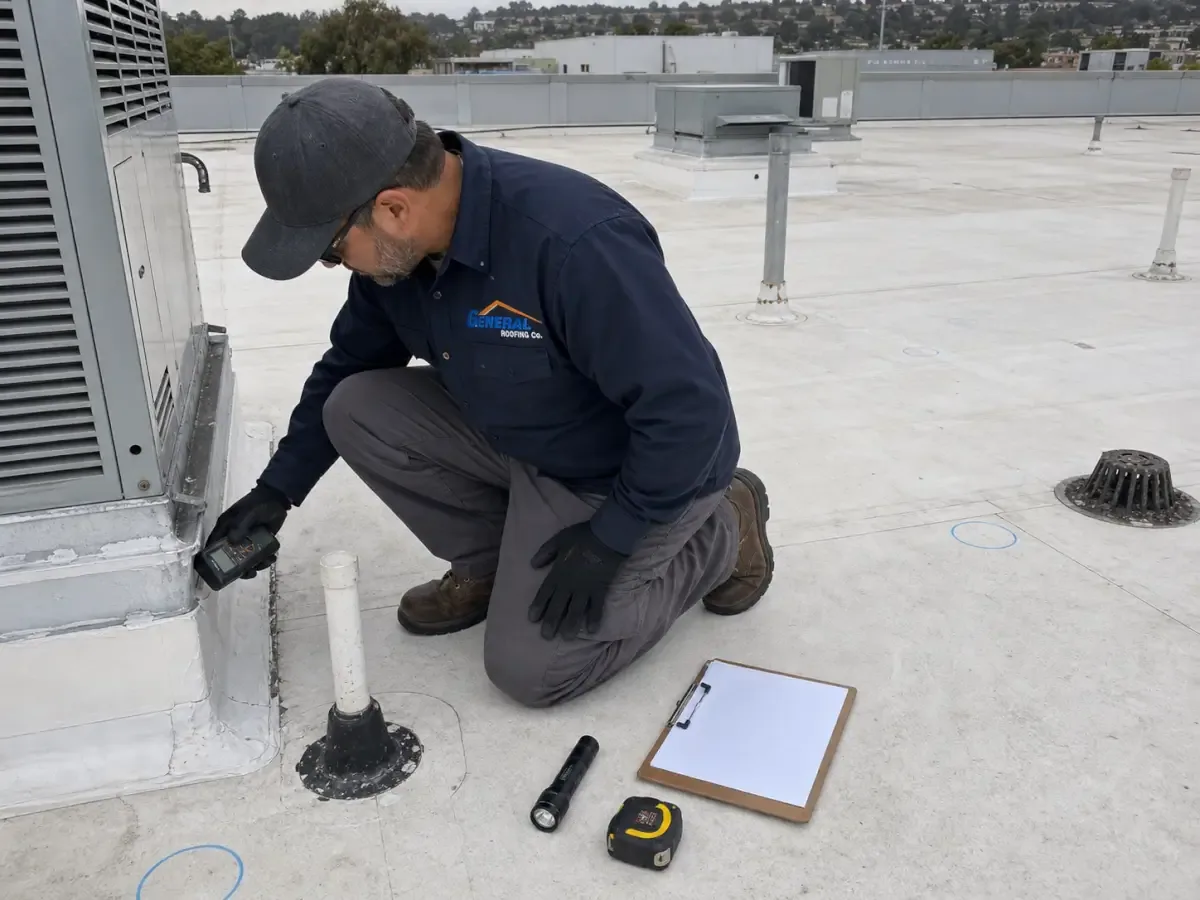
A commercial roof inspection tells you what we found and where. Every finding is tied to a location on the roof, with a photo and a short description. That makes it easy for your team to match roof problems to tenant complaints.
We are also clear about what the inspection did and did not cover. If an area was blocked by equipment or we could not check the insulation without a core cut, we say so. A finding at one curb tells us about that curb. It does not tell us the condition of the whole roof.
If the inspection suggests a larger problem, such as the same flashing failure at every rooftop unit, we explain that and recommend whether a wider review makes sense.
When a leak inside cannot be matched to a roof finding, we say that too and suggest a water test or other next step.
We also check drains and scuppers on every inspection, since a slow drain can turn a minor seam issue into an active leak.
Show what the price includes
Our proposals break the price into the parts of the work: access and setup, removing failed material, replacing wet insulation if found, installing the new membrane and flashing, and cleanup. That way you can see where the money goes.
For roof capital planning, this breakdown helps you compare options. A local repair, a larger repair and a phased replacement each have different access needs, schedules and costs. We price each one with the same level of detail.
If some work depends on another trade, such as a mechanical contractor lifting a unit so we can replace curb flashing, we list it separately and note who handles it. If the price could change based on what we find, like the amount of wet insulation, we say so and explain how changes will be handled.
Prepare the membrane for a lasting repair
Many office roofs along the corridor are single-ply. On a TPO roof, a lasting repair starts with removing failed material and any incompatible patches. We then clean the surrounding membrane, which on older roofs can be heavily oxidized and dirty, and test a weld before committing.
Once the surface is ready, we heat-weld new TPO or flashing to it and probe every weld after it cools. Around curbs and walls, we install proper flashing with reinforced corners and secure terminations.
If the insulation under the repair is wet, it comes out before the new membrane goes down. We photograph it first and explain the added cost.
We also look for the reason the repair was needed. Foot traffic to rooftop units is a common cause on office roofs, and walk pads can prevent repeat damage.
Leave each work stage clearly defined
Some repairs take more than one visit, especially if another trade has to do work in the middle. At the end of each stage, we tell your property manager what was finished, what is temporarily protected and what comes next.
If the roof is left with temporary protection, we explain where it is and how long it can safely stay. We also leave a phone number for after-hours problems.
When the job is complete, we remove all temporary materials and send a report with each repair location, photos of any hidden damage and the finished work.
Open items, such as an area that still needs a core cut or a mechanical fix pending with another contractor, are listed separately. That way nobody assumes the whole roof was finished when part of it is still waiting.
Keep the report on file. When a tenant calls about a leak next year, it will show whether the spot was already repaired.
Commercial Roofing Questions
Why should roof access be part of the repair price?
Because it can change the cost a lot. An exterior lift, elevator protection or after-hours work all add up. We include them so the price matches the real job.
What does a roof finding at one spot tell you?
It tells us about that spot. It does not tell us the condition of the whole roof. If we see a pattern, we recommend a wider review.
How is work by other trades handled in the price?
We list it separately and note who handles it, such as a mechanical contractor lifting a unit before we reflash the curb.
How do you prepare the membrane at the repair?
We remove failed material and incompatible patches, replace wet insulation, clean the existing membrane and test a weld before installing the repair.
What should I hear at the end of each work stage?
What was finished, what is temporarily protected and for how long, what comes next and who to call after hours.
Plan your Spring Creek Parkway roof repair
Share the building and the roof issue. We will plan access with your property manager and give you a clear price for each part of the work.
Request a Roof Assessment in Plano
Tell us about the building, the roof and what you are seeing. Send a request or call 555-555-5555.