
Roof Coating Restoration in Plano, TX
Home / Commercial Roofing Services / Roof Coating Restoration
A roof coating can add years to a commercial roof that is aging but still basically sound. In Plano, where summer sun and occasional freezes like the February 2021 winter storm are both hard on roofs, a good coating can protect the membrane and reflect heat. But a coating is not a fix-all. It only works when it goes onto a clean, dry, sound surface that has been properly repaired first.
We inspect the roof, figure out what is there, repair what needs repairing and only then apply the coating. The price shows each of those steps, so you can see what the coating costs and what the preparation costs.
Identify the existing surface
Coatings bond differently to different surfaces. A roof might be TPO, EPDM, modified bitumen, built-up, metal or spray foam. It might already have an old coating on it. Each of these needs a different approach, and some combinations need a primer or a different coating altogether.
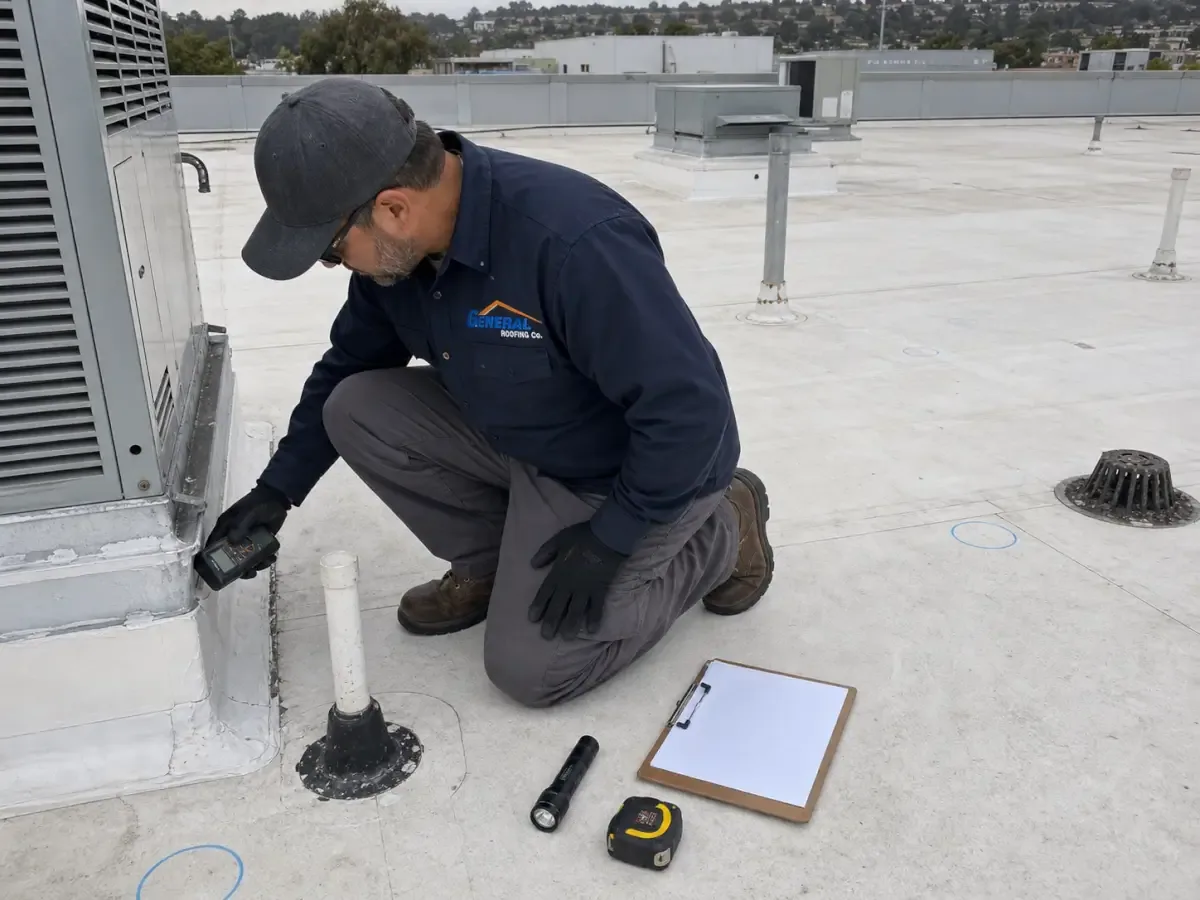
A commercial roof inspection identifies the existing surface across the whole area to be coated. If parts of the roof were coated before, we try to find out with what, because some coatings do not bond well to others. That information goes into the proposal so the coating choice fits the roof you actually have.
We also look at the overall condition. A roof with a few problem spots and a sound field is a good candidate. A roof with widespread blistering, cracking or loose membrane may be better served by a recover or replacement.
Test adhesion before committing
Before coating the whole roof, we apply small test patches to see how well the coating bonds. After the test patch cures, we pull it and check whether it stuck to the surface or peeled off cleanly. If it peels, we try a different primer or cleaning method until we get a good bond.
For a silicone roof coating, manufacturers typically call for a clean, dry surface with no trapped moisture, repairs to damaged membrane, flashing and penetrations, and an adhesion test patch, with priming where the surface needs it. We record where each test patch was placed, what surface it was on and the result, so the decision to proceed is based on evidence.
Repair the details before coating
Coating over a failed seam or a split flashing does not fix it. The coating may bridge the gap for a while, but movement and water will reopen it. Every seam, flashing, penetration and puncture needs a proper repair first, with materials that match the existing roof.
As part of commercial roof repair before coating, we fix open seams, replace failed flashing at curbs and walls, reset loose metal and repair any damage. Seams and transitions usually get reinforced with fabric set in base coat. These repairs are listed separately in the proposal, so you can see what the roof needs regardless of whether you coat it.
Loose or billowing membrane also has to be secured before coating, since a coating will not hold down a sheet that moves in the wind.
Deal with drainage and moisture
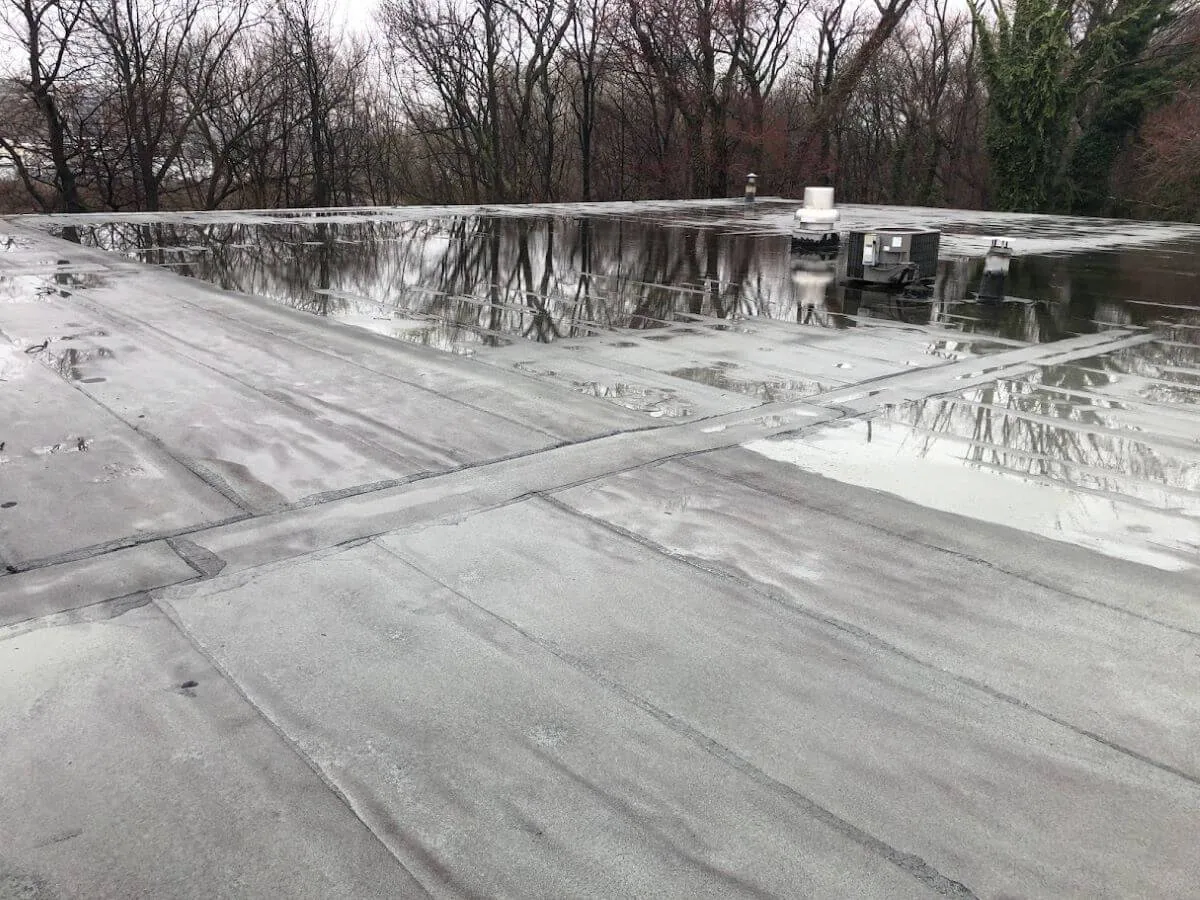
Two things can ruin a coating: standing water and trapped moisture. Some coatings, especially acrylics, do not hold up well under ponding water. Silicone handles ponding better, but drainage still matters. If water sits for days after a rain, we look at whether a drain, cricket or tapered insulation is needed.
Trapped moisture is the bigger risk. A roof can look dry on top and still have wet insulation underneath. Coating over it seals the water in. We check with test cuts, cores or an infrared scan before coating. Wet areas get cut out and replaced. If wet insulation is widespread, coating may not be the right choice, and we will tell you.
We also make sure drains and scuppers are clear and working before coating, so the new surface is not sitting in water from day one.
Plan the application
Coatings need the right conditions. Temperature, humidity, dew and the chance of rain all affect how they cure. We plan the application around the forecast and do not apply coating if rain is coming before it can cure.
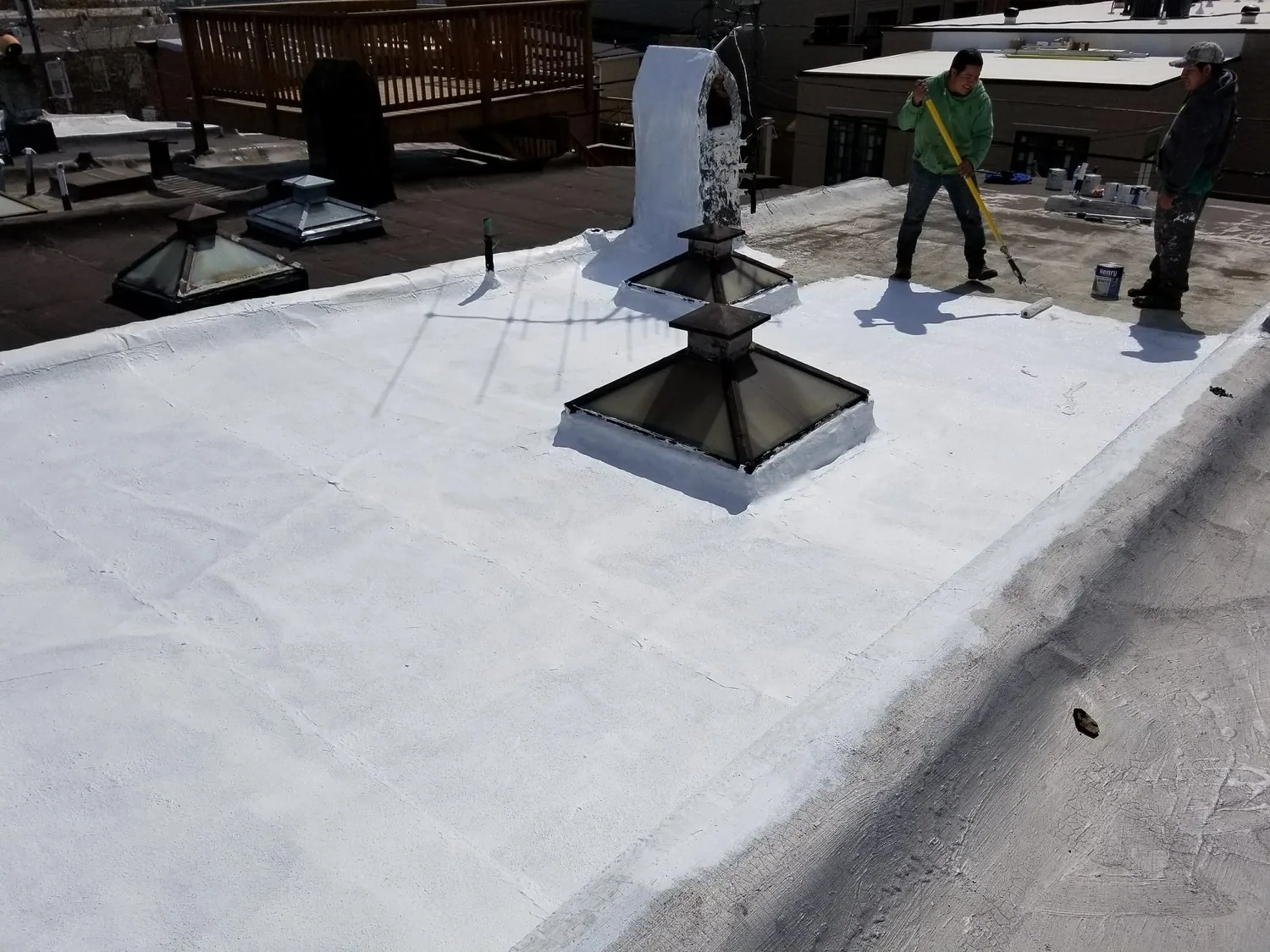
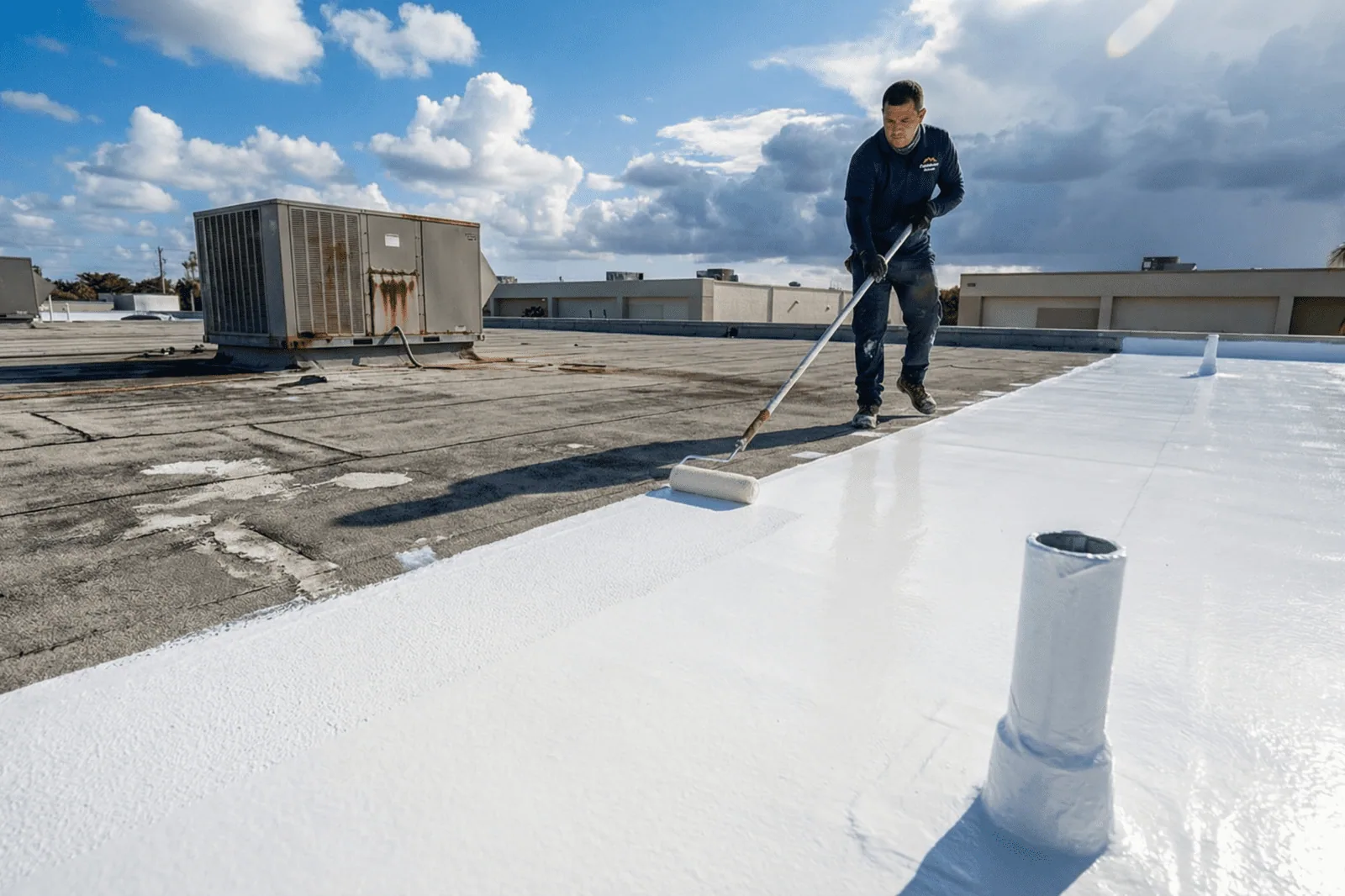
For an acrylic roof coating, the work usually goes in stages: cleaning, repairs, primer if needed, base coat with fabric at seams and details, then the field coat. We plan the order so crews do not walk on fresh coating, and we tell your facility team when each area will be off-limits. Coverage rate and thickness follow the manufacturer's requirements, and we check thickness as we go.
Keep repair and coating records together
Once the coating is on, nobody can see what is underneath. That is why we keep the repair and coating records together: what was repaired, where insulation was replaced, the adhesion test results, the primer and coating used, the thickness applied and photos of each stage.
That record supports warranty claims and helps whoever works on the roof next. For buildings from Downtown Plano to the business parks, preventive roof maintenance visits keep the coating clean, the drains clear and the details in good shape. We note the recommended inspection and eventual recoat schedule in general terms so you can plan for it.
Commercial Roofing Questions
Why identify old coatings before quoting a restoration?
Because some coatings do not bond well to others. Knowing what is on the roof tells us which coating and primer will work.
What should an adhesion test patch record?
Where it was placed, what surface it was on, the cleaning and primer used and whether the coating bonded when pulled after curing.
Does coating the roof fix damaged flashing?
No. Damaged flashing, seams and penetrations need proper repairs first with materials that match the roof. The coating goes over those repairs.
If the roof surface looks dry, is the insulation dry too?
Not necessarily. Wet insulation can sit under a dry-looking surface. We check with test cuts, cores or an infrared scan before coating.
How should silicone and acrylic quotes be compared?
Look at how each handles ponding water, what prep and primer each requires and what thickness is specified. The cheaper product is not always the better value.
Find out if your Plano roof can be restored
Tell us about the building and the roof. We will inspect it, test adhesion and give you a clear restoration price with the repairs and coating listed separately.
Related Roofing Work
Request a Roof Assessment in Plano
Tell us about the building, the roof and what you are seeing. Send a request or call 555-555-5555.