
Warehouse Roofing in Plano, TX
Home / Property Types We Roof / Warehouse Roofing
Warehouse roofs are big and flat, and they move a lot of water to a small number of drains. When a drain leaks, the fix often involves two trades: we rebuild the membrane and flashing at the drain, and a plumber handles anything wrong with the bowl connection or the pipe under the deck. At a warehouse in Plano, TX, we tell you what we found and which contractor handles each part, so both costs show up when you compare bids. A new seam won't fix a cracked drain pipe, and a patch around a drain that can't be clamped properly won't last. We price the drain work, the membrane removed and the new roofing together, along with protection for the space below.
The National Weather Service documented tornado damage on October 20, 2019 in North Dallas and Richardson, among other places. That was outside Plano and tells us nothing about your warehouse. Local landmarks like the Plano Municipal Center on K Avenue or Collin College's Spring Creek Parkway campus don't tell us anything about your roof either. We start with the building address, any roof drawings and past repair records, and a contact who can get us access. The repair follows what we find on your roof, not storm history or the building type.
Inspecting the drain connections
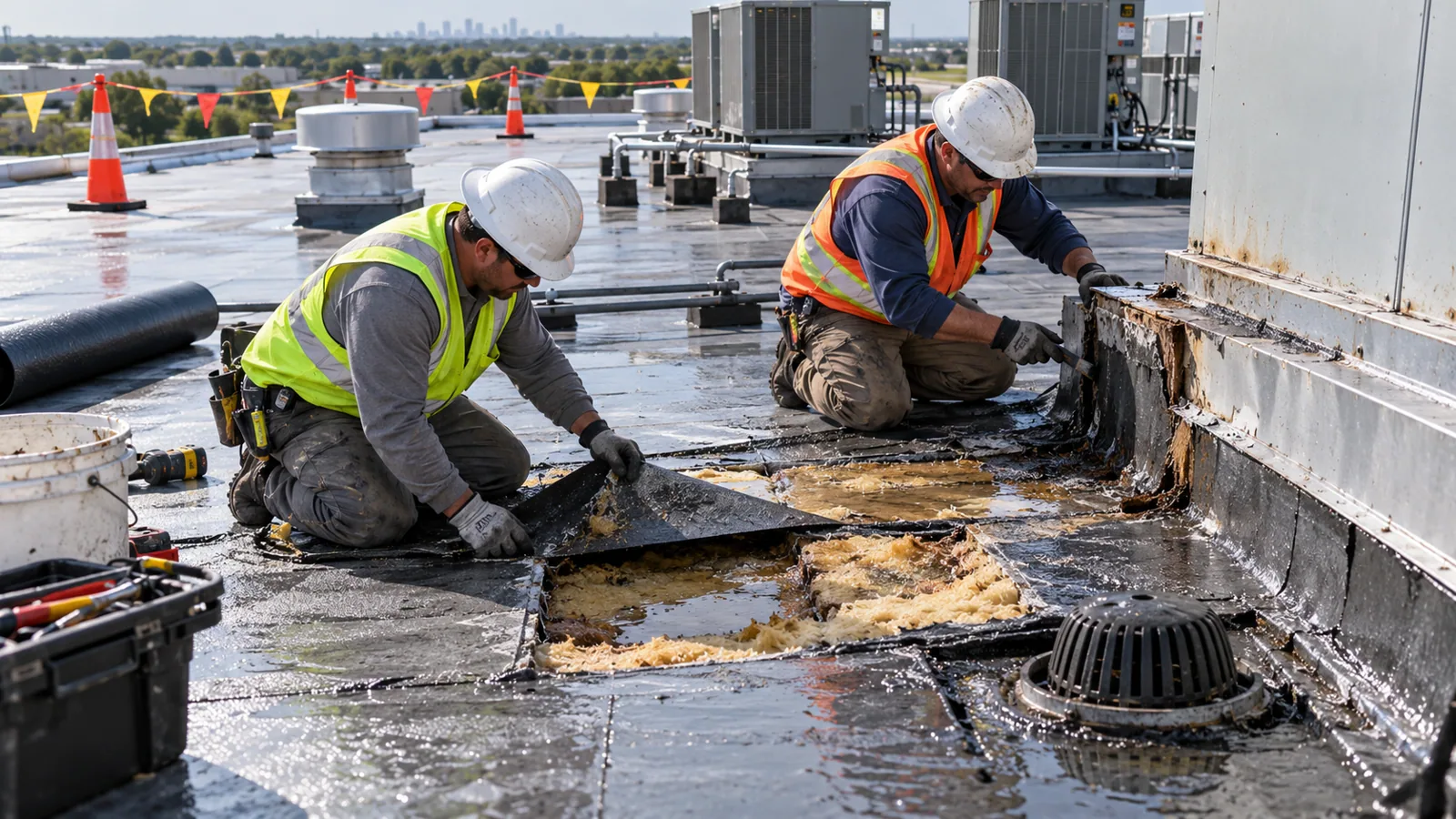
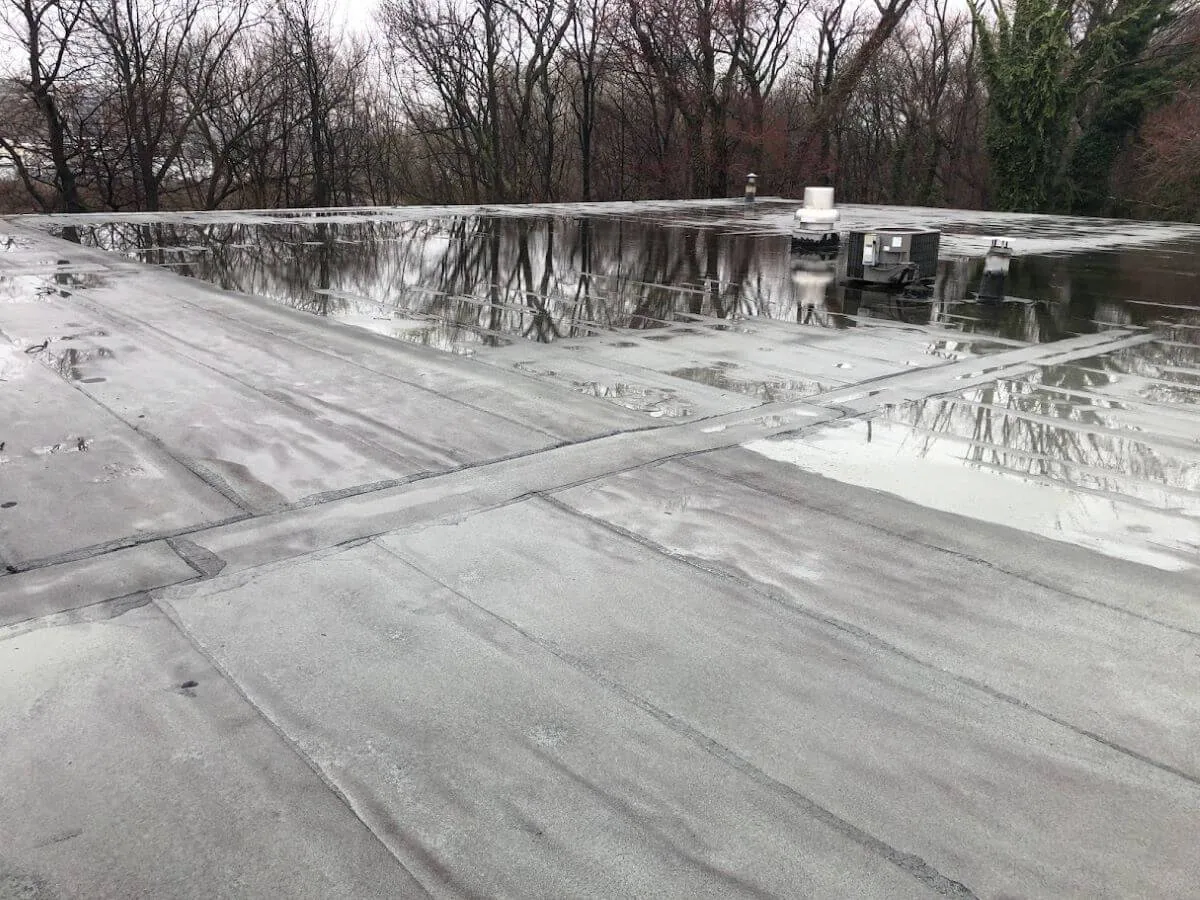
During drain and scupper repair on a warehouse, we start at the drain or scupper closest to the reported leak. We check the clamping ring and bolts, the membrane where it turns down into the bowl, and how much water ponds around the drain after rain. On roofs with interior drains, a missing or shallow sump around the drain is a common reason water sits there for days. If the fix means changing the drainage, like adding a drain or building crickets, an engineer should review it. We spell out the roofing side clearly and don't claim to have checked piping we can't see.
A wet spot on the slab or a drip over a rack gives us a starting point, but on a warehouse roof water can travel a long way along the deck flutes before it falls. We follow what we can see and take photos before anything is closed up. If we can't tell whether the insulation around the drain is wet without a core cut, we tell you where we'd cut and why. A neat drain detail doesn't prove the surrounding insulation is dry. If another test spot is needed, we say where and what we're trying to learn, rather than guessing from a single visit.
Storm history versus what's on the roof
A storm report from another city can't tell us why your drain is leaking or what your roof is made of. We tell you what we found at the drain and keep any guess about the cause separate. If you're working with an insurer, a lender or an ownership group, they need a clear reason for the repair, not an old storm offered as proof of hidden damage. Where an open question would change the repair, we point it out and say what it would take to answer, so you can decide on more testing before weighing a local repair against a larger replacement.
An infrared moisture survey can help on a large warehouse roof by pointing to where wet insulation may be. The results depend on the weather during the scan and on the roof system, so a warm spot isn't automatically water. We confirm the key areas with core cuts and include patching them, along with protection for whatever sits below each cut. The point is solid evidence for the repair, not assumptions based on the building being a warehouse or on a storm that hit somewhere else. We'll tell you what the testing showed and what it couldn't.
What the drain repair price should include
A roof repair at a warehouse drain should list what membrane and insulation come out, what stays and how the new membrane ties in. TPO and PVC roofs get a heat-welded flashing under the clamping ring; other roof systems need a flashing method that works with that membrane. The drain parts, such as a new clamping ring, strainer or bowl, should be listed too, along with who supplies them. A coating won't fix a cracked pipe or a drain that can't be clamped, so check whether each bid includes the drain work.
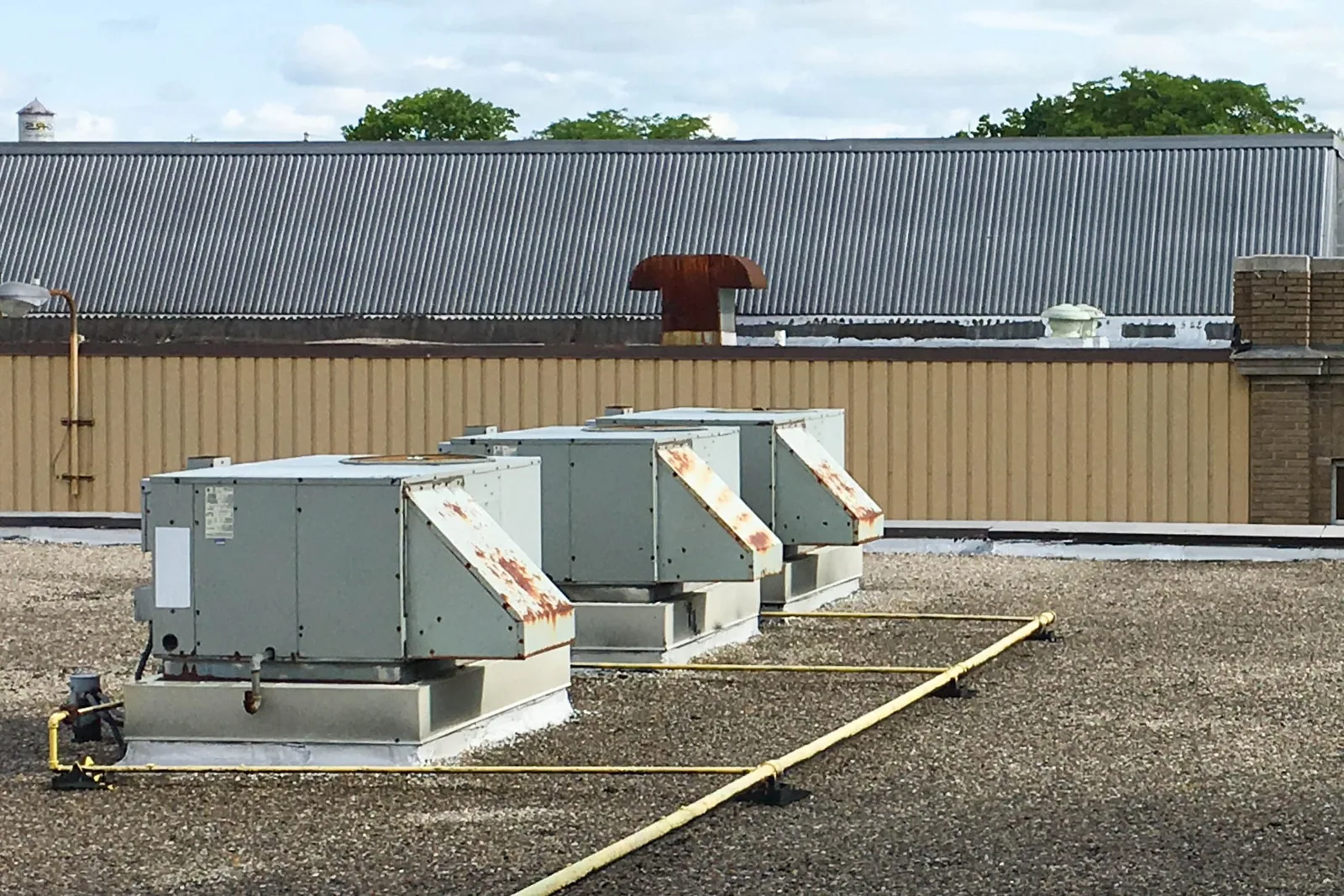
Rooftop units, exhaust fans and gas lines on curbs and supports sometimes sit right next to a drain. If equipment is in the way, the tenant's or owner's HVAC contractor may need to disconnect or move it, and we schedule around them. An engineer reviews any change to supports. Where a wall or parapet is part of the repair, we check the backing before new flashing goes on. Pipe and plumbing decisions stay with the plumber. All of that is listed separately, so a new membrane isn't mistaken for finished plumbing or HVAC work.
Protecting inventory and operations
Before roof work on an occupied building like a warehouse, we walk the area below with the property or operations manager. We need to know what's stored under the opening, whether racking or product needs to be covered or moved, and where forklifts and dock traffic run. Your team decides how the floor is managed while we work. An inspection doesn't mean the area is ready for tear-off, and we don't assume what's stored or how a tenant operates just because the building is a warehouse.
If we open the roof and find more wet insulation or rusted deck than expected, we stop, show you and go over what else needs to come out. Before making the opening bigger, we review access and protection for the new area below. If a plumber or another contractor still has drain work to finish, we install a temporary seal to keep water out. The change order lists the added area and protection together. Tarps and barriers set up under the first opening won't protect a different area with different stock, so each change gets its own review.
Closeout records
When the drain repair is done, you should have photos of what we found, a list of the drain parts replaced and membrane rebuilt, and the locations of patched core cuts. Plumbing, wall or HVAC work still pending should be listed separately from finished roofing. Any areas that still need testing should be noted with their location and the question to answer. That way a future facility manager can check the drain against the record, and nobody assumes a clean new drain means the pipe below or the rest of the roof was checked.
We inspect warehouse roofs in the East Plano Parkway area and across Plano; send the building address and a contact for roof access. A distribution center roof or a flex industrial roof is priced on its own findings, and your warehouse will be too. Your repair plan stays with your building's evidence and the protection planned for its work area, not another building's storm history.
Commercial Roofing Questions
What drain work should be priced with the membrane repair?
The clamping ring, strainer or bowl work, the new membrane flashing and patching of any core cuts. Problems with the pipe below the deck go to a plumber. If the drainage needs to change, an engineer should review it.
Can the October 2019 tornado prove my warehouse was damaged?
No. That tornado damage was documented in North Dallas and Richardson, outside Plano. Any damage to your warehouse has to be confirmed by inspecting the roof itself.
What happens if more roof needs to come off?
We stop, show you what we found and go over the extra work. Protection for stock and traffic under the bigger opening is reviewed before we go further. The change order includes any temporary seal along with the permanent repair.
What should the final repair record include?
Photos, a list of drain parts and membrane replaced, and where core cuts were patched. Work still pending by plumbers or other trades should be listed separately, along with any areas that still need testing.
Schedule a warehouse roof inspection
Have your property or facility manager set up a visit to the leaking drain. We'll find the source and give you an itemized estimate.

Request a Roof Assessment in Plano
Tell us about the building, the roof and what you are seeing. Send a request or call 555-555-5555.