
Cold Storage and Refrigerated Warehouse Roofing in Plano, TX
Home / Property Types We Roof / Cold Storage Roofing
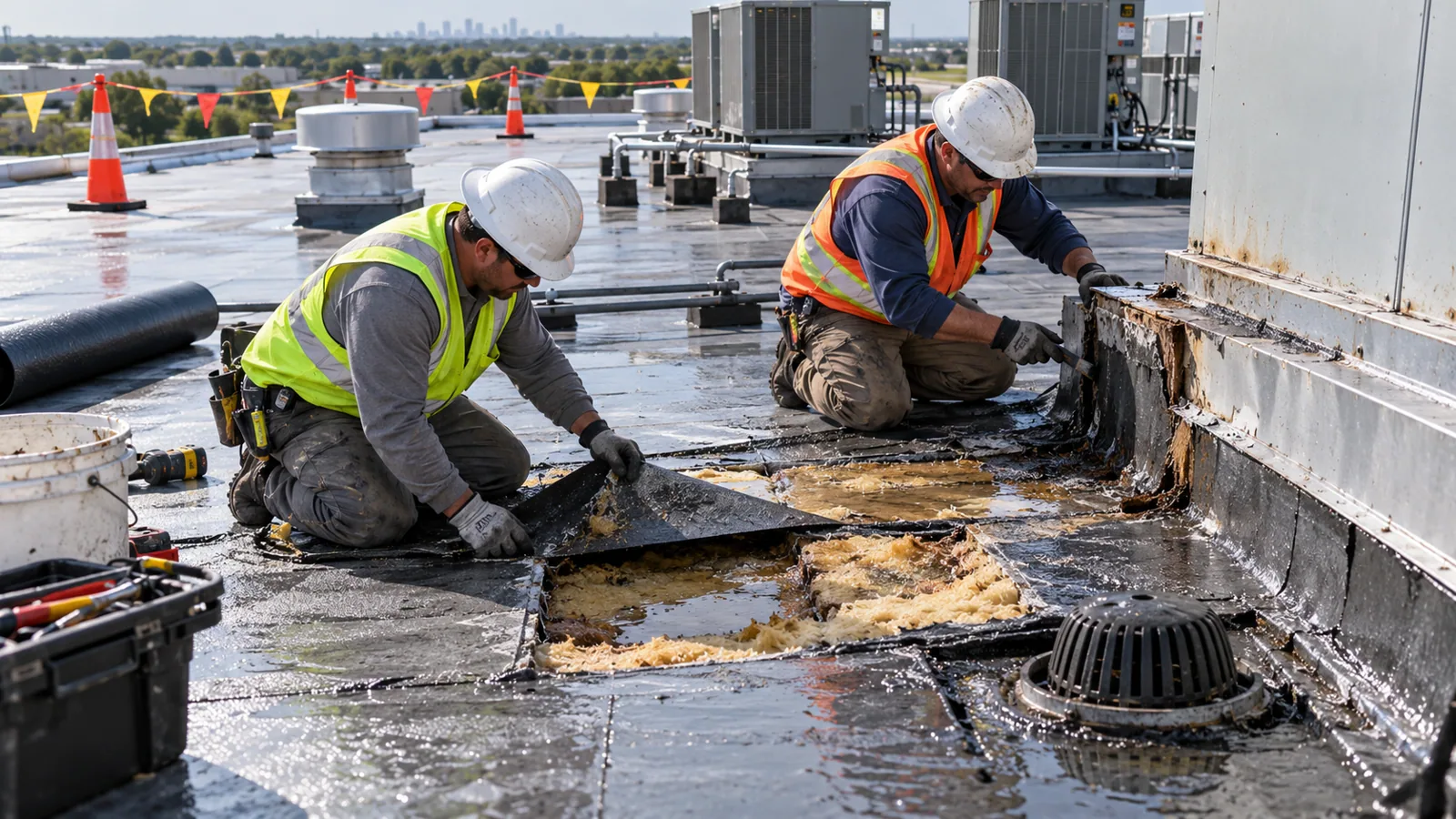
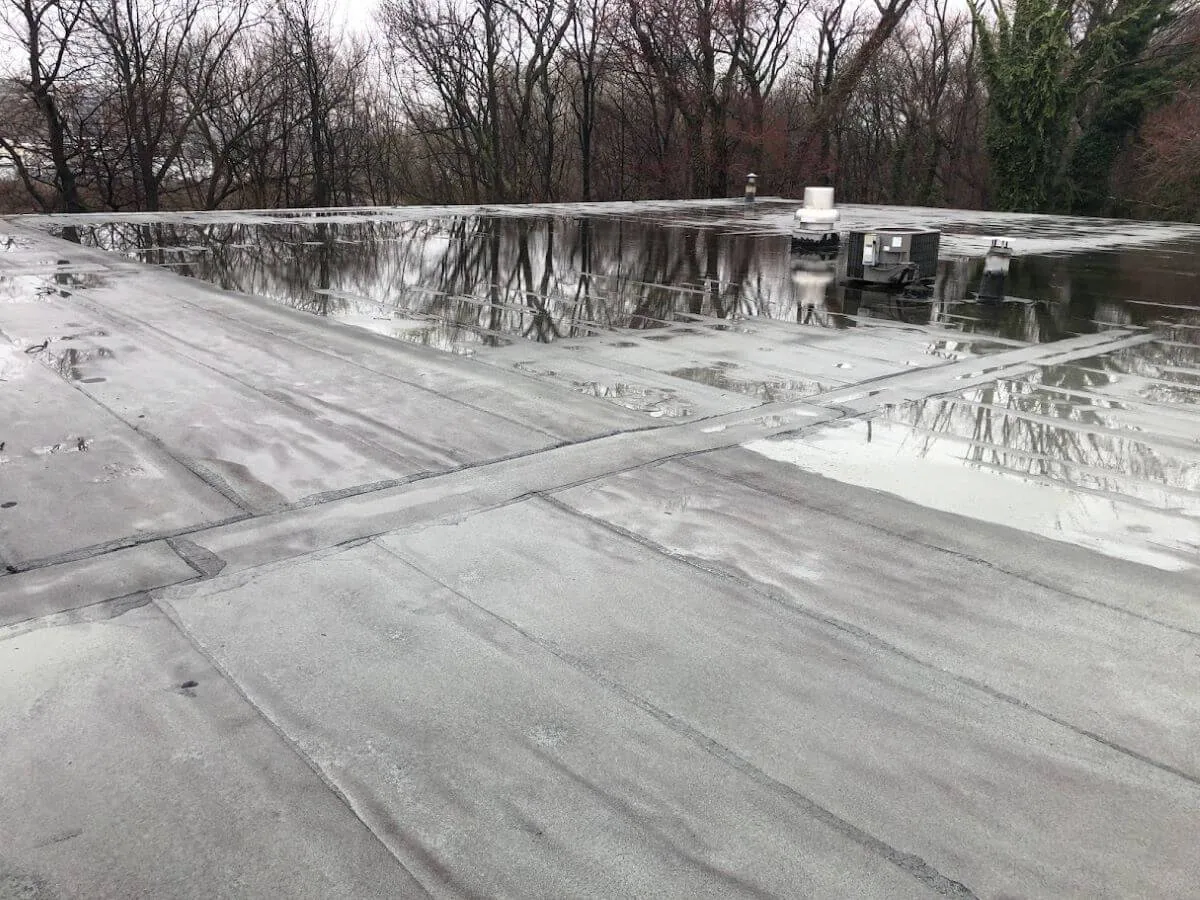
Cold storage roofs fail in ways a regular warehouse roof doesn't. The building is colder inside than out for most of the year, so warm, humid air keeps pushing toward the cold side, and any gap in the vapor retarder lets moisture condense inside the insulation. Drains are a common weak spot. The bowl and pipe pass straight through the insulated roof, and when the seal at the drain fails, both rainwater and humid air get in. In a refrigerated warehouse in Plano, TX, that can mean frost or ice under the deck, soaked insulation that has lost much of its value, and higher power bills long before anyone sees a drip. Fixing it properly means rebuilding the drain detail, not just patching the membrane on top.
The National Weather Service documented a major winter storm across North Central Texas from February 14 to 17, 2021. That record is useful background, but it doesn't tell us what any one roof went through or prove damage at your building. The same goes for local landmarks like the Plano Municipal Center on K Avenue or Collin College's Spring Creek Parkway campus; they say nothing about refrigerated buildings nearby. We start with your address, any roof drawings and repair history, and a contact who can get us access. The repair plan is based on what we find on your roof.
Checking the drains
Our drain and scupper repair work on cold storage starts with the drain itself: the clamping ring, the membrane flashing, the strainer and the bowl. We look for split membrane, missing bolts, and spots where the insulation was cut back around the drain and never sealed. On a cold building we also check whether the drain body and pipe are insulated below the deck, because a bare drain line can sweat or frost up and look just like a roof leak. Problems with the pipe itself go to a plumber. New membrane on top won't fix a cracked drain line underneath.
A wet spot on the floor or frost on the ceiling gives us a starting point, but in a cold building that moisture may be condensation rather than rain coming through. We trace it to the source and take photos before anything gets closed back up. If the only way to know whether the insulation near the drain is wet is to cut a core, we tell you where and why. The price includes sealing that cut properly, so we don't open a new path for warm air into the cold space. We keep what we saw separate from what still needs checking.
Finding wet insulation
An infrared moisture survey works differently on a refrigerated building. A normal scan relies on wet insulation holding daytime heat, but over a freezer the temperature difference runs the other way, so timing the scan and reading it take experience. Even then, the scan is a guide. We confirm questionable areas with core samples before recommending that insulation be kept or replaced. Neither the scan nor the 2021 storm record tells us what temperatures your roof actually saw, or what caused the damage we find.
Around the drain, we also check the vapor retarder, the deck and any wood blocking that will support the new flashing. If the deck is rusted or the vapor retarder is torn, those get fixed before new membrane goes down, and they're listed in the estimate. If the repair needs structural changes, such as reinforcing the deck or moving a drain, an engineer should review it first. We take photos at each step, so there's a clear record of why more material came out once the finished roof hides the evidence.
What the repair estimate should include
A complete roof repair estimate lists what comes off, what stays and how the new membrane ties in. On TPO or PVC, that's a heat-welded flashing under the clamping ring; on other systems, it's a flashing method made for that membrane. For cold storage, it should also include replacing wet insulation in kind, resealing the vapor retarder and patching any core cuts. A roof coating has its uses, but it won't rebuild a drain or stop vapor from getting into the insulation. If one bid is a coating and another is a rebuilt drain, compare them for what they actually do.
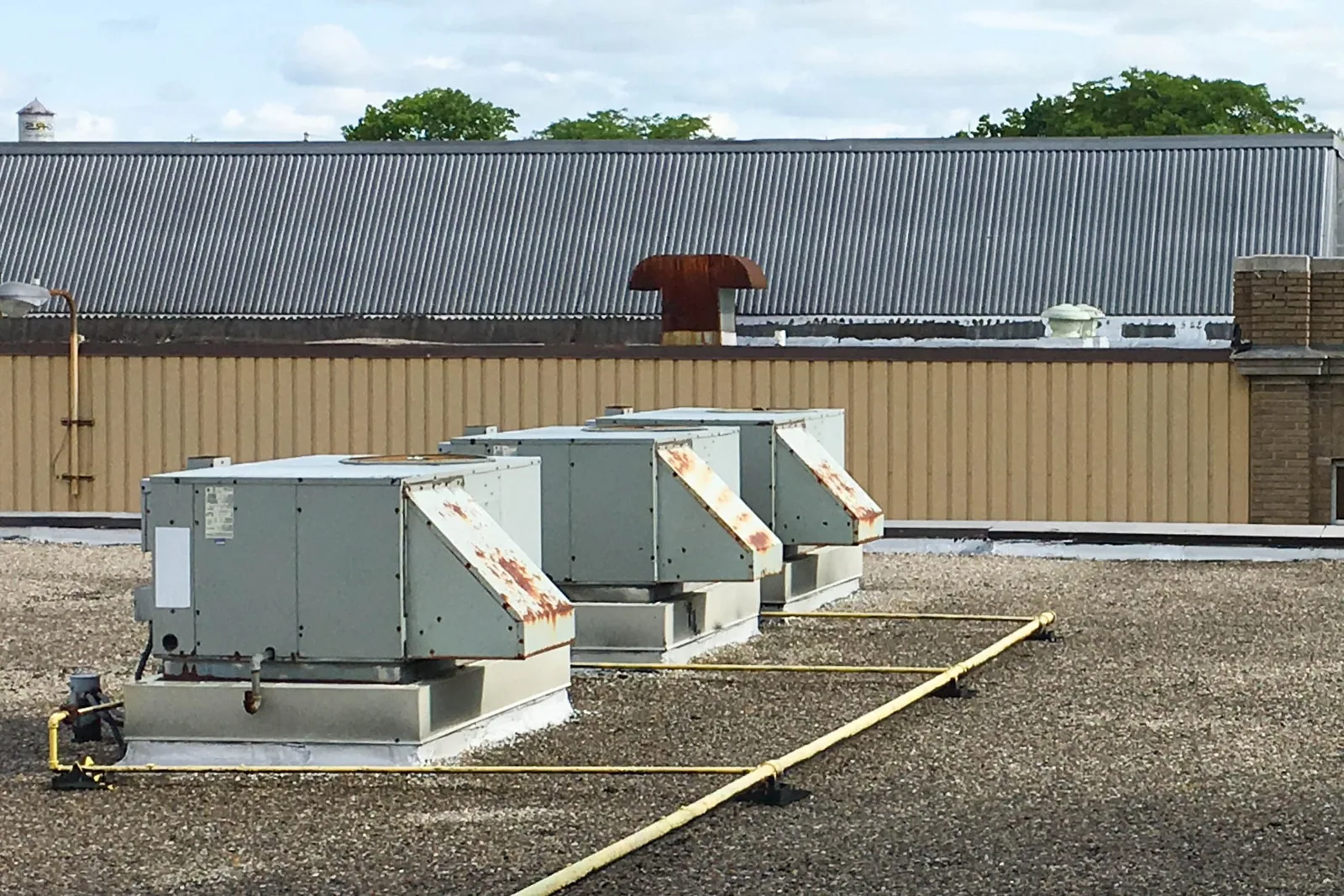
Refrigeration equipment is the other big piece. Condensing units, refrigerant lines and their curbs and supports often sit near drains, and moving or disconnecting them is work for your refrigeration contractor. We set the timing with them so product temperatures aren't put at risk. Where a wall or parapet meets the repair area, we check the backing before installing new flashing. Work outside roofing, such as refrigeration or plumbing, is listed separately, so the estimate is clear about what we do and what we don't.
Protecting the cold space during work
Opening a roof over a freezer or cooler has to be planned with your operations team. For roof work on occupied buildings, we agree on the size of each opening, how long it can stay open, and how material gets on and off the roof. Your staff decide what product needs to be moved or protected and whether any rooms can be warmed up or must stay at temperature. Roof access for an inspection doesn't mean the space is ready for tear-off. That's a separate call, made with the people who run the building, not a standard schedule.
If we open the roof and find wet insulation or a damaged vapor retarder running farther than expected, we stop and show you before going further. A larger opening may need more protection below and a new plan for the product nearby. If the refrigeration contractor or plumber still has work to finish, we put in a temporary seal to keep weather and warm air out in the meantime. The change order should list the extra area, the protection and the temporary work together, so you can see exactly why the scope grew.
Keeping a record of the work
After the repair, you should have the drain locations, photos of what we found, a list of the insulation and membrane replaced, and where core cuts were sealed. Any refrigeration, plumbing or wall work still pending should be listed apart from the finished roofing. Spots where we couldn't confirm the insulation condition should be noted by location. That record helps your maintenance team or the next facility manager know what was actually fixed, instead of assuming a clean new drain means the rest of the roof was checked.
We inspect cold storage roofs in the East Plano Parkway area and elsewhere in Plano; send the right address and a contact who can give us access. A warehouse roof drain repair or a manufacturing plant roof wall repair follows its own findings, and so does yours. A cold storage building has its own vapor and temperature problems, so we price the work on what we find on your roof, not on another building or a regional weather report.
Commercial Roofing Questions
What should a cold storage drain repair include?
The membrane flashing at the drain, any new clamping ring or strainer, replacement of wet insulation and resealing of the vapor retarder. Plumbing below the deck is priced separately. Ask for each item to be listed so bids can be compared.
Can the February 2021 winter storm prove my roof was damaged?
No. The NWS dates describe a regional event, not conditions at your building. Damage has to be confirmed by inspecting the roof itself.
How do you protect product and cold rooms during roof work?
We plan each opening with your operations team, including its size, how long it stays open and what product needs to be moved or covered. Your staff decide how the rooms are run during the work. An inspection visit on its own doesn't clear the space for tear-off.
What happens if the damage is bigger than expected?
We stop, take photos and tell you how much more needs to come out. Protection below and plans for nearby product are reviewed again before the opening grows. The change order lists added roofing, protection and any temporary sealing.
Schedule a cold storage roof inspection
Have your facility manager set up a visit to the problem drain. We'll find the source, check the insulation and vapor retarder, and give you an itemized estimate.

Request a Roof Assessment in Plano
Tell us about the building, the roof and what you are seeing. Send a request or call 555-555-5555.