
Commercial Roofing for Real Estate Investors in Plano, TX
Home / Industries We Serve / Real Estate Investors
Two roof bids can't be compared if neither says how deep the tear-off goes. One might keep the existing insulation; the other might replace it down to the deck. The totals are describing different jobs. For Plano investors and owners, we tie every price to what we found on the roof and the flashing and edge work it includes. That way the decision follows the work you're buying, not the size of the number. Any test still pending is listed next to the choice it could change.
Whether the property sits near Collin College's Spring Creek Parkway campus or the Plano Municipal Center downtown, send us the building address and any roof records you have. A roof capital plan for that building is based on its own inspection. Each line states the tear-off depth, the layers being kept and the detail work included.
The work item needs a measured scope
We mark the roof section and the parts involved, then measure the field area along with the walls, drains, edges and equipment curbs the work touches. A square-foot price alone can leave out the edge where new membrane meets the old roof. We include that tie-in in the scope, so the owner sees both the surface work and the flashing that makes the repair permanent.
We state how deep the tear-off goes for each price. We explain what stays, what gets rebuilt and the evidence behind that call. If we're still waiting on a core sample or moisture test, we say so instead of assuming the best. You can tell whether a price is based on a defined job or still depends on another finding.
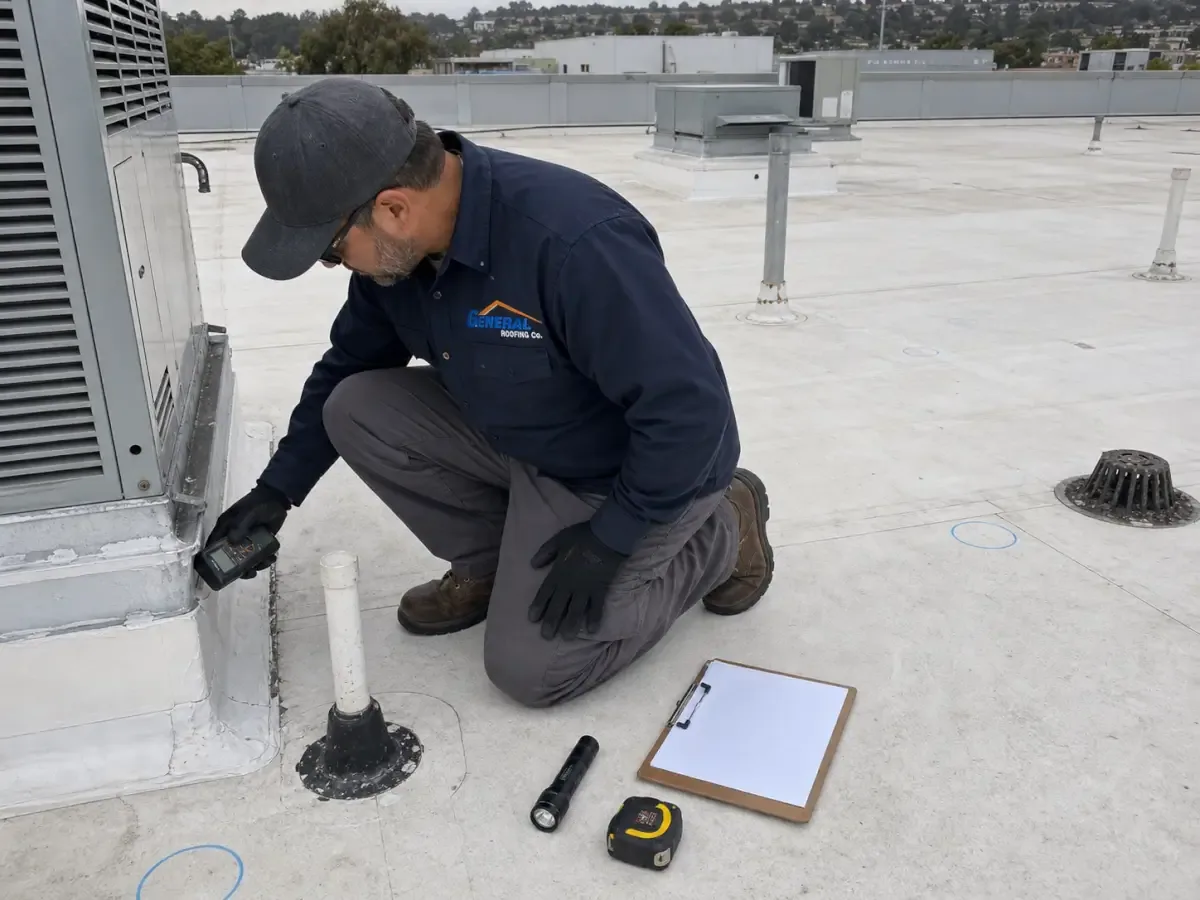
Our commercial roof inspection notes the area inspected and its limits. One test cut can justify rebuilding that spot without telling us about every layer across the building. We keep that clear when using one finding to plan a larger project, so you know exactly why a recommendation was expanded or kept small.
Acquisition evidence stays distinguishable
When the review is for a purchase, we match the seller's records to the part of the roof they describe. A repair invoice and what we see today are two different things, and we report both. An invoice may say "replaced flashing" without saying how it was done or what was underneath. The buyer sees that gap rather than assuming the paperwork describes the roof as it stands.
Our due diligence roof surveys report what we could inspect and the questions still open. Any section we couldn't reach stays uninspected until someone checks it, and we note what that takes. A tidy budget allowance shouldn't fill in for a part of the roof nobody saw.
Local repair must reach permanent closure
We evaluate a smaller repair by where it stops and what it needs to tie in properly. Sometimes good prep and a clean seam are enough. Other times the layers underneath have to be cut out and replaced. A "repair" label alone doesn't tell you which. Our commercial roof repair estimates spell out the rebuild and edge work involved.
We also list work by other trades that has to happen before new membrane goes on, such as a drain body replacement or an HVAC curb repair. That work and who does it sit next to the roofing price. You shouldn't discover an extra job after choosing the lower bid. Comparable options make the finished work and what it depends on easy to see.
For commercial roof replacement, we show the tear-off, any sections staying in place and the new flashing and transitions together. A bigger job usually involves more curbs and edges, but the total doesn't automatically include every other trade. The recommendation follows the evidence, with any open questions about the deck or insulation listed.
The approval keeps changed findings visible
If opening the roof uncovers something that changes the job, we document it before it's covered back up. We explain how it affects the prep, tear-off or flashing and send the revised scope through the agreed approval route. The roof stays protected while you decide. Any added cost has a clear construction reason behind it.
Other decisions outside the current job stay separate. Fixing one area doesn't prove the rest of the roof is sound. Future work needs its own findings before it's approved. The earlier record is still good evidence for the repair it covers, while the next recommendation is based on the section in question. Past spending shouldn't be read as a clean report on the whole roof.
Timing reflects building-specific readiness
We confirm access, material handling and other trade scheduling with the people authorized at the building. Work at Granite Park properties follows that building's own rules. The neighborhood doesn't tell us your work hours or give us permission to be on the roof. The schedule depends on having the right contact and the other trades lined up.
When a property management company runs the building, we keep their arrangements attached to the job. Other trades' readiness is tracked separately from our schedule. A date on an approval doesn't mean the new drain, wall repair or equipment curb is ready. You'll see that dependency next to the price.
We provide emergency roof protection on holidays, at night and on weekends. We note what the temporary fix was for and what still needs inspection. The permanent spending decision follows the inspection findings and other trades' readiness. A quick emergency response shouldn't be read as a full roof assessment when it only dealt with one leak.
Completed work explains the expenditure
We keep located photos of the prepared deck and insulation and the finished flashing, all filed with the completed job. The record lists which layers were replaced, which were kept and any work still owed by other trades. You can tie what was built to the findings that justified it. A photo of the finished roof or a completion date alone doesn't show what was rebuilt underneath.
When we coordinate with general contractors on related work, we record who did what and our records keep their own boundaries. Future acquisition or ownership decisions can use that history while looking at current conditions. We document what you paid for; we don't promise returns, roof life or coverage we can't back up.
Commercial Roofing Questions
Why does tear-off depth matter when comparing roof bids?
Because two prices may include different amounts of insulation or deck replacement. We state what's kept, what's rebuilt and the edge and flashing work for each option, so you're comparing the same job, not just the same square footage.
How should seller repair records be used in a purchase review?
We match each record to its roof location and compare it with what we see today. We note any missing detail. An invoice alone can't confirm what's under the membrane or the condition outside the area it describes.
When is a local repair a real option instead of a full replacement?
When the surrounding roof is sound enough to tie into and the repair includes the damaged layers and nearby flashing. Any other trade's work has to be listed too. A smaller price only makes sense if it describes a repair that will actually hold.
What if new damage is found once the roof is opened?
We document it before it's covered, explain how it changes the work and send the revised scope through the agreed approval route. The roof stays protected and other trades' work stays on the list.
What records show what we paid for on a roof job?
Located photos of the prep and finished flashing, a list of replaced and retained layers and any work still owed by other trades. Future decisions can then rely on what was actually done, with new findings for new questions.
Compare the roof amounts through complete work
Book a commercial roof review in Plano for an acquisition or a building you already own. We'll document what we find, price complete options and flag any testing or other trade work that could change the number.

Request a Roof Assessment in Plano
Tell us about the building, the roof and what you are seeing. Send a request or call 555-555-5555.