
Commercial Roof Repair in Plano, TX
Home / Commercial Roofing Services / Commercial Roof Repair
Most commercial roof problems in Plano start small: a seam that has opened, a puncture from a dropped tool, flashing that has pulled away from a curb. Caught early, they are straightforward to fix. The trick is fixing the right thing, the right way. A photo of a hole is a starting point, not a repair plan. We look at the defect, the material around it and what caused it before we tell you what the repair involves and what it costs.
Plano has seen its share of severe weather, and the October 2019 tornado that tore through North Dallas and into Richardson was a reminder of how quickly a roof can be put to the test. After any major storm, a quick check of seams, flashing and edges is worth the time. Whether the cause is weather, age or foot traffic, the approach is the same: find it, explain it and fix it properly.
Identify the defect
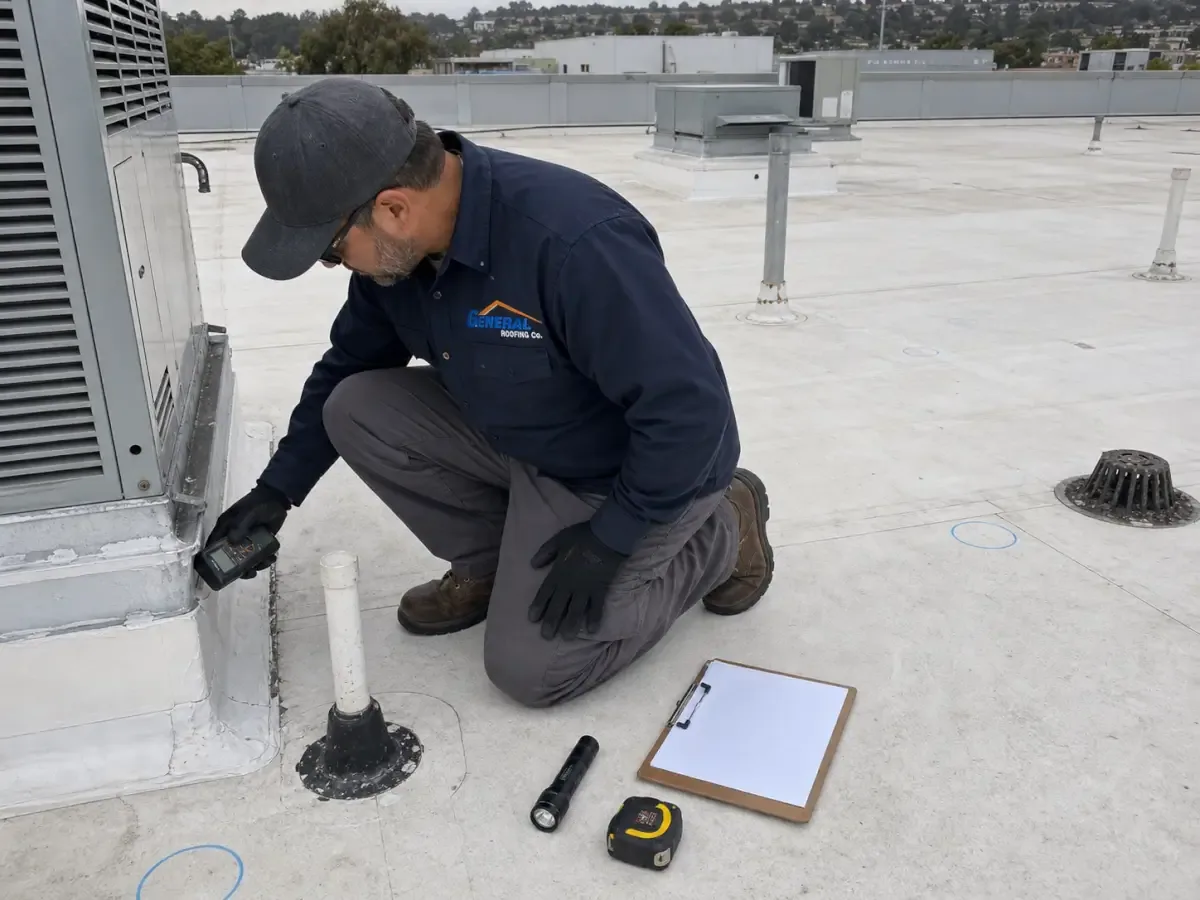
An open seam, a puncture and a failed curb flashing can look alike in a photo taken from across the roof. Up close, they are different problems with different repairs. We go to the spot, identify the roof material, look at the surrounding details and mark the location on a roof sketch so anyone can find it again.
A commercial roof inspection also separates what is happening inside from what we see on the roof. A stain in a conference room may line up with the defect we found, or it may be coming from somewhere else. If there are leaks we have not explained yet, we say so and keep looking rather than assume the first defect we find accounts for all of them.
Size the patch to sound material
A repair usually needs to extend past the visible damage. The membrane right around a split or puncture is often stressed, dirty or covered with an old patch or coating. New material has to bond to clean, sound membrane, so we find where that starts and size the patch accordingly.
On a TPO roof, that means cleaning the existing sheet and heat-welding new TPO to it. Manufacturer seam guidance draws a clear line between a weld that simply did not fuse, which can be cleaned and rewelded, and membrane that was overheated and damaged, which usually needs a new overlay even if the edge probes closed. We check which one we are dealing with instead of assuming another pass with the welder will fix it. Other membranes have their own methods, and we follow them.
Handle equipment and component work
Many leaks happen where something passes through the roof: a curb, a pipe, a skylight or a conduit. Fixing them can involve more than roofing. A unit may need to be lifted, a curb raised or a loose pipe support secured before the flashing can be done right.
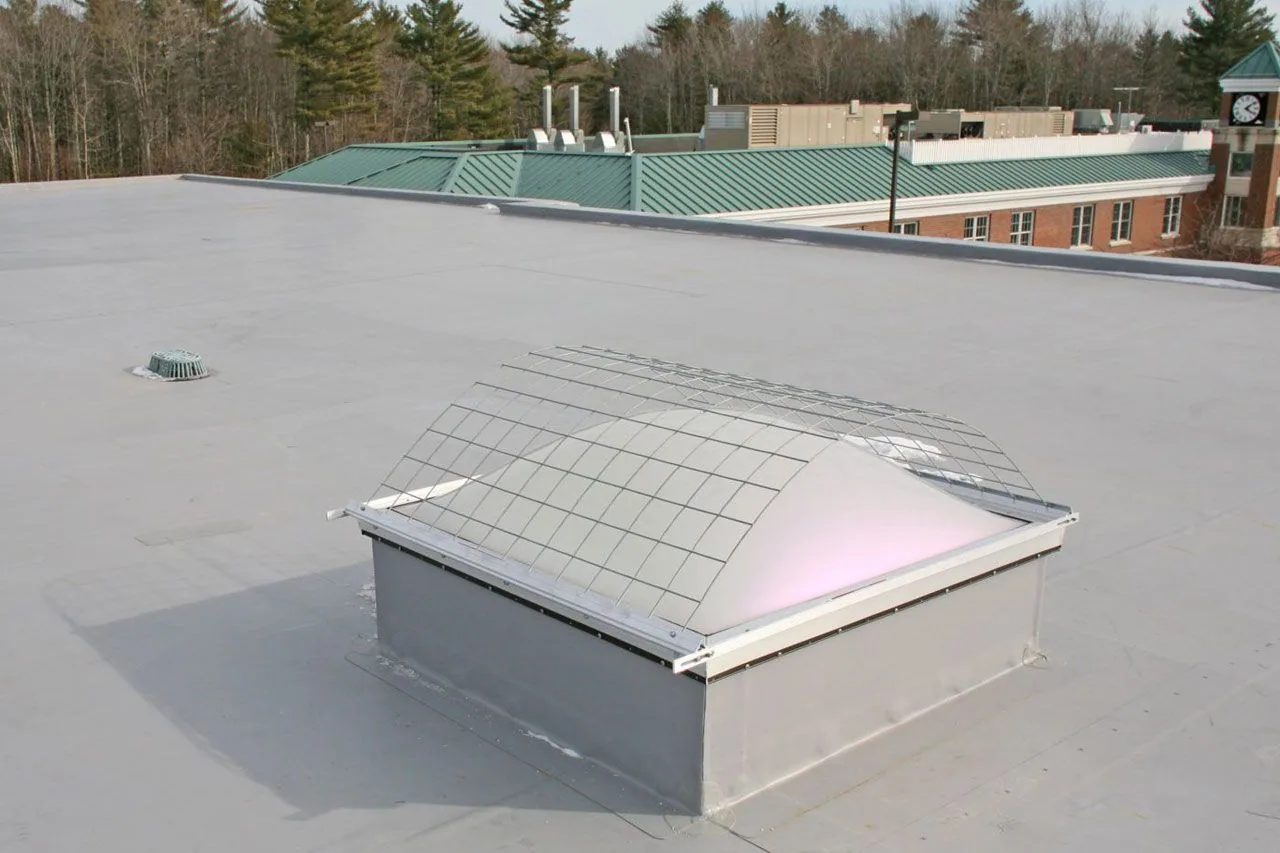
For skylight and penetration flashing, we tell you which parts of the job are roofing and which belong to another trade, and in what order they need to happen. If your mechanical contractor needs to disconnect a unit, we coordinate with them through your property manager. If a skylight's dome or gasket is the problem rather than its flashing, we say so. That keeps you from paying for a new flashing when the leak is coming from the unit itself.
Price each repair on its own line
When a roof has several problems, we list each repair separately: its location, what failed, what we will do and what it costs. That makes it easy to approve the most urgent items now and schedule others later.
It also makes the work easy to check. Your maintenance team can match each repair number to an interior leak, and your finance team can see exactly what each dollar is for. If the price depends on something we cannot see yet, such as whether the insulation under a repair is wet, we note that assumption next to the item and explain how a change would be handled. Nothing gets bundled into a single lump sum that hides what you are paying for.
Check the finished repair
A finished repair should be checked before the crew leaves. On welded membranes, we probe every seam once it cools. On adhered membranes, we roll seams and check edges for full contact. Flashings get checked at corners and terminations, where failures usually start.
On an EPDM roof, that means confirming the primer was applied correctly, the seam tape is fully bonded and the cover strips are rolled and sealed at the edges. We photograph the finished repair and include those photos in your report along with the before photos. A good-looking repair photo is useful, but it does not replace the checks themselves, so we note in the report which checks were done.
Know when repair is no longer enough
Sometimes the inspection shows that repairs are only buying time. Widespread wet insulation, a membrane that is cracking across the field or the same failures repeating at every curb are signs the roof is near the end of its life.
When we see that pattern, we tell you, and we price commercial roof replacement or a recover as a separate option, based on its own assessment. We do not inflate the repair price to push replacement, and we do not stretch one repair into a judgment about the whole roof. Owners across Plano, from Downtown Plano storefronts to large office and industrial buildings, get the same straight comparison: what each option costs, what it includes and what it leaves for later.
Commercial Roofing Questions
Why can a patch be bigger than the visible damage?
Because the membrane right around the damage is often stressed, dirty or covered by an old patch. New material has to bond to clean, sound membrane, so the patch extends to where that starts.
What is the difference between a membrane repair and a component repair?
A membrane repair fixes the roof sheet itself. A component repair involves a curb, pipe, skylight or equipment support, and may need another trade to act before the roof flashing can be done.
How should several repairs appear in a proposal?
Each one on its own line, with its location, what failed, the repair and its cost. That makes it easy to approve the urgent items first and check each one afterward.
Does a photo of the finished patch prove the repair was done right?
Not by itself. The repair also needs hands-on checks, such as probing welded seams and checking flashing corners. Our report notes which checks were done.
When should repairs be compared with replacement?
When the roof shows widespread wet insulation, cracking across the field or the same failures repeating. We price replacement as a separate option based on its own assessment.
Get your Plano roof repair priced
Tell us the building and where you are seeing problems. We will find each defect, explain the fix and give you a clear price for each repair.
Related Roofing Work
Request a Roof Assessment in Plano
Tell us about the building, the roof and what you are seeing. Send a request or call 555-555-5555.