
School Roofing in Plano, TX
Home / Property Types We Roof / School Roofing
Loose edge metal on a school roof is more than a cosmetic problem. The metal is fastened to a wood nailer along the roof edge, and if that nailer is rotted or split, the edge can peel back in high wind and take membrane with it. When we inspect a school building in Plano, TX, we check what's behind the visible metal. If the nailer can't stay, replacing it changes the price, along with the membrane that has to come off and be tied back in. We tell you what we found and who handles each part, so you can compare complete bids. Sealant over a loose joint doesn't fix a rotten nailer, and it does nothing to plan for the classrooms below.
Plano covers a lot of ground, from the Municipal Center on K Avenue to the Collin College campus on Spring Creek Parkway, but landmarks like those say nothing about your school's roof. We start with your building, any roof drawings, records of past work and the person who can approve access. Old records help us find the trouble spots; what we find on the roof decides the repair. Timing gets set with your administration and facilities staff, not assumed from the school calendar.
Checking the edge metal and nailer
For edge metal, coping and gutter repair, we look at the fasteners, the metal itself, the cleats that hold it and the wood nailer behind it. We note where the problem was reported and what we can reach. If we can't tell whether the nailer is sound without pulling metal, we say so, tell you where we'd open it, and include putting it back. A straight, freshly painted edge can still hide a soft nailer, so we don't take a good-looking edge as proof. You should know what we could and couldn't check before comparing a bid that assumes the nailer is fine with one that plans to look.
If the nailer is rotted, the estimate should say who replaces it and how it gets fastened. Anything that affects structure, such as a damaged deck edge or wall top, should go to an engineer. We also note what shape the edge needs to be in before new metal and membrane go on. Photos taken before the new metal goes up show why the nailer was replaced. One loose section tells us where to look, not that every edge on the school needs the same work, so we check other edges wherever the answer changes the scope.
Deciding what can stay
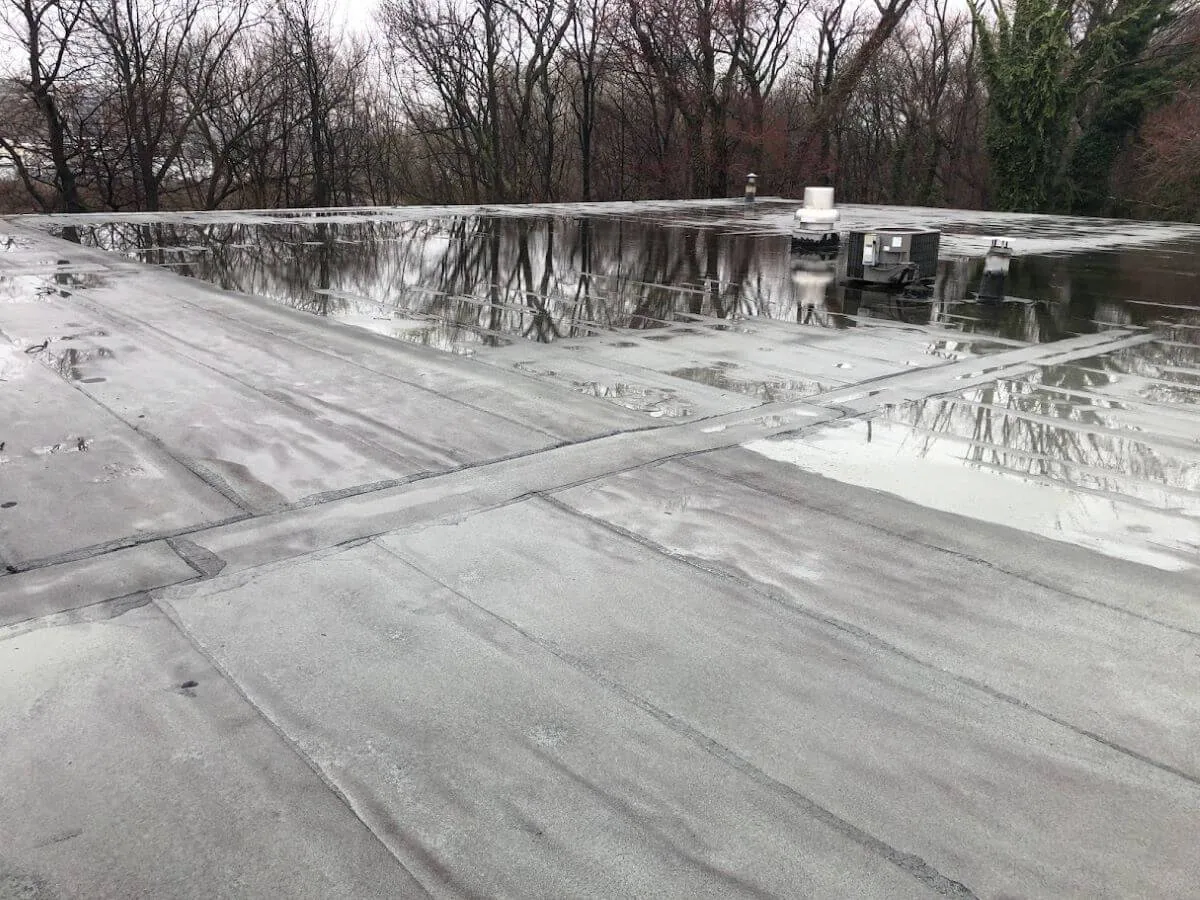
On a large school roof, an infrared moisture survey can point to areas where wet insulation has spread from a leaking edge or other trouble spots. Results depend on the weather during the scan and on the roof system, and a scan can't tell whether a nailer will hold fasteners. Where the choice to keep or replace material depends on that, we cut cores or pull metal to check, and the estimate includes patching those spots. The scan helps us decide where to look. It doesn't replace looking, and we'd rather confirm a wet area than guess at it.
We keep what we found separate from what we can only guess. A rotted nailer clearly needs replacing, but it usually doesn't tell us when water first got in or exactly how. A stain in a classroom or hallway ceiling helps us find the area, but water can travel before it drips, so we still check the roof details nearby to find where it's getting in. Then we tell you what we confirmed and what's still uncertain. That way the removal you pay for is based on real findings, and anything we couldn't confirm is clearly marked for another look.
What a complete edge repair includes
A complete roof repair at the edge lists the membrane being removed, what stays and how the new membrane laps onto the rebuilt nailer. On TPO or PVC, the membrane is heat-welded; on modified bitumen or built-up roofs, it's set with a method made for that system. Then the new edge metal or coping goes on, fastened into solid wood. The nailer and the metal should be priced together with the membrane. A coating job may look similar on paper, but it won't replace a rotten nailer or missing metal, so compare what the bids actually do rather than just the totals.
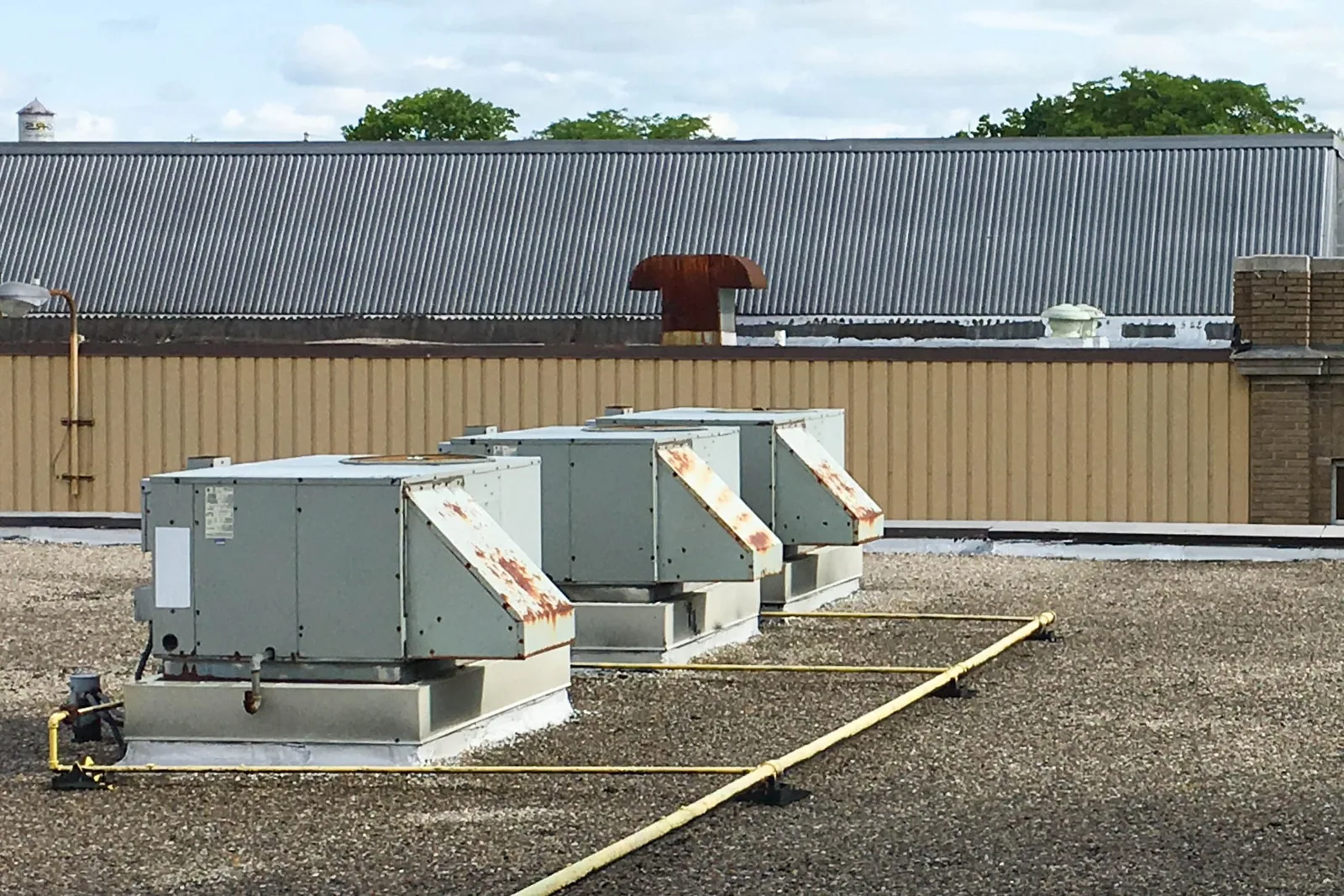
Schools often have rooftop units, exhaust fans and gas lines on curbs and supports near the edge. If any of that equipment is in the way, the district's HVAC contractor may need to shut it down or move it, and we schedule around them. Changes to supports may need an engineer. Where a wall meets the work area, we check its backing before new flashing goes on. Drains are split the same way: we handle the roof side, and a plumber handles the pipe below. All outside work is listed separately from ours, so nobody assumes a new edge means the rest is done.
Planning around students and staff
For roof work on occupied buildings like a school, we sit down with your facilities staff first. We cover which classrooms, offices or gyms are under the work area, where the crew will stage and lift material, and how we'll keep debris and equipment away from drop-off lanes, playgrounds and entrances. Your team decides whether rooms need to be emptied or whether the work should wait for a break, an evening or a weekend. An inspection visit doesn't clear any room for tear-off. Those plans are made for your building and your schedule, not from a standard school timeline.
If we open the edge and find the rot goes farther than expected, we stop, take photos and tell you how much more needs to come out. We review protection for the larger area with your staff before going further. If another trade still has work to finish, we install a temporary seal so the building stays dry and classes can carry on. The change order lists the added nailer, metal, membrane and protection together. Extra feet of edge metal on an invoice don't tell you what changed; the photos and notes from the roof should.
What stays in the school's file
After the work, your file should include photos of the nailer we found, a list of what was replaced, how the new metal and membrane were installed and where test openings were patched. Work still pending by other trades, such as HVAC or plumbing, should be listed separately from finished roofing. Any spot we couldn't confirm should be noted with its location and why it's worth checking. That helps the next facilities director see what this repair took care of, instead of assuming one clean edge means the whole roof was inspected.
We inspect school roofs in Downtown Plano and elsewhere in the city; send the building address and a contact who can approve roof access. A college or university roof or a government building roof gets priced on its own findings, and so does your school. Your repair is based on what we find at your building's edges, not on another property's condition or assumptions about how schools run.
Commercial Roofing Questions
Why does the wood behind the edge metal matter?
Edge metal is only as secure as the nailer it's fastened to. If the nailer is rotted, new metal can work loose or blow off. That's why the estimate should include replacing the nailer along with the metal and membrane.
Does one loose piece mean every edge is damaged?
No. One loose section tells us where to start. We check the nailer there and look at the other edges before recommending a larger repair.
What needs to happen before the roof is opened?
We review the work area, staging and access with your facilities staff and decide together which rooms need to be cleared or protected. Your team sets the timing. An inspection visit on its own doesn't clear the area for work.
Why might the repair grow after work starts?
Rot in a nailer can run past what's visible before the metal comes off. If it does, we stop, take photos and go over the added work before continuing. The change order lists added nailer, metal, membrane and temporary protection.
Schedule a school roof inspection
Have your facilities staff set up a visit to the problem edge. We'll check the metal and nailer and give you an itemized estimate.


Request a Roof Assessment in Plano
Tell us about the building, the roof and what you are seeing. Send a request or call 555-555-5555.