
Government Building Roofing in Plano, TX
Home / Property Types We Roof / Government Building Roofing
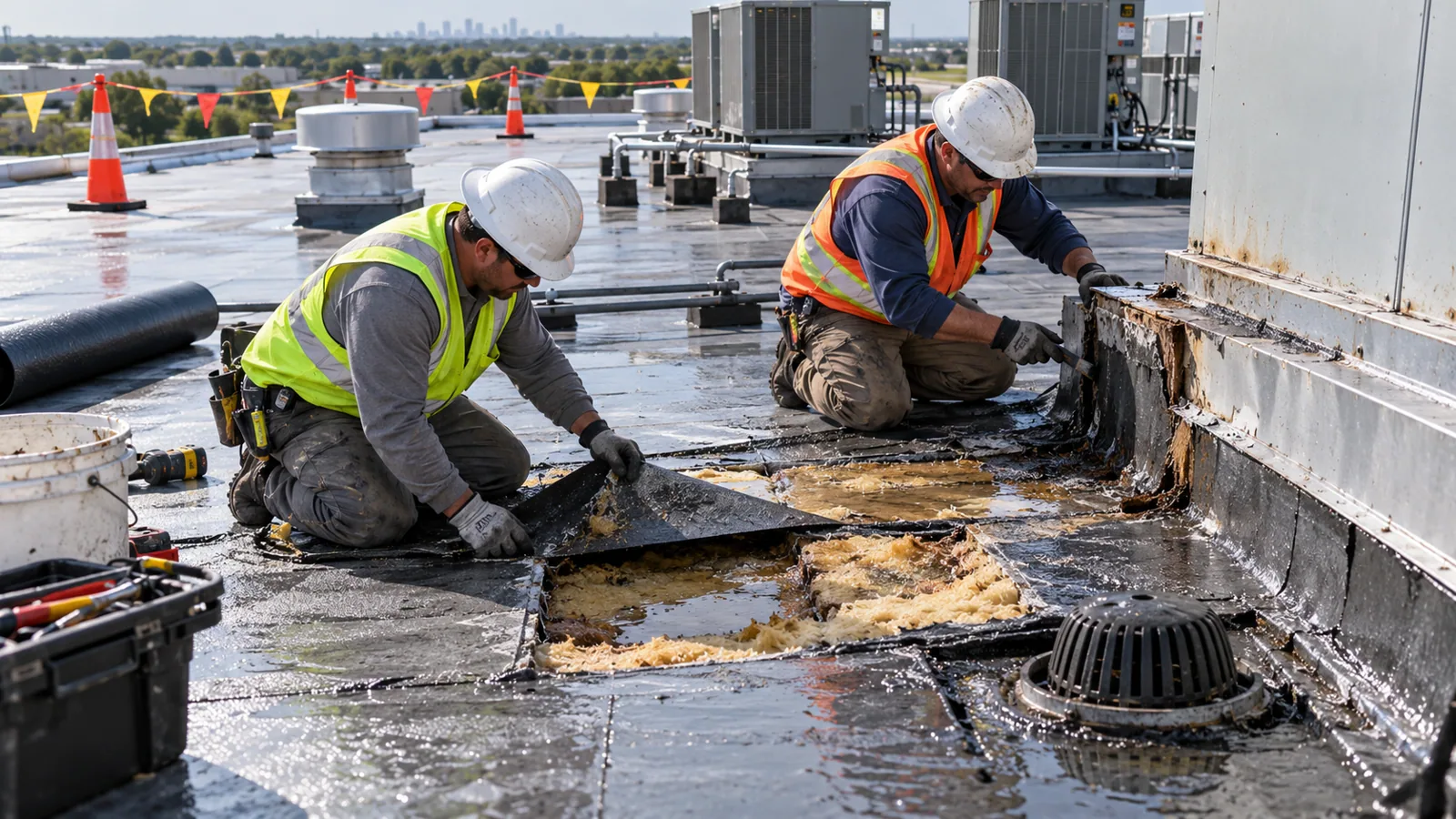
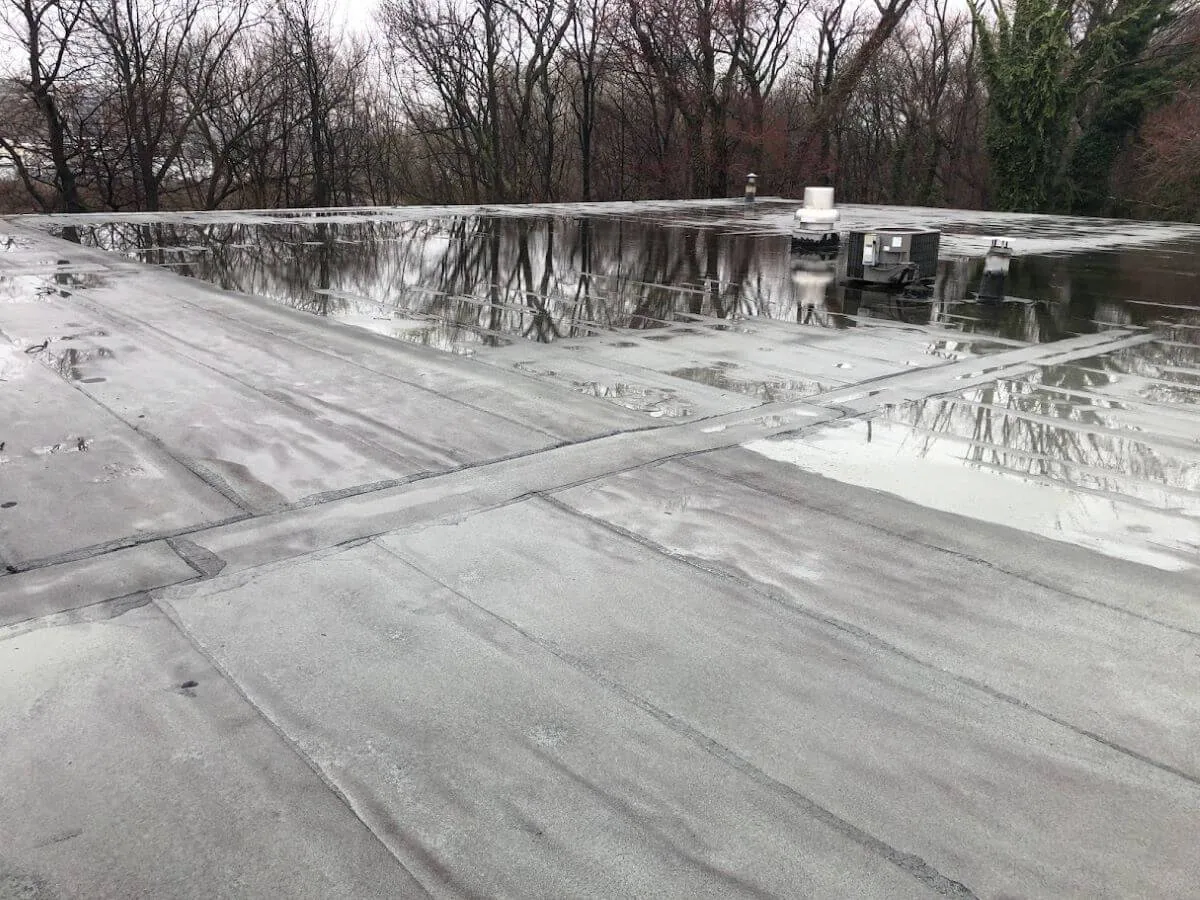
Roof drains cause a large share of the leaks we see on government buildings: a drain body that has corroded, a clamp ring that no longer grips the membrane, or a sump that sits higher than the roof around it so water ponds instead of draining. On a Plano, TX public building, the fix starts with what the drain looks like once the old flashing is off. If the drain bowl is sound, we reset the clamp ring, add new flashing and tie it into the membrane. If it's cracked or rusted through, it needs replacing or a retrofit insert before the roof can be sealed to it, and the piping below the deck is a plumber's call, not ours. Public owners usually compare bids side by side, so the estimate needs to show all of that: tear-off, drain work, who does what, and the membrane repair. A price that only includes caulk around the drain is not the same job.
Plano Municipal Center on K Avenue and Collin College's Plano Campus on Spring Creek Parkway are familiar local landmarks. We mention them for orientation, not as past projects. For your building, we start with the address, any roof plans and past repair records, and the contact who controls scheduling and access. Public buildings have their own rules on hours, security and work near the public, and we follow what your staff sets.
Inspecting drains and scuppers
Our roof drain and scupper inspection works from the top down: the strainer dome, the clamp ring and its bolts, the flashing ply or target patch around it, and whether the insulation around the sump is tapered so water actually reaches the drain. We check for ponding after rain, cracked or rusted drain bowls, and debris that has backed water up against nearby seams. Overflow drains and scuppers get the same look, since a blocked overflow is what turns a slow leak into a flooded ceiling. Whether the drain leaks where it meets the pipe below is often something we can't see from the roof, and we'll say so rather than guess.
A wet ceiling tile helps narrow the search, but water travels along the deck and may come through several feet from the drain. We trace it back on the roof and note what we checked. If we need to cut into the membrane to see the insulation or the drain bowl, we tell you where and what we're looking for, and patch it the same visit. Photos go into the report. One bad drain doesn't mean the rest are failing, so we check the others rather than assume.
Moisture surveys and what they leave out
On a large public roof, an infrared moisture survey can show where water has spread into the insulation around a leaking drain or along a low area. The scan is done after sunset, when wet insulation holds heat and shows up warmer than dry roof. It's a fast way to find the problem zones. It can't tell us what the drain bowl looks like, whether the deck around the sump is rusting, or exactly how wet the insulation is, and ballast, coatings and recent rain all affect the readings. So we treat the scan as a guide for where to take cores. Each core is marked on the roof plan and patched, and that cost is in the estimate.
We separate what we found from what caused it. A failed clamp ring tells us what to replace, but it might have failed from age, foot traffic, ponding or a poor install years ago, and often there's no way to know which. If the deck or structure around the drain is damaged, we bring in an engineer before changing it. Every line in the estimate ties back to something we found. A lower bid that assumes dry insulation and a sound drain without checking is pricing a different job, not the same one for less.
What the drain repair includes
A roof repair at a drain spells out what comes out and what stays. Usually that means removing the old flashing and any wet insulation around the sump, replacing the drain bowl or installing a retrofit drain if the old one is shot, setting a new tapered sump, and flashing the membrane into the drain under a new clamp ring. On TPO or PVC the flashing is heat-welded. EPDM uses tape and primer. Modified bitumen and built-up roofs use compatible plies set in asphalt or adhesive. Sealant or coating around the drain is a short-term patch, not a repair of a cracked drain or wet insulation.
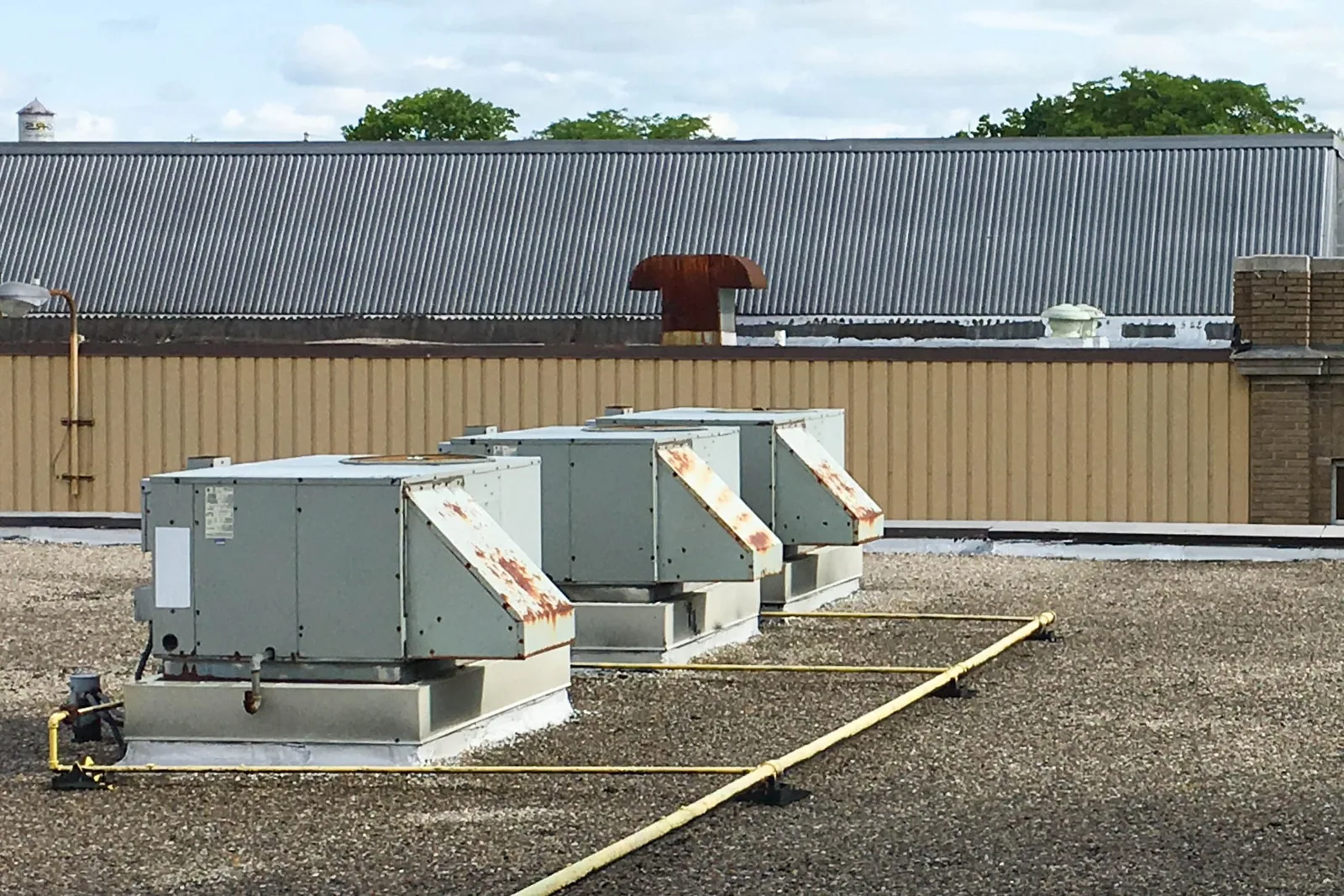
Drains often sit near equipment. Our curb and equipment support work covers reflashing curbs and replacing rotted supports, while the HVAC contractor disconnects and restarts the units. If a wall or parapet is part of the repair, we check the backing behind the wall flashing before reflashing it. Plumbing below the deck, including drain leaders and their connections, stays with the plumber. Each of those trades is listed in the scope so there are no gaps between bids.
Working around public spaces and staff
City and county buildings stay open while we work, so reroofing an occupied building takes planning. We meet with the building manager to go over where the roof will be open, how materials get up and down, where the hoist or crane sits, and how the public and staff are kept clear of the work zone. Then we look at what's under the repair: lobbies, council chambers or courtrooms, records storage, IT closets. Each may need different protection, from plastic sheeting to moving files to scheduling tear-off after hours. Your staff sets the hours and access rules, including any security screening for crews. An inspection visit doesn't approve opening the roof, so we confirm that work plan separately.
If the drain area turns out worse once it's opened, we stop, photograph it, and send a written change order showing how much more insulation, membrane and drain work is needed and whether a plumber or other trade has to come back. If the bigger area sits over a sensitive room, we recheck the protection below first. Temporary membrane goes down at the end of each day so the roof stays watertight until the work is finished.
Records for your building file
Public owners need a clean paper trail. At closeout you get photos of the drain and insulation before and after, a roof plan showing every core and how it was patched, and a list of what was replaced: drain body or insert, sump, flashing, membrane. Anything left for another trade, like a drain line the plumber needs to scope or an HVAC unit waiting on a restart, is listed apart from the roofing. Areas we couldn't reach are noted with what to check next. The next building manager can then see what was actually done at that drain instead of trusting a clean-looking roof.
We inspect public buildings across Plano, including Downtown Plano. Related pages cover school roofing and armory roofing, which share some of the same scheduling and access issues. Each estimate, though, comes from what we find on your roof, not from another building's history or general assumptions about how public facilities run.
Commercial Roofing Questions
What should a roof drain repair estimate include?
Removal of the old flashing and wet insulation, any new drain body or retrofit insert, a new sump, and new membrane flashing under the clamp ring. It should also list work for other trades, like the plumber for pipe below the deck. Sealant around the drain by itself is a temporary patch.
If one drain has failed, are the rest failing too?
Not necessarily. One failed drain is a reason to check the others, especially ones of the same age and type. We price what we confirm and note which drains still need a closer look.
What happens if you find more damage when the roof is open?
We stop and send a written change order with photos showing the added tear-off, insulation and drain work. We recheck the protection below the larger area, and the roof is dried in with temporary membrane each day.
Does a roof inspection mean you can start the repair?
No. The inspection lets us look and make any test cuts you agree to. Opening the roof needs separate approval from building staff, along with their rules on work hours, security and protecting the spaces below.
Request a roof inspection
Have your building manager contact us to schedule a look at the leaking drain. We'll check the drain, flashing and insulation, and send an estimate you can compare line by line.

Request a Roof Assessment in Plano
Tell us about the building, the roof and what you are seeing. Send a request or call 555-555-5555.