
Occupied Building Reroofing in Plano, TX
Home / Commercial Roofing Services / Occupied Building Reroofing
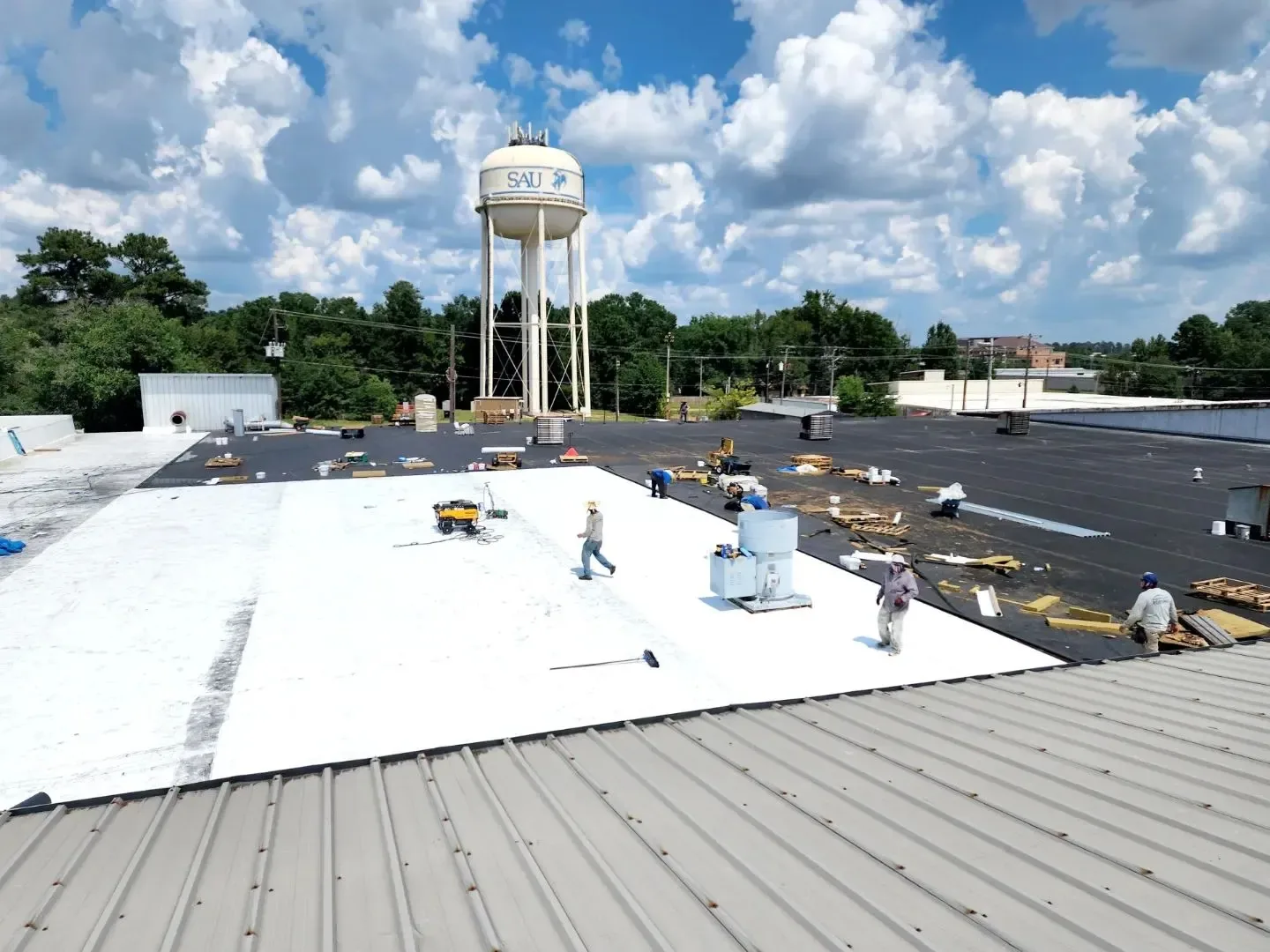
Most commercial buildings in Plano cannot shut down for a reroof. Offices keep working, stores stay open, schools hold classes and clinics see patients. Replacing a roof over people means doing the work in sections, keeping each section watertight every night and planning around what is happening inside. North Texas weather adds pressure: spring storms, summer heat and the occasional hard freeze, like the February 2021 winter storm, all limit when a roof can safely be left open.
We plan occupied reroofs area by area. Before the first crew arrives, you know which section is being worked on each week, what the building below needs to do and how each area will be closed up at the end of the day.
Map the roof work against the building below
The first step is a map. We divide the roof into work areas and note what sits under each one: offices, a server room, a kitchen, a warehouse floor, a lobby. Some spaces can tolerate noise and vibration; others cannot. Some can be worked over during the day; others need nights or weekends.
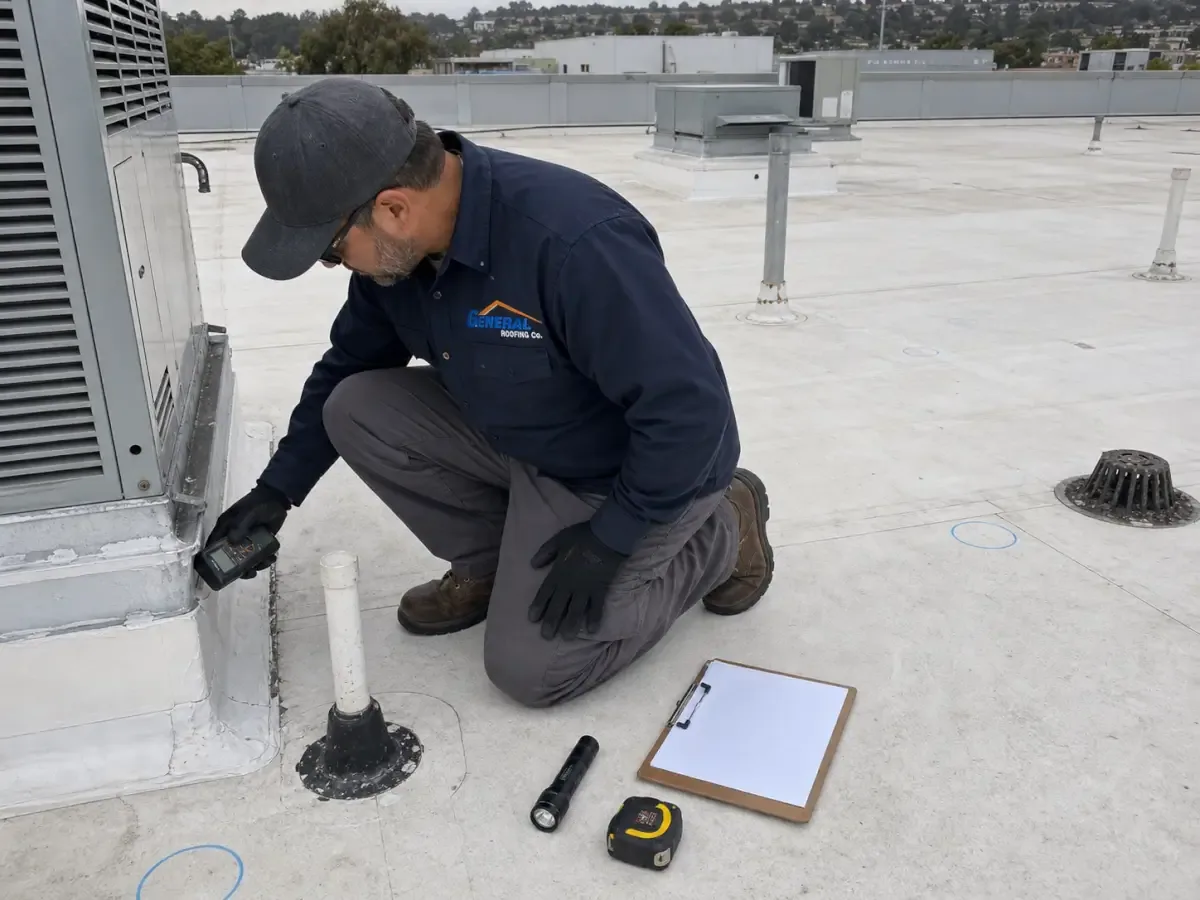
A commercial roof inspection at this stage also checks the condition of each area, because a section with wet insulation or deck damage will take longer and need more care. We share the map with your facility team and adjust the order of work to suit the building, starting with the areas that leak most or are easiest to work over.
We also agree on how occupants will be told about the work. A short notice a few days before each area starts, explaining the noise, the hours and any changes to parking or entrances, heads off most complaints before they start.
Decide how deep the tear-off goes
Tear-off depth is one of the biggest decisions in a reroof. Do we remove only the membrane, or the insulation too? Is there an older roof underneath that has to come off? Each layer removed adds time, noise, debris and exposure to weather.
For roof insulation and cover board, we use test cuts to see what is there and whether it is dry. Dry, sound insulation may be able to stay with a new cover board on top. Wet insulation has to go. We show the removal depth for each area in the plan, so you can see where the crew will be opening the roof down to the deck and where they will not.
Tie each finished area in for the night
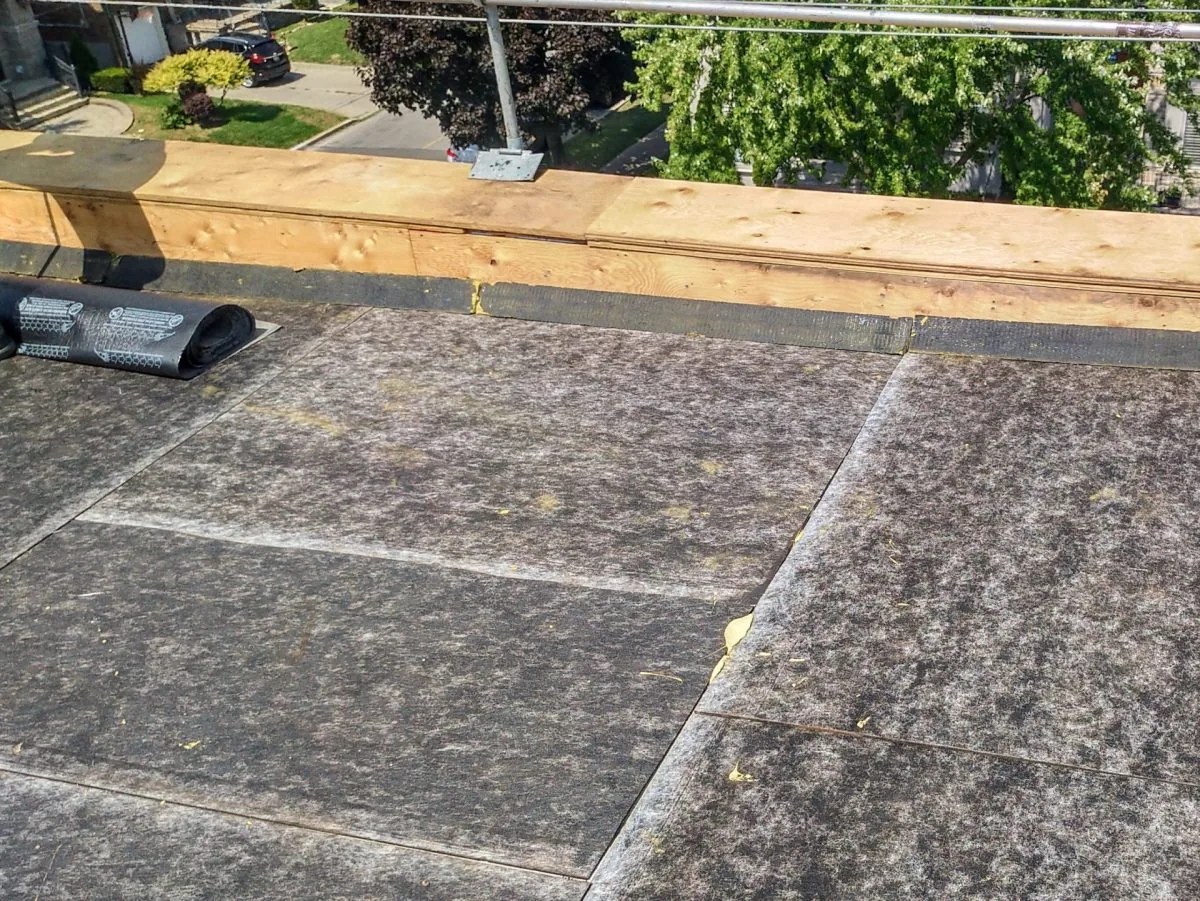
On an occupied building, every area that is opened has to be watertight before the crew leaves. That means planning each day's work so the new membrane can be installed and tied into the old roof by evening. If weather threatens, we open less.
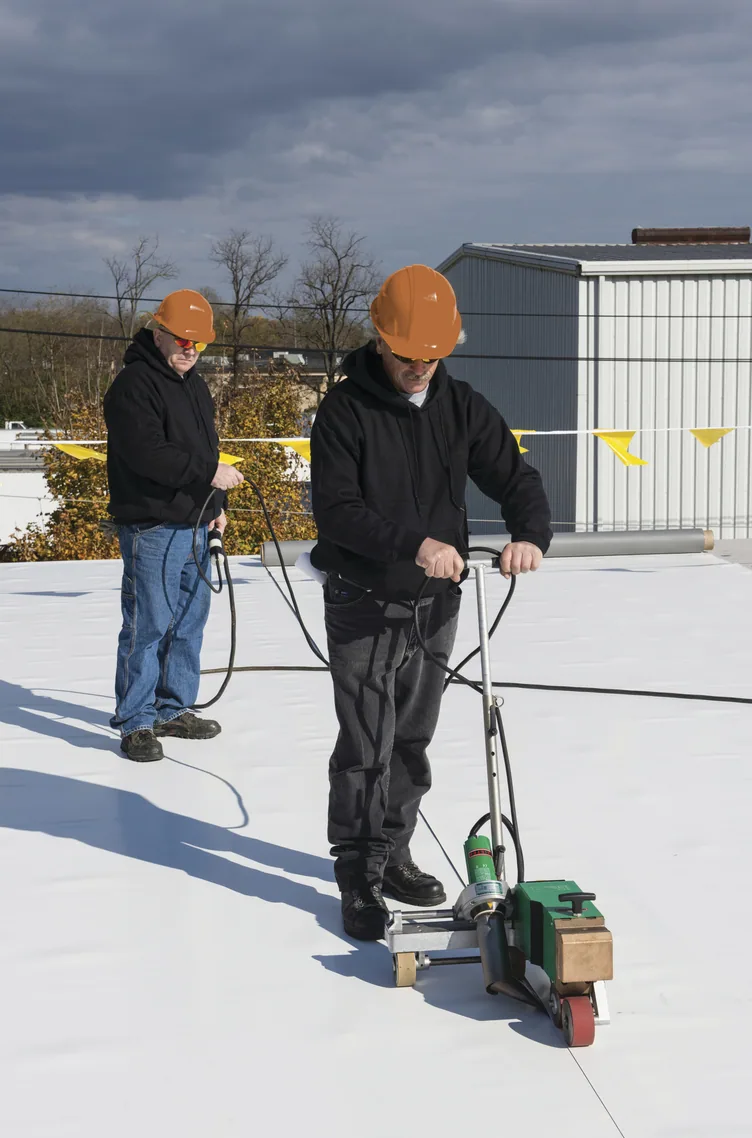
On a TPO roof, the tie-in between new and old roof is usually a temporary cutoff sealed to the existing membrane, then removed when the next area is installed. We plan where those tie-ins go and how they are made. A poor nightly tie-in is one of the most common causes of leaks during a reroof, and it is the first thing we check at the end of each shift.
If a storm moves in faster than forecast, the crew stops removal, seals what is open and secures loose materials before leaving the roof.
Coordinate equipment and other trades
Reroofing usually means working around rooftop equipment. Units may need to be disconnected and lifted so the curbs can be reflashed or raised. Exhaust fans, vents and conduit all need new flashing. Some of that is mechanical or electrical work, done by other contractors.
On a PVC roof, we plan when each unit is lifted, who lifts it, how long it will be down and when we will be ready to reflash. We coordinate with your mechanical contractor so equipment is not off any longer than necessary. That matters for occupied buildings where cooling, ventilation or kitchen exhaust cannot be off for long.
Stick to the site plan, or change it openly
The site plan covers access, crane or lift locations, material staging, debris chutes, parking, work hours and the order of work areas. We agree on it with your facility team before work starts, and the crew follows it.
For rooftop equipment curbs and supports, the site plan also lists which units will be shut down and when. If something has to change, such as a crane date slipping or a tenant requesting a different schedule, we tell you what is changing, why and how it affects the timeline and cost. Changes are agreed in writing, not made on the fly.
Safety is part of the plan too: edge protection, controlled zones around debris chutes and keeping building entrances clear of overhead work.
Report each area as it is finished
As each area is completed, we send a short progress report: the area finished, what was removed, what was installed, any hidden damage found and fixed and photos of each stage. Your facility team knows which parts of the building are under new roof and which are still waiting.
For owners with properties from Downtown Plano to the suburbs, these reports add up to a complete record of the new roof by the end of the project. They are also the starting point for preventive roof maintenance, since a new roof still needs regular checks to keep its warranty in good standing and catch damage from other trades early. We note the warranty paperwork and recommended maintenance schedule in the final report.
Commercial Roofing Questions
How do you plan a reroof around an occupied building?
We map the roof into work areas, note what is underneath each one and schedule the work so sensitive spaces are handled at the right times, with each area watertight every night.
Why does removal depth matter on an occupied building?
Each layer removed adds noise, debris, time and exposure. Test cuts show what can stay and what must go, and the plan shows the depth for each area.
How is another contractor's equipment work handled?
We schedule when each unit is disconnected and lifted, who does it and how long it will be down, and we coordinate with your mechanical contractor to keep downtime short.
What happens if the site plan needs to change?
We tell you what is changing, why and how it affects the schedule and cost. Changes are agreed in writing before they happen.
What makes a progress report useful?
It shows the finished area, what was removed and installed, any hidden damage found and photos. By the end of the project, the reports form a full record of the new roof.
Plan a reroof that keeps your building open
Tell us about the building and what happens inside it. We will plan the work area by area and keep your facility team informed every step of the way.
Related Roofing Work
Request a Roof Assessment in Plano
Tell us about the building, the roof and what you are seeing. Send a request or call 555-555-5555.