
Roof Insulation and Cover Board in Plano, TX
Home / Commercial Roofing Services / Roof Insulation and Cover Board
Insulation and cover board do a lot of quiet work under a commercial roof. They keep heat in during winter and out during summer, give the membrane a solid surface and protect it from foot traffic and hail. When insulation gets wet, it loses much of its value, adds weight and can rot or rust the deck. Long stretches of bad weather, like the February 2021 winter storm across North and Central Texas, can keep crews off roofs for days, and a leak left that long can soak a wide area of insulation.
Whether you are repairing a section, recovering or replacing the whole roof, the insulation decision matters. We find out what is there, whether it is dry and what the new roof needs before we price the work.
Find out what the insulation needs
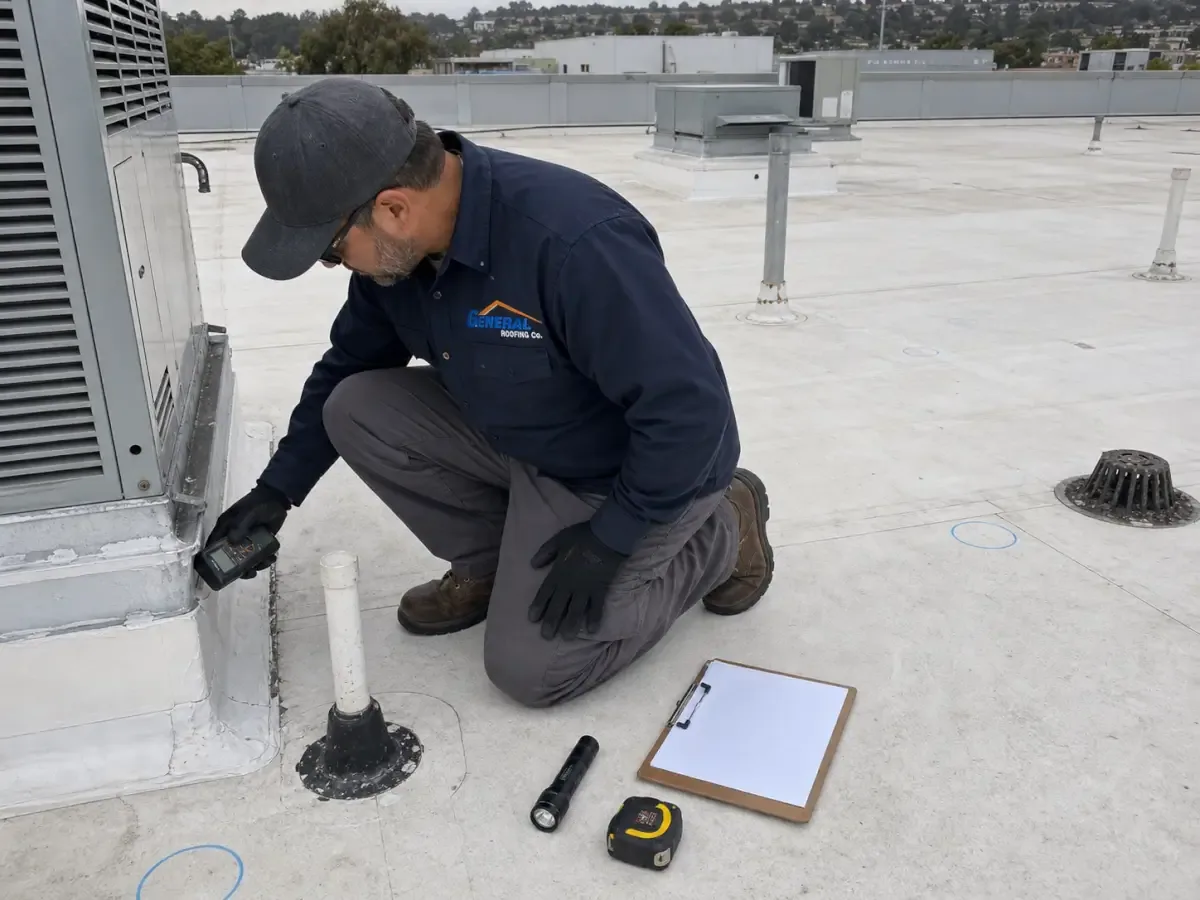
The first question is simple: is the insulation dry? An infrared moisture survey can scan a large roof and show areas that hold heat differently, which often means wet insulation. But infrared is an interpretation, not a direct measurement. Results depend on the roof materials, the weather and the time of day.
That is why we confirm infrared findings with test cuts or cores in a few spots. A core shows exactly what is there and whether it is wet. Together, the scan and the cores give a reliable map of wet and dry areas, which drives the rest of the decision.
Small test openings are patched properly the same day, so they never become leaks of their own.
Know what is under the membrane
Commercial roofs often have more layers than the drawings show. There may be an original built-up roof under a newer single-ply, or two layers of insulation of different types. Some roofs have a cover board; others do not.
A commercial roof inspection with cores tells us each layer, its thickness and its condition. We also check how the layers are attached, whether with fasteners, adhesive or loose-laid. That information decides what can stay, how the new roof will be attached and whether building codes allow another roof layer on top.
Decide what comes off and what stays
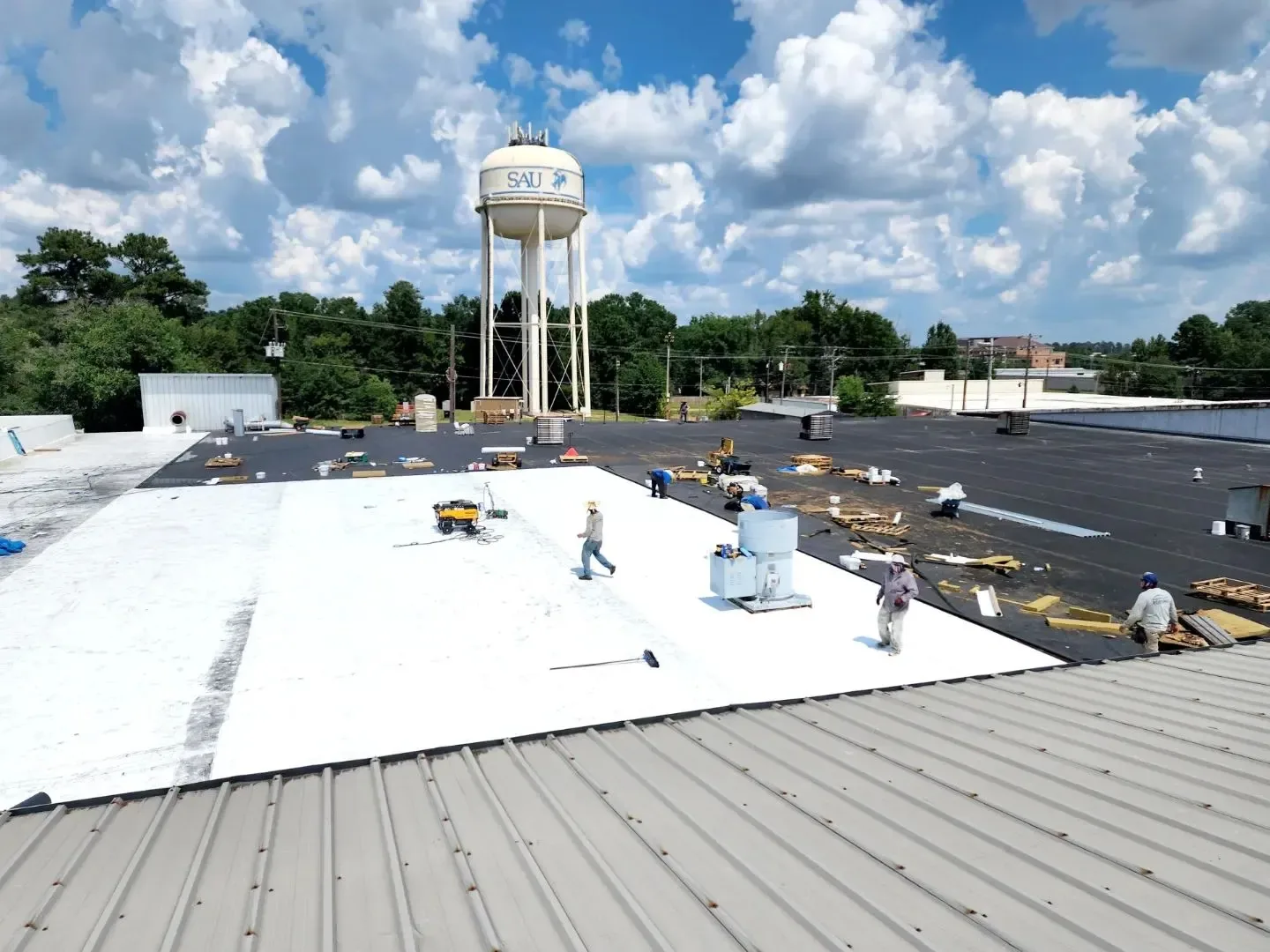
Once we know what is there, we decide what comes off. Wet insulation always goes. Dry, sound insulation may be able to stay, especially in a recover. An old roof that is already at the limit of allowed layers has to come off down to the deck.
For commercial roof replacement, we show both the area and the depth of removal in the proposal. One section might be membrane only, another might go down to the deck because the insulation is soaked. Showing both helps you understand the price and keeps the crew working from the same plan.
We also look at the deck once it is exposed. Rusted metal or soft wood is repaired before new insulation goes down, and any deck work is photographed and priced before it is done.
Choose the new insulation and cover board
The new insulation is chosen for the job: the insulating value the building needs, the slope needed for drainage and compatibility with the new membrane. Cover board goes on top of the insulation to give the membrane a firm, smooth surface and add protection from hail and foot traffic.
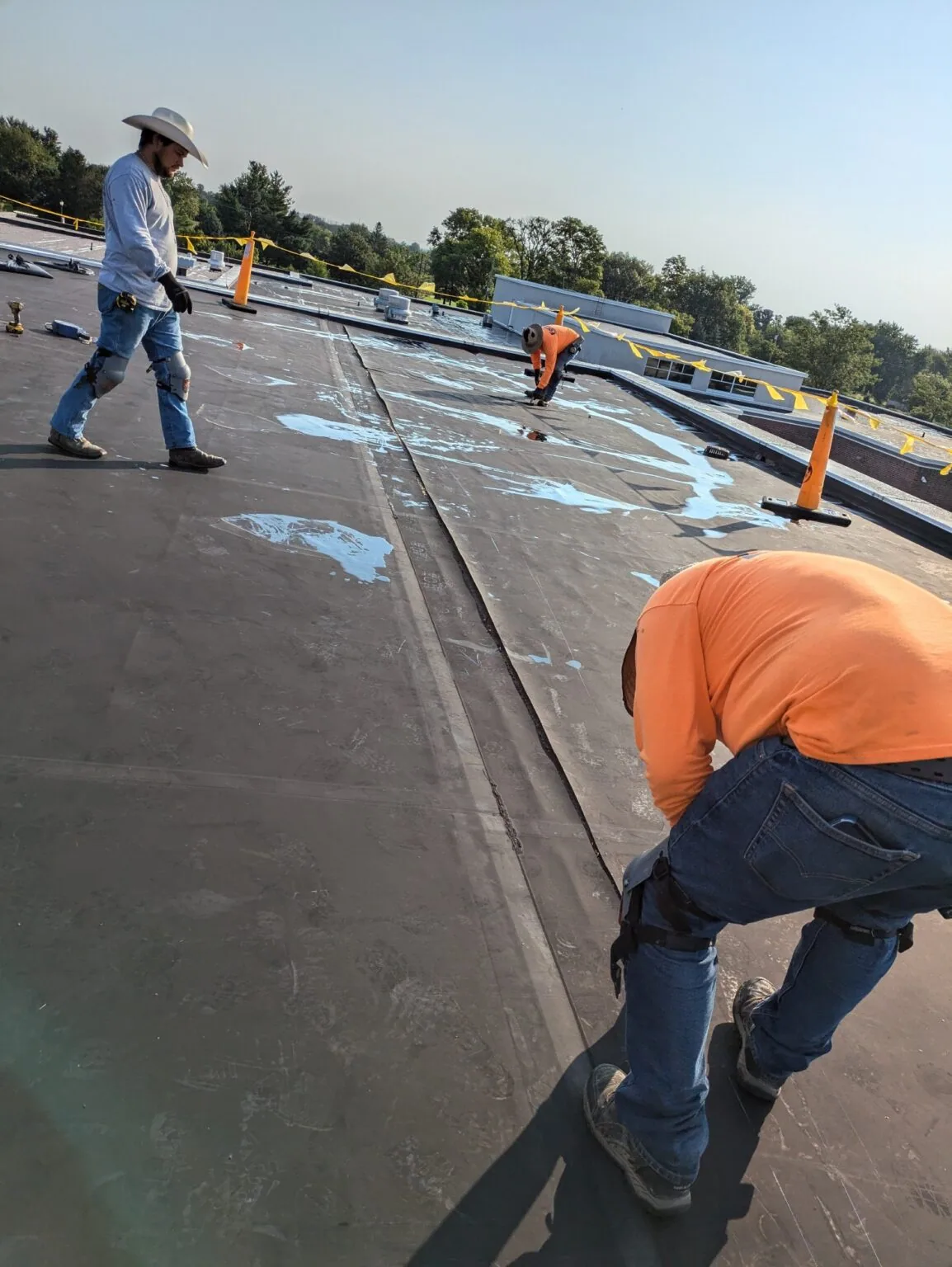
On a TPO roof, the cover board choice affects how the membrane is attached, whether mechanically fastened or fully adhered. A product name alone does not describe the installation. We spell out the insulation type and thickness, the cover board, the attachment method and the fastening pattern, because all of those affect how the roof performs.
Where drainage is poor, tapered insulation can add slope toward the drains, and crickets behind curbs keep water from collecting there.
Match heights at curbs, walls and edges
Adding or changing insulation changes the roof height. That affects every curb, wall, edge and drain. Curbs may end up too short for proper flashing. Edge metal may need new wood blocking to match the new height. Drains may need extensions so water still flows into them.
On a PVC roof, we check each of these details before the new insulation goes down. Raising a curb may need your mechanical contractor. Raising the edge may mean new blocking and new metal. We list each of these items in the scope so nothing gets missed and the new roof drains and flashes properly.
Record what goes under the new roof
Once the new membrane is down, nobody can see the insulation and cover board underneath. That is why we keep a record: the layers removed, the layers kept, the new insulation and cover board installed, the thicknesses, the attachment method and photos of each stage, including any deck repairs.
That record supports the roof warranty and helps anyone who works on the roof later. For owners across Plano, from Downtown Plano to the larger office and industrial parks, it also shows what is under the roof if you ever sell, refinance or need an insurance inspection. We keep a copy on file so the next project starts with the facts.
Commercial Roofing Questions
What should an insulation assessment find before the work is priced?
Whether the insulation is dry, how many layers there are, what type and thickness they are and how they are attached. Infrared scans are confirmed with cores.
Why show both the area and the depth of removal?
Because one section might lose only the membrane while another goes down to the deck. Showing both explains the price and keeps everyone working from the same plan.
Does naming a cover board product describe the whole installation?
No. The insulation type and thickness, the cover board, the attachment method and the fastening pattern all matter.
Which roof details need review when insulation height changes?
Curbs, walls, edges and drains. Curbs may need raising, edges new blocking and drains extensions so the roof still drains and flashes properly.
How are layers that will be covered again recorded?
With a written list of layers removed, kept and installed, their thicknesses and attachment, plus photos of each stage before the membrane goes on.
Get the insulation decision right
Send us the building details and what you know about the current roof. We will find out what is under the membrane, whether it is dry and what the new roof needs.
Related Roofing Work

Request a Roof Assessment in Plano
Tell us about the building, the roof and what you are seeing. Send a request or call 555-555-5555.