
Manufacturing Plant Roofing in Plano, TX
Home / Property Types We Roof / Manufacturing Plant Roofing
At a manufacturing plant, a leak at a wall can come from two very different problems. Sometimes the membrane seam at the base of the wall has simply opened and the wall behind it is fine. Other times the backing behind the flashing has rotted or broken down, and nothing new will stay attached until it's rebuilt. On a plant in Plano, TX, we tell you which one we found and what we couldn't see yet, because the answer changes the price, the crew and how long the area stays open. New membrane can't stand in for failed backing. And sealing a visible joint does nothing about exhaust ducts or process equipment that another contractor has to move first.
Plano is a big city, from the Municipal Center on K Avenue to Collin College's Spring Creek Parkway campus, and its industrial buildings vary widely in age and construction. So we don't assume a roof system from the address or the district. We start with your building, any drawings and past repair records, and a contact who can approve access. Those records help us find the problem wall faster, but the condition we find when we open it is what decides the repair.
Checking the wall flashing and backing
For wall flashing repair at a plant, we check the roof membrane, the base flashing and the wall material behind it at the reported leak. We look at where the flashing ends, whether under counterflashing, a reglet or coping, and whether that top edge is still tight. Plant walls often take heat, vibration and exhaust residue, which can wear out sealants and fasteners faster. If the outside looks fine but we can't tell what's behind it, we say what opening we'd need and why. A photo of a clean exterior wall doesn't prove the backing is sound.
If the backing has failed, the estimate should say who rebuilds it before the new flashing goes on, whether that's our crew, a carpenter or a mason. If the repair touches structure, an engineer should review it. We also spell out what the wall needs to look like when it's ready for us. That way you can see the difference between rebuilding the wall and replacing the membrane in front of it, and a low roofing price doesn't quietly skip the part that actually failed.
Separate observations from cause
Rust, rot or a split seam tells us what's wrong now. It doesn't always tell us when it started or why. A wet spot on the production floor is a good starting point, but water often runs along beams, deck flutes or insulation before it drips, so the leak may be some distance away. We trace it through the parts of the roof we can reach and note which spots we actually checked. We don't assume an entire wall is in the same shape from one opening; where it matters, we look further.
An infrared moisture survey can help us see how far wet insulation has spread from the wall. The scan depends on weather and the roof assembly, and heat from process equipment below can throw off readings in some areas. It can't tell us whether the wall backing is strong enough to hold new flashing. So we use it to choose where to cut cores or open up, and the price includes patching those spots. The goal is to replace what's actually wet or failed, not to tear off everything just in case.
What the repair price should cover
A complete roof repair at a plant wall includes enough removal to reach solid material, the membrane that stays and the new flashing tied into it. Heat-welded seams are right for TPO and PVC; modified bitumen and built-up roofs need a flashing made for those systems. The estimate should cover both ends of the flashing: where it meets the roof and where it ends on the wall. A coating price doesn't rebuild backing or add a missing termination. When bids describe different work, compare the work, not just the totals.
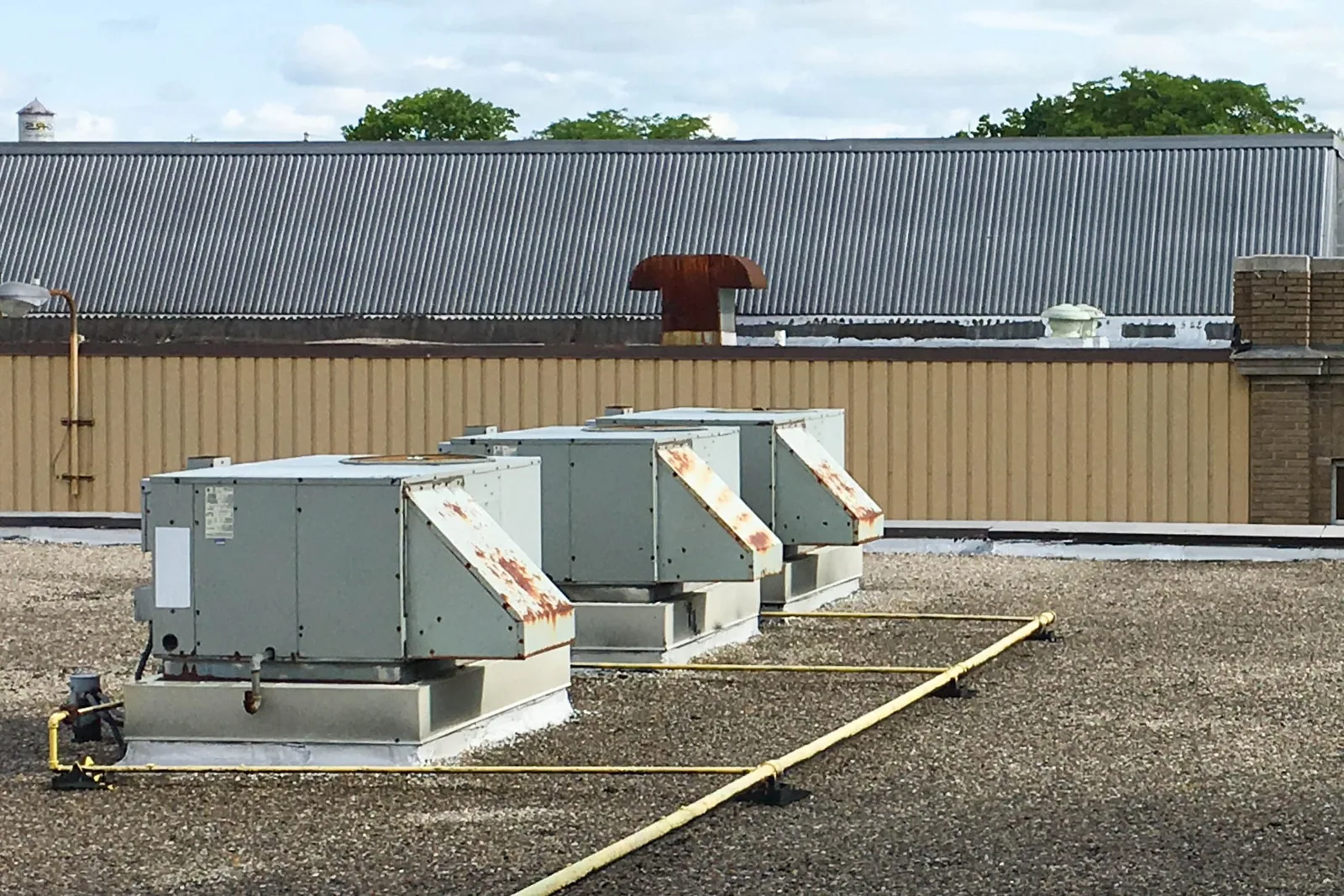
Manufacturing roofs often carry exhaust fans, makeup air units, dust collectors and process piping on curbs and supports. If any of it is in the way of the repair, the contractor who services that equipment needs to plan the shutdown, disconnect and move. An engineer reviews any change to the supports. We work out the timing with them before we start. If a roof drain is involved, we handle the roof side and a plumber handles the piping below. All of that is listed separately so it's clear what our price includes and what it doesn't.
Working around production
Before we open a roof over a production area, we plan the occupied-building roof work with your plant or facility manager. We go over the size of the opening, how material gets up and down, and what's underneath: production lines, finished goods, electrical gear, clean areas. Your team decides whether equipment needs to be covered, whether a line needs to stop and whether some work should happen on a weekend or off shift. An inspection visit doesn't set any of that up. Those decisions follow your production plan, not a schedule we assume.
If we open the wall and find more damaged backing than expected, we stop, show you, and tell you how much more needs to be removed and who rebuilds it. We review protection with your team before making the opening bigger. While a carpenter, mason or equipment contractor finishes their part, we install a temporary seal so the building stays dry. The change order lists the added wall and roof work, the extra protection and the temporary seal together. That way you aren't approving more membrane without knowing what's happening below it.
Closeout records
Your closeout package should list what backing was rebuilt, how the new flashing was attached and where it ties into the existing membrane. It should include photos of the damage before it was closed up, where test openings were patched, and any equipment, wall or plumbing work still outstanding, listed apart from the finished roofing. A clean-looking wall doesn't mean every contractor's work is complete. Any spot we couldn't fully check should be noted by location, so your maintenance team knows where to look next.
We inspect manufacturing roofs along East Plano Parkway and the rest of Plano; send the building address and a contact who can grant roof access. A distribution center roof edge repair or a warehouse roof drain repair is based on what we found at that building. Neither one tells us anything about your plant's walls. Your repair plan stays tied to your own building's findings and your production schedule.
Commercial Roofing Questions
What should a wall flashing repair include?
Removal of the failed flashing, any rebuilt backing, the new base flashing tied into the roof and a proper termination at the top. The estimate should say who rebuilds the backing. A membrane-only price usually leaves out the part that failed.
Does an infrared scan prove the wall backing is good?
No. A scan points to where wet insulation may be, but not whether the backing will hold fasteners. Checking that usually means opening the wall at the leak.
What if more damage turns up during the repair?
We stop, take photos and walk you through the added work and cost. Protection over production areas is reviewed with your team before the opening grows. A temporary seal keeps things dry while other trades finish.
What records should we keep after the repair?
Keep photos of the damage, a list of what was rebuilt and replaced, and where test openings were patched. Any equipment or plumbing work still pending should be listed separately from the finished roofing.
Schedule a plant roof inspection
Have your facility manager set up a visit to the leaking wall. We'll check the flashing and backing and plan the work around production.

Request a Roof Assessment in Plano
Tell us about the building, the roof and what you are seeing. Send a request or call 555-555-5555.