
Commercial Roof Repair in McKinney
Home / Service Areas / McKinney
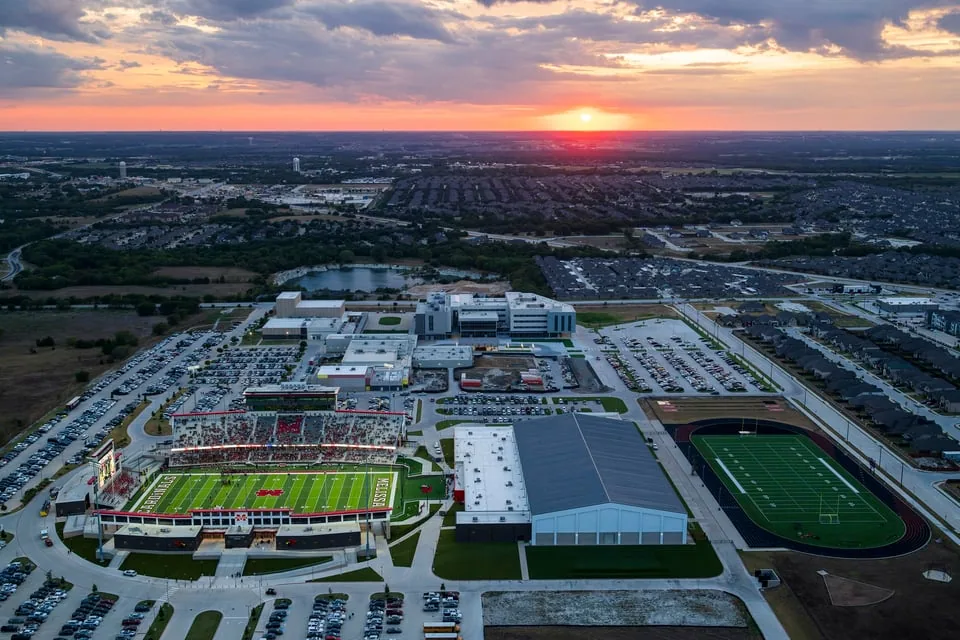
McKinney has everything from historic downtown storefronts to new office parks and industrial buildings along the US 75 and SH 121 corridors. One thing we hear from owners across all of them is frustration with roof repair prices that grow after the job starts. Sometimes that is unavoidable, because you cannot see wet insulation or rotted wood until the roof is opened. But it should never be a surprise. Every change should be tied to something we found, shown in photos and approved before the work continues.
We also serve Allen and Melissa. On every job, we tell you what we know, what we do not know yet and how any change will be handled.
Tie every change to a finding
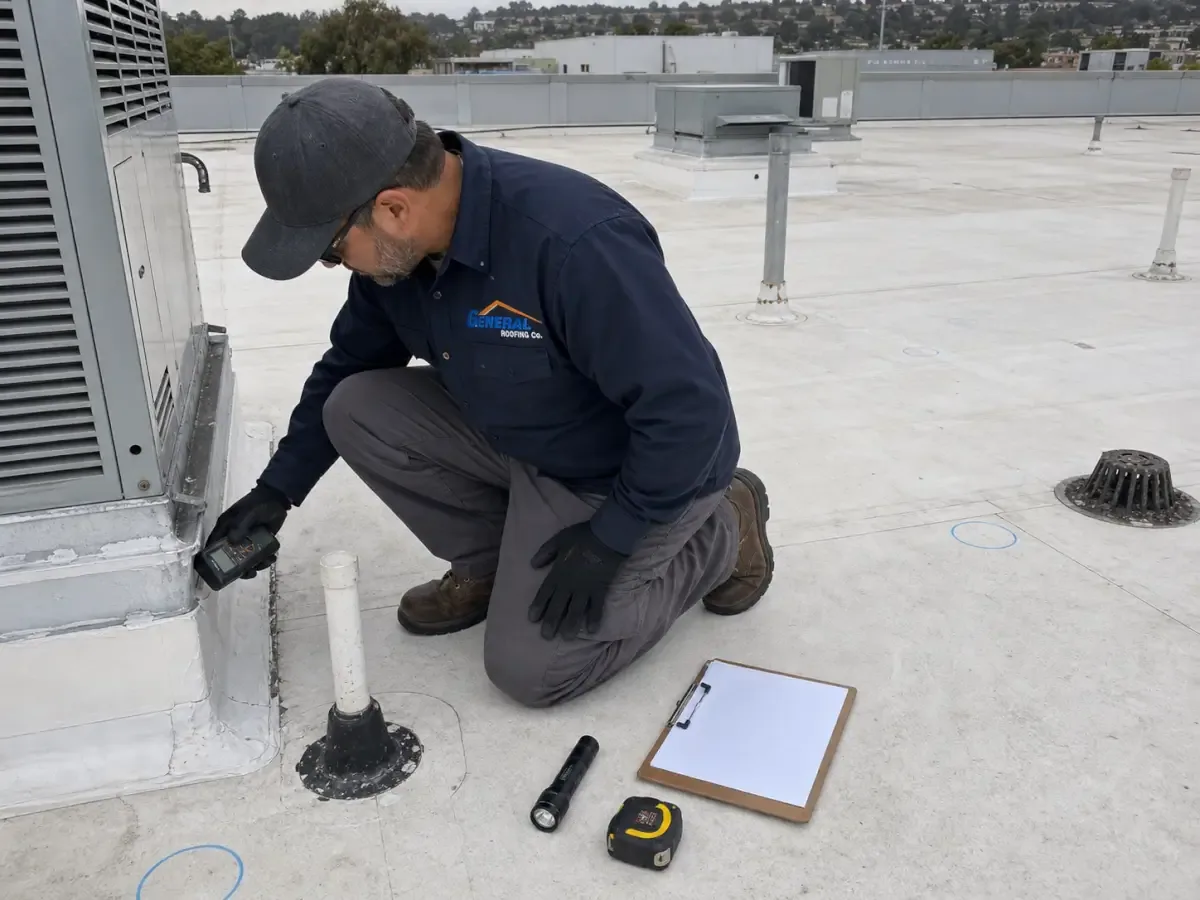
A commercial roof inspection sets the starting scope. We look at the leak area and the roof around it, and we cut test openings where needed to check insulation. The proposal lists what we inspected, what we found and what we could not see.
If we open the roof during the repair and find something new, such as wet insulation spreading further than expected or rotted wood blocking at an edge, we stop. We photograph it, mark its location and explain what needs to change. Then we give you a revised price for that change and wait for your approval.
This process protects you. It keeps the repair honest, gives you photos for your records and makes sure the extra money is going toward real problems.
We also keep the original scope and the change separate on the invoice, so your accounting team can see what was planned and what was added.
Know what roof you are working on
Older McKinney buildings often have several generations of roofing: an original built-up roof, a newer membrane on top of it and patches from various contractors. Before we repair anything, we figure out what is actually there at the repair spot.
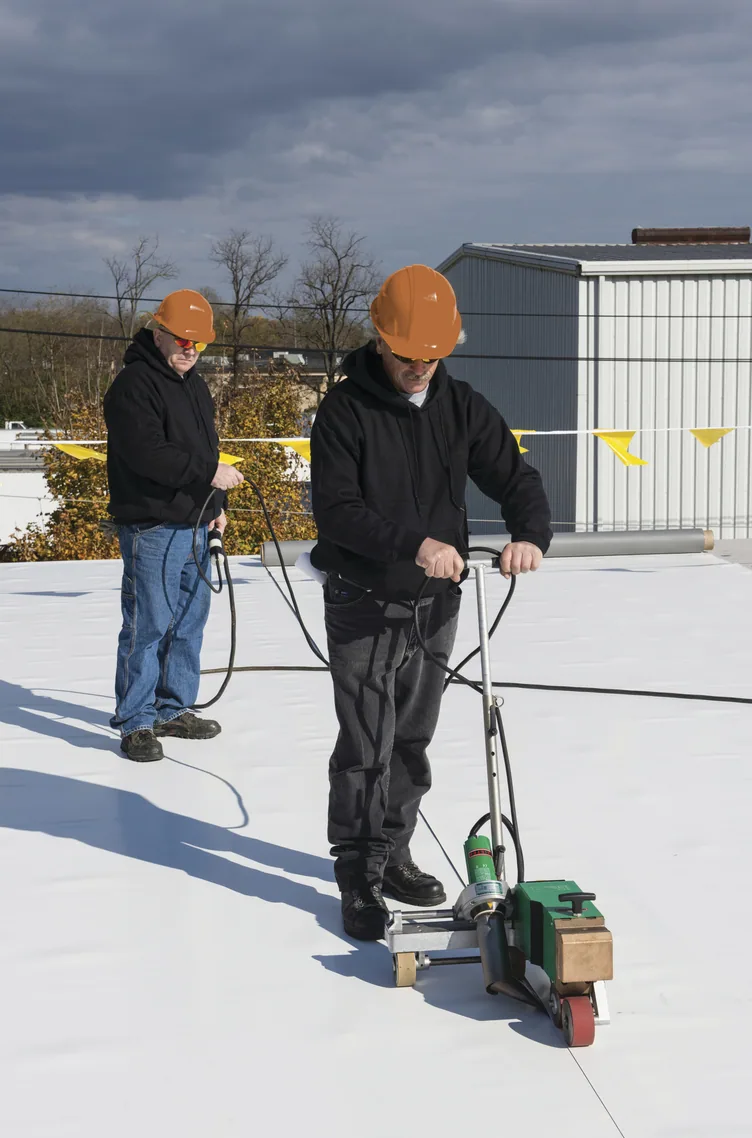
On a PVC roof, we confirm the membrane, clean it and test-weld a small area. If we find a patch made from a different material, such as a TPO patch or an asphalt-based mastic, we cut it out before welding new PVC. PVC does not bond to those materials, and a repair that relies on that bond will fail.
If the building records say one thing and the roof says another, we go with the roof. We note the difference in our report so your files are corrected for next time.
We also check how many layers are on the roof. Building codes limit how many roof layers can stay in place, and that affects whether a future recover is even possible.
Who approves what, and when
Some repairs need decisions from more than one person. A rooftop unit may need to be moved by the mechanical contractor. A tenant may need to approve after-hours access. Ownership may need to sign off on a scope change above a certain dollar amount.
On an office building, we ask your property manager up front who approves what. Who can okay a change order? Who coordinates with tenants? Who handles the mechanical contractor? Knowing this before work starts keeps the crew from sitting idle while someone hunts for a signature.
When a decision is pending, we tell the right person what is needed and by when, and we keep the roof protected while we wait. The proposal also lists any work that depends on someone else, such as raising a curb before we can reflash it.
If an approval stalls, we let you know how long the temporary protection can safely hold.
Price each option on its own
When the inspection points to more than one path, we price each option separately. A local repair fixes the problem areas we found. A larger repair might address all the aging flashing on the roof. A restoration or replacement covers the whole roof.
For roof capital planning, we list each option's scope, price, assumptions and open questions side by side. If one option assumes dry insulation that still needs confirming, we say so. If one option requires another trade's work first, that is listed too.
This lets your finance team compare real numbers. It also prevents the common trap of choosing the cheapest repair now and then paying for the same work again in two years.
We also talk about timing. If the building is being sold or refinanced soon, a solid repair and a clear report may serve you better than a large project. If you plan to own it for years, the math may favor doing more now.
Report what was delivered
When the job is done, you get a report that covers the original scope, any changes and why they were made, photos of hidden damage and the finished repair, and any open items.
For finance teams, we keep the original price and change orders separate, each tied to its finding. That makes it easy to explain the final cost to ownership or a lender.
For property managers, the report shows exactly where work was done. If a tenant reports a new leak later, you can see right away whether it is in a repaired area or somewhere new.
We also list areas of the roof we noticed but did not touch, such as aging seams, a drain that holds water or a parapet with cracked coping. Those notes help with next year's budget.
Temporary protection still in place, if any, is listed with the decision it is waiting on.
Commercial Roofing Questions
What should back up a change in the repair scope?
Photos of the condition we found, its location and a clear explanation of what needs to change. You approve the revised price before work continues.
How do you identify the membrane at a repair that has been patched before?
We look at the actual material at the repair spot, test-weld or test-bond a small area and remove any incompatible patches before installing new material.
Who should hear about a pending decision?
Whoever your property manager names as the approver for that type of decision. We confirm this before work starts and keep the roof protected while a decision is pending.
How can I compare local repairs with a bigger project?
We price each option separately with its scope, assumptions and open questions listed side by side, so your finance team can compare them fairly.
What helps my finance team review the finished job?
A report that keeps the original price and each change order separate, tied to photos and findings, plus a list of open items.
Get a McKinney repair price you can trust
Describe the building and what is going wrong on the roof. We will inspect it, explain what we found and handle any changes openly, with photos and your approval.
Request a Roof Assessment in Plano
Tell us about the building, the roof and what you are seeing. Send a request or call 555-555-5555.