
Commercial Roof Repair in Collin Creek
Home / Service Areas / Collin Creek
Most repair calls we get around Collin Creek involve a roof that has been touched since anyone last wrote it down. A new rooftop unit went in, a vent was moved, or a previous contractor patched a seam and never mentioned it. The old roof report still says one thing; the roof now says another. Before we price a repair, we look at the actual spot, see what was done there and what it ties into, and tell you plainly which parts we know and which we still need to open up.
We work across the Collin Creek area along US 75 and nearby, including Downtown Plano and the Willow Bend area. Tell us the building, the roof section and what you are seeing inside or on top. We will meet you on site, ask about access, and explain which findings support a permanent fix and which call for a closer look.
Start with what changed on the roof
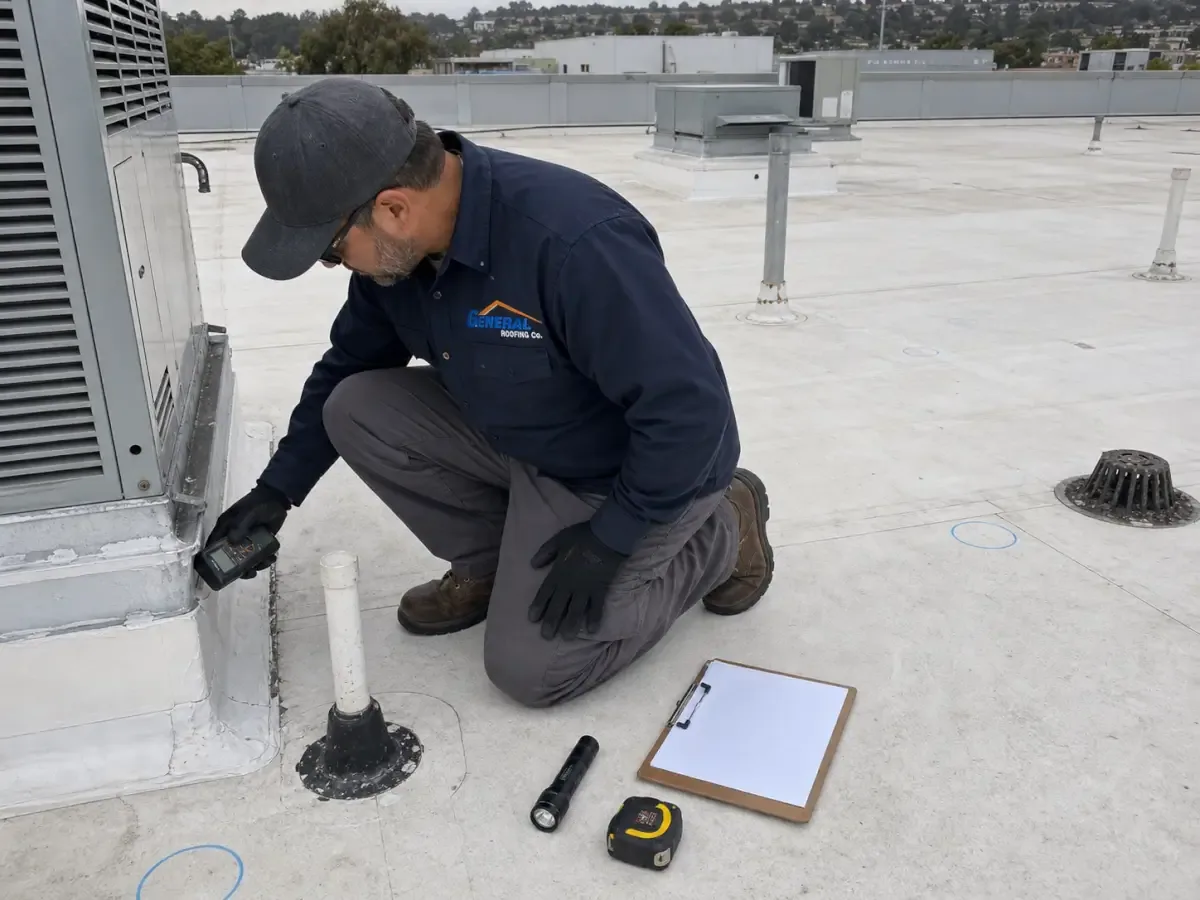
We walk to the area you have asked about and look at the detail that changed. That might be a new pipe penetration, a curb that was reflashed, or a patch laid over a seam. Older paperwork is useful because it hints at what the roof was, but it does not tell us what is under that patch today. So we check the membrane around it, the seams that run into it and the flashing it relies on.
A commercial roof inspection at this stage should tell you two things: what we were able to reach and what we confirmed. If a thick patch hides the edge of the original membrane, we say so and recommend a small test cut or core rather than guess. A leak inside the building and a visible split on the roof are not always the same problem, and we keep them separate.
We also stay honest about scope. One inspected curb does not tell us the condition of the whole roof. If you are weighing a bigger project, that needs its own survey, and we will price the local fix and the larger option separately so you can compare them fairly.
Sort out equipment work first
Sometimes the roofer cannot finish until another trade does its part. A rooftop unit may need to be lifted, a gas line rerouted or a curb raised before the membrane and flashing can be installed properly. When that is the case, our proposal says so up front, names the work that has to happen first and shows what we do once it is done.
On a flex industrial building, that usually means a short conversation with the property manager about who owns the equipment and who can approve changes to it. We ask about roof access, where we can stage materials and any tenant rules we need to follow. Settling those details early keeps a crew from showing up to a curb nobody has cleared to touch.
If you are comparing two approaches, they may need different prep. A simple reflash might work with the existing curb, while a better long-term repair may require the mechanical contractor to raise it first. We list those steps beside each price so your finance team is not comparing a bare roofing number against a complete repair.
Tie into the membrane that is really there
A repair is only as good as the material it ties into. We confirm what membrane is actually on the roof at the repair, then check the seams and flashing around it. A surface can look sound while a seam a few feet away has already opened. If we find that, we tell you and include it, because a new detail tied into a failed seam will leak again.
For a TPO roof, we probe the welds, clean and prep the existing sheet and heat-weld new material to it. If we discover the roof is something other than what the file said, such as an older PVC or a modified bitumen patch, we change the repair method to match rather than force the original plan onto the wrong material.
Where wet insulation or soft deck is possible, we cut in and check. Wet board under the repair gets removed and replaced before we close it up. Only after those repairs are done do we clean and prime the surrounding membrane and install the new flashing. You can follow each step from what we found to what we built.
Keep the building dry between visits
Some repairs take more than one visit. We may open a detail to inspect it and then wait on the mechanical contractor, or wait on a material that has to be ordered. In between, we install temporary protection so the building stays dry, and we tell you exactly what is temporary and what is still left to finish.
Before we start, we agree with your site contact on work hours, how materials get to the roof and where debris goes down. If there is a gap between visits, we confirm how the area will be protected and who we call if something changes overnight or during a storm. That way nobody mistakes a tarped curb for a completed repair.
If we open the roof and find rotted wood nailers, wet insulation or rusted deck, we photograph it before anything else happens. We explain what needs to be removed or rebuilt and what that does to the price, and we wait for your approval before closing it up. Those photos stay with the job file so anyone reviewing the roof later can see what was hidden under the finished work.
What you get when the job is done
When the repair is finished, you get a short, clear report: where we worked, what we found when we opened it, what the other trade changed and what we installed. Hidden repairs, like replaced insulation or new wood blocking, are photographed before they are covered. If the scope grew, the report shows the condition that caused it.
That record is useful for roof capital planning as well. It tells you which areas are now in good shape and which questions are still open elsewhere on the roof. A sound repair at one curb is good news, but it does not answer what the rest of the field looks like; that needs its own look before you budget for it.
We send the same report to the property manager and to whoever handles the budget, so everyone is working from the same facts. If temporary protection is still in place somewhere, the report says where and what decision is pending.
On altered details around Collin Creek, we photograph the old patch edge and the current component before removing anything. Comparing the two often tells us whether a patch failed on its own or whether something bigger is going on.
Commercial Roofing Questions
Why inspect a patched or altered detail on its own?
Because the roof may have changed since the last report. A later patch, a new penetration or a reflashed curb can hide what is underneath, and the right repair depends on the membrane and flashing that are actually there today.
Who handles equipment that has to move before the roof is repaired?
Usually your mechanical contractor or the equipment owner. We tell you in the proposal what needs to happen first and ask your property manager who can approve it, so the roof work can follow without delays.
How should I compare two repair prices?
Look at what each one includes. One may cover only the flashing while another includes raising a curb, replacing wet insulation or extra inspection. We list those items beside each number so you are comparing like for like.
What happens if opening the roof changes the scope?
We stop, photograph what we found and explain what needs to be removed or rebuilt and how that affects the price. The area stays protected while you decide, and nothing gets covered up before you have seen it.
What information will help with future roof decisions?
Our completion report shows where we worked, the hidden repairs we made and anything still open. It also notes other areas that need their own inspection before you plan a larger project.
Get the Collin Creek roof detail checked
Tell us the building and the patch, curb or leak you are concerned about. We will inspect what is there now, sort out any equipment work that has to come first and give you a clear repair price.
Related Roofing Work
Request a Roof Assessment in Plano
Tell us about the building, the roof and what you are seeing. Send a request or call 555-555-5555.