
Flex Industrial Roofing in Plano, TX
Home / Property Types We Roof / Flex Industrial Roofing
Flex buildings in Plano, TX usually put office space up front and warehouse or light-industrial space in back, and the roof often runs into a taller wall or parapet along the storefront or where the two sections meet. That wall flashing is one of the most common leak sources we find. Flashing is only as good as what it's fastened to. If the plywood, gypsum sheathing or masonry behind it has gone soft or crumbly, new flashing won't hold. When we find that, the backing has to be rebuilt before new membrane goes on, and the estimate should say who does that work and what it costs. Caulking the top edge of a failed flashing won't fix rotten backing behind it.
Plano stretches from the Municipal Center on K Avenue to Collin College's Spring Creek Parkway campus, and flex buildings around the city vary in age and construction, so we don't assume anything from the building type. Send us the address, any drawings, notes on earlier repairs and a contact who can grant roof access. Old records help us know where to look, but what we find when we open the wall decides the repair. With several tenants under one roof, we also need to know whose space sits below the work area, so each tenant can be told in advance.
Inspecting the wall flashing
For wall and penetration flashing repair, we start where the leak was reported and follow the flashing up the wall to where it ends, whether that's under counterflashing, a termination bar or coping. We check whether the membrane has pulled away from the wall, whether the termination bar is loose and whether the sealant has dried out and cracked. Then we press on the backing. A stain on the office ceiling helps, but water often runs along the wall or deck first, so the stain may not sit right under the leak. If we can't judge the backing without opening the wall, we tell you where we'd cut and what it costs to close it back up.
When the backing is bad, someone has to rebuild it before the new flashing goes on. Sometimes that's our crew; sometimes it's a carpenter or mason, and the estimate should say which. If the wall itself needs structural repair, an engineer should look at it. We photograph the damaged backing before it's hidden behind new material, so there's a record of why it was replaced. One bad section of wall doesn't mean the whole parapet needs the same repair, but we check other spots where the answer would change the scope.
Using moisture surveys wisely
An infrared moisture survey can map how far wet insulation has spread out from a leaking wall, which helps us decide where to cut cores and how much roof area is involved. The results depend on the weather during the scan and on how the roof is built, and no scan can tell whether wall backing is strong enough to hold new flashing. So we use it to choose test spots, not as the final word. Where the answer matters for the repair, we cut a core or open the wall, and the estimate includes patching those openings. That keeps the guesswork out of the removal quantities.
We keep what we found separate from what we're guessing about. A flashing that has pulled loose clearly needs repair, but that doesn't tell us when it failed or exactly why. It might be age, movement between the wall and the roof, poor original work or a mix of all three. What matters for the estimate is how much material is bad and where it is. If some areas can only be judged after more is opened, we say so and price them as a separate line, rather than pretending we can see behind finished walls. You know up front which numbers are firm and which depend on what we find.
What a complete flashing repair includes
A full roof repair at a wall lists the membrane being removed, what stays, how the new base flashing ties into the roof and how it's finished at the top. On TPO or PVC, the new flashing is heat-welded to the field membrane; on modified bitumen or built-up roofs, it's torched or set in an adhesive made for that system. At the top, it needs a termination bar, counterflashing or coping that actually sheds water. Rebuilt backing goes on the list too. A coating job may cost less, but it doesn't rebuild backing or add a proper top termination, so it's a different repair, not the same one at a lower price.
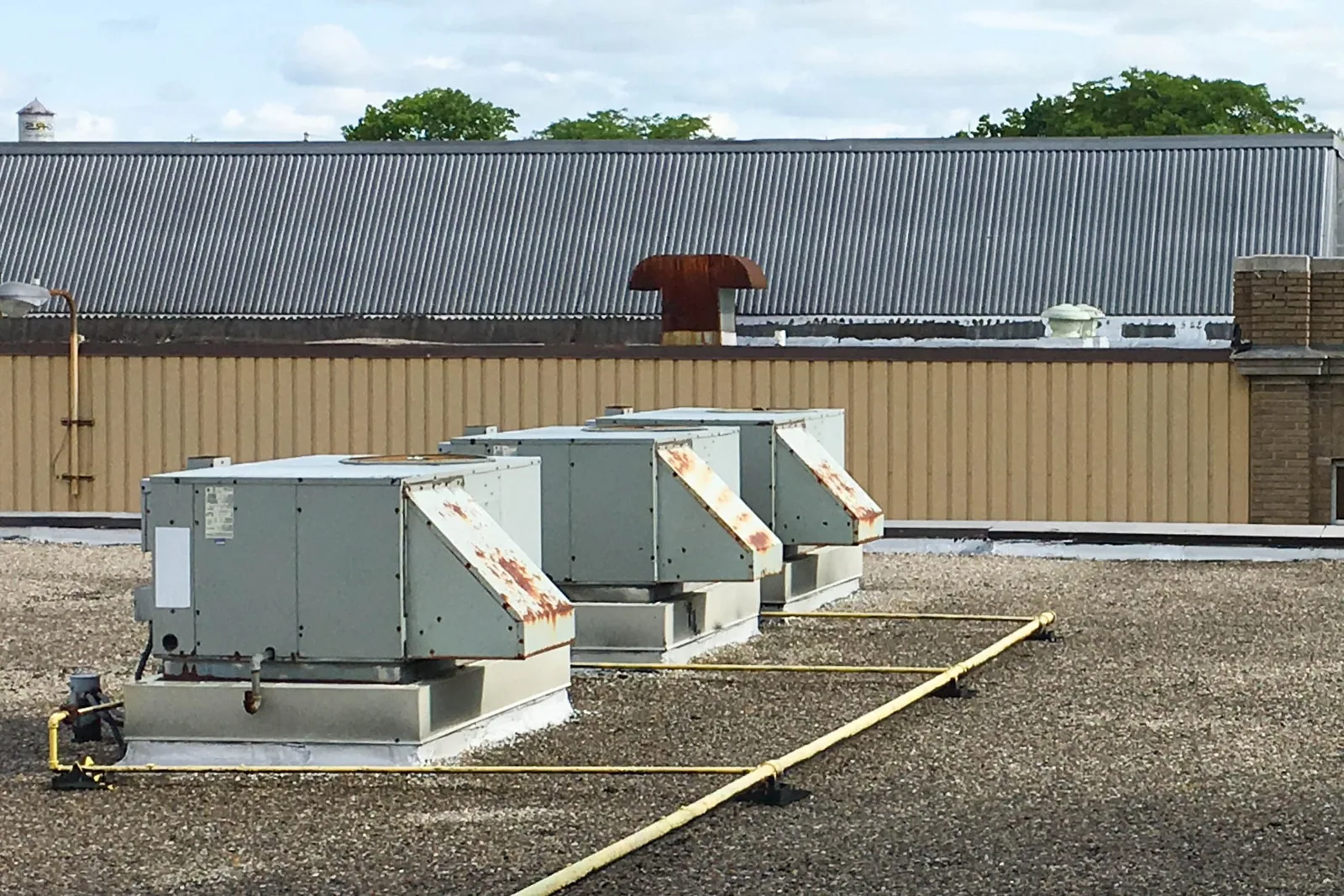
Flex roofs also tend to carry a lot of tenant equipment: rooftop units, exhaust fans and their curbs and supports. If a unit near the wall is in the way, the tenant's HVAC contractor may need to disconnect or move it, and we schedule around them. Changes to supports may need an engineer's review. If a drain or scupper is part of the repair, we handle the roof side while a plumber deals with any pipe below. We list that outside work separately, so finishing the flashing doesn't get mistaken for finishing the HVAC or plumbing work, even when the equipment sits right next to it.
Planning around tenants
For roof work on occupied buildings like a flex center, we walk the work area with the property manager first. We go over which tenants are underneath, whether it's office or warehouse space, and what's stored or running below. Each tenant may need different notice. An office tenant may care most about noise and odors during business hours, while a warehouse tenant may need racks or inventory under the work area covered or moved. An inspection visit doesn't mean tenants are ready for tear-off. That's a separate step, planned with your team and based on this building rather than a generic schedule.
If we open the wall and the bad backing runs farther than expected, we stop and show you what we found before going further. We tell you how much more backing and membrane needs to come out, who will rebuild it and what it adds to the cost. Tenants under the larger area may need new notice and protection. If a carpenter, mason or HVAC contractor still has work to finish, we install a temporary seal so the building stays dry. The change order lists the added area, the outside work and the protection together, so you can approve the change with all the facts in front of you.
Keeping the repair record
When the job is done, you should have photos of the damaged backing before it was replaced, a note of what was rebuilt, how the new flashing ends at the top and where test openings were closed. Outstanding wall, HVAC or plumbing work should be listed separately from finished roofing. If there were spots we couldn't check, they should be noted by location. That way the next property manager knows what was fixed at this wall without assuming the rest of the parapet, or other walls on the building, were inspected too.
We inspect flex industrial roofs along East Plano Parkway and across Plano; just send the address and a contact for roof access. A self-storage roof edge repair or an auto dealership roof wall repair is priced on its own findings, and yours will be too. Your flex building's repair should rest on what we find at this wall, not on another building's problems or its tenants.
Commercial Roofing Questions
What should a wall flashing repair estimate include?
Removal of the old flashing, any rebuilt wall backing, the new base flashing tied into the roof and the top termination or counterflashing. It should also say who rebuilds the backing. Without those items, a low bid may leave the real problem in place.
Can an infrared scan tell if the wall backing is still good?
No. A scan helps map where wet insulation has spread, but it can't judge whether the backing will hold fasteners. Where that matters, we open the wall or cut a core to check.
How do you handle tenants during roof work?
We review the work area with your property manager, figure out which tenants are below, and plan notice, protection and timing for each space. Office and warehouse tenants often need different arrangements.
What if the damaged backing goes farther than expected?
We stop, take photos and tell you how much more needs to come out and what it costs. Tenants below the larger area get notice and protection. A temporary seal keeps the building dry while other trades finish.
Schedule a flex building roof inspection
Have your property manager set up a visit to the leaking wall. We'll check the flashing and backing and give you an itemized estimate.

Request a Roof Assessment in Plano
Tell us about the building, the roof and what you are seeing. Send a request or call 555-555-5555.