
Self Storage Roofing in Plano, TX
Home / Property Types We Roof / Self Storage Roofing
Self-storage buildings are long and low, and their edges take a beating. Gutters fill and overflow, edge metal gets bent by trucks and ladders, and water that gets behind the drip edge soaks the wood nailer it's screwed to. Once that nailer rots, a new piece of metal won't stay put. Tenants usually notice first: a water spot on a stored couch, a musty unit, a complaint at the office. On a Plano, TX storage property, the repair price depends on what's under the edge. If the nailer is sound, it's a metal and membrane job. If it's rotted, the nailer has to come out and be replaced first. A good estimate lists the tear-off, the new nailer, the new edge and gutter, the membrane or panel tie-in, and who does each piece, so you can compare bids that price the same work.
Plano Municipal Center on K Avenue and Collin College's Plano Campus on Spring Creek Parkway are well-known landmarks; we name them for orientation, not as projects. For your property, we start with the address, any roof records or past repair invoices, and the manager who handles gate access and tenant notices. Which units are rented and what's inside them is something your office tells us. We don't guess.
Checking edges and gutters
Our edge metal and gutter inspection walks the full length of each building, since storage roofs often have hundreds of feet of edge. We look for loose or bent drip edge, missing fasteners, open joints between metal sections, gutters pulling off their hangers, clogged downspouts, and membrane or panel laps that have opened at the perimeter. We press on the edge to feel for soft wood. A fresh coat of paint can hide a rotten nailer, so we don't go by looks. Where the condition under the metal decides the repair, we'll pull a short section or make a small cut, tell you where, and close it up the same day.
If the nailer is rotted, the estimate adds new treated wood fastened to the framing before new metal goes on. If the framing or purlins behind it are damaged, we bring in an engineer before changing anything structural. We photograph what we find so you have a record after it's closed up. And we keep pricing tied to what we checked. One bad stretch of edge on Building C doesn't mean Building A is the same, so we look rather than assume.
What a moisture scan adds
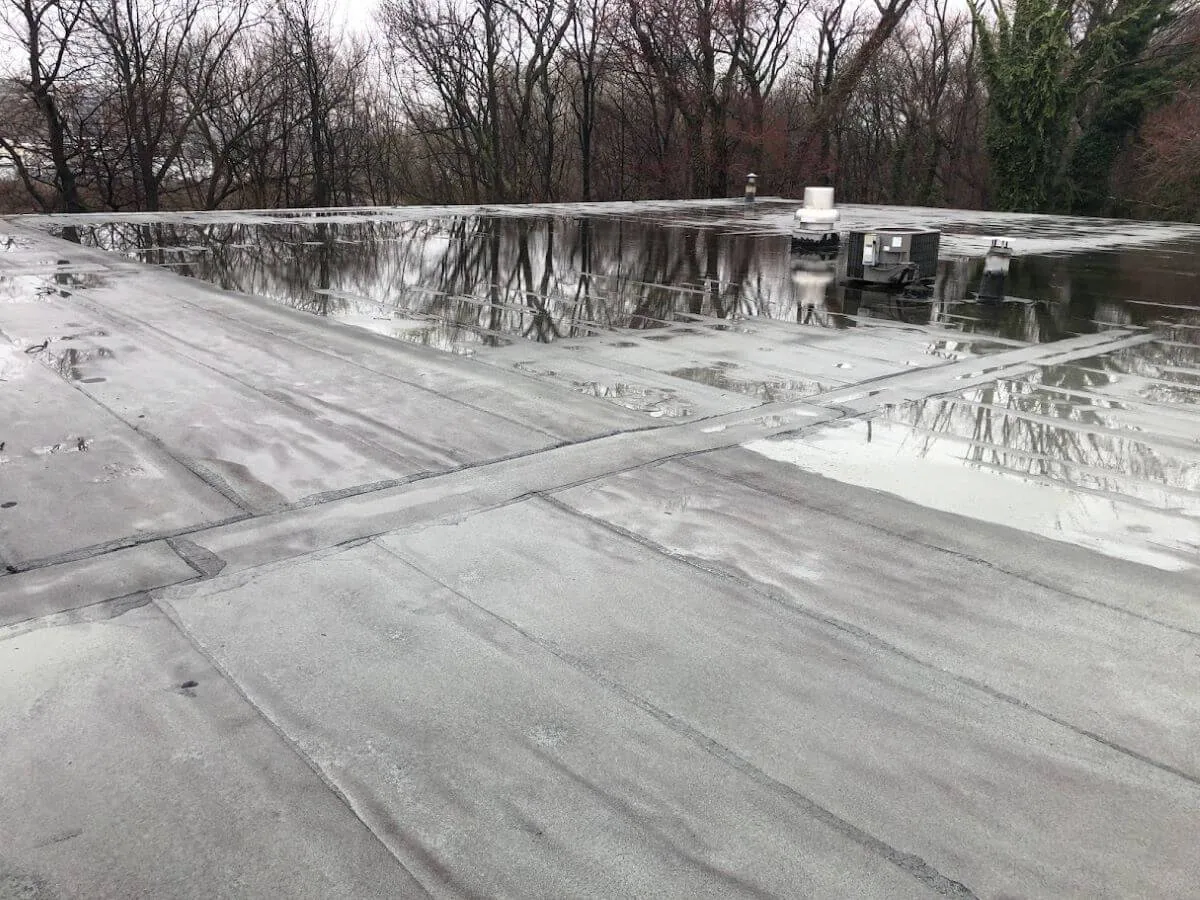
On low-slope storage roofs with insulation, an infrared moisture survey can show how far water from a leaking edge has spread. Wet insulation holds the day's heat after sunset and shows up warmer on the camera, which helps size the repair. But the scan reads surface temperature only. It can't tell us whether the nailer under the edge is sound, and coatings, recent rain or a bare metal roof surface can make readings unreliable. So we use it to choose where to take cores, mark each one on the roof plan, and include patching in the price. Where the repair depends on something the scan can't show, we say which openings are still needed.
We keep what we found separate from why. A rotted nailer and a failed gutter tell us what to replace; they may not tell us whether the cause was clogged downspouts, wind, or a detail that was wrong from the start. A wet unit isn't always right under the leak, either, since water runs along the deck or panel ribs first. We trace it back on the roof and note what we confirmed. That way a lower bid that skipped those checks doesn't look like the same job.
Scope of an edge repair
A roof repair at a storage building edge should say where removal starts and stops. A typical scope: pull the old gutter and edge metal, cut out rotted nailer, install new treated nailer, hang new edge metal and gutters with proper hanger spacing, and tie the roof back in. On TPO or PVC the membrane strip is heat-welded over the metal flange; EPDM uses tape and primer; modified bitumen gets a compatible ply. On a metal panel roof it means new closures, sealant tape and fasteners at the eave. Nailer first, then metal, then membrane or panels. A coating over loose edge metal won't fix rot or refasten anything.
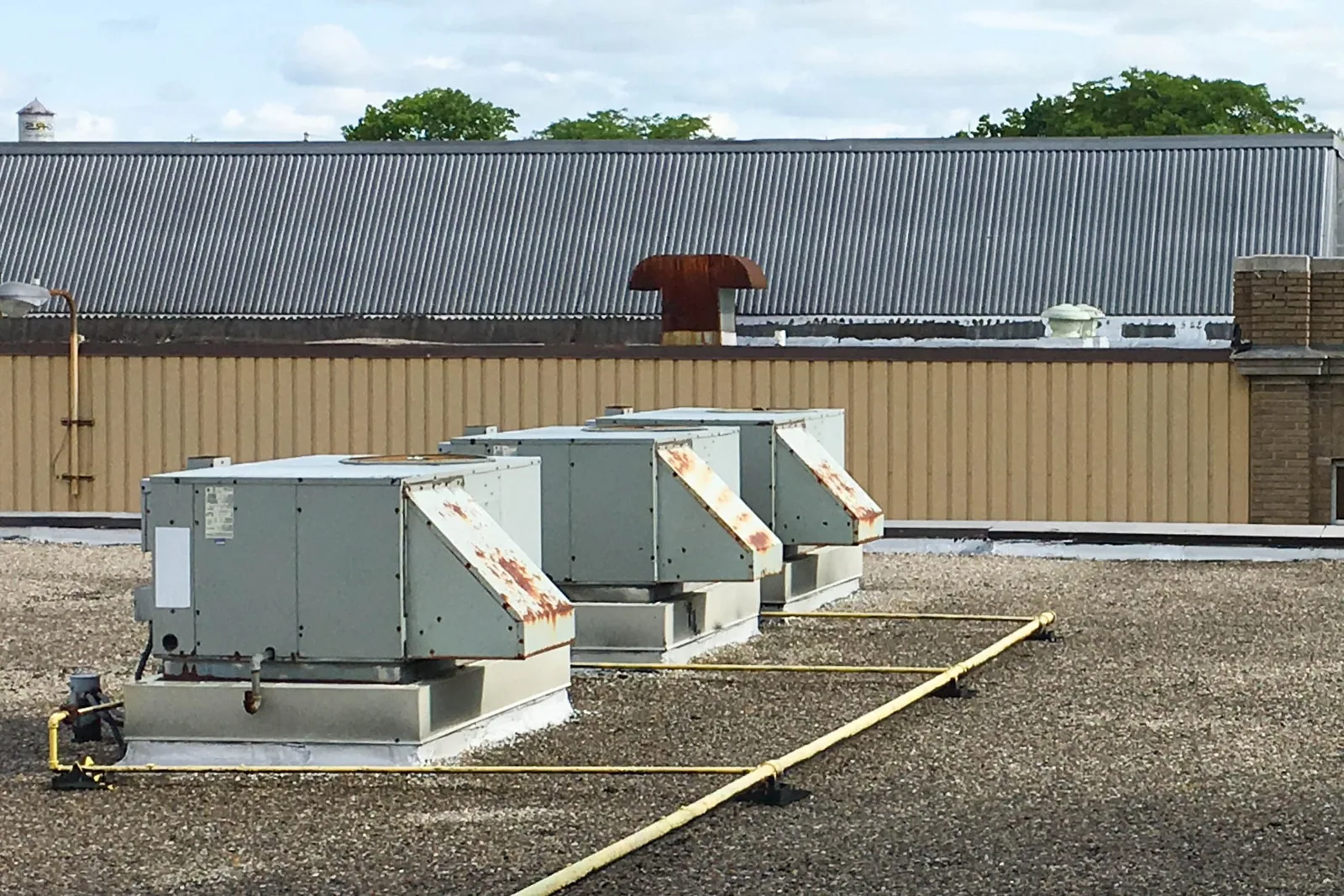
Storage roofs don't carry much equipment, but office HVAC units, exhaust fans and security cameras do show up. Our curb and equipment support work handles the roofing around them, while the HVAC or low-voltage contractor disconnects and reconnects their equipment. Where an edge meets a taller wall, we check the backing behind the wall flashing. Downspouts that tie into underground drain lines are a plumbing or site contractor's job. Each trade is listed so nothing falls through the cracks.
Working around tenants and drive aisles
Storage facilities stay open while we work, so we plan the job like any occupied-building reroofing project. We go over with the manager where the roof will be open, where material gets staged, and how lifts and trucks move through the drive aisles without blocking tenants. Gate codes and hours come from your office. Then we look at the units under the work area. Climate-controlled buildings, units with valuable contents, and units with tenants coming and going each need a plan, whether that's a tenant notice, poly over the ceiling, or doing tear-off on a slow day. An inspection visit doesn't approve opening the roof, so we confirm that plan separately.
If the rot runs farther once the edge is off, we stop at that point, photograph it, and send a written change order showing the added nailer, metal and membrane, and whether another trade has to come back. Before cutting farther over rented units, the manager reviews the units below with us. Temporary membrane or tarps go down at the end of each day so nothing stays open overnight. The change order ties the added cost directly to what we found.
Records after the repair
When the repair's done, you get photos of the nailer before and after it was replaced, a roof plan marking every core or test opening and how it was closed, and a list of what was installed: nailer, edge metal, gutters, membrane or panel trim. Work that's still open for someone else, like a downspout tie-in to the storm line, is listed separately. If we couldn't get to part of an edge, the report says where. New edge metal looks the same whether the wood behind it was replaced or not, so this record is how a future manager knows what was actually done.
We cover storage properties along the East Plano Parkway corridor and across Plano. For larger single-story buildings, see warehouse roofing; for mixed office-warehouse buildings, see flex industrial roofing. Each estimate is priced from what we find on your buildings, not from another property's repair history or assumptions about what's stored inside.
Commercial Roofing Questions
What should a storage roof edge estimate include?
Any rotted nailer replacement, new edge metal and gutters, and the membrane or panel tie-in at the edge. It should also say who handles related work like downspout connections. A price for metal alone skips the part that keeps the edge from coming loose again.
Can fresh-looking edge metal still be hiding rot?
Yes. Paint and sealant can make a failing edge look fine. We check by feel and, when needed, by pulling a short section of metal, then reinstall it the same day.
How do you handle tenants' units during the work?
We go over the work area with your manager, who knows which units are rented and what's in them. Depending on the units, that may mean tenant notices, protection over the ceilings, or scheduling tear-off for a slow day. Inspection access alone doesn't approve opening the roof.
How is extra nailer replacement priced?
We stop, photograph the additional rot and send a written change order with the added nailer, metal and membrane. The roof is dried in with temporary membrane or tarps each day until the work is finished.
Schedule a roof edge inspection
Have your property manager contact us to set a time. We'll walk the edges and gutters, check the nailer, and send a clear repair estimate.


Request a Roof Assessment in Plano
Tell us about the building, the roof and what you are seeing. Send a request or call 555-555-5555.