
Rooftop Equipment Curbs and Supports in Plano, TX
Home / Commercial Roofing Services / Rooftop Equipment Curbs and Supports
Rooftop units, exhaust fans and pipe racks put more holes and more weight on a commercial roof than anything else up there, and the curbs and supports under them are where many Plano leaks start. When equipment is being added, swapped or simply has a leak around its base, the roof work and the mechanical work have to be planned together. We handle the roofing side: the membrane, flashing and insulation around the curb. We also make sure your estimate says plainly which pieces belong to the HVAC contractor.
North Texas weather is hard on these details. The February 2021 winter storm that hit the region showed how quickly ice and freeze-thaw cycles find a tired curb seam. Summer heat then bakes the same flashing for months. A curb that looked fine five years ago can have split corners, loose counterflashing or a sunken support pad today, and those problems are much cheaper to fix before the next unit change than after it.
Start with the equipment plan
The first question is simple: what is happening to the equipment? Keeping an existing unit on its existing curb is a flashing repair. Replacing a unit with one that fits the same curb is a little more involved. A new unit with a different footprint, or a brand-new opening, means cutting the roof, framing a new curb and patching the old hole. Each of those prices very differently, so the roofing estimate should match the plan your mechanical contractor actually has.
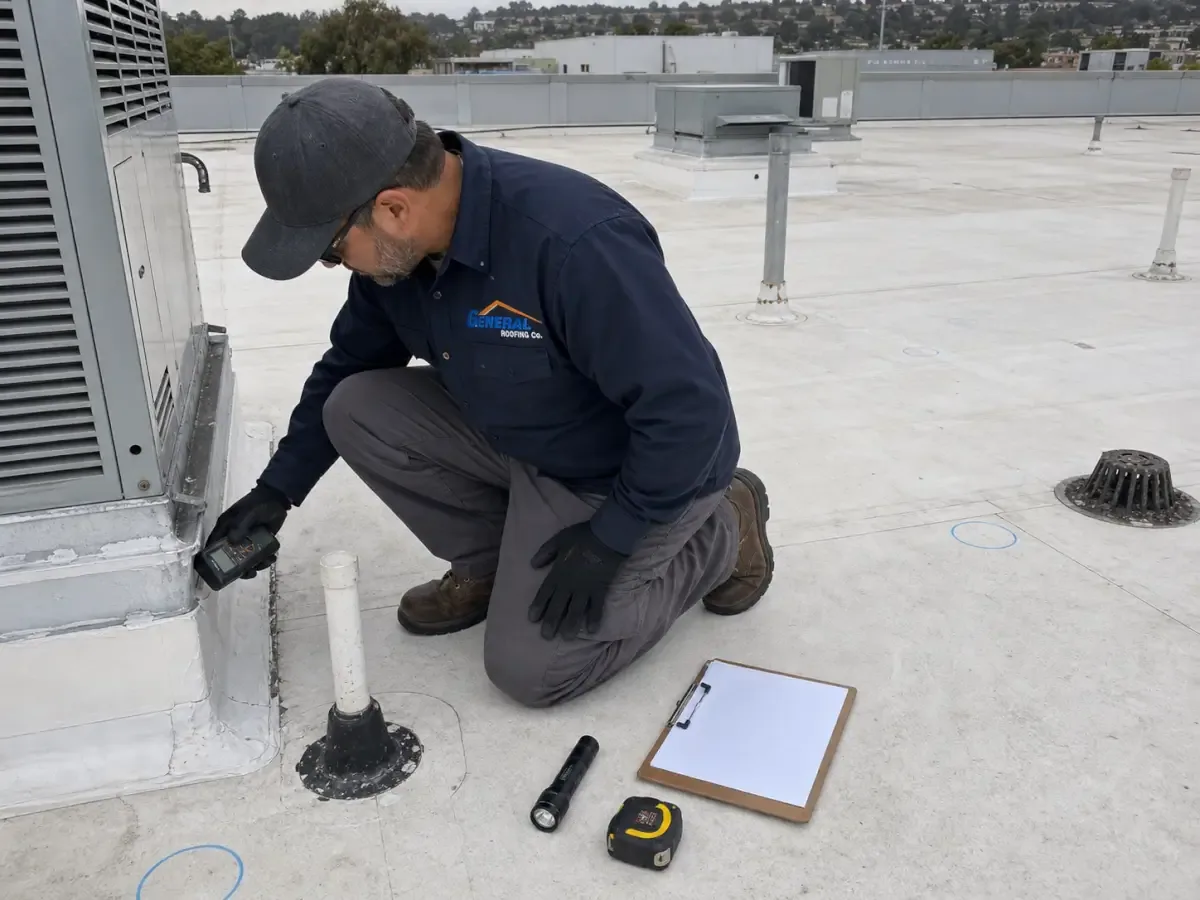
A roof inspection around the equipment gives us photos and measurements of each curb, its flashing height and the membrane around it. If the equipment decision has not been made yet, we tell you what we still need to know. That keeps a vague allowance from turning into a change order once the new unit shows up on the truck.
Assign the curb and support responsibilities
Curbs and supports usually involve more than one trade. The mechanical contractor typically supplies the curb or adapter that matches the unit. A structural engineer may need to confirm that the deck and joists can carry a heavier replacement. The roofer flashes the curb into the roof and ties it into the membrane. Problems start when nobody writes down who owns each of those steps, and a structural question ends up buried inside a line item called flashing.
Wet or crushed insulation around an old curb is common, and it is roofing work. A insulation and cover board replacement around the opening gives the new flashing a solid base. Deck repairs, framing changes and anything that carries the unit's weight are usually handled by others. If we open the roof and find rusted deck or rotten wood nailers, we stop, photograph it and tell you who needs to look at it before we close the roof back up.
Develop the membrane detail
Good curb flashing comes down to a few things: enough height above the finished roof, clean corners, solid attachment at the top and counterflashing or a metal cap that sheds water past the seam. Old curbs often have layers of past patches, mastic and coatings that hide what is underneath. We cut back to sound membrane before we start, so the new detail bonds to good material rather than to the edge of a previous repair.
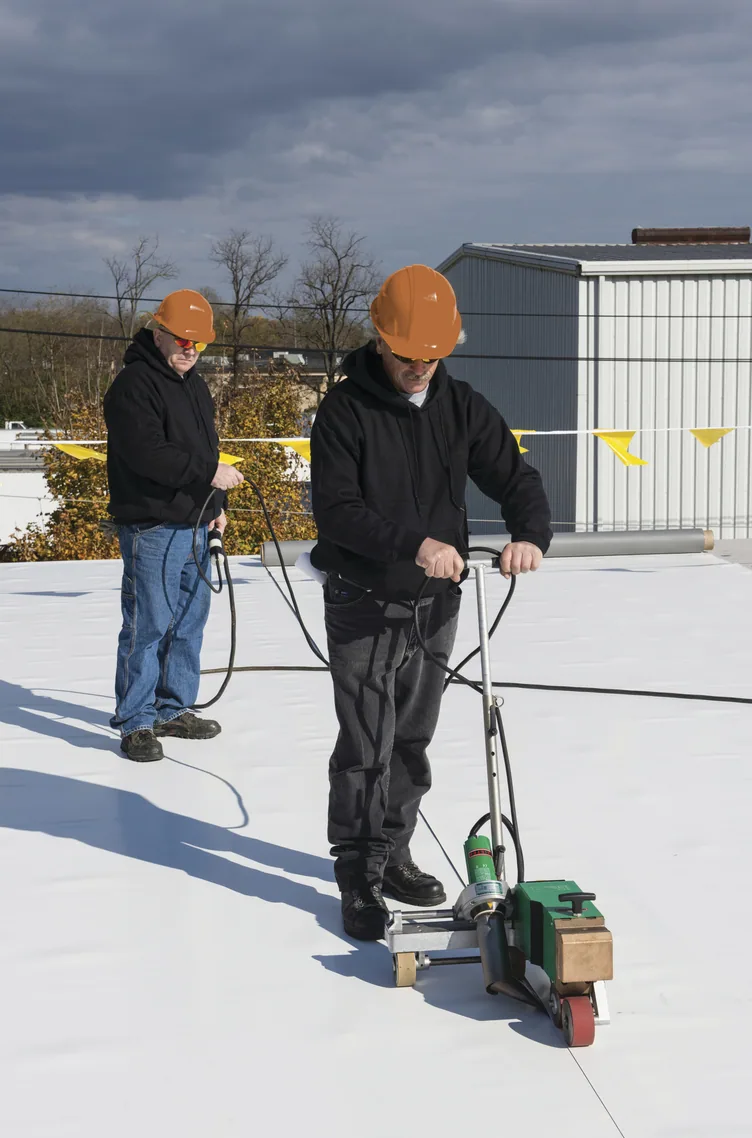
On single-ply roofs, a TPO roof curb gets heat-welded wrap flashing and prefabricated corners when the shape allows. If the curb stays, we may only need to replace the wrap and reseal the top edge. If the curb is replaced, the flashing is built new from the deck up. When you compare bids, check that each one is pricing the same thing, because a quote to reflash an existing curb is not the same job as one that covers a new opening.
Review changes in height and footprint
Replacement units rarely match the old ones exactly. A larger footprint means a bigger opening, a new curb and more roof to remove and patch around it. A taller curb can change how water drains around the unit, and a unit moved a few feet can leave the old opening to be decked over and sealed. Each of those adds area and detail work that should be measured and shown on the estimate rather than guessed at.
On a PVC roof, the new membrane around a changed opening has to be welded to existing material that is still sound and clean enough to accept a weld. Older or contaminated PVC near kitchen exhaust or grease vents may need a larger replacement area than you would expect. We measure the new curb, the old opening and the patch area between them so the price covers the whole affected section, not just the new curb outline.
Coordinate opening and closure
Equipment swaps go smoothly when the order of work is agreed before anyone climbs the ladder. Typically the roofer or mechanical contractor disconnects and removes the old unit, the roofer cuts out and dries in the opening, the new curb is set, the roofer flashes it, and the unit is lifted onto the finished curb. Crane day is expensive, so the roof needs to be ready for it, and a temporary dry-in has to hold if weather moves in between steps.
For buildings that stay open during the work, an occupied-building roofing plan covers access, crane timing, protection of tenants and any after-hours shutdowns. If the mechanical plan changes partway through, such as a different unit or a delayed delivery, we review what that does to the roof before continuing. That way the flashing we install fits the curb that is actually there, and any added cost is explained before the work happens.
Closeout records for curb work
When the job is done, you should get a short closeout: which units or supports were worked on, what roofing materials were installed and photos of the new flashing before and after it was covered. If we spotted something outside our scope, such as a rusted equipment rail, a loose condensate line or a support that needs an engineer's look, it goes in the same report so it does not get lost.
For properties in downtown Plano and across the city, those records save time the next time a unit is replaced or a leak shows up near the equipment. Pair them with our notes on skylight and penetration flashing and the next contractor can see exactly how each curb was built, what was replaced and where the roof was patched before they start cutting.
Commercial Roofing Questions
What do you need to know about the equipment before pricing the roof work?
Whether the unit is staying, being replaced on the same curb or moving to a new opening, plus the new unit's curb size if it changes. That tells us how much roof has to be cut, patched and flashed.
Who is responsible for the curb and the structure under it?
The mechanical contractor usually supplies the curb or adapter, an engineer confirms the deck can carry heavier units, and the roofer flashes the curb into the membrane. We put that split in writing on the estimate.
Why does a bigger replacement unit change the roofing cost?
A larger footprint means a bigger opening, a new curb and more membrane and insulation to remove and replace. The old opening may also need to be decked over and sealed.
What order does the work happen in during an equipment swap?
Usually the old unit comes off, the roof opening is cut and dried in, the new curb is set and flashed, and then the new unit is lifted on. We coordinate timing with the mechanical contractor and your building staff.
What records do we get after the curb work is finished?
A closeout listing the curbs and supports we worked on, the materials installed and photos of the flashing. Any issues outside the roofing scope are noted so they can be passed to the right trade.
Get your rooftop equipment checked
Schedule a roof inspection around your Plano rooftop equipment. We will check each curb and support and give you a clear estimate that spells out the roofing work and what belongs to your mechanical contractor.
Related Roofing Work
Request a Roof Assessment in Plano
Tell us about the building, the roof and what you are seeing. Send a request or call 555-555-5555.