
National Guard Armory Roofing in Plano, TX
Home / Property Types We Roof / National Guard Armory Roofing
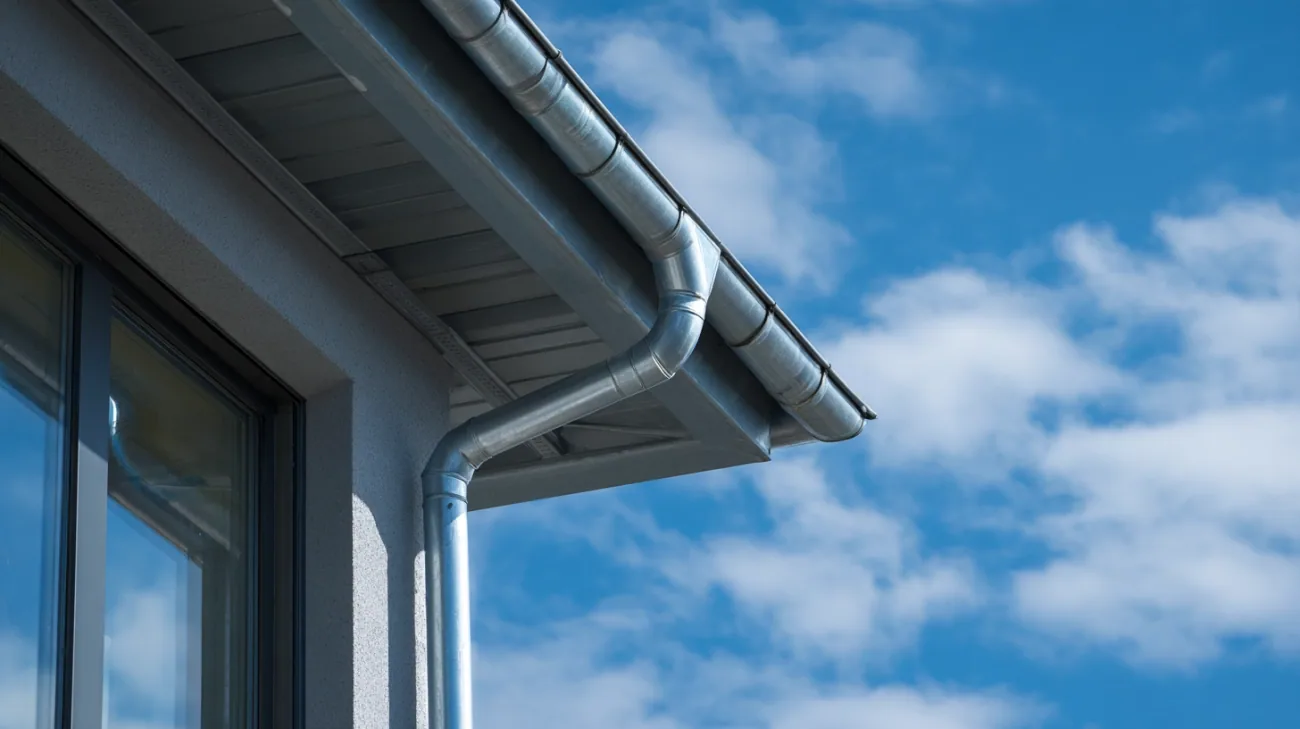
Loose edge metal on an armory roof is usually a fastening problem before it is a metal problem. Gravel stops, drip edges and coping along a drill hall or office wing are nailed or screwed into a wood nailer, and when that nailer rots or splits, the metal starts lifting in wind. Caulking the joints won't hold it down. On a Guard building in the Plano, TX area, we follow a loose section into the wood behind it, replace what's bad, then install new metal and tie the membrane back into it. The estimate covers all three, not just a length of new metal.
The February 14 to 17, 2021 winter storm hit North and Central Texas hard, but that alone tells us nothing about a specific roof. We look at the building in front of us. The same goes for regional Guard names. The 136th Airlift Wing is a Texas Air National Guard unit associated with Fort Worth, and a January 29, 2019 account described Fort Wolters in Mineral Wells as a Guard training facility. Neither tells us what buildings or roofs exist in Plano. We work from the actual property, its drawings and repair history, and the person who can approve our access.
Checking the edge and what holds it
When we inspect edge metal and coping, we check fasteners, cleats, the lap joints between sections and the membrane where it meets the metal. If metal lifts by hand, we look underneath at the nailer. Wood that's still sound can stay; rotted or split wood gets replaced, and if the wall or roof framing behind it is damaged, an engineer should look at it. The new metal then gets fastened into solid wood, and the membrane is stripped in over the flange. Those pieces belong together on the estimate so you can see what holds the new edge down.
We photograph the nailer while the edge is open because the new metal will hide it, and those photos explain why the repair cost what it did. If a section of edge stays hidden and its condition matters for what we keep, we tell you where we want to open it next. One loose piece is a good reason to check the sections next to it, but it doesn't prove the whole perimeter is bad. We price the edge we actually inspected and list the other runs to check, rather than judging the whole building from one corner.
Storms, causes and what a scan can show
A dated storm like the 2021 freeze is history, not a diagnosis. It can't tell us when a particular piece of edge metal came loose or what the wood under it looks like. When we can see damage but can't tell what caused it, we say that plainly. A leak report from inside the building helps us decide where to start, but water can travel a long way along the deck before it shows up on a ceiling. If hidden conditions could change the repair, we tell you what we'd need to open before giving a firm price.
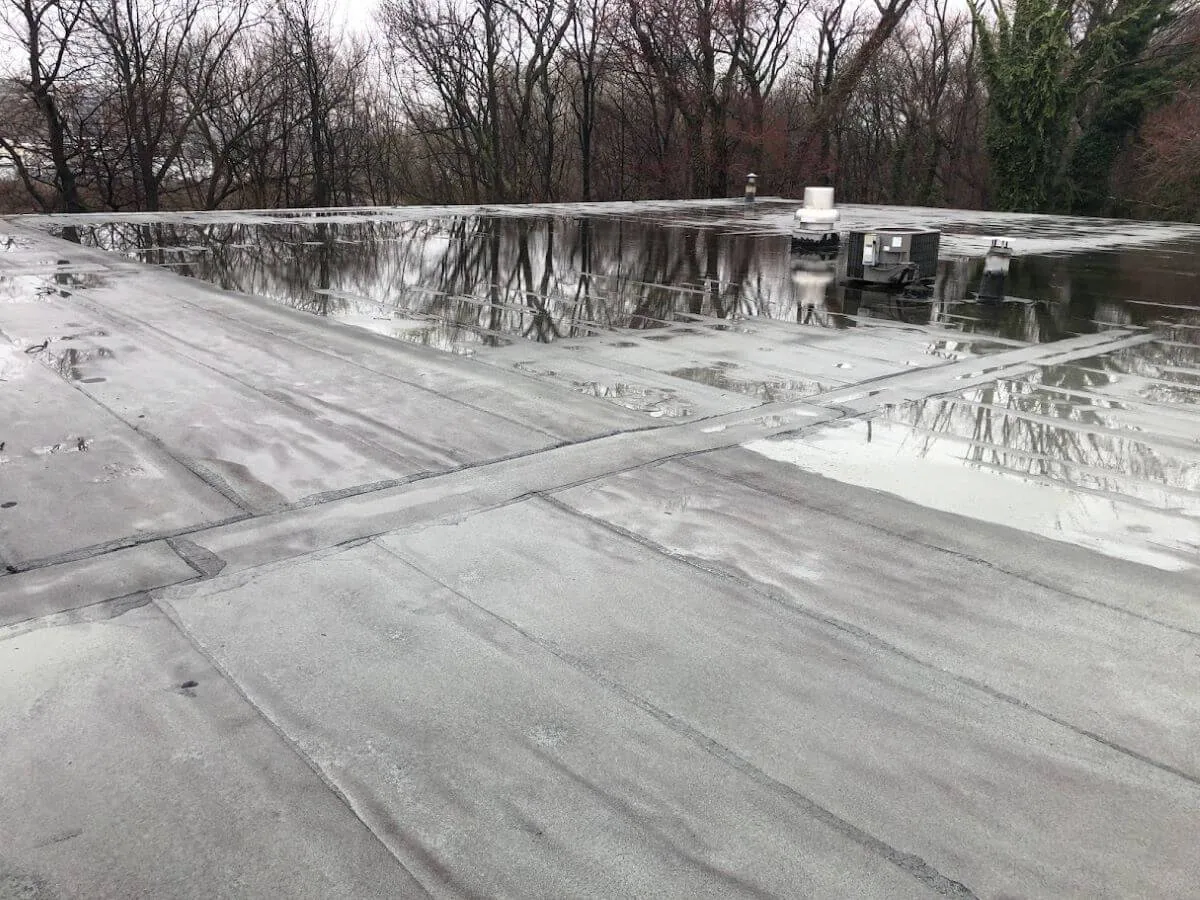
An infrared moisture survey can map wet insulation over a drill hall and other wings without cutting the roof, but readings depend on weather, roof surface and timing, and they can't judge every layer. We use the scan to pick where to take core samples, then confirm with cuts and a moisture meter. Each core gets patched the same day, and we check with your facility contact about what's underneath before we cut. The point is a clear decision on which insulation stays and which goes.
What the edge repair estimate should include
A proper commercial roof repair at the edge lists the old metal and membrane coming off, the nailer being replaced, the new metal and the membrane tie-in. The tie-in depends on the roof: TPO and PVC get heat-welded strips, EPDM uses tape and primer, and modified bitumen or built-up roofs get compatible plies. The wood work and the roof work should sit side by side on the estimate. A coating can be priced by the square foot, but it won't fix a rotted nailer or move equipment out of the way.
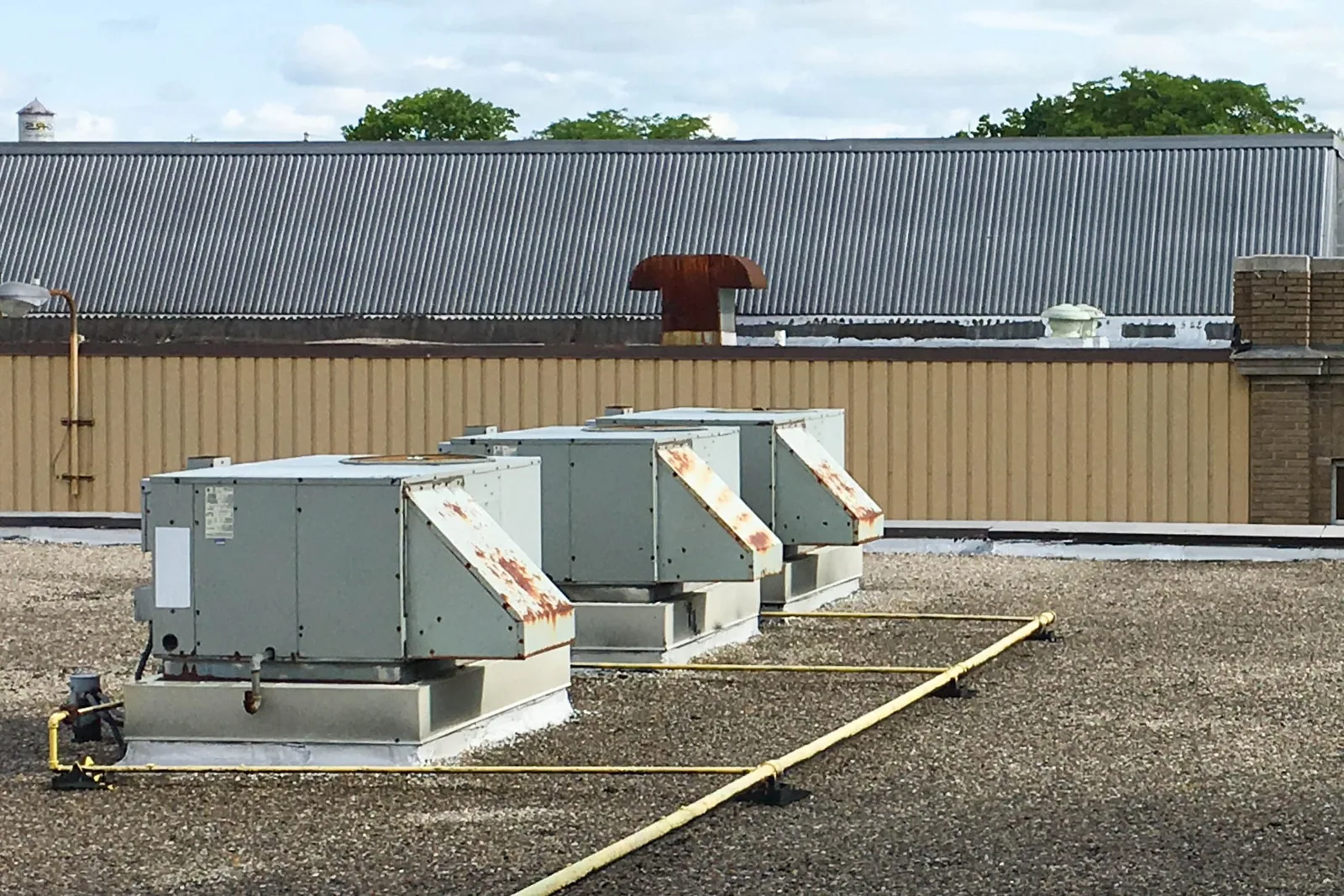
If rooftop equipment and curbs sit near the edge we're repairing, the contractor who services that equipment handles any disconnecting or moving, and an engineer reviews changes to supports. If a roof drain or scupper falls in the work area, we replace its flashing from the roof side; problems in the pipe below belong to a plumber. Where the edge runs into a wall that needs masonry or framing work, that trade goes first. We list each one on the estimate so you can see who does what and in what order.
Working around the building's operations
Most armory repairs are roof work over an occupied building. Before tear-off starts, we walk the plan with your facility contact: how big the opening is, how material gets on and off the roof, and what's directly below. Staff responsible for that space decide what needs protection or moving, whether it's office equipment, stored gear or the drill hall floor. We follow whatever access, escort and scheduling rules the facility sets. Being allowed on the roof for an inspection isn't the same as approval to open it.
If removing the edge exposes more rotted wood or wet insulation than expected, we stop and send photos with a revised price before going further. The revision lists the extra wood, membrane and metal, and if the work area now sits over a different room, we review protection for that space with your team. When another trade has to finish their part first, we install a temporary seal so the building stays dry in the meantime. A few extra feet of metal on a change order doesn't explain any of that, so we spell it out.
A record of what was repaired
When the work is done, you get a record of the edge sections we repaired, photos of the nailer before it was closed up, the wood and metal we replaced and how the membrane ties in. Patched test cuts are noted, and any work left for another trade, like a drain line or an equipment support, is listed separately. Spots we flagged but didn't open stay on the list. The next facility contact can then see exactly what was fixed, instead of assuming a clean new edge means every leak on the building is solved.
We cover Plano, including the downtown Plano area; listing that area doesn't mean there's a particular armory there. Related building types have similar needs. Army installation roofs and government building roofs often involve the same kind of access rules and approval steps, though each roof still needs its own inspection. For a Guard building, send us the address and the person who can approve access, and we'll start with the edge that's moving.
Commercial Roofing Questions
Do regional Guard units tell you anything about an armory roof in Plano?
No. The 136th Airlift Wing is associated with Fort Worth, and a January 2019 account described Fort Wolters as a training facility in Mineral Wells. Neither tells us about buildings in Plano, so we work from the actual property and its records.
What needs to be fixed behind loose edge metal?
Usually the wood nailer it's fastened to. If the nailer is rotted or split, it has to be replaced before new metal goes on. Sealant or a new strip of metal over bad wood won't stay put.
Can an infrared scan tell you which insulation can stay?
It helps, but it isn't the final answer. A scan maps likely wet areas, and we confirm them with core cuts and a moisture meter before deciding what stays. We patch every core.
What happens when another contractor still has work to do?
We list their work on the estimate next to the roof work that depends on it. Until they finish, we install a temporary seal so the building stays dry, then come back to complete the permanent repair.
Schedule an armory roof inspection
Send us the building address and the person who can approve access. We'll check the edge metal and nailer and lay out what the repair needs.

Request a Roof Assessment in Plano
Tell us about the building, the roof and what you are seeing. Send a request or call 555-555-5555.