
Acrylic Roof Coatings in Plano, TX
Home / Roof Systems / Acrylic Roof Coatings
A proposal that only mentions the top coat often skips what goes under it. When we plan an acrylic roof coating in Plano, we identify the whole system before planning how it goes on. You should know what surface the base coat goes over, what repairs come first and when the next coat can be applied. If a bid names only the finish, it's hard to compare with one that spells out every step.
For a large building like the Plano Municipal Center on K Avenue, the existing roof records and an inspection would guide the coating review. We mark the areas to be coated and the prep each one needs. If there's still a question about which product suits the existing roof, it stays on the list until we've checked the materials and the surface together.
Read the basecoat and topcoat together
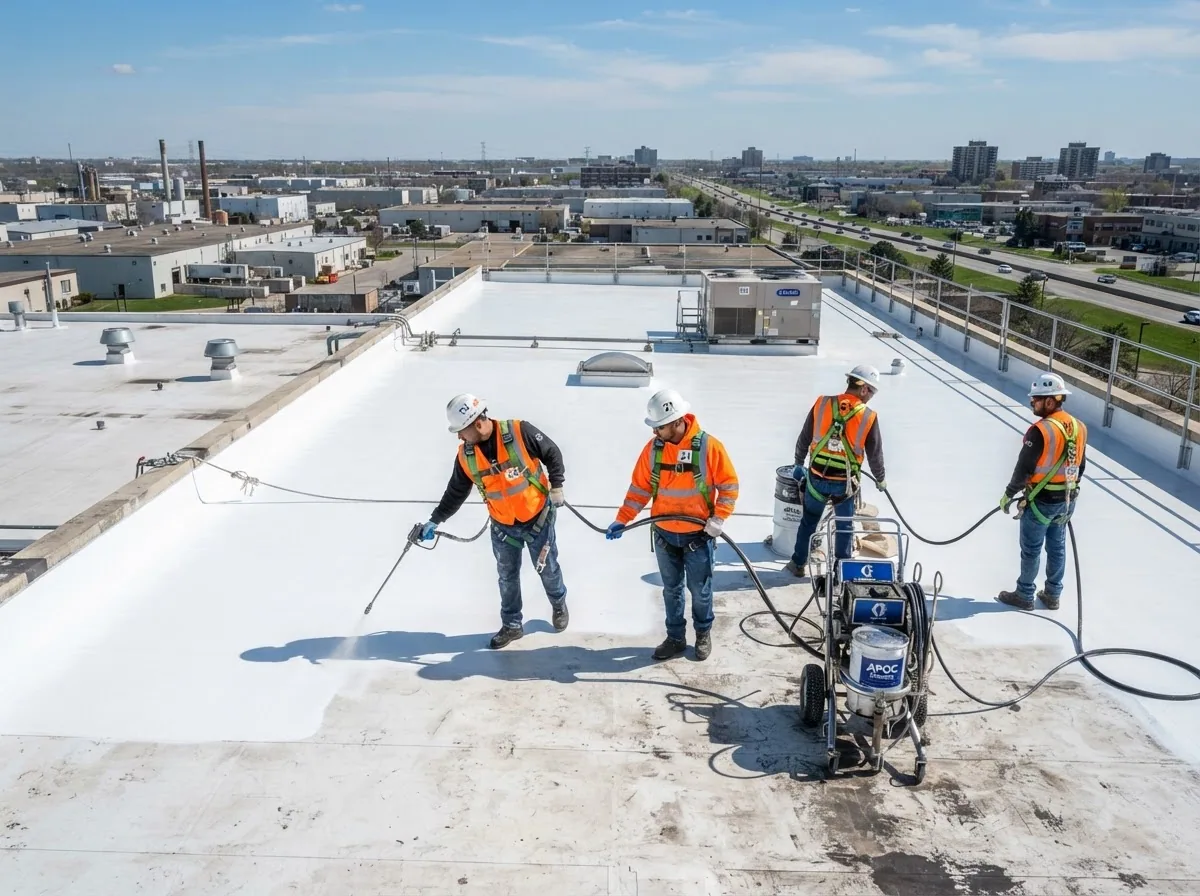
GAF Acrylic Top Coat is a water-based elastomeric coating designed to go over GAF Acrylic Base Coat. The base coat helps the top coat stick and can block bleed-through on aged asphalt roofs. Each layer has its own job. A proposal should name both products and show where each one is applied, not leave the base coat hidden inside a finish quantity.
Our roof coating restoration scopes explain the whole system, including any primer or detail prep for specific surfaces. If a product changes, we review the sequence again instead of assuming the old prep still applies. You can compare the coating system and the work it needs, including the steps you won't be able to see once it's on.
Check each product against the roof material
GAF's Acrylic Base Coat instructions exclude EPDM, gravel-surfaced roofs and shingle roofs. The top coat sheet lists different surfaces, including EPDM, while still excluding gravel and shingles. So the products have to be checked as a complete system. One product listing a roof type doesn't mean the other product works on it.
On an EPDM roof, for example, that difference matters. We identify the actual roof and any existing coating before choosing a system. If the combination needs clarifying, we get the manufacturer's guidance before pricing it as ready to install. That clarification stays with the products and the roof notes so the crew gets the approved system before prep begins. That's why "acrylic works on commercial roofs" isn't enough of an answer.
Develop repairs ahead of the coating sequence
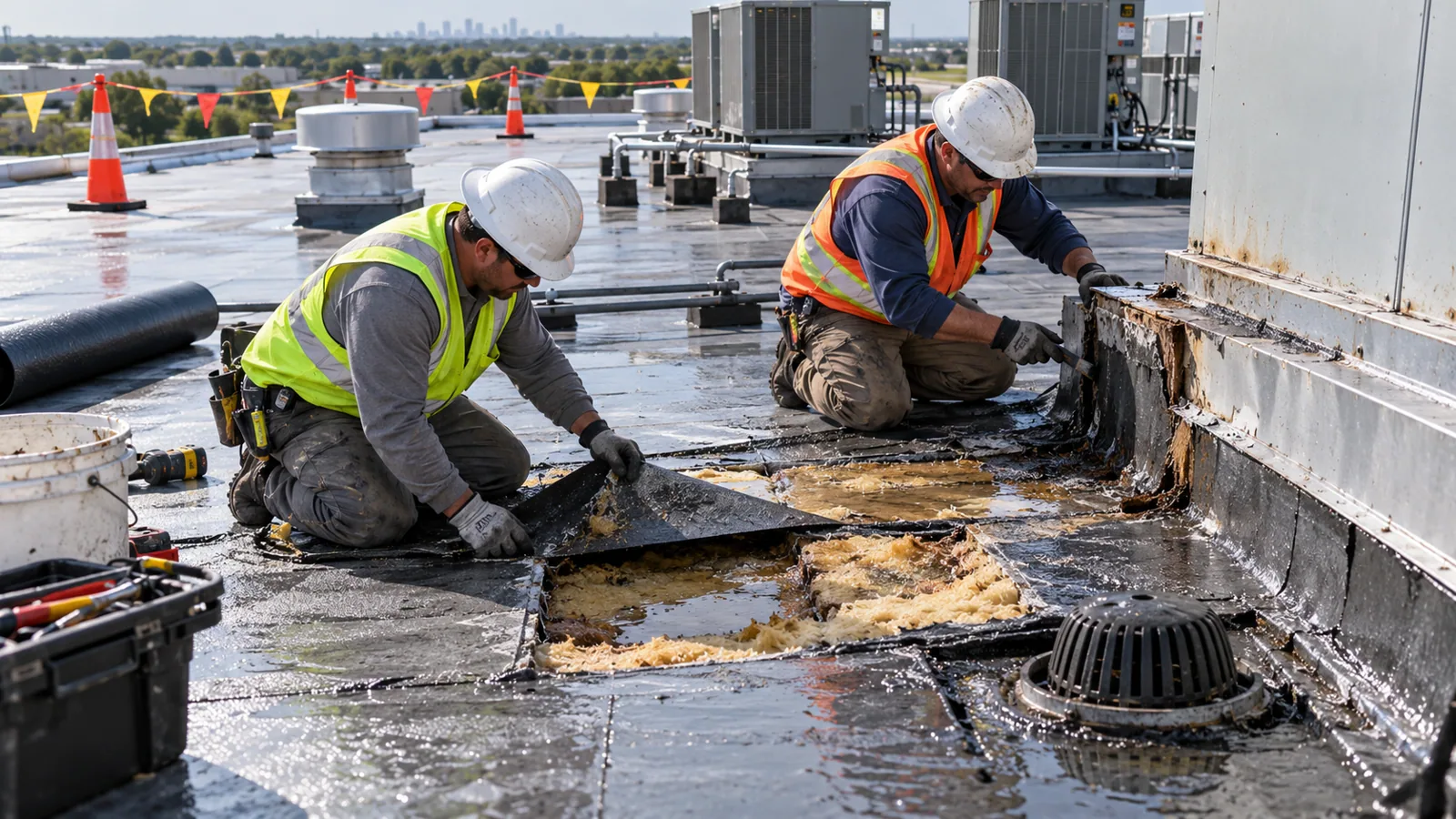
Before prepping for coating, we find damaged membrane and failing flashings and describe how each will be fixed. If an opening or damaged curb needs further investigation, it's handled separately from the coating. The coating should go over a finished repair, not cover up a question about what's underneath. That also makes it easier to compare bids with different prep allowances.
On a larger campus, such as Collin College's Spring Creek Parkway campus, roof records would help locate the inspected areas. Our commercial roof repair scope sets the repair quantity separately from the coating that follows. We photograph repairs before the coating hides them and note any change in prep the repair material requires.
Keep drainage decisions outside the finish quantity
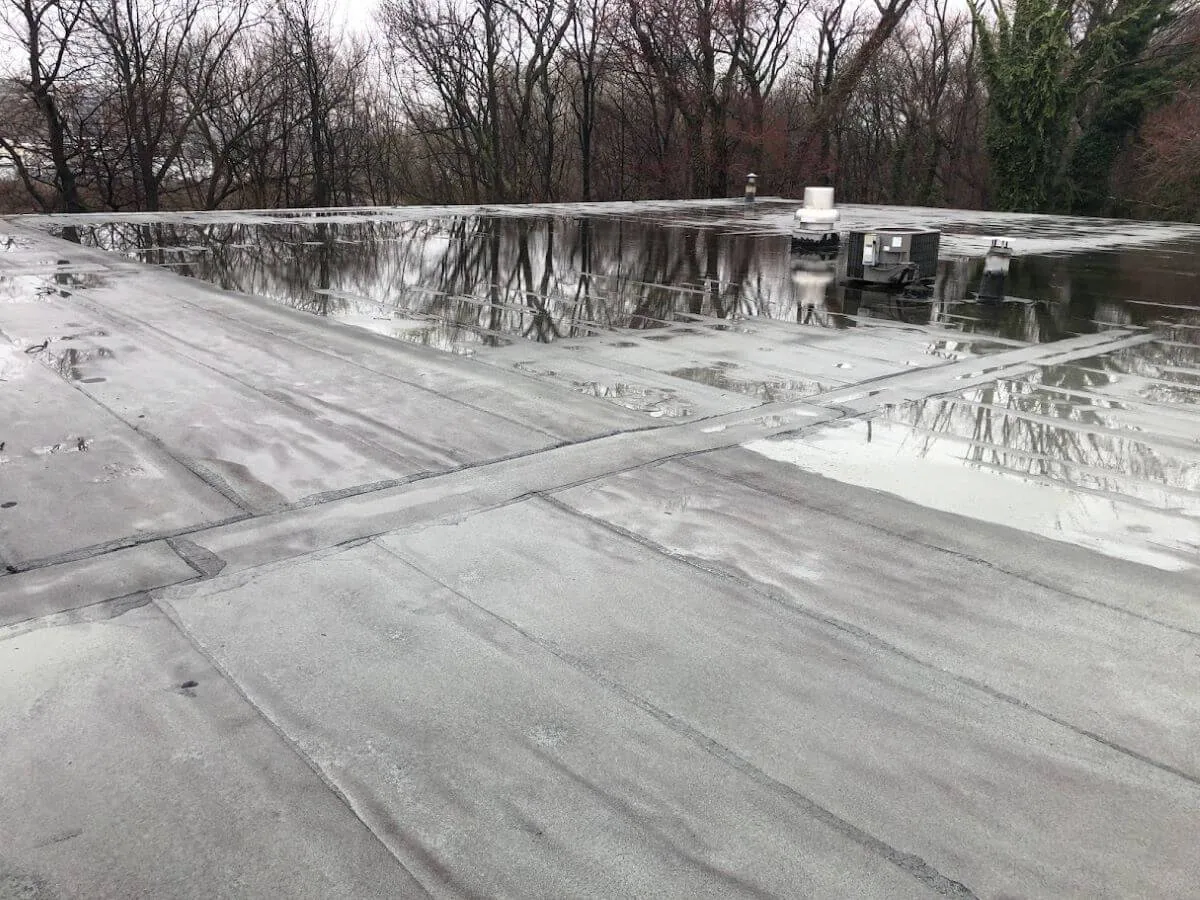
Standing water and drains get their own inspection and findings. We locate the problem and plan any testing or repair before treating the coating area as complete. The price shows what drainage work is included and what needs separate review. A coating description alone can't tell you who fixes a clogged or sagging drain.
Our roof drain and scupper review keeps drain work separate from base coat and top coat application. Any drain repair by another trade is listed, along with the roofing steps it affects. If the drain work changes what area will be coated, that goes into the recommendation. You won't find out mid-job that a drain repair has to be done first.
Allow conditions to govern the next operation
GAF's acrylic instructions say not to apply when rain, dew, fog, condensation or freezing temperatures would interfere with curing. Cool temperatures and high humidity can also slow the cure. We check the current product requirements while planning each job. Not every section of the roof will be ready for the next coat at the same time, and the schedule has to allow.
A silicone roof coating is another option, and we compare the full method for each without mixing up their requirements. If weather changes the planned sequence, we tell you which area is affected. You'll understand why the crew paused or changed the order, with the product requirement and the remaining work listed together.
Record both coats and corrected details
We record the base coat and top coat products, the areas coated and the prep findings in the job file. Repaired details and any changes to the coated area or products are included. Anyone looking at the roof later can tell this coating apart from an older one elsewhere on the roof. The record describes the work done and lists any open questions handed to another trade.
For Downtown Plano buildings and elsewhere, the next inspection starts with known materials. You can find each repaired detail and see what the earlier work kept. That helps the next repair decision rely on the real coating history rather than a vague note that the roof "got another coat."
Commercial Roofing Questions
Why should an acrylic coating proposal name both the base coat and top coat?
Because they do different jobs. Naming both products shows the prep and order of application needed, so nothing is hidden inside a finish quantity.
If the top coat lists our roof type, does that mean the whole system works?
No. Every product in the system has to be checked against your roof. GAF's base coat, for example, excludes EPDM even though the top coat lists it.
What has to happen before coating over a damaged area?
The damage has to be found and repaired first. Testing, equipment work and coating prep are each listed as separate steps.
Why might the coating schedule change during the job?
Rain, dew, fog or freezing temperatures can stop application, and cool or humid weather can slow curing. We tell you which area is affected and what's left to do.
What records should we keep after an acrylic coating is applied?
The base coat and top coat products, the coated areas, repaired details, prep findings and any changes that affected the finished work.
Define the complete acrylic sequence
Schedule a roof assessment in Plano. We'll record the roof materials and prep needs and explain each coating step and the work required before it.
Related Roofing Work
Request a Roof Assessment in Plano
Tell us about the building, the roof and what you are seeing. Send a request or call 555-555-5555.