
Apartment Roofing in Plano, TX
Home / Property Types We Roof / Apartment Roofing
On a lot of apartment buildings in Plano, TX, the leak that ends up on a resident's ceiling starts at a roof drain. Low-slope roofs over garden-style and mid-rise buildings send a lot of water to a handful of outlets, and the membrane around each drain bowl is where seams pull, clamping rings loosen and leaves and grit hold water against the flashing. When we open a drain detail, we check whether the bowl, clamping ring and strainer can be reused or need replacing before any new membrane goes down. If the bowl is cracked or the pipe connection under the deck is leaking, that is plumbing work, and we say so up front instead of sealing over it. A bead of sealant around a failed drain buys a few weeks at best.
Plano covers a lot of ground, from the Municipal Center on K Avenue out to Collin College's campus on Spring Creek Parkway, and apartment roofs across the city vary just as much. You'll find built-up and modified bitumen on many older buildings and TPO on many newer ones. Before a visit, send us the building address, any roof drawings and notes on past repairs. Those help us find the problem drain faster, but what we see when we open it decides the repair. We also need to know which units sit under the work area so residents can be told ahead of time.
What we check at the drain
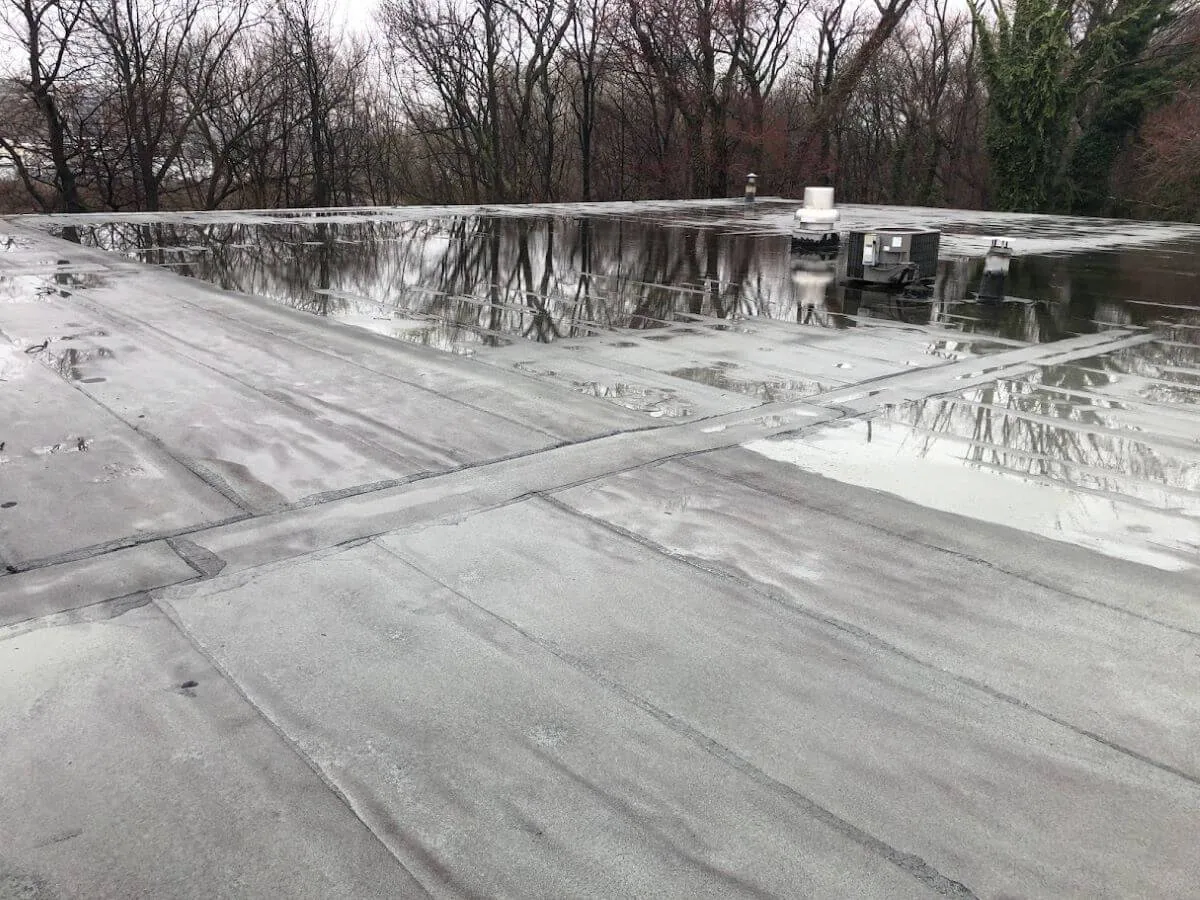
Our drain and scupper repair work starts on the roof, not in the unit. We pull the strainer, clear the bowl and look at how the membrane is clamped. Is the clamping ring tight and complete? Are all the bolts there? Has the membrane split where it turns down into the bowl? We also check whether the area around the drain holds water after rain, because ponding speeds up seam failure. If the bowl or the pipe below it looks damaged, we bring in a plumber to check it. That part isn't roofing, and new membrane won't fix it.
A ceiling stain in a third-floor unit points us in the right direction, but water often runs along the deck or through the insulation before it drips, so the stain can sit several feet from the actual leak. We trace it back and take photos of what we find before anything gets closed up. If we can't tell whether the insulation around the drain is wet without cutting a core, we tell you that, explain why, and include patching the core in the price. And one bad drain doesn't mean every drain on the property needs the same work.
Wet insulation and what can stay
On a larger complex, an infrared moisture survey helps map where water has gotten into the insulation. It's usually done on a clear evening after a sunny day, when wet areas hold heat longer than dry ones. It's a good screening tool, not a final answer. Some roof systems read poorly, and a warm spot can be a patch, extra bitumen or a change in materials rather than water. Where the choice to keep or replace insulation depends on it, we take core samples to confirm, and the estimate covers patching those cuts. That way you aren't paying to tear off dry insulation, or leaving wet board under new membrane.
We'll also be straight about what we know and what we don't. An opened drain can show rot, rust or a split seam, but it usually can't tell us when the leak started or exactly why. If the deck under the drain is rusted or soft and needs repair before the new flashing goes in, we include it in the price and point it out. If the fix involves structural changes, such as cutting in a new drain or reinforcing the deck, an engineer should weigh in before work starts.
What goes into the drain repair price
A proper roof repair at a drain spells out what gets cut out, what stays and how the new membrane ties in. On a TPO or PVC roof, that means a heat-welded target patch or new flashing sheet under the clamping ring. On modified bitumen or built-up roofs, it means torched or cold-applied plies and a flashing that works with that system. The estimate should also list strainer, clamping ring or bowl work, and patching of any test cuts. If one bid is a coating job and another is a rebuilt drain, they aren't the same repair, and the price gap usually reflects.
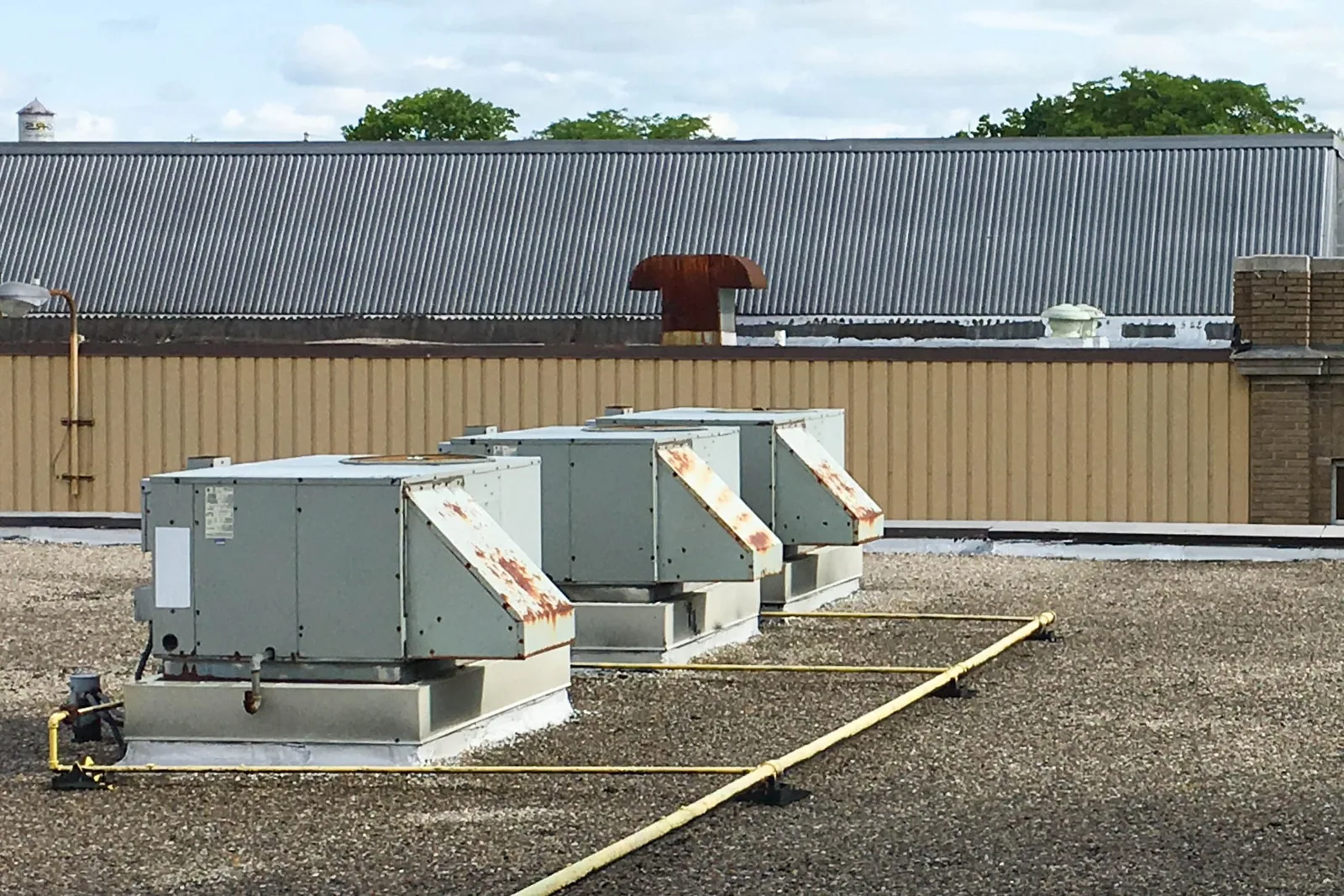
Apartment roofs also carry a lot of equipment: condensing units, exhaust fans, plumbing vents. If a unit or its curb or support sits close enough to the drain to get in the way, the HVAC contractor may need to disconnect or lift it, and we line up the schedule with them. Where the roof meets a parapet or wall, we check whether the wall backing is solid enough to hold new flashing. Anything outside our scope, like HVAC service or plumbing, is listed separately so nobody assumes it was included.
Working over occupied units
Tearing off roofing over occupied units takes planning. For roof work on occupied buildings, we go over the work area with your property manager first: which units are underneath, where the crew will stage and carry material, and how we keep debris away from walkways, parking and the pool. Residents should get notice about noise, any odors from adhesives or torch work, and the hours crews will be on the roof. An inspection doesn't mean the building is ready for tear-off. That's a separate decision, made with your team once we know how big the opening will be.
Sometimes we open a drain and find the wet insulation or rusted deck goes farther than expected. When that happens, we stop, take photos and walk you through how much more needs to come out before we expand. Units under the bigger area may need fresh notice. If the plumber or HVAC contractor still has work to finish, we put down a temporary seal to keep the building dry in the meantime. The change order should list the added roof area, the extra protection and the temporary work together, so you know exactly what changed and why.
Keeping a record of the repair
When the job is done, you should get the locations of the drains we worked on, before-and-after photos, a list of what was removed and replaced, and where test cuts were patched. Any plumbing, HVAC or wall work still outstanding should be listed separately from the finished roofing. If there are spots where we couldn't confirm the insulation condition, the record should say where they are and why they're worth checking later. That gives the next property manager or maintenance tech a clear picture, instead of guessing whether a clean-looking drain means every pipe and seam was checked.
We inspect apartment roofs around Collin Creek and across the rest of Plano; just send the right building address and a contact who can give us roof access. The approach is similar on hotel roofs and senior living roofs, but each building has its own drains, walls and occupants, and we price each one on what we find there. Your apartment repair should be based on your roof, not on a neighboring property's problems or a standard package.
Commercial Roofing Questions
What should a drain repair estimate include?
It should list the membrane work around the drain, any new clamping ring, strainer or bowl, and patching of test cuts. Plumbing below the deck is priced separately by a plumber. If those items aren't spelled out, you can't compare bids fairly.
Does one leak mean the whole roof is wet?
No. One wet ceiling tells us where to start, not how far the damage goes. We trace the leak, check the insulation nearby and take cores if needed before recommending more than a local repair.
How do you handle residents during roof work?
We plan the work area with your property manager, decide which units need notice, and keep staging and debris away from walkways and parking. Residents should know when crews will be on the roof and what noise or odors to expect.
Why would the repair price go up after work starts?
Wet insulation or rusted deck sometimes runs past what we could see before opening the roof. We stop, take photos and go over the added area with you before going further. The change order lists the extra roofing, protection and any temporary sealing.
Schedule an apartment roof inspection
Have your property manager set up a visit to the leaking drain. We'll find the source, talk you through the repair and give you an itemized estimate.


Request a Roof Assessment in Plano
Tell us about the building, the roof and what you are seeing. Send a request or call 555-555-5555.