
Commercial Tornado Damage Roof Repair in Plano, TX
Home / Roof Damage Repair / Tornado Damage Roof Repair
The tornado the National Weather Service documented on October 20, 2019 did its damage in North Dallas and Richardson, just south of Plano. It's a reminder of how close these storms run to the city, but it says nothing about any particular Plano building. After a tornado or severe straight-line winds, a roof can lose edge metal, sheets of membrane, rooftop units and the insulation underneath, and flying debris can puncture what's left.
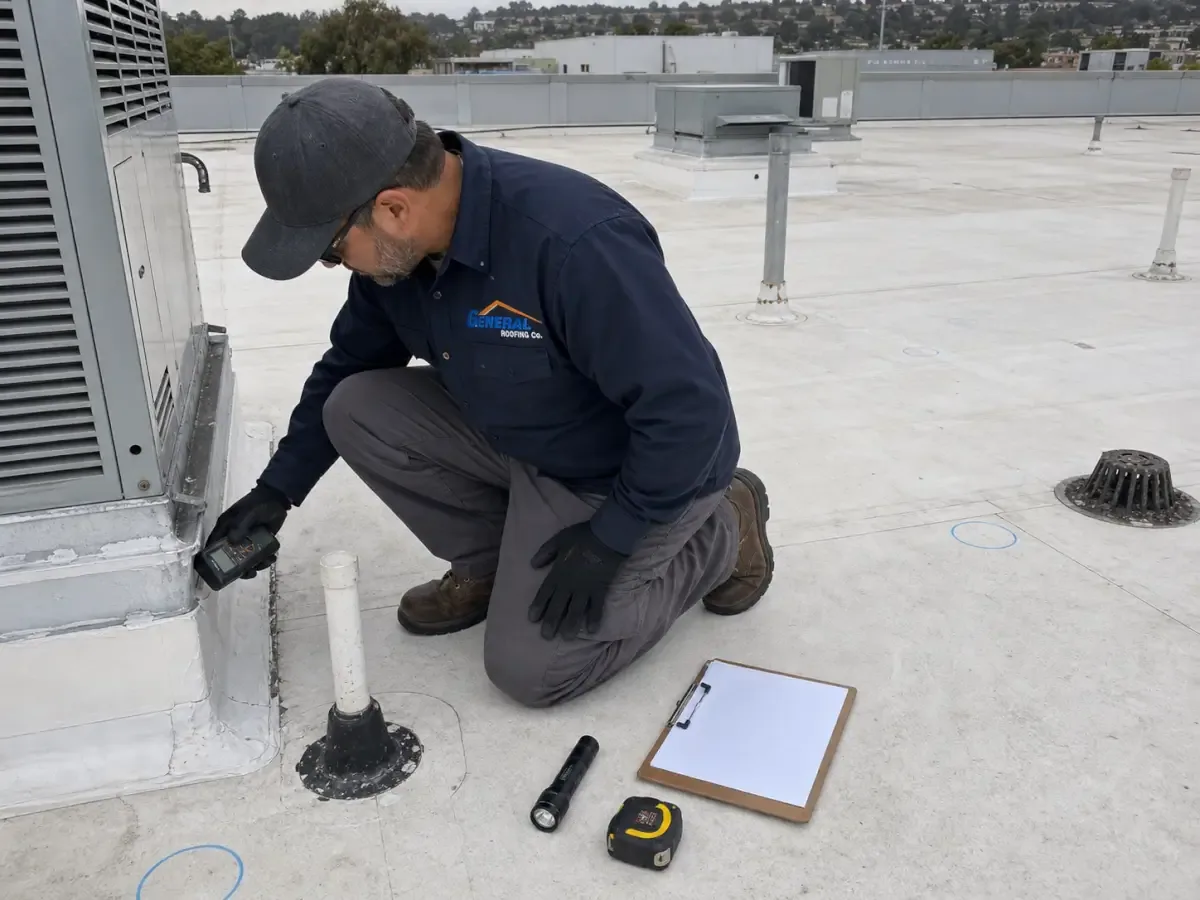
Before anything else, the building needs to be safe to walk. Once it is, a roof inspection records what is damaged, what is still holding, and which parts of the building need a structural engineer, mechanical contractor or electrician before roofing can start. The repair estimate follows from what we actually find on your roof.
Is it safe to get on the roof?
We check with the property manager first: are there signs of structural damage, exposed wiring, gas leaks or displaced rooftop units? If so, the fire department, utilities, an engineer or the HVAC contractor may need to clear the roof before our crew goes up. We don't walk a deck we're not sure will hold.
When only part of the roof is reachable, we inspect what we can and mark the rest as not inspected on the plan. That way nobody mistakes a blank area of the report for undamaged roof, and you know exactly what still needs to be looked at before a full repair or replacement decision.
Mapping the damage
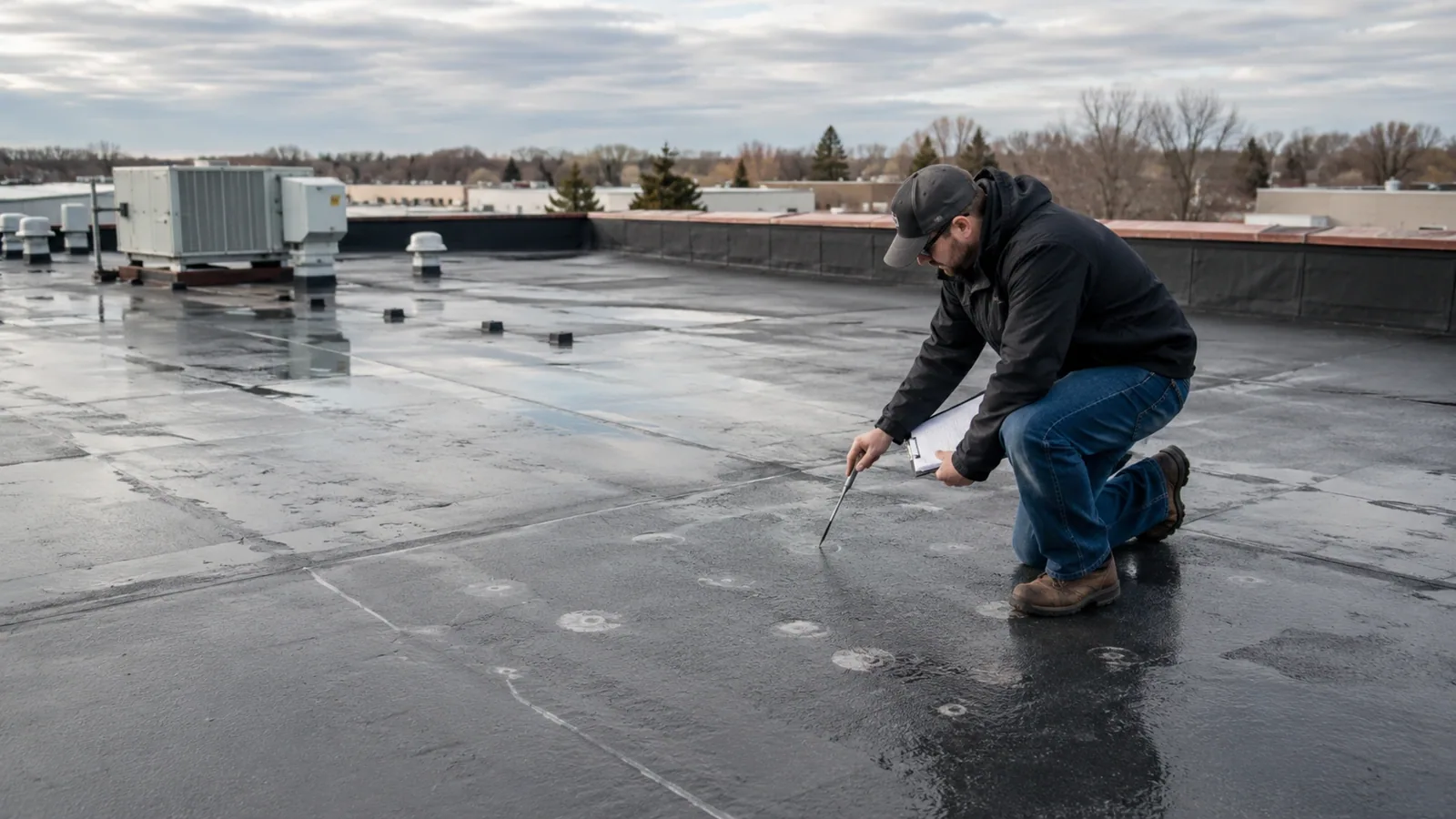
We walk the accessible roof and log every damaged item: peeled-back membrane, torn flashing, missing edge metal and coping, crushed or wet insulation, punctures from debris, and rooftop equipment that shifted on its curb. Each one gets a location on the roof plan and a note on what it affects, such as whether a torn sheet has exposed the insulation or whether coping that blew off left the top of the parapet wall open.
Photos include close-ups and a wide shot so every item can be found again. We also note older problems, like aged seams or earlier patches, separately from fresh storm damage. Insurance adjusters and owners both need that distinction, and lumping everything into "tornado damage" causes trouble later.
Perimeter damage is common because wind pulls hardest at edges and corners. That work is covered on our wind damage repair page. We check each edge run on its own rather than assuming one missing section means the whole perimeter is gone.
Structure and insulation come before new membrane
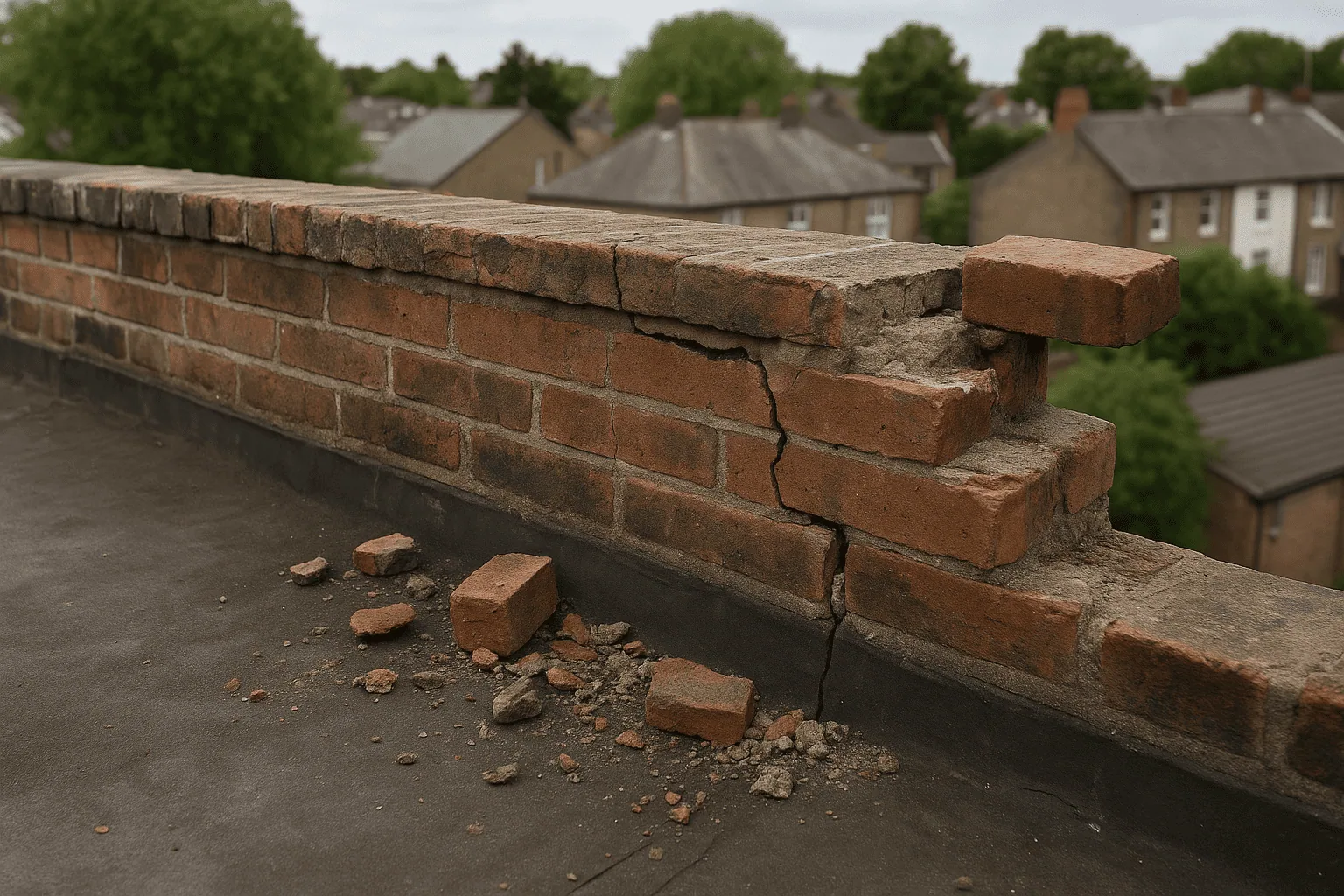
If the deck is bent, the joists are damaged or the parapet walls have cracked, a structural engineer needs to sign off on repairs before we install new roofing. New membrane over a damaged deck just hides the problem. We keep that work listed separately so you can see what has to happen first and who is doing it.
Where membrane has torn open, rain often follows, and the insulation underneath may be soaked. We take cores and moisture readings to find where the wet board ends. The tear-out in the estimate comes from those readings, not from guessing based on how large the torn area looks.
Opening a damaged roof sometimes turns up more, like a broken nailer or crushed deck that wasn't visible from above. When that happens we stop, photograph it and talk to you before changing the scope. The area stays covered while you decide, and the change is written down before work continues.
Repair or replace
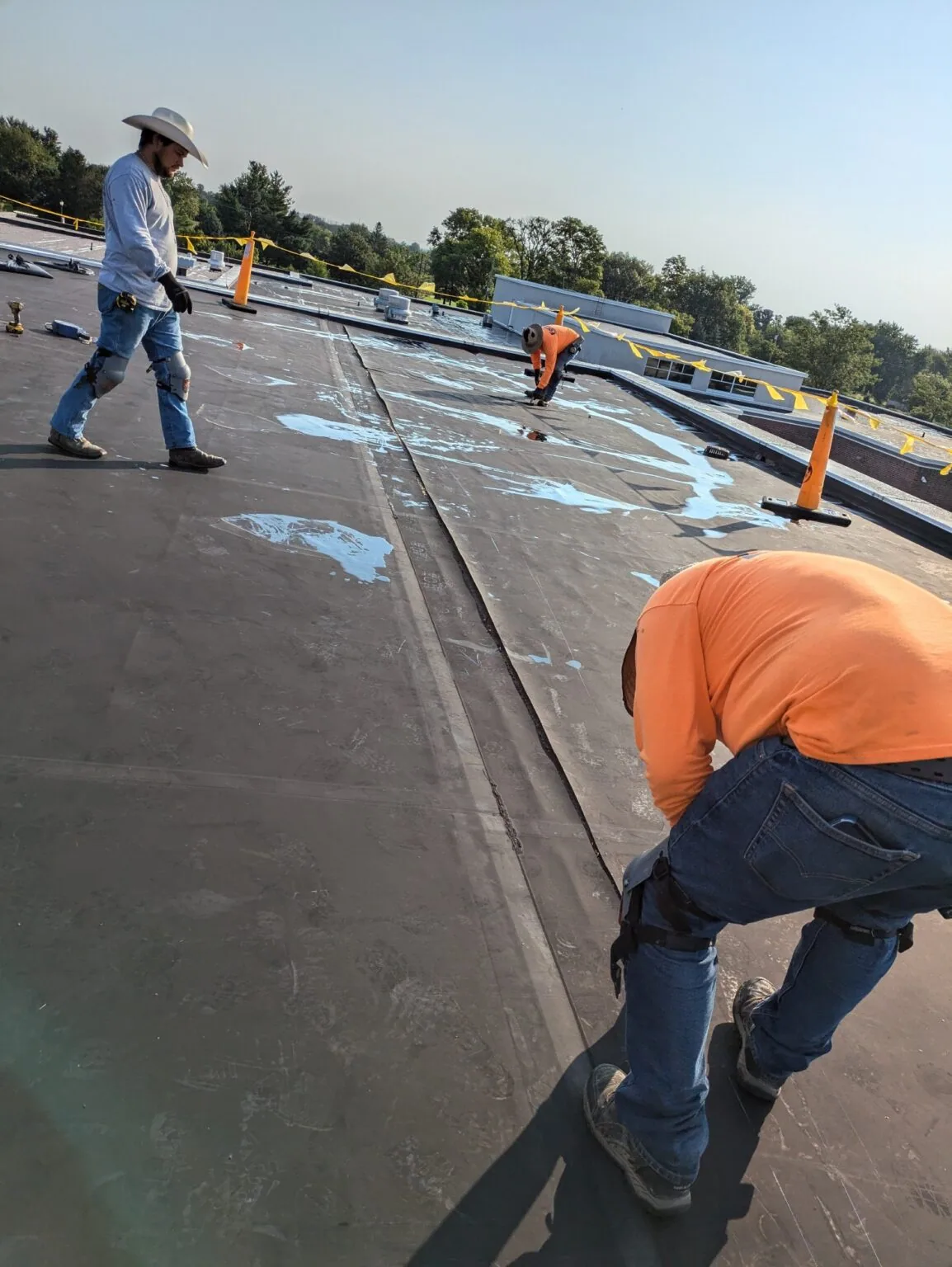
When a large section of the roof is gone or soaked, replacing that section, or the whole roof, often makes more sense than patching. Our commercial roof replacement estimates list tear-off, deck repair, insulation, membrane and every detail where the new roof meets walls, drains, curbs and edges. Those details are where leaks start, so they shouldn't hide inside a square-footage price.
Walls with torn base flashing get rebuilt under flashing repair, including the termination at the top. Rooftop units that moved need the mechanical contractor to reset and reconnect them, and we coordinate the curbs and equipment supports so the flashing fits the unit's final position.
If most of the roof is intact and the membrane is still in good shape, a targeted repair can be the right answer. We'll lay out both options with what each includes, so the decision comes down to what's on the roof, not how dramatic the storm sounded.
Scheduling around the building
Office buildings along the Spring Creek Parkway corridor usually have tenants working, security procedures and limited loading dock time. We plan crane picks, material staging and crew access with building management so the work doesn't shut the property down.
Permanent repairs can only start once the engineering, mechanical and electrical work that has to come first is done. If the roof is open right now, we can come out at night, on weekends and on holidays to tarp or temporarily seal the damaged areas. We'll tell you what the temporary cover protects and what still needs a permanent repair.
Paperwork for the owner and the adjuster
We photograph deck repairs, new insulation and flashing before they're covered, and test the finished roof in the way that suits its membrane type. The roof condition report lists the work completed and any items still waiting on other trades.
Storm damage and pre-existing conditions are kept separate in the report, which helps when you're working through an insurance claim. We don't make the coverage decision; the adjuster does. Our job is to give an accurate account of what's on the roof and what we fixed.
Commercial Roofing Questions
Does the October 2019 tornado report mean our Plano roof was hit?
No. That National Weather Service report documents damage in North Dallas and Richardson. Whether your roof was damaged by any storm depends on what an inspection finds on your building.
What has to happen before a roofer inspects after a tornado?
The building should be checked for structural damage, gas leaks, live wiring and loose rooftop equipment. If any of those are present, the right trade or an engineer clears the roof first. We inspect what's safe and mark anything we couldn't reach.
How will storm damage be shown in the estimate?
Each damaged item gets a location on the roof plan, photos and its own line, whether it's membrane, flashing, edge metal or insulation. Older wear is noted separately from fresh storm damage.
Will a new roof take care of everything the storm damaged?
Not by itself. Deck and structural repairs, and resetting or reconnecting rooftop units, are done by other trades, usually first. The roofing estimate covers the details where the new roof meets those items.
What will the closeout report include?
The areas we repaired or replaced, photos of the work before it was covered, and test results. It also lists items still waiting on other trades and any parts of the roof we didn't inspect.
Get the storm damage inspected
Schedule a roof inspection in Plano once the building is safe to access. We'll map the damage, separate it from older wear, and price the repair or replacement along with what other trades need to do first.
Request a Roof Assessment in Plano
Tell us about the building, the roof and what you are seeing. Send a request or call 555-555-5555.