
Commercial Wind Damage Roof Repair in Plano, TX
Home / Roof Damage Repair / Wind Damage Roof Repair
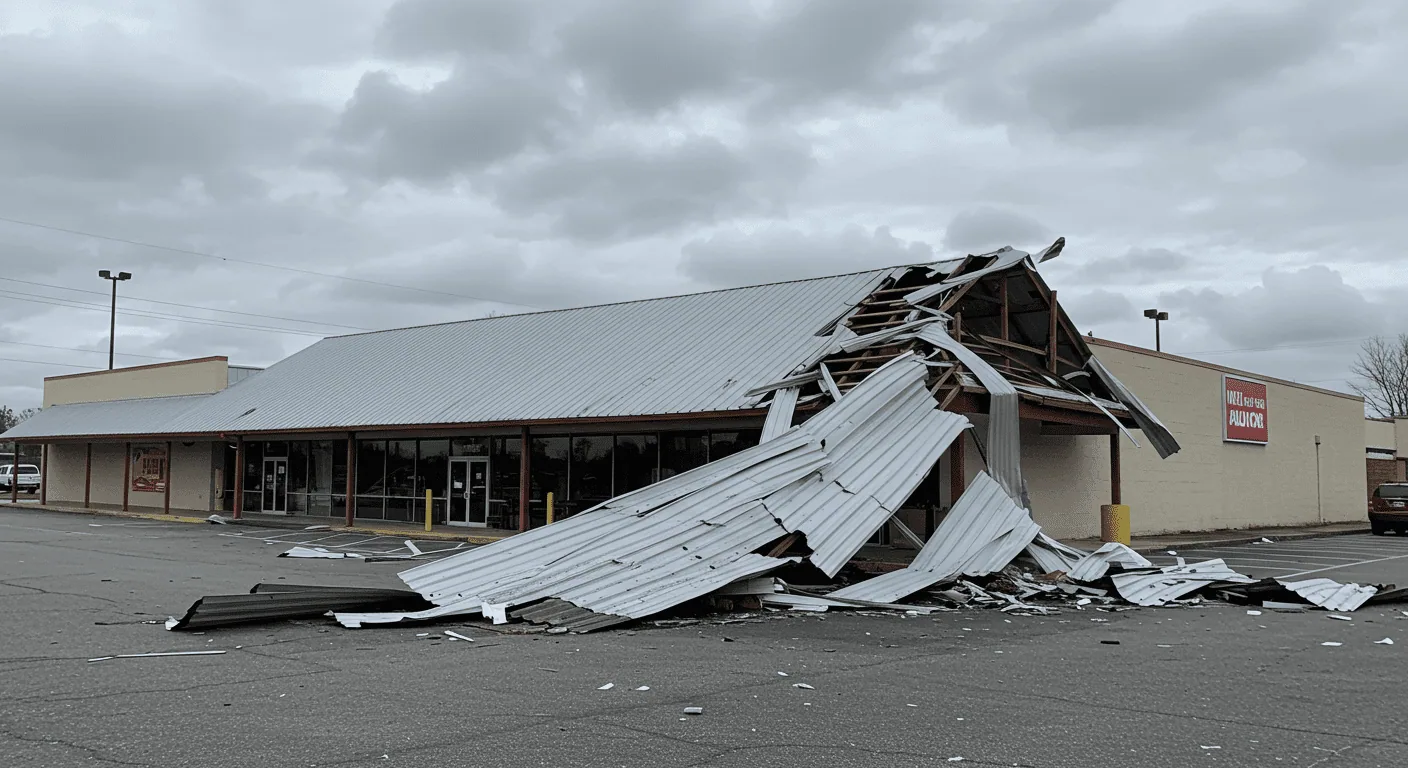
Wind damage on a flat commercial roof usually starts at the edge. Gusts get under a loose piece of edge metal or coping, peel it back, and the membrane behind it follows. By the time someone notices, there may be a section of perimeter flapping, a torn corner, and wet insulation underneath. Replacing the metal alone rarely fixes it; the wood nailer, the fasteners and the membrane termination all have to be checked.
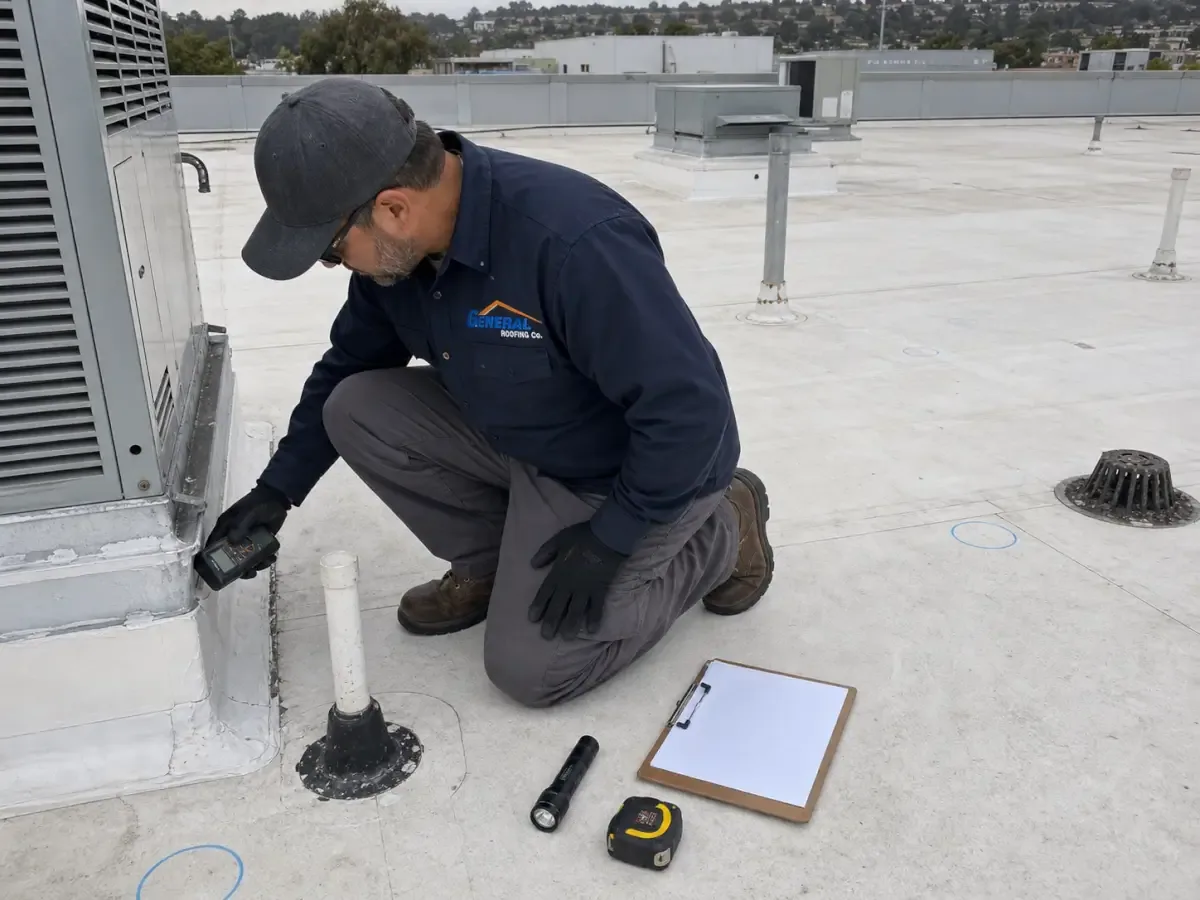
For Plano buildings, we start with a commercial roof inspection of the damaged area and the rest of the perimeter. We look at what's holding the edge in place, what has pulled loose and how far the membrane is affected, then price a repair that rebuilds the whole edge detail rather than just the piece that blew off.
Securing the roof right away
A loose edge in the wind keeps getting worse, so the first job is often to stop it. We confirm roof access with the property manager, then secure or remove flapping metal and cover exposed areas. If a rooftop unit has shifted or a wire is exposed, the mechanical contractor or electrician needs to handle it, and we wait for them before working nearby.
We answer emergency roof repair calls at night, on weekends and on holidays. The crew photographs what they secured and notes what's still open, such as an edge that needs a new nailer or membrane that still has to be replaced. A temporary fix holds the roof until permanent repairs, but it isn't the permanent repair.
Checking the nailer and fasteners
Edge metal is only as strong as the wood nailer it's fastened to. We pull back the damaged section and check the nailer for rot, splits and fasteners that have backed out or pulled through. On older Plano buildings, nailers along the roof edge have often been wet for years from small leaks, and they no longer hold a screw. Reattaching new metal to bad wood just sets up the next failure.
We note how much of the edge we actually opened and checked. If one run along the north wall has a rotted nailer, the runs next to it may need opening too, but we don't assume the whole perimeter is bad. The estimate gives the length we inspected, what we found, and which sections are priced as a contingency until they're opened.
If the parapet wall itself is cracked or the deck at the edge is damaged, a structural engineer or mason may need to look first. The roof edge goes back on once the wall and nailer are sound.
Repairing the membrane behind the edge
When the edge lets go, the membrane near it often tears, wrinkles or lifts at its seams. We check how far the damage runs and fix any open seams nearby in the same opening. The repair has to tie into membrane that's clean, flexible and still bonded, so we cut back to good material instead of laying a patch over a wrinkled or brittle area. That sometimes means a bigger patch than the torn area suggests.
Our edge metal and coping work pairs the new metal with the membrane underneath. The estimate covers removing the damaged metal, replacing the nailer, terminating the membrane and installing new edge or coping with the right fastening. Putting new metal over a torn membrane edge leaves water an easy way in.
If the insulation near the edge is wet, we cut it out and replace it. New board can change the height at the edge, which affects how the membrane and metal fit, so we sort that out before ordering material.
Storm damage vs. old wear
Owners often want to know whether the damage came from last week's storm or has been building for years. We report what we see: fresh tears, bent metal and scattered debris look different from rusted fasteners, rotted wood and old patches. Often it's both, with a storm finishing off an edge that was already weak. We note each condition and leave the coverage question to you and your insurance adjuster. We'd rather flag an open question than overstate damage that a later inspection contradicts.
A roof condition report pulls those findings together with photos, roof plan locations and the repair we recommend for each. Every photo set includes a wide shot so the damage can be found again. If something needs more investigation before anyone can say it's storm-related, such as a soft area of insulation away from the edge, the report says so instead of guessing.
Planning the repair
For buildings around Downtown Plano, where older storefronts and offices sit close to the street and to each other, we work out roof access, material staging, and any sidewalk or alley use with the property manager before the crew arrives.
On the roof, the order is simple: remove damaged metal, replace the nailer, repair the membrane, then install the new edge or coping. If tearing off the old edge reveals more rot or a damaged wall than we expected, we photograph it and talk to you about the change before going further. The roof stays covered while you decide.
After the edge is rebuilt
We photograph the new nailer, fasteners and membrane termination before the metal covers them, then mark the rebuilt edge on the roof plan. The closeout states exactly which length of perimeter was rebuilt and which wasn't, along with anything still waiting on another trade. It also helps with the next roof budget, since you'll know which edges are new and which are original.
Wind damage at an edge often carries into walls and curbs. That work falls under flashing failure repair and gets its own line. If a leak shows up later somewhere else, the records make it easy to tell whether it's at the repaired section or a new problem.
Commercial Roofing Questions
What needs to be checked after edge metal blows off?
The wood nailer, the fasteners, the membrane termination and the insulation near the edge. New metal only holds if the nailer underneath is sound, so we open the damaged section to check before pricing the repair.
Why is the repair bigger than the torn area?
The patch has to bond to clean, flexible membrane that's still attached. If the sheet around the tear is wrinkled, brittle or loose, we cut back to good material. Nearby seams and flashing can widen the repair too.
Does a windstorm explain all the damage on our roof?
Not always. Fresh tears and bent metal look different from rusted fasteners and rotted wood, and often a storm finishes off an edge that was already weak. We report each condition and leave coverage decisions to you and your adjuster.
What if the nailer or wall behind the edge is damaged?
The nailer gets replaced before new metal goes on. If the parapet wall or deck is damaged, an engineer or mason looks at it first. The edge is rebuilt once the wood and wall underneath can hold it.
What records do we get when the edge repair is done?
Photos of the nailer, fasteners and membrane before they were covered, the rebuilt length marked on a roof plan, and a list of what was replaced. Any open items for other trades are listed separately.
Get the wind damage inspected
Schedule a roof visit in Plano for loose edge metal, coping or torn membrane. We'll check the nailer, fasteners and membrane and price a repair that rebuilds the whole edge.
Request a Roof Assessment in Plano
Tell us about the building, the roof and what you are seeing. Send a request or call 555-555-5555.