
Commercial Roof Seam Failure Repair in Plano, TX
Home / Roof Damage Repair / Seam Failure Repair
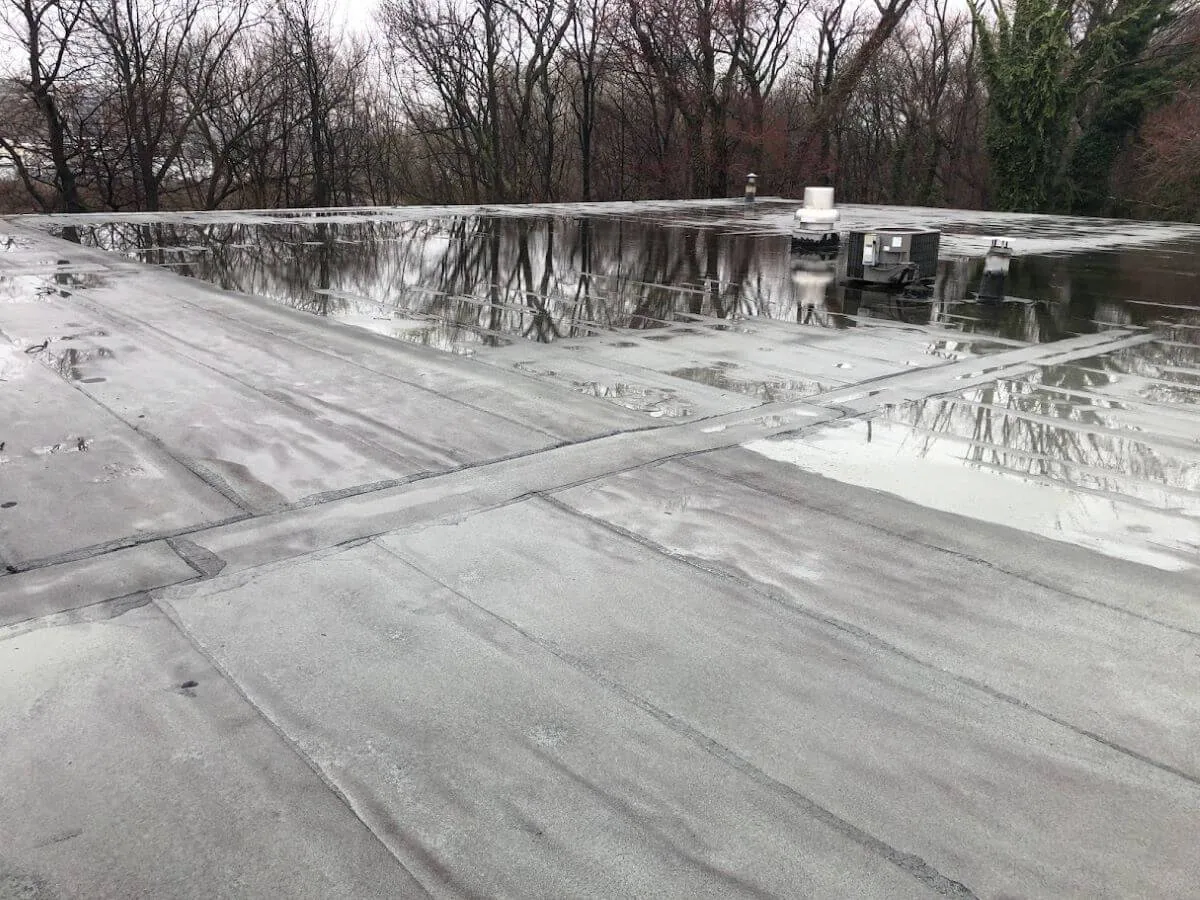
An open seam is one of the most common leaks we find on single-ply roofs in Plano. On TPO and PVC, a weld that never fully fused, or one that has been flexed by years of heat and wind, starts to lift at the edge. On EPDM, the seam tape or adhesive lets go, often at T-joints and around corners. Water runs under the lap and travels along the insulation before it shows up on a ceiling tile, sometimes well away from the opening.
The repair depends on what the membrane is and how much of the surrounding sheet is still in good shape. Our commercial roof repair crews pin down the material first, clean and test the surrounding sheet, and then decide between rewelding, a cover strip or cutting in a new section. If you have the original roof specs or warranty paperwork, send them over; they save time.
Start by knowing the membrane
White single-ply roofs all look alike from the ladder. TPO, PVC and coated EPDM can be hard to tell apart without a closer look or a small sample, and each needs a different repair. Heat-welding TPO to PVC doesn't hold, and EPDM tape won't bond to a thermoplastic sheet.
On a TPO roof, older sheets often need scrubbing and a cleaner before they'll take a weld, and very weathered membrane may not weld at all. We test a small area first. The estimate states the repair method, the cleaner or primer, and how far past the opening the repair extends, so you can compare it with other bids line for line rather than against a vague "reseal seams."
Finding where the seam failed
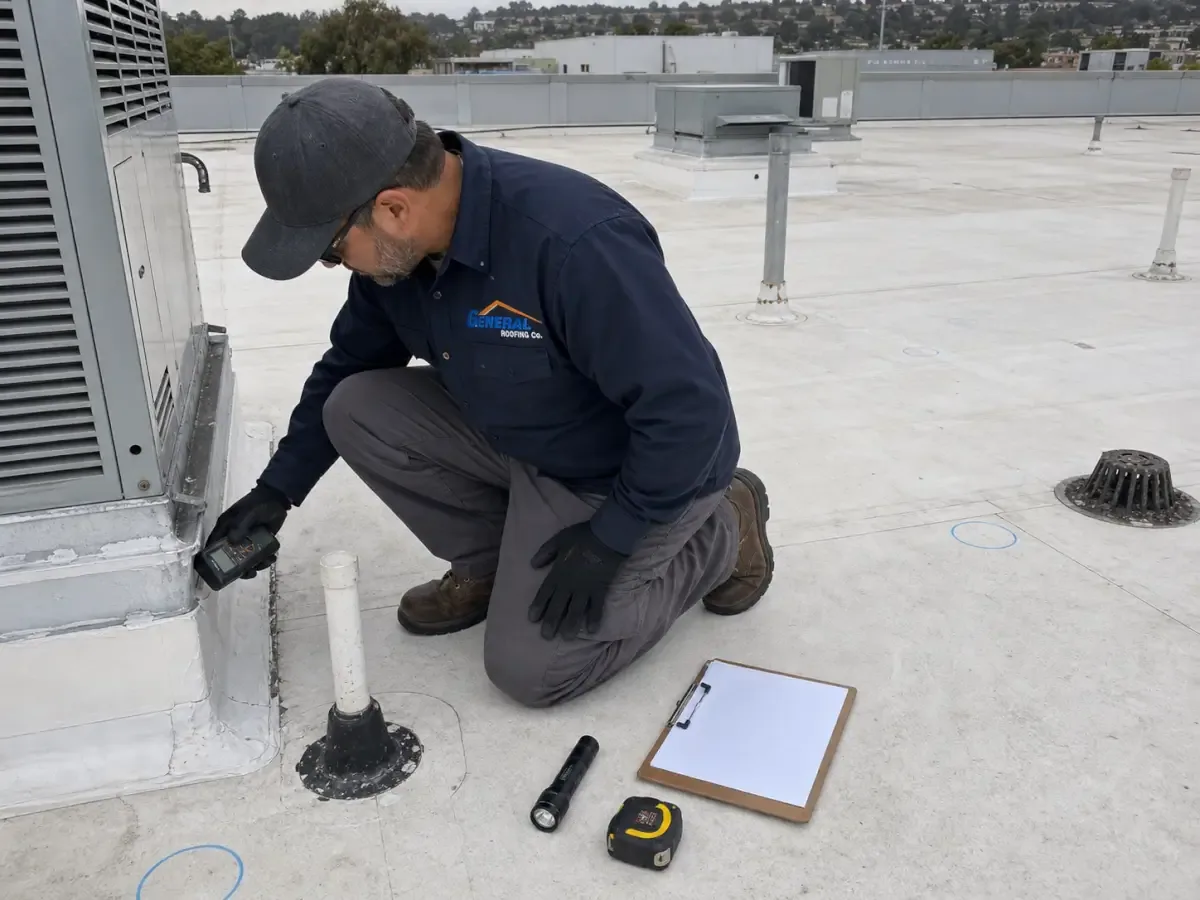
We run a seam probe along the lap to find exactly where it's open, then mark both ends. A seam that fails right at a drain, a wall or an equipment curb needs more work than one that opens in the middle of the field, because the repair has to tie into flashing as well. Each opening gets a close photo and a wide one so it can be found on the roof plan.
Next we check the sheet on both sides. Dirt, oily residue from rooftop units, chalking and brittle membrane all affect whether a new weld or cover strip will hold. If the sheet next to the seam is too far gone, the repair has to extend to good material or a section of membrane has to be replaced. That often settles whether a local repair is the right call or whether you're looking at a bigger project.
A roof inspection that probes all the seams tells you whether you have one bad lap or a pattern. If we only checked part of the roof, the report says which part.
Checking what's under the seam
Water that got in through a seam usually soaks the insulation near it first. We look for soft spots, blisters and wrinkles, and take a core or moisture reading when the roof feels spongy. One open seam doesn't mean the whole roof is wet, and we won't price it that way, but we do want to know how far the water traveled before we close it up.
When the insulation or cover board is wet, we cut it out and replace it as part of the repair; that falls under our insulation and cover board work. The new board has to sit flush with the surrounding roof so the membrane lies flat and the new seams aren't stressed. That tear-out appears as its own line on the estimate instead of being buried in a "seam repair" price.
Sometimes we open a seam and find more: a rotted nailer, a rusted deck flute, or wet insulation that runs farther than the readings suggested. We photograph it, call you, and agree on the change before closing the roof. The area stays watertight in the meantime.
When the seam runs into flashing
Seams often fail where they meet a parapet wall, a pipe boot or a roof edge. In those spots the repair has to continue into the flashing, and sometimes the flashing itself has pulled loose or the wall behind it is wet. If metal coping or wall panels need work first, we schedule that before the membrane goes back.
When a seam opening runs into failed flashing, we fix both in one opening. A puncture nearby gets patched at the same visit. The estimate lists each item so you can see what's being done at each spot and what it costs.
Scheduling and testing the repair
We settle roof access, ladder or hatch use, and where the crew can stage materials with the property manager. Office buildings around Granite Park often have tenant schedules, security check-in and loading dock limits that shape when we can work, and hot-air welders need power or a generator.
Once the new seam is welded or taped, we probe it end to end. On a weld we look for a consistent bleed-out line along the edge. The report notes exactly which seams we repaired and tested, so nobody assumes the rest of the roof was checked the same way.
Keeping track of the repair
The closeout includes photos of the open seam, the prep, any replaced insulation and the finished weld, plus its location on the roof plan. If a leak shows up next year, you or the next contractor can tell right away whether it's at the repaired seam or somewhere new, and that matters in warranty conversations.
If water is coming in now, we can come out at night, on weekends and on holidays to put down a temporary seal or cover. That buys time; it isn't the final repair. We'll tell you what the temporary fix covers, what we still need to check, and when the permanent seam work can be scheduled.
Commercial Roofing Questions
Why do you need to know the membrane type before repairing a seam?
TPO, PVC and EPDM each use different repair materials and methods, and they don't bond to each other. Several white membranes look the same from a distance. Getting it wrong means a repair that peels off.
How do you decide whether a seam can be repaired in place?
We check the sheet on both sides of the opening for dirt, chalking and brittleness, and test a small weld if needed. If the membrane next to the seam is in poor shape, the repair extends to sound material or a section gets replaced. Nearby flashing and curbs can widen the repair too.
Does one open seam mean the insulation is wet across the roof?
No. Water usually spreads only a limited distance from the opening. We check the area with cores or moisture readings and replace only the board that's actually wet.
What happens when the seam failure reaches a wall or curb?
The repair has to continue into the flashing at that wall or curb. If the flashing has pulled away or the wall behind it needs work, that gets fixed first. We list it separately on the estimate.
What records do we get after a seam repair?
Photos of the open seam, the prep and the finished repair, with its location on a roof plan. We also note which seams were probed and any items still open. That makes it easy to tell a new leak from an old repair.
Have the open seam checked
Schedule a roof visit in Plano. We'll confirm the membrane type, probe the seams, check for wet insulation and give you a repair estimate that covers the seam and any flashing it ties into.
Related Roofing Work
Request a Roof Assessment in Plano
Tell us about the building, the roof and what you are seeing. Send a request or call 555-555-5555.