
Commercial Roof Membrane Puncture Repair in Plano, TX
Home / Roof Damage Repair / Membrane Puncture Repair
A puncture the size of a screwdriver tip can let in enough water to soak several boards of insulation before anyone sees a ceiling stain. Dropped tools, HVAC service traffic, wind-blown debris and hail all leave holes like this. The patch has to bond to sound membrane around it, and the insulation under the hole may need checking before it's sealed over. We inspect the area, find where good membrane begins, and price a repair that closes the roof for good instead of trapping wet insulation under a patch. For a Plano building owner, that means the estimate shows the prep and any insulation replacement, not just the cost of a patch.
Hilton Dallas/Plano Granite Park on Granite Parkway and Collin College's Plano Campus on East Spring Creek Parkway are local landmarks we mention for context only; we're not describing their roofs or any work there. On your roof, membrane repair is based on what we find at the puncture and what membrane is actually installed.
Pinpointing the puncture
We mark the puncture on a roof plan or note its position relative to the nearest drain, seam, curb or rooftop unit, and photograph it with enough of the surroundings to find it again. A close-up shows the hole but not where it is. We also check the membrane right around it for scuffs, cuts and soft spots. That location goes into the closeout record so anyone can find the repair later.
We keep what you've been told about the puncture separate from what we see. A hole next to an HVAC unit doesn't prove who made it or when. We report the damage and what we could inspect. If you need to sort out responsibility with a service contractor or tenant, that's a separate conversation, and the repair doesn't wait on a guess about how the hole got there.
Matching the repair to the membrane
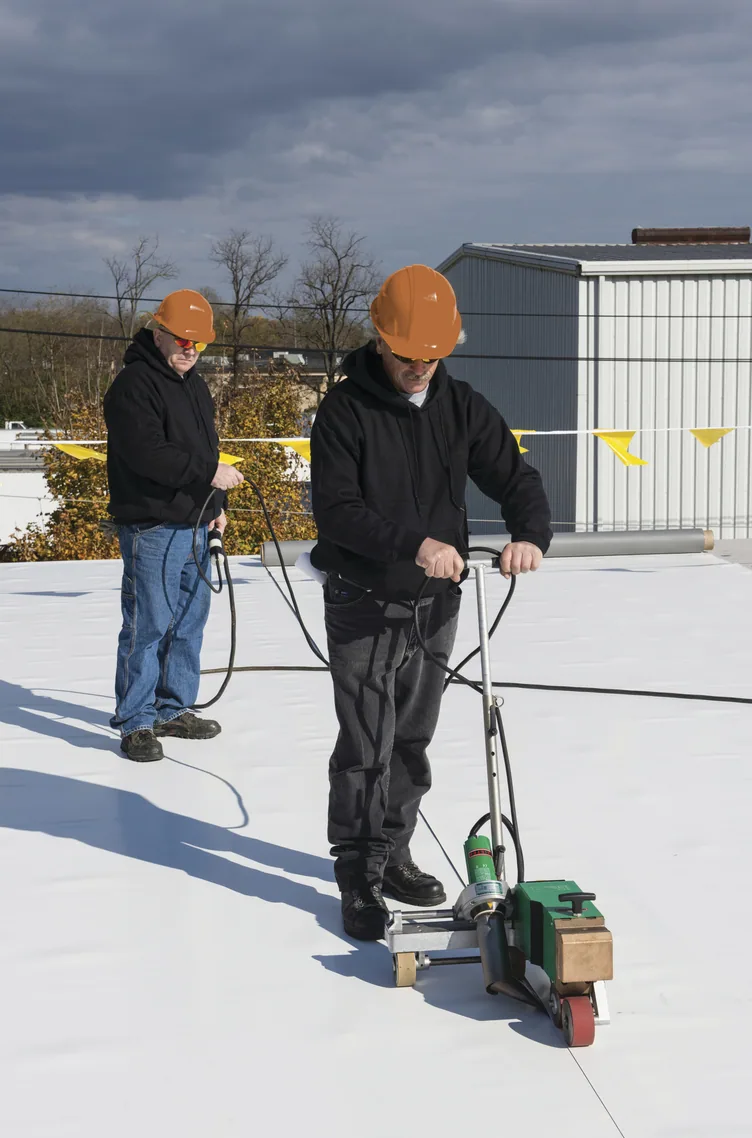
We confirm the roof system before choosing a patch. TPO and PVC are heat-welded, EPDM uses primer and seam tape, and modified bitumen is torched, mopped or set in cold adhesive. Two white membranes can look alike and still be different materials that won't weld to each other. If the membrane type isn't certain, we confirm it before choosing the repair, because "seal the hole" doesn't tell you what you're paying for.
On PVC roofs, the existing sheet has to be cleaned and, if it's older, tested to make sure it will still take a weld. We check the membrane around the hole for cuts, scuffs or brittleness. The patch needs good membrane on every side and a shape that doesn't land on a seam, termination or worn area; if it would, we enlarge it.
We note which membrane stays and which comes out. That lets you compare a small patch with a larger repair based on the prep each one needs. A bigger patch isn't necessarily better if the seam beside it or the insulation beneath it still hasn't been dealt with.
Checking for wet insulation
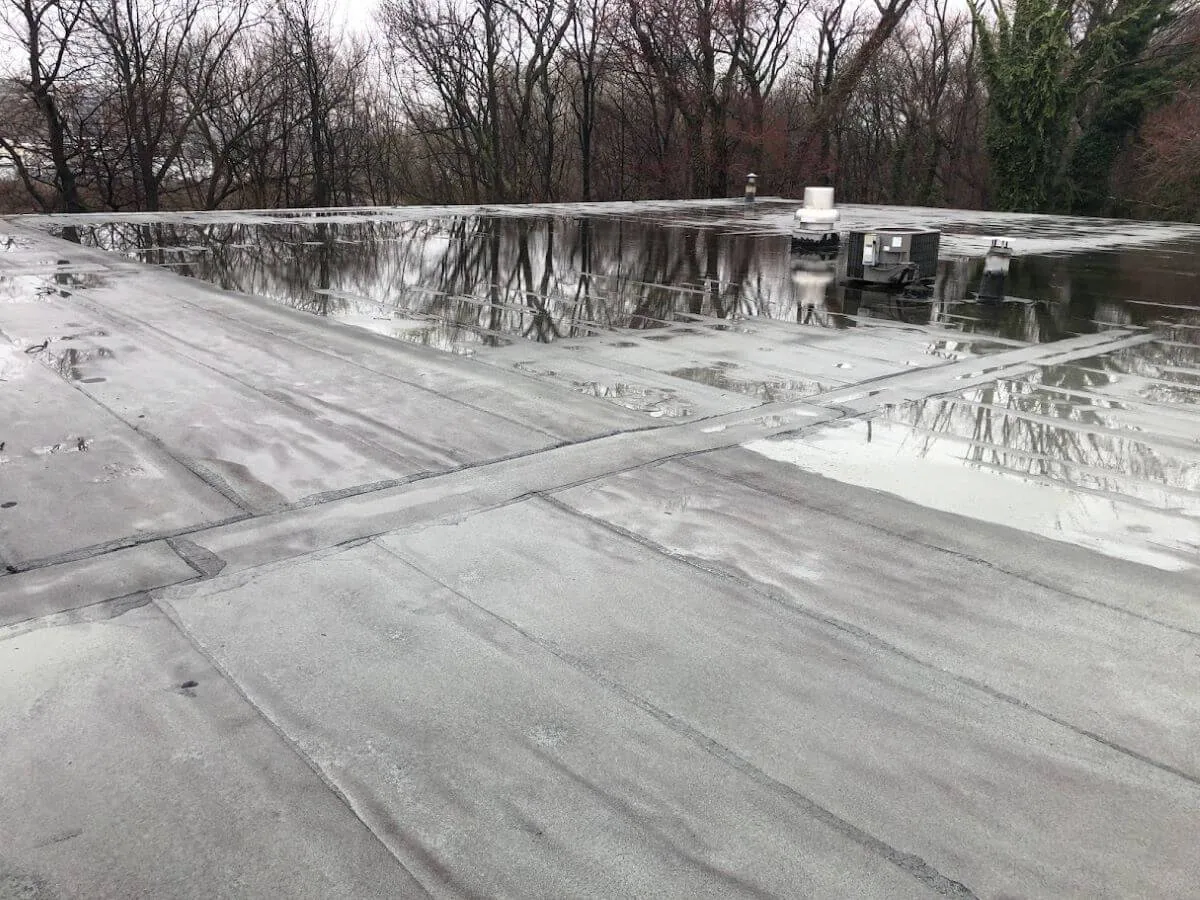
Water through a puncture often spreads through the insulation well beyond the hole. Where the repair depends on keeping the insulation below, we take a core or test cut, or scan for moisture, and set the tear-off from the result. The size of the hole doesn't tell us how much insulation is wet. A patch over soaked polyiso traps the water, and the roof keeps deteriorating out of sight.
Our insulation and cover board replacement rebuilds the layers the test results show are damaged. We note where we tested, what we found and how deep the repair goes. A dry core under one puncture tells us about that spot, not the rest of the roof. You see the reason for the insulation work without the repair growing across the building on a guess.
Sometimes opening the roof shows the water traveled further than expected. When it does, we photograph it and walk you through how it changes the prep or the layers we're replacing before anything gets sealed. You approve the revised scope under the terms we agreed to, and the roof stays protected while you decide. We won't keep the original small patch if the insulation under it can't support the new membrane.
Nearby seams and flashing
We check whether the patch area runs into a seam, wall flashing or pipe penetration. Each of those tie-ins needs sound membrane and the right prep. A patch in the field doesn't fix an open seam next to it. With seam failure repair, we include the seam work when it's part of the same repair area and price it on its own line.
If the damage reaches a wall or curb, flashing repair goes into the scope. The HVAC contractor may need to fix a unit or a support first, and we note that before roofing starts. You can see the whole repair, from replaced insulation to the finished tie-in, instead of assuming a patch takes care of everything nearby.
Access and scheduling
We confirm the site contact, how we get onto the roof and where we can carry and stage material. Buildings around Legacy West and Legacy Business Park each have their own access rules, loading dock hours and roof entry points. We note the approved route and any work-area rules with the repair location, and your property manager handles the arrangements on their end.
We only open the roof when we have the protection and materials to close it on the same visit. The scope brings insulation replacement, membrane prep and the final patch together. If another trade has to finish first, that's listed beside the repair. A date on a work order doesn't fix a missing step, so we sort out the sequence before scheduling.
After the patch
We photograph the removed material and new insulation before the membrane covers them, and mark the patch on the roof plan. The finished repair is checked with the method that fits the membrane, such as probing a heat-welded seam, and the result goes in the record along with any open items for other trades. One patched hole doesn't prove the rest of the roof is dry.
A roof condition report keeps those details for future decisions. If another puncture shows up later, it gets its own inspection and its own repair boundary. The earlier record shows what was fixed, while the new repair is based on current findings. We can install emergency temporary protection on nights, weekends and holidays, and it's kept separate from the permanent repair.
Commercial Roofing Questions
Does the size of the hole set the size of the patch?
No. The patch needs sound membrane on every side and room to bond or weld properly. We check nearby seams, terminations and damaged membrane, and enlarge the patch where needed.
Why does the membrane type matter for a puncture repair?
Each system needs its own repair method: TPO and PVC are heat-welded, EPDM uses primer and tape, and mod-bit is torched or adhered. Similar-looking membranes can be incompatible. If we're not sure what's installed, we confirm it before choosing the patch.
When do you check the insulation under a puncture?
Whenever the repair relies on keeping that insulation. We take a core or test cut, or scan for moisture, and note where we tested and what we found. Wet insulation gets replaced rather than patched over.
Can a puncture repair include a failed seam nearby?
Yes, if the scope lists the seam work and the prep it needs. Nearby flashing or equipment repairs are listed too. A general "patch" line doesn't mean every nearby problem is included.
What should we keep after the repair?
Keep the photos of the prep and new insulation, the patch location on the roof plan, and the test results. The report lists anything still open with other trades. A new puncture later gets its own inspection.
Get a punctured roof membrane repaired properly
Schedule a commercial roof inspection in Plano for the puncture. We'll check the membrane around it and the insulation underneath, then price a patch that's prepped and tied in to last.
Related Roofing Work
Request a Roof Assessment in Plano
Tell us about the building, the roof and what you are seeing. Send a request or call 555-555-5555.