
Commercial Roof Condition Reports in Plano, TX
Home / Roofing Capabilities / Commercial Roof Condition Reports
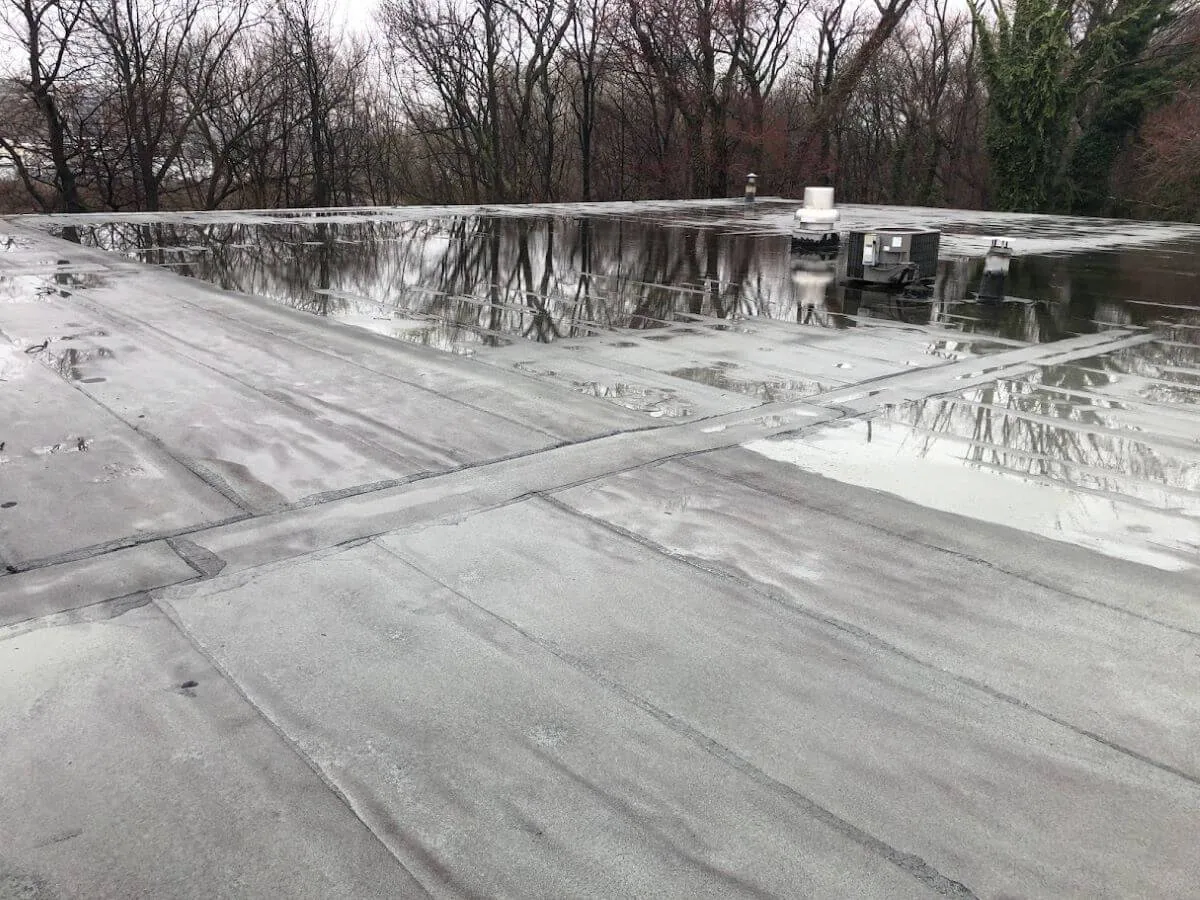
A water stain on a ceiling tile is where an inspection starts, not where it ends. Water often runs along the deck, a purlin or the top of the insulation before it drips through, so the leak on the roof can be well away from the stain below. A Plano facility manager needs three things in one place: where the stain is, what we checked on the roof above it and what we could not reach. We inspect the roof we can get to and back each recommendation with what we found. A good report makes it obvious which part is the original complaint and which part is the defect we actually confirmed.
Hilton Dallas/Plano Granite Park is on Granite Parkway, and Plano Municipal Center is on K Avenue. We use those as landmarks only; they say nothing about your roof and imply no business tie. Our commercial roof inspection at your property follows the leak and the roof system that is there. Your building's own findings are the basis for its report. A neighbor's address tells us nothing about the roof under review.
Keeping the original complaint traceable
We note where the problem was first seen inside and how to find it again, often by marking the room on a roof plan. Even so, a stain directly under a spot on the roof does not prove that spot is leaking. We ask the building engineer or property manager for the leak history and keep their account apart from what we see on the visit. "It leaks every time it rains hard" and "the seam at this pipe boot is open" are two different kinds of information.
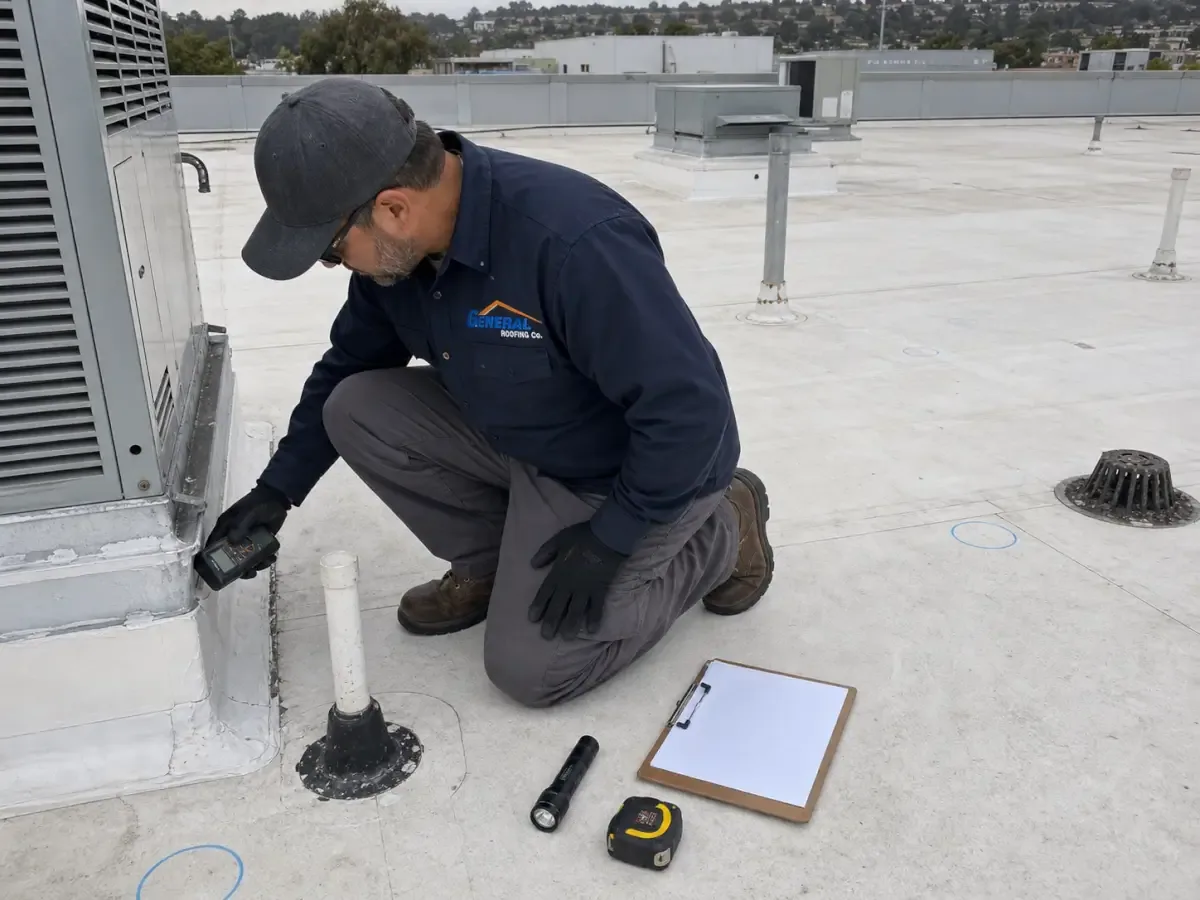
Every photo is taken with enough of the surroundings to find the spot again. A tight close-up can show an open seam and still leave a reader unable to tell which pipe it is on. We add a wider shot or a numbered mark on the roof plan. The report links each defect to the part of the roof and the roof section where it sits, so a manager who was not on the roof can follow the proposed repair.
What we saw versus what we think it means
We state what we saw before saying what it probably means. An open seam at a pipe boot, loose edge metal and worn-out wall flashing at a parapet each call for a different follow-up. The report names the materials and nearby details involved. If something points to a problem outside the roof, like a cracked vent pipe or a sagging deck, we say a plumber or engineer should look at it. A roofer's observation is not a plumbing or structural verdict.
Our roof leak repair assessment ties every recommended fix to the evidence behind it. If what we could see does not account for the leak, the report says so. We spell out the extra testing needed instead of naming a cause just to make the report look finished. The manager can then approve the next useful step knowing what is still unanswered.
The photos and the written notes have to agree on the location and size of each problem. A photo of one pipe boot covers that boot, not every boot on the roof. The reader should know whether other penetrations were checked or left out of the visit. That matters when deciding between one repair and a wider investigation.
Hidden layers and how far we can vouch for them
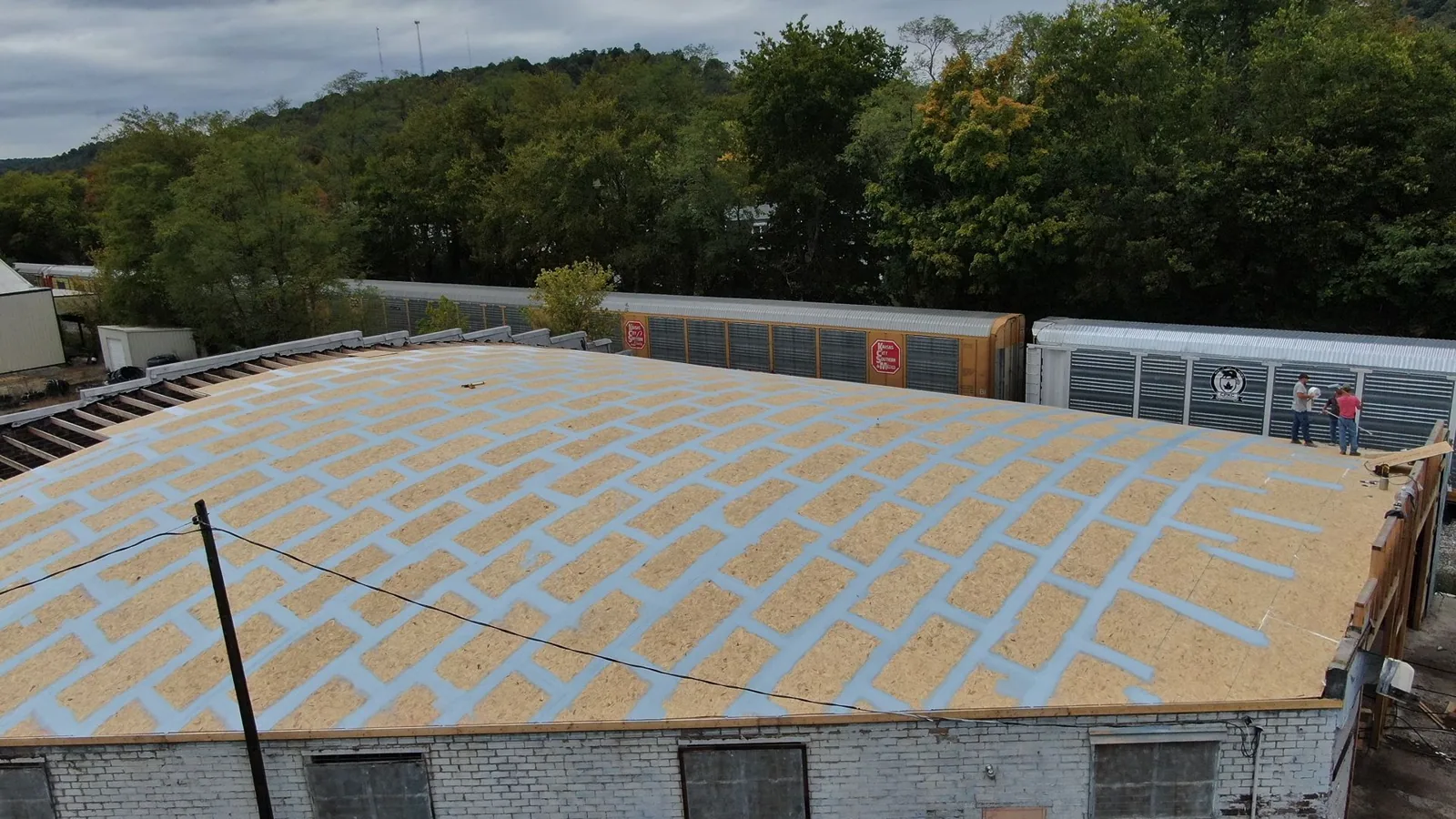
When a recommendation depends on what is under the membrane, the report says how we checked it. Sometimes that takes a core cut, a test opening or a moisture scan to find out how much insulation is wet. The report notes where that testing happened and how much of the roof it covered. A dry-looking surface is never described as proof that the insulation below is dry. The repair decision needs the real reason for keeping or tearing off material.
Results stay tied to the area tested. A wet core at one drain may justify a rebuild there while the next section stays an open question. We say whether more testing is needed to set the repair boundary. The report lists what we found, how it changes the repair and what is still uncertain, so the manager can weigh the recommendation against the evidence instead of assuming one core speaks for the whole roof.
Recommendations that cover the whole job
A recommended repair should list the prep and the finished flashing, not just the patch. That means the wet insulation coming out, the membrane that stays and anything like a drain bowl, curb or wall that needs fixing before roofing can finish. A one-line note to "patch the area" can hide the wall flashing, drain or equipment work that makes the patch hold. With commercial roof repair, we tie the finished detail to those earlier steps.
If another trade needs to look at something first, the report names that task and how it affects the roofing. We can suggest an order of work without pretending the other trade's job is already done. The owner can see which repairs can start now and which are waiting on someone else. New membrane flashing should go over a sound curb or drain, not over a question nobody has answered.
Where the findings support it, we compare a spot repair with a larger one. We note what about the surrounding roof makes the smaller fix workable, or what rules it out. The comparison is about the work you get, not just two prices. The manager gets a reason for the recommendation that can be checked against the photos and roof plan.
Priorities you can act on
The next steps are split into three groups: emergency protection, permanent repair and further testing. Each does a different job. For each, the report states the condition and the action we suggest, and it never makes up a remaining life for roof areas we did not inspect. A manager needs to know what can be handled now and what needs another decision. The order should be clear without a mystery rating to decode.
Jobs around Granite Park follow each property's own access rules and equipment schedules, which we confirm with the property manager. Emergency roof protection is available on weekends, on holidays and at night. If we put on a temporary patch, the report says what it was for and what still needs checking before a permanent repair. A patch does not settle the cause or the full extent of a leak.
Using the report for the next approval
The roof plan marks, photos, findings and recommended scopes stay together. A roof capital plan can use the report to compare spending options. A roof asset record keeps track of what was inspected and what was later repaired. Both should carry forward the limits of the original visit.
Once the work is done, we photograph the prep under the new membrane and the finished flashing. Anything another trade still owes is noted. A later report can then tell that finished repair apart from a new leak somewhere else. The old record stays good evidence for its own repair, and the new recommendation follows the area we just inspected.
Commercial Roofing Questions
Does a ceiling stain show exactly where the roof is leaking?
No. Water often travels along the deck or insulation before it drips through, so the opening can be some distance away. We note the stain, inspect the roof above and around it, and say plainly if the cause is still uncertain and needs more testing.
What location details should go with roof photos?
Each close-up needs a wider shot or a mark on the roof plan so someone else can find the spot. The photo backs up that one condition. It does not tell you the state of every similar pipe boot or curb on the roof.
How are findings under the membrane reported?
The report says where and how we checked, such as a core cut or moisture scan, and what we found. The result applies to the tested area only. If more testing is needed before widening a repair or keeping old layers elsewhere, the report says so.
What should a repair recommendation include?
The prep work, which layers get replaced and the finished flashing detail. It should also name any work another trade must do first. That way the manager approves a complete repair rather than a vague instruction to patch.
How can an owner use the report after the repair is done?
Keep it with the closeout photos of the prep and finished flashing, plus any items other trades still owe. When a new leak shows up, that history helps, but the new problem still gets inspected on its own.
Get a roof condition report
Book a commercial roof inspection in Plano. You will get photos pinned to a roof plan, plain notes on what we could and could not check, and a clear list of next steps, from emergency patching to repair or further testing.
Related Roofing Work

Request a Roof Assessment in Plano
Tell us about the building, the roof and what you are seeing. Send a request or call 555-555-5555.