
Aircraft Hangar Roofing in Plano, TX
Home / Property Types We Roof / Aircraft Hangar Roofing
A hangar roof has a job most roofs never face: it has to stay dry over an open floor where one drip can land on a wing, an engine cowling or a freshly painted fuselage. On the hangar repairs we look at in Plano, the leak very often traces back to a roof drain. A big clear-span roof sends a lot of water to just a few outlets, and when the drain bowl, clamping ring or the deck around the sump has rusted or pulled loose, a patch over the membrane rarely lasts a season. If we open the roof and the drain body itself can't be reused, the estimate needs to say who replaces it, how much membrane and insulation comes off to get there, and how the new roof ties back in. The pipe below the deck belongs to a plumber, and we put that in writing instead of leaving it vague.
Addison Airport is the closest general-aviation field, just west of Plano in Addison, but the airport's name tells us nothing about your building or its roof. Aircraft storage and maintenance buildings around Plano sit in industrial and business parks, and each has its own history. When you call, give us the building address, the person who can get us onto the roof, and any drawings or old repair invoices you have. Those help us find the right drain quickly. They don't replace a core cut where the roof layers actually matter.
Checking the drains first
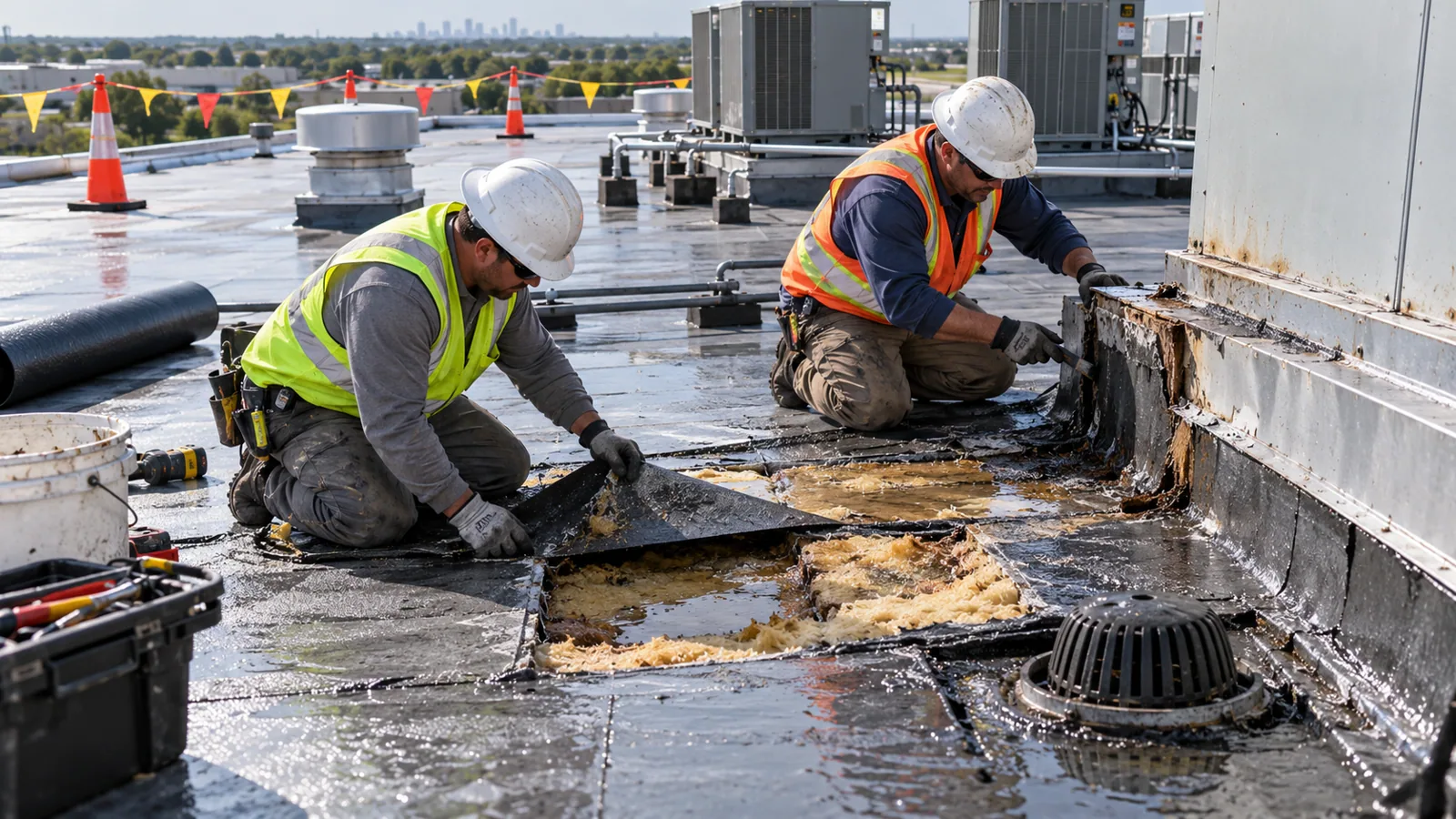
Our drain and scupper inspection starts at the outlet nearest the reported leak. We pull the strainer, check the clamping ring and bolts, look at how the membrane is stripped into the drain bowl, and probe the insulation around the sump for soft or wet board. If the bowl is cracked, the ring is missing bolts, or the deck around it has rusted through, we tell you plainly that the drain needs rebuilding before any new roof goes back over it. The vertical leader, the horizontal pipe and anything else inside the building are plumbing work, and we list them separately so nobody assumes a new membrane flange fixes a broken pipe joint below.
We also tell you where our look stopped. A wet spot on the hangar floor is a clue, but on a ceiling that high, water can run along a purlin or a pipe and drop well away from where it got in. If we can't see the layer that decides the repair, we'll suggest a small test cut, note where it goes, and include patching it closed. Photos of the drain and the cut go into the file before the new roof hides them. One bad drain doesn't mean every drain on the roof is failing, and we won't price it that way.
What a moisture survey can and can't tell you
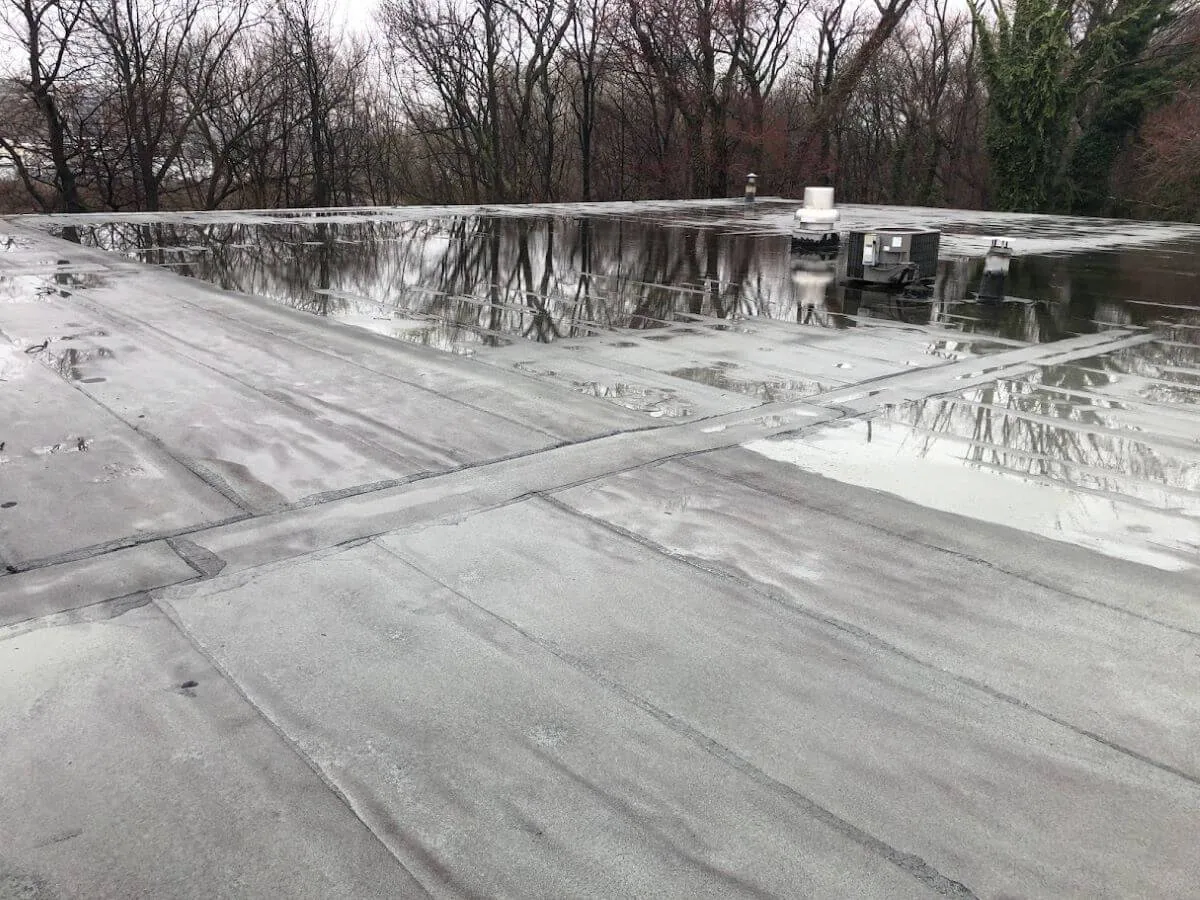
An infrared moisture survey is a good way to map where wet insulation might be across a large hangar roof, especially one too big to core everywhere. It works best on a clear evening after a sunny day, and the results still need checking against the roof itself. A warm spot on the image can be wet board, or it can be a change in insulation thickness, a patched area or heat from something below. Where the survey result decides whether insulation stays or comes out, we confirm it with a core sample and include sealing the core in the price.
We also keep what we found separate from guesses about why it happened. A split seam at a drain or a rusted sump needs repair whether it failed from ponding, age, foot traffic or hail, and the roof doesn't always say which. If the steel deck or the support framing under the drain looks compromised, we'll recommend a structural engineer look at it before we fasten anything back down. That matters for the price: an estimate that only covers new membrane over the drain can't put back steel or decking that isn't there, and a lower number that skips the core or the deck repair isn't really comparing the same job.
What the repair estimate should include
A solid commercial roof repair estimate for a hangar drain lists what comes off, what stays, and what goes back. That usually means cutting out wet insulation around the sump, replacing the drain body or adding a retrofit drain insert where it fits, installing tapered insulation or cover board to bring the area back to grade, and stripping in new membrane. TPO and PVC seams get hot-air welded; an EPDM or modified bitumen roof needs its own compatible flashing and adhesives. A coat of roof coating over a failed drain doesn't replace any of that, and it doesn't fix the pipe underneath, so be careful comparing a coating bid against a real repair.
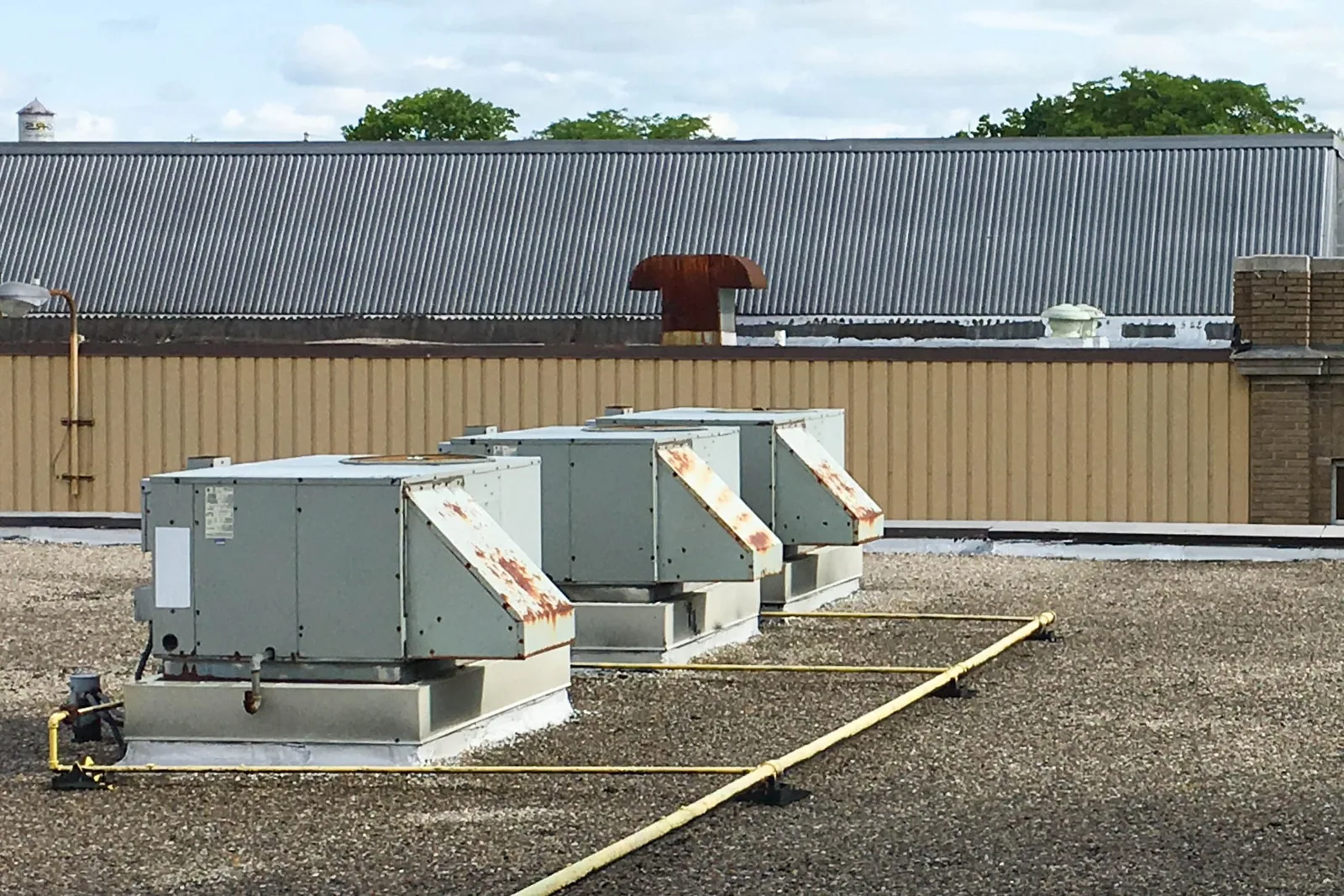
Hangars often have exhaust fans, makeup air units or HVAC on the roof, so our equipment curb and support work comes up a lot. If a unit sits near the repair, its mechanical contractor should disconnect, lift or move it, and handle restart and any clearance concerns. If a curb or support needs to change, an engineer may need to review it. Where the roof meets a parapet or the tall hangar door header, we check the wall behind the flashing before we attach anything. Each of those items goes on the estimate with who does it, so a finished seam isn't mistaken for the HVAC work being done.
Working above aircraft and hangar operations
Before any roof work over an occupied building starts, we sit down with the facility manager to go over where we'll cut, how materials get up to the roof and where debris comes down. In a hangar, that means talking about which aircraft and equipment are parked under the work area, whether they can be moved or covered, and whether fire suppression, lighting or electrical runs sit just below the deck. Ground crews, maintenance staff and tenants all need to know the plan. An inspection visit is not permission to start tearing off roof, and the airport's name doesn't give us any right to be on the flight line. Access comes from whoever manages your building.
Sometimes opening the roof shows more damage than expected, like wet insulation running past the first cut or deck rust spreading beyond the drain. When that happens we stop, photograph it, mark how far the bad material goes, and tell you what it adds: more removal, deck repair, maybe a second trade. We'll keep the opening dried in with a temporary seal while that gets sorted out, and we'll review again what needs protecting below the larger area. The revised price covers all of it, not just extra square feet of membrane, so you're approving the full job.
Records to keep after the repair
Once the new drain and membrane are in, nobody will see what was under them, so the file matters. We keep the drain location, photos of the old bowl and the wet insulation, what we removed, what we left in place and how the new membrane ties into the existing roof. Test cuts we patched go on the list too. Anything still open, such as the plumber's pipe repair, a mechanical unit waiting on a technician or a wall that needs masonry work, gets listed apart from the roofing we finished. If a question about hidden layers is still open, we note where and why. The next person managing the hangar can then see exactly what was done at that drain and won't assume the whole roof was inspected.
We work on hangars and industrial buildings throughout the East Plano Parkway industrial area and the rest of the city. When you reach out, send the building address and the person who handles roof access. Many of the same drain and deck issues show up on warehouse roofs and flex industrial buildings, but each building gets judged on what we actually find on its roof, not on what we saw at the place next door or what the nearest airport does.
Commercial Roofing Questions
What should a hangar drain repair estimate include?
It should list the membrane and insulation being removed, the drain replacement or retrofit insert, any deck repair, and the new flashing tied into the existing roof. It should also say clearly that pipe repairs inside the building belong to a plumber. If those pieces aren't listed, you can't compare bids fairly.
Does being near Addison Airport give you access to my hangar?
No. Addison Airport is just a nearby landmark, and its management has nothing to do with your building. We need permission and access from whoever owns or manages your hangar, plus any rules they have for working near aircraft.
If one drain is bad, are all of them bad?
Not necessarily. We judge each drain and the insulation around it on what we actually see or core. If the first one raises questions about the rest of the roof, we'll suggest checking others rather than guessing.
What happens if you find more damage once the roof is open?
We stop, photograph it, and tell you how far the bad material goes and what it adds to the price. The opening gets a temporary seal while you decide. We also go back over what needs to be moved or protected below the larger work area.
Get your hangar roof drains inspected
Tell us which drain or area is leaking and who can let us on the roof. We'll check the drain, the insulation around it and the deck, then give you a clear repair estimate.

Request a Roof Assessment in Plano
Tell us about the building, the roof and what you are seeing. Send a request or call 555-555-5555.