
Commercial Snow and Ice Roof Damage Repair in Plano, TX
Home / Roof Damage Repair / Snow and Ice Roof Damage Repair
Plano doesn't see much snow, but when ice does come it tends to arrive hard, as it did during the winter storm the National Weather Service documented across North and Central Texas from February 14 through 17, 2021. Roofs here aren't designed around regular snow, and drains, scuppers and rooftop piping aren't built for days below freezing. After a hard freeze, the leaks we get called about usually trace back to iced-over drains, meltwater backing up under flashing, or frozen pipes that split inside or on top of the building.
A weather event is background, not proof. A stain that showed up after a freeze could be from the storm, from an old seam problem, or from a burst pipe. We start with a roof inspection of your building to find the actual source before anyone commits to a repair or files paperwork based on a guess.
Pinning down where the water showed up
We begin inside, with the facility manager: where the stain or drip appeared, when it was first noticed, and whether it gets worse in rain or only showed up once things thawed. A leak that appears only during a thaw points toward ice at the drains, backed-up gutters or a split pipe, while one that drips every time it rains is more likely an opening in the roof.
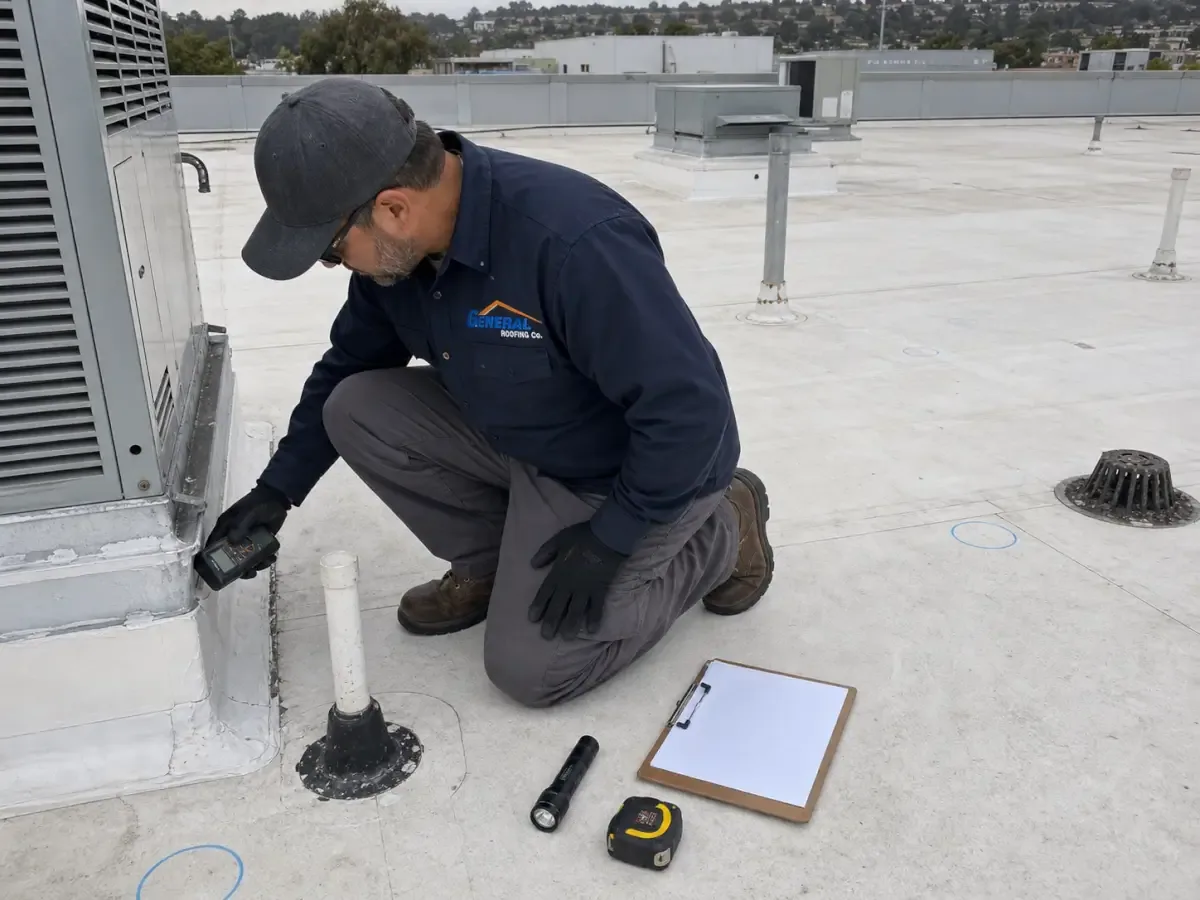
On the roof, we match the interior location to what's above it: drains, rooftop units, penetrations, seams and walls. Every finding gets a photo and a spot on the roof plan. If we couldn't reach part of the roof, say a section behind locked mechanical screens, the report lists it as not inspected instead of calling it fine.
When the structure needs a second look
Before the crew walks a roof after heavy ice, we ask the property manager about sagging, cracked joists, ceiling deflection or doors that suddenly stick. Any of those means a structural engineer should look first. We're roofers; we can point out a deflected deck or a new low spot, but we don't rate how much load a structure can carry.
A regional storm report doesn't tell anyone what weight sat on your roof. If the engineer recommends repairs to joists or deck, those come first and our roof work follows. The estimate keeps the two apart, so a roof repair price isn't mistaken for a structural sign-off.
Drains, scuppers and frozen pipes
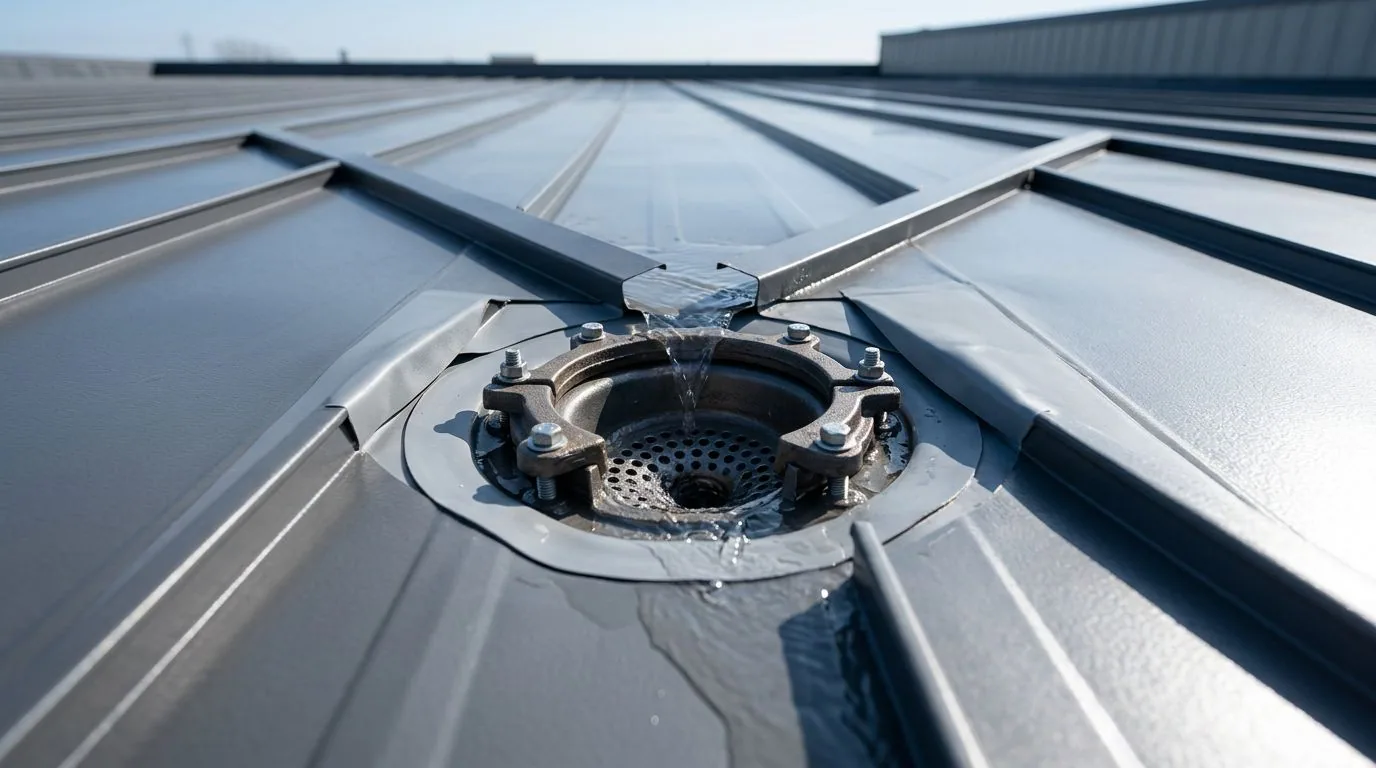
Ice in a drain bowl or scupper sends meltwater looking for another way off the roof, often up under base flashing or through a weak seam. We clear the drain, inspect the strainer and clamping ring, and check the flashing around the bowl for cracks from freeze-thaw. Rooftop condensate lines and exposed water piping get a look too, since a split line can pour water onto the membrane or straight into a penetration.
Our drain and scupper work covers the roof side of those outlets. If the leader pipe inside the building froze and cracked, or a sprinkler or domestic water line burst, that's a job for a plumber or fire protection contractor, and it needs to be fixed before we flash in new membrane. The estimate makes clear what's ours and what isn't.
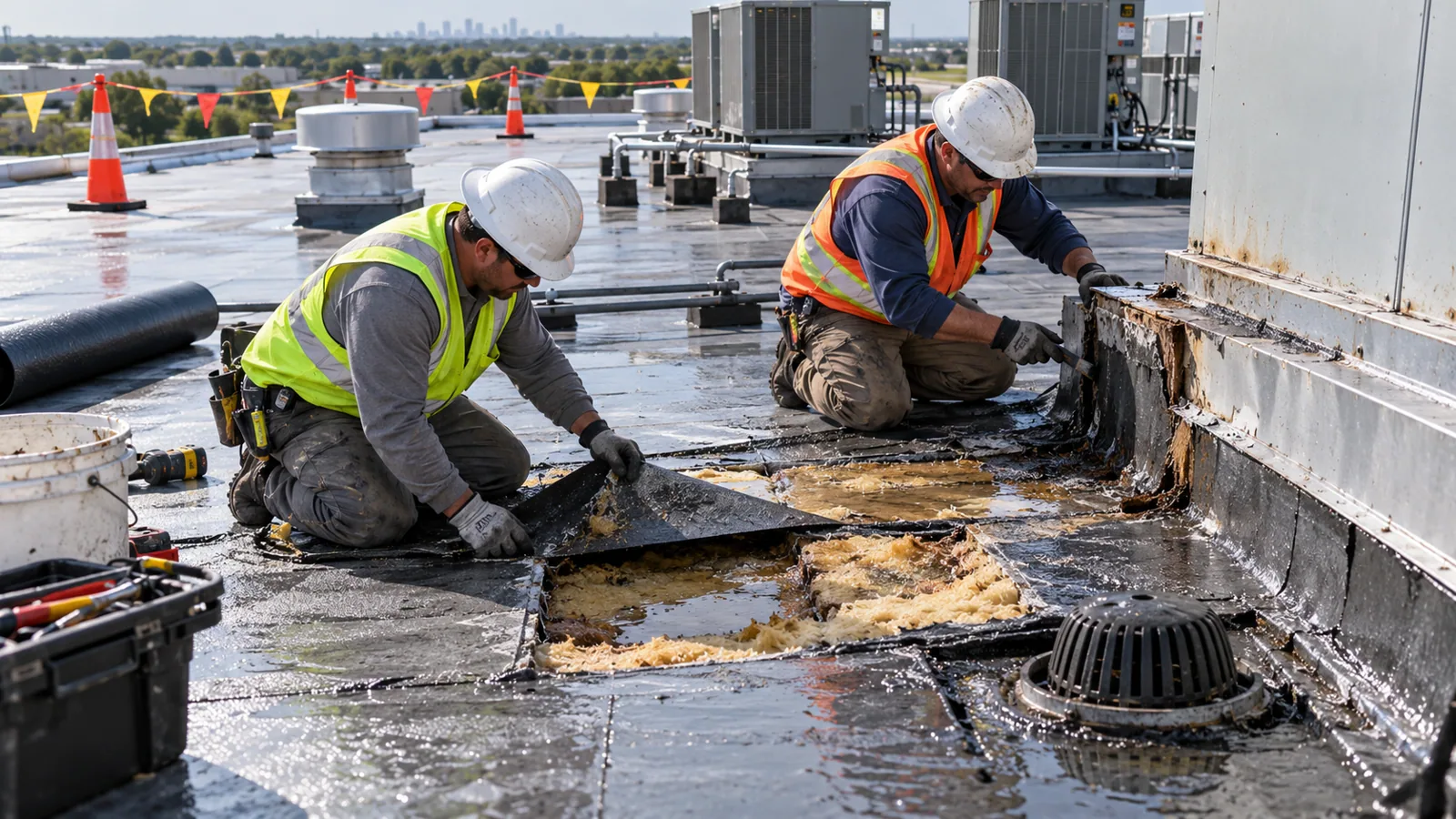
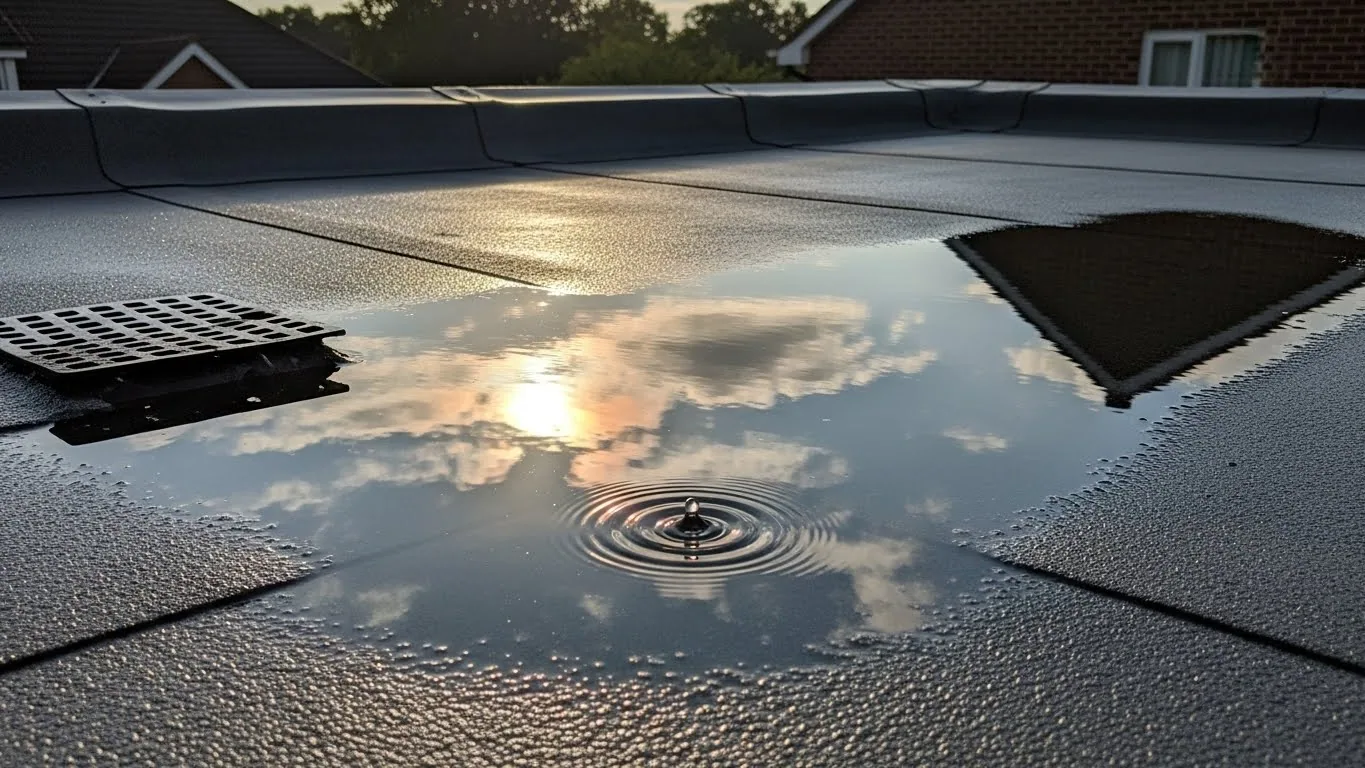
Where water sat around a drain long enough to soak the insulation, the work falls under ponding water repair: cut out the wet board, rebuild the slope and reflash the drain.
Repairing the membrane after a freeze
Ice and freeze-thaw cycles are hard on older membranes. Brittle EPDM can crack where it was folded at a corner, weathered TPO can split at stressed welds, and modified bitumen can lose granules and crack where ice built up. We confirm the membrane type first, then check whether the sheet around each crack is still flexible enough to take a patch.
Open laps are handled as seam failure repair. Where water got behind base flashing at a parapet, the fix runs into flashing repair, including the termination bar and counterflashing at the top. We price each item on its own so you can see what's being done at each wall, drain and seam.
If a spot feels soft or a wet core comes up, we check how far the wet insulation extends and replace only that area. Wet board near one drain doesn't mean the whole roof is saturated, and the readings decide where the tear-out stops.
Changes once the roof is open
Sometimes cutting into a damaged area shows more than the surface did, like a rusted deck or a wood nailer that has rotted out. When that happens, we photograph it, walk you through what it means for the repair and the price, and get your approval before going further. The roof stays dried in while you decide.
For buildings in Granite Park, we coordinate access, elevator or hatch use and material staging with building management ahead of time. After a regional freeze, roofers and plumbers across the area get booked up fast, so settling the access plan early helps keep your job moving.
Closeout and emergency calls
When the work is done, the roof condition report shows the repaired drains, seams and flashings with before-and-after photos and their locations on the roof plan. Anything still open, such as a plumber's pipe repair or an engineer's review, is listed with its status so it doesn't get forgotten.
If water is coming in right now, we take calls at night, on weekends and on holidays to clear drains and put in temporary protection. That stops the immediate damage. Permanent repairs follow once we know what's underneath and any pipe or structural issues are handled.
Commercial Roofing Questions
Does a regional winter storm report prove what caused our leak?
No. The National Weather Service record tells you the storm happened across the region. Your building still needs an inspection to find where the water got in, whether through the roof, a drain or a burst pipe.
Can a roofer tell us whether the structure handled the ice load?
Not reliably. We can point out a sagging deck or new low spots, but judging structural capacity is a structural engineer's job. If there are signs of deflection, an engineer should look before anyone works on the roof.
What if a frozen pipe caused the leak instead of the roof?
Then a plumber or fire protection contractor repairs the pipe first. We inspect and repair the roof side of drains and penetrations. The membrane shouldn't be closed over a pipe problem that hasn't been fixed.
What kinds of roof damage do freezes cause in Plano?
Mostly iced drains that push water under flashing, cracked brittle membrane at corners and seams, and split condensate or water lines on the roof. We confirm the membrane type and repair each spot with matching materials.
What should we have on file after the repair?
Photos and a roof plan showing what was repaired, plus a list of what was removed and installed. Any open plumbing or structural items are listed separately with their status.
Get the freeze damage inspected
Schedule a roof inspection in Plano after ice or a hard freeze. We'll check drains, seams and flashing, flag any pipe or structural issues for the right trade, and price the roof repairs clearly.
Related Roofing Work
Request a Roof Assessment in Plano
Tell us about the building, the roof and what you are seeing. Send a request or call 555-555-5555.