
Commercial Ponding Water Roof Repair in Plano, TX
Home / Roof Damage Repair / Ponding Water Roof Repair
Water that is still sitting on a flat roof two days after a Plano storm is telling you something about the drains, the slope, or both. Most of the time it collects around a drain that sits a little high, a scupper partly blocked with leaves and gravel, or a low spot where wet insulation has compressed under foot traffic. The membrane itself may be fine for now, but standing water speeds up wear on seams and coatings, adds weight to the deck, and finds its way into any small opening. Before we price a repair, we want to know why the water stays.
That means walking the roof after rain when we can, pulling the drain strainer, and checking how the field slopes toward each outlet. Our roof drain and scupper work starts with that diagnosis. If the problem turns out to be a clogged leader or a broken pipe inside the building, we say so and point you to a plumber instead of selling you new roofing.
The outlet question comes first
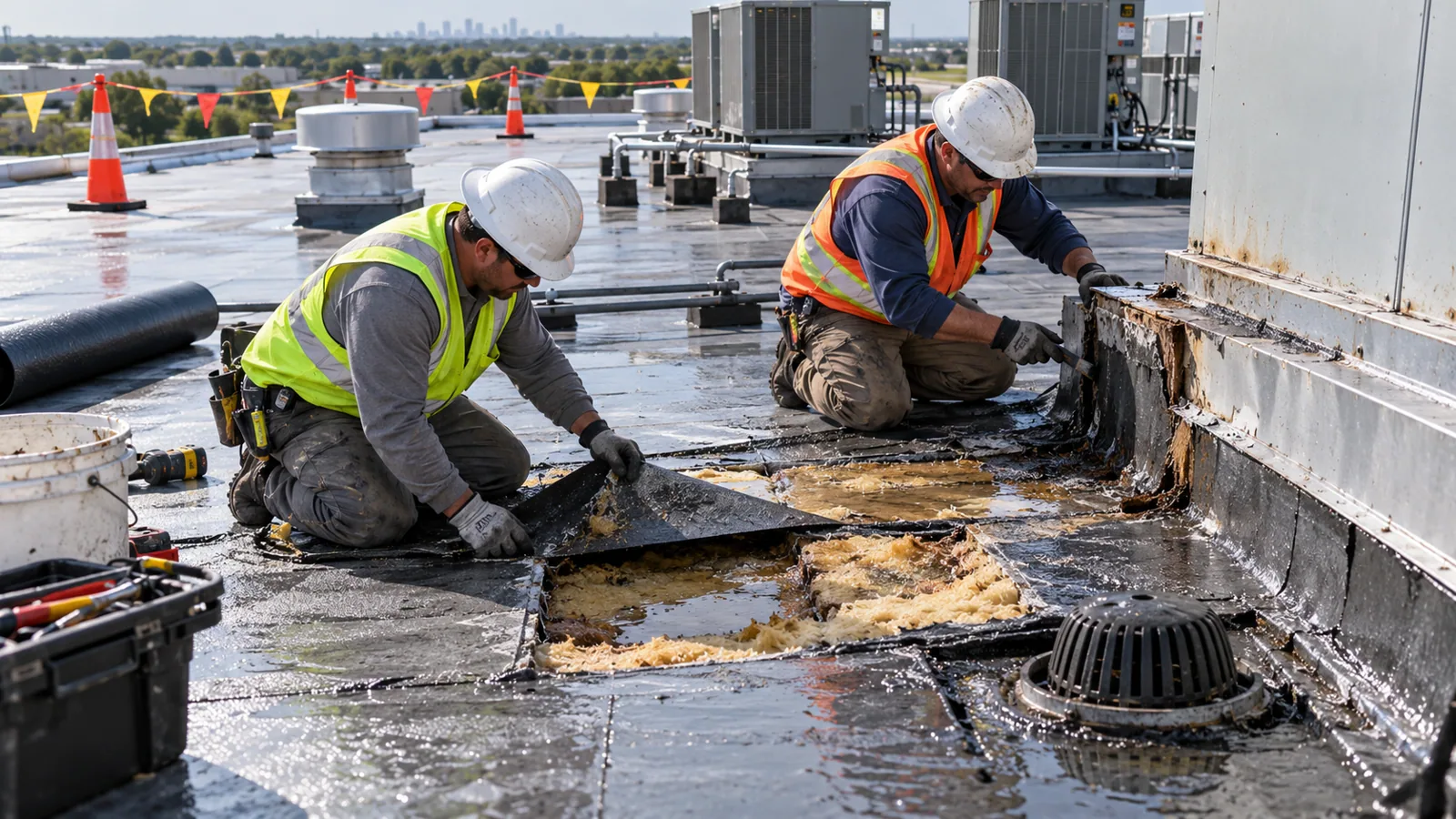
We start at the drain or scupper where the water collects. We pull the strainer, clear debris, and look at the clamping ring, the flashing around the bowl, and whether the drain body sits above the surrounding membrane. A drain set too high, or one left high after insulation compressed around it, holds a ring of water that never leaves. Scuppers get the same check: the opening height, the metal liner, and whether the overflow route is blocked.
We mark each ponding area on a roof plan and photograph it with enough of the surroundings that anyone can find it later. If water drains slowly even after the strainer is cleared, the restriction is probably in the leader pipe below the roof. We can run water to confirm, but camera work and pipe repair inside the building belong to a plumber, and the estimate will say so plainly.
Fixing the slope around the drain
Once we know where the water sits, the fix usually involves reshaping the roof surface so it falls toward the drain. On many Plano warehouses and office buildings that means adding tapered insulation or a drain sump, a shallow recessed area of tapered board that pulls the membrane down to the drain bowl. On some roofs it means lowering a drain or adding a new one.
Our roof insulation and cover board work covers those tapered sections. Raising the surface around a drain changes the flashing height at nearby curbs, walls and roof edges, so we check those details before we commit to a thickness. Adding another layer of membrane over a low spot doesn't move the water; it just hides the problem under new material.
We price each ponding area separately. One low drain on the north side of a building doesn't mean the whole roof needs crickets and tapered board, and the estimate should tell you which areas we're correcting and why.
Checking for wet insulation
Long-term ponding often soaks the insulation underneath. Wet polyiso or fiberboard loses its strength and insulating value, and it can hold water long after the leak stops. We check for soft areas underfoot, take core cuts where needed, and use moisture scans on larger roofs to map how far the wet material spreads. The amount of tear-out in the estimate comes from those readings, not from the size of the puddle on top.
If ponding has also opened a membrane puncture or a cracked seam, we repair that in the same opening. Ponding and punctures show up together often, especially near drains where people walk and set down tools, but we don't assume every puncture means wet insulation across the roof.
Sometimes the roof turns out worse once it's opened, with rotted wood nailers or a rusted deck. When that happens we stop, take photos, and talk to you about the change before we go further. The area stays dried in while you decide.
Who handles the pipe, who handles the roof
If the drain body is cracked, the leader pipe is broken, or the bowl needs replacing at the deck, that work has to happen before we flash new membrane to it. Sometimes we handle the drain body ourselves; when the problem is below the deck in the plumbing, a plumber does it. We sort that out up front so nobody discovers it on the day the crew shows up.
For buildings in Granite Park, where office towers and hotels sit close together, we plan roof access, freight elevator or ladder use, and material staging with building management. Some roofs need a hoist or crane pick for tapered board, and the property manager usually needs to book that ahead.
The work runs roughly in this order: clear and repair the drain, cut out wet insulation, install tapered board or the sump, prepare the membrane, then flash the drain and seal everything in. The schedule we give you lists what has to happen first and who is doing it, so the date actually means something.
Tying the new membrane in
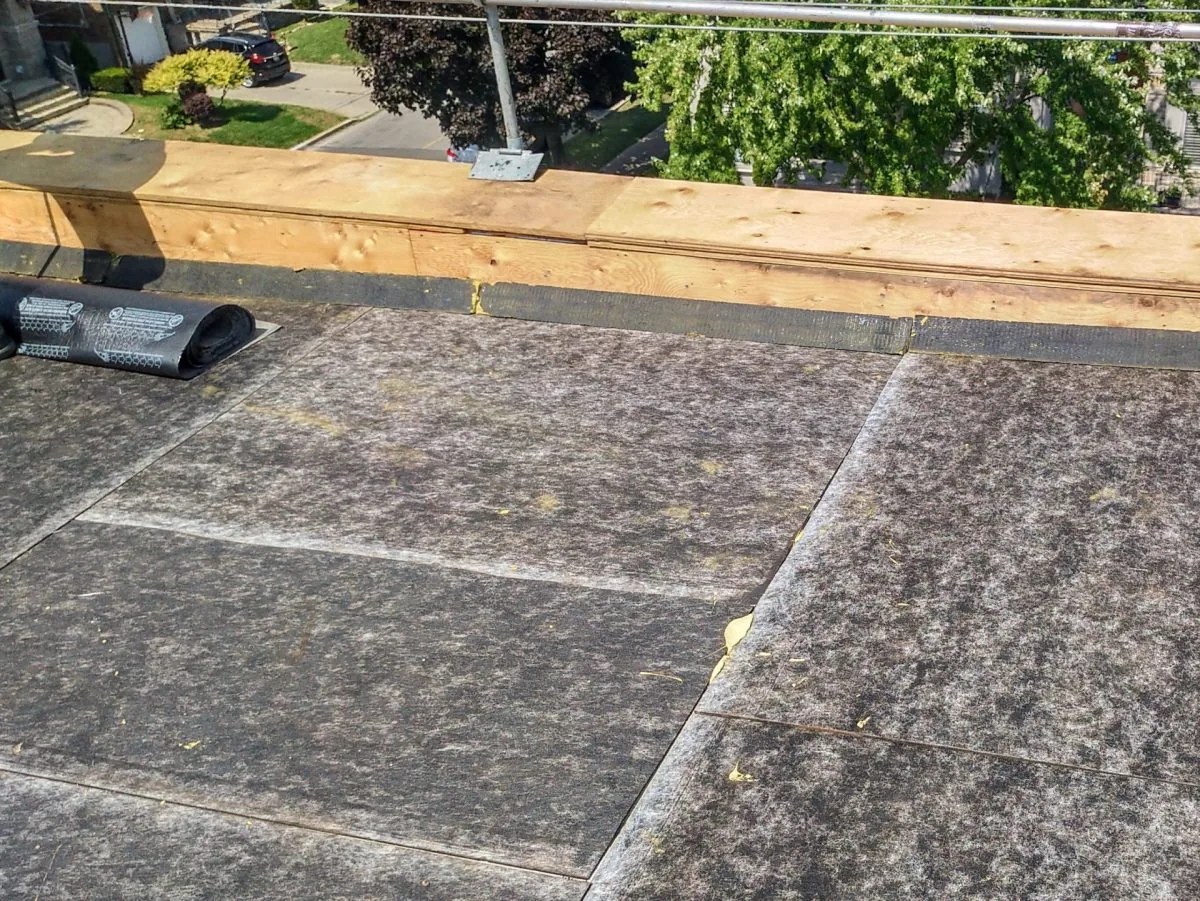
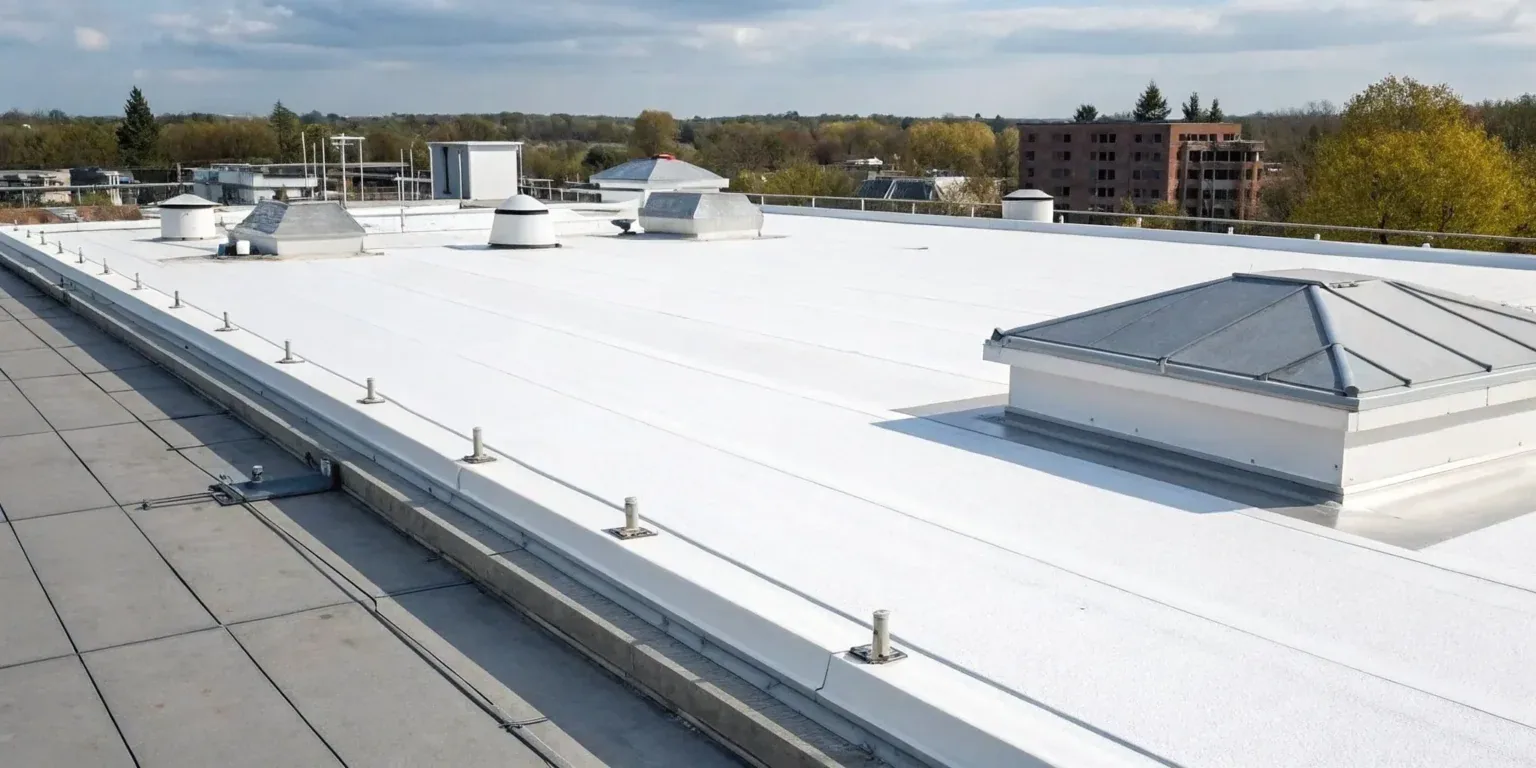
The patch material has to match the roof. TPO gets heat-welded TPO, PVC gets PVC, EPDM gets EPDM tape and primer, and modified bitumen gets torched or cold-applied plies. If the new surface around the drain sits higher, nearby base flashing may need to be extended; we cover that under flashing repair.
When the work is done, we probe every welded seam and, where possible, run water or wait for the next rain to watch the area drain. A dry roof on a sunny afternoon doesn't prove much, so we tell you what we tested and how, and what we'd still want to see after a storm.
What you get when we finish
We photograph the drain, the tapered board and the membrane prep before they're covered, and include them in a roof condition report with the ponding areas marked on the plan. It lists what we removed, what we kept and what we installed, plus any plumbing work that is still open.
If water is coming into the building now, we can come out nights, weekends and holidays to clear drains and put in temporary protection. That stops the immediate leak. The permanent drain and slope fix gets scheduled once we know the condition of the insulation and the pipe, and the paperwork says which is.
Commercial Roofing Questions
Does standing water on the roof mean the drain pipe is broken?
Not necessarily. Most ponding comes from a clogged strainer, a drain set too high, or a low spot in the roof. If water still drains slowly after we clear the strainer, the restriction is probably in the pipe below, and a plumber should look at it.
What do you check before raising the roof surface near a drain?
We look at the drain height, the insulation underneath, and the flashing at nearby curbs, walls and edges. Tapered board raises the surface, so those flashings may need to go higher too. We work that out before setting the thickness.
How do you decide how much insulation to tear out?
We use core cuts and moisture readings around the ponding area to find where the insulation is wet, and the tear-out follows those readings. Another section of the roof needs its own testing before we'd recommend removal there.
Who fixes the drain itself?
Drain bowls and clamping rings at the roof are usually part of our work. Cracked leader pipe or blockages inside the building go to a plumber. Either way, the drain has to be sound before we flash new membrane to it.
What paperwork do we get after a ponding repair?
You get photos of the drain, insulation and membrane prep before they were covered, a plan showing the repaired areas, and a list of what was removed and installed. Any open plumbing items are listed separately so they don't get lost.
Get the ponding areas looked at
Schedule a roof visit in Plano, ideally after a rain. We'll find where water is collecting, check the drains and insulation, and give you an estimate that separates roof work from any plumbing.
Related Roofing Work

Request a Roof Assessment in Plano
Tell us about the building, the roof and what you are seeing. Send a request or call 555-555-5555.