
Commercial Fire Damage Roof Repair in Plano, TX
Home / Roof Damage Repair / Fire Damage Roof Repair
After a fire, the roof is rarely the only thing that needs looking at. Heat can weaken steel joists and wood decking, melt or char insulation, and damage the rooftop units, conduit and gas lines that sit on the membrane. Before we price roofing in Plano, the building may need a structural engineer, a fire department or insurer clearance, and the mechanical and electrical trades. We tell you up front which of those our scope depends on, what we could test, and what we couldn't reach.
Collin College's Plano Campus and the Plano Municipal Center are familiar reference points for our area. If your building is nearby, send us its address and any engineering or clearance reports you have. Once we're on site, a roof inspection of the areas we can safely reach gives us findings of our own, and we keep the structural notes and clearance status next to the rebuild scope.
Knowing what we can and can't inspect
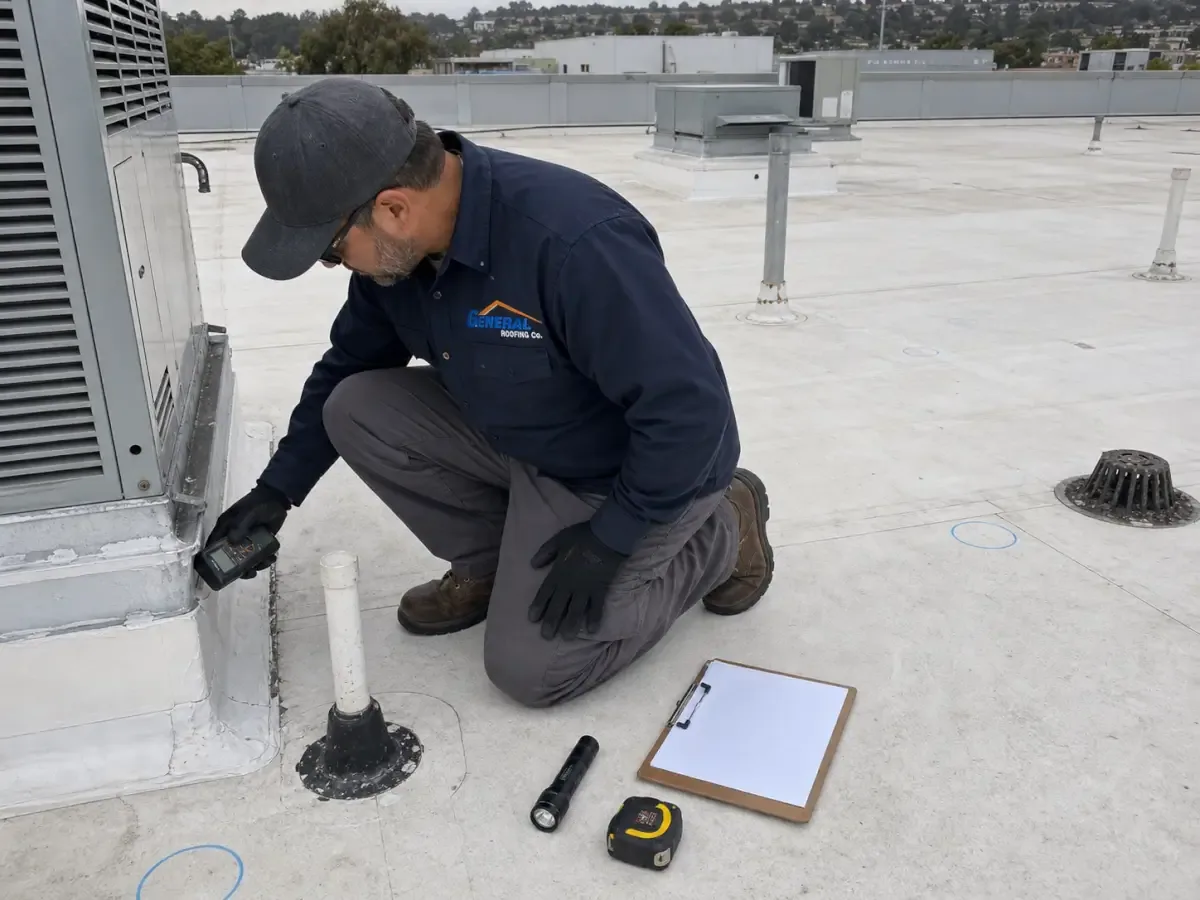
The first conversation is about access and safety. We confirm with the owner, the property manager and any engineer already involved which parts of the roof are safe to walk and which are off limits. A section over a burned bay with sagging joists stays off our walk path, and our report says so plainly. That matters if you're deciding whether to buy, repair or file a claim: an area nobody could inspect should never be treated as if it were in good shape.
We also keep the roofing questions apart from everything else. Structural capacity, damaged wiring, gas piping and rooftop HVAC units each need the right trade to sign off before we start. Our job is to tell you how the roof is built, where it's damaged and what it will take to put it back. A roof inspection is not a structural clearance, and we won't present it as one.
At the end of the visit you get a straightforward account: which areas we walked, what the membrane, insulation and edge details looked like, and what's still waiting on someone else. Even when we can't settle on a permanent repair yet, that list tells you exactly what has to happen next, which beats a vague assurance that the building is ready to reroof.
Mapping the damage on the roof
On the parts we can reach, we look at the membrane, the seams, the flashing at walls and curbs, and the drains and edge metal. Blistered or melted membrane, scorched flashing, warped metal and soot-stained areas all get marked on a roof plan and photographed with enough of the surroundings that you can find the spot again. A tight close-up proves what it shows and nothing more, so each photo is tied to a section of the roof and to a line item in the estimate.
Heat often does its real damage under the membrane. Polyiso insulation can char or shrink, cover board can delaminate, and a steel or wood deck can lose strength without much showing on top. Where the scope depends on those layers, we cut test openings or take cores and note where we took them and what we found. A burned surface doesn't tell us the condition of the deck three feet away, and questions about joists and beams go to the engineer. Where the tear-off starts and stops follows what the cuts show.
We keep what happened during the fire separate from what we see now. We don't assign a cause, and we don't stretch a damage finding past the evidence. Insurance reporting and any fire investigation run through your own people; our recommendation sticks to the roof.
Rebuilding from the deck up
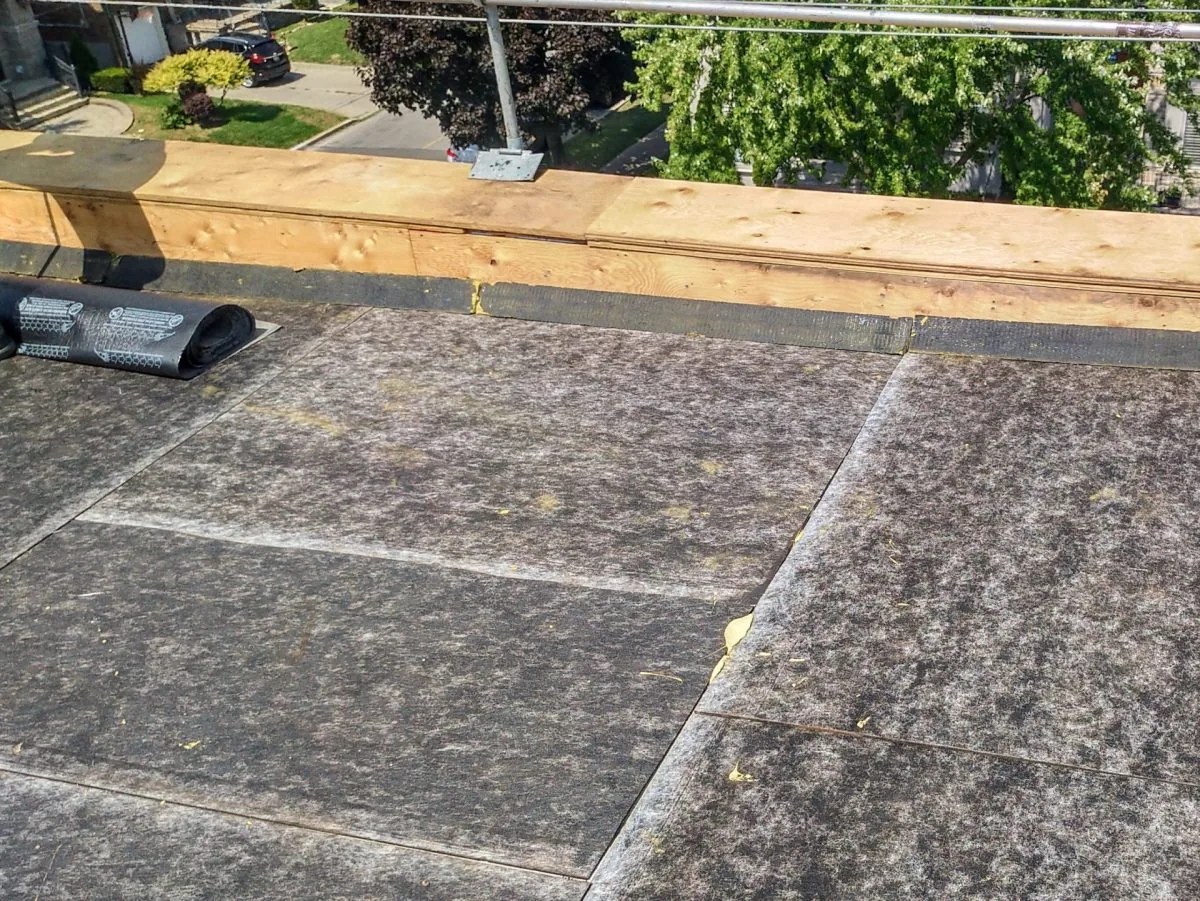
New membrane over a damaged deck or wet, charred insulation just hides the problem. If the deck needs repair or replacement, or the engineer calls for joist reinforcement, that work happens first, and we list it beside our roofing scope so you can see who does what and in what order. Our estimate runs from the prepared deck surface all the way up to the finished membrane and flashing.
Our insulation and cover board work replaces the layers the inspection calls for, whether that's a few damaged boards or the full assembly over a burned bay. The estimate spells out what comes off, what stays, and how the new insulation, cover board and membrane tie into the existing roof at the edges. A price per square of membrane without that detail is hard to judge, and when another contractor is handling the deck, their work and ours are listed separately.
Tear-off sometimes turns up more damage than the test cuts suggested. When it does, we photograph it before anything gets covered, walk you through what it means for the rebuild, and get your approval on any change. We won't hold to the original scope if the deck in front of us needs something different.
Tying the new roof into walls, drains and equipment
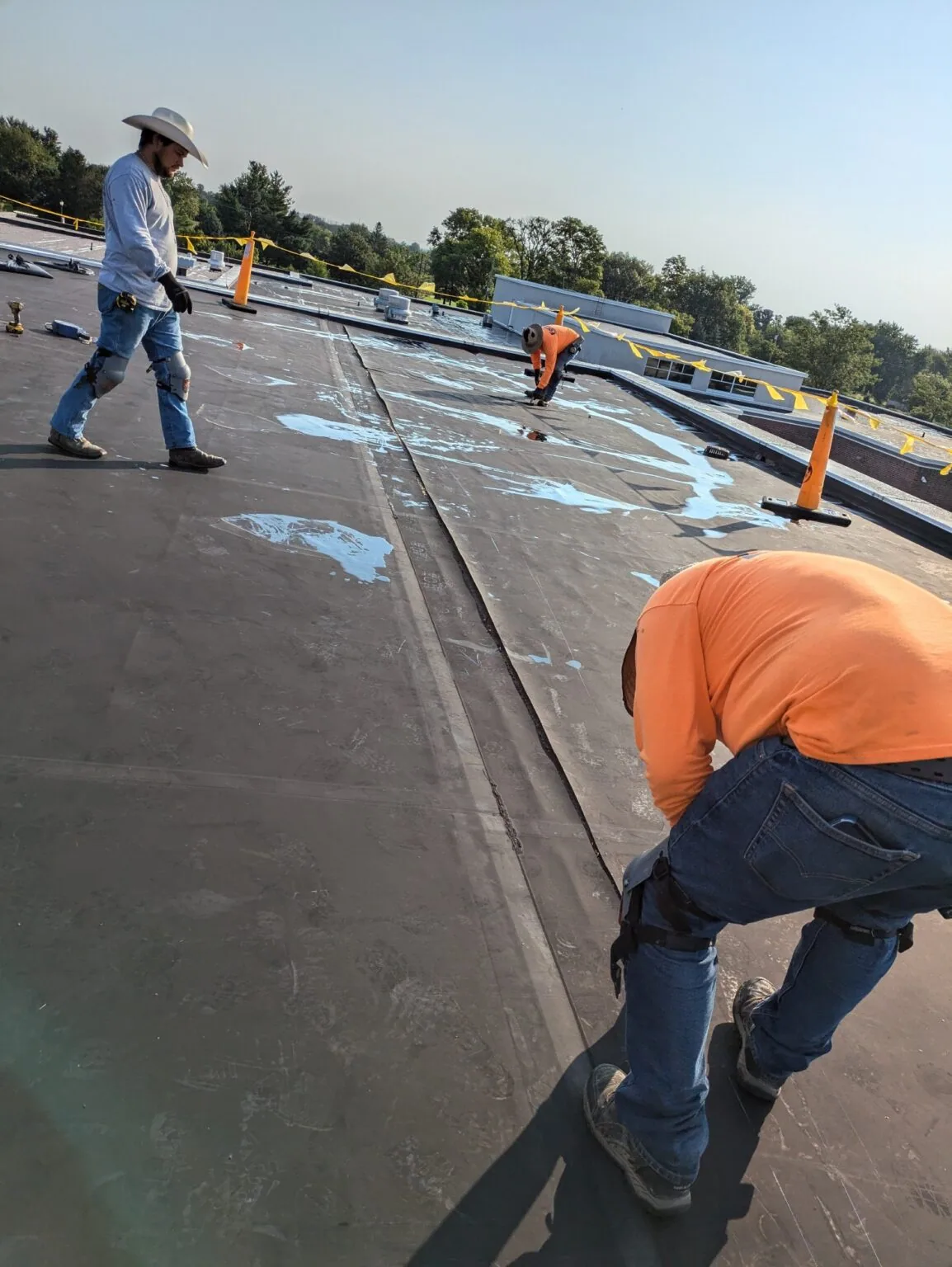
We mark which roof sections are being rebuilt and where they meet parapets, curbs, drains, edge metal and rooftop units. Any of those details damaged by heat get fixed as part of the job. With commercial roof replacement, we spell out how the new field membrane connects to everything around it, because a bigger membrane quantity doesn't automatically include wall, equipment or drain work.
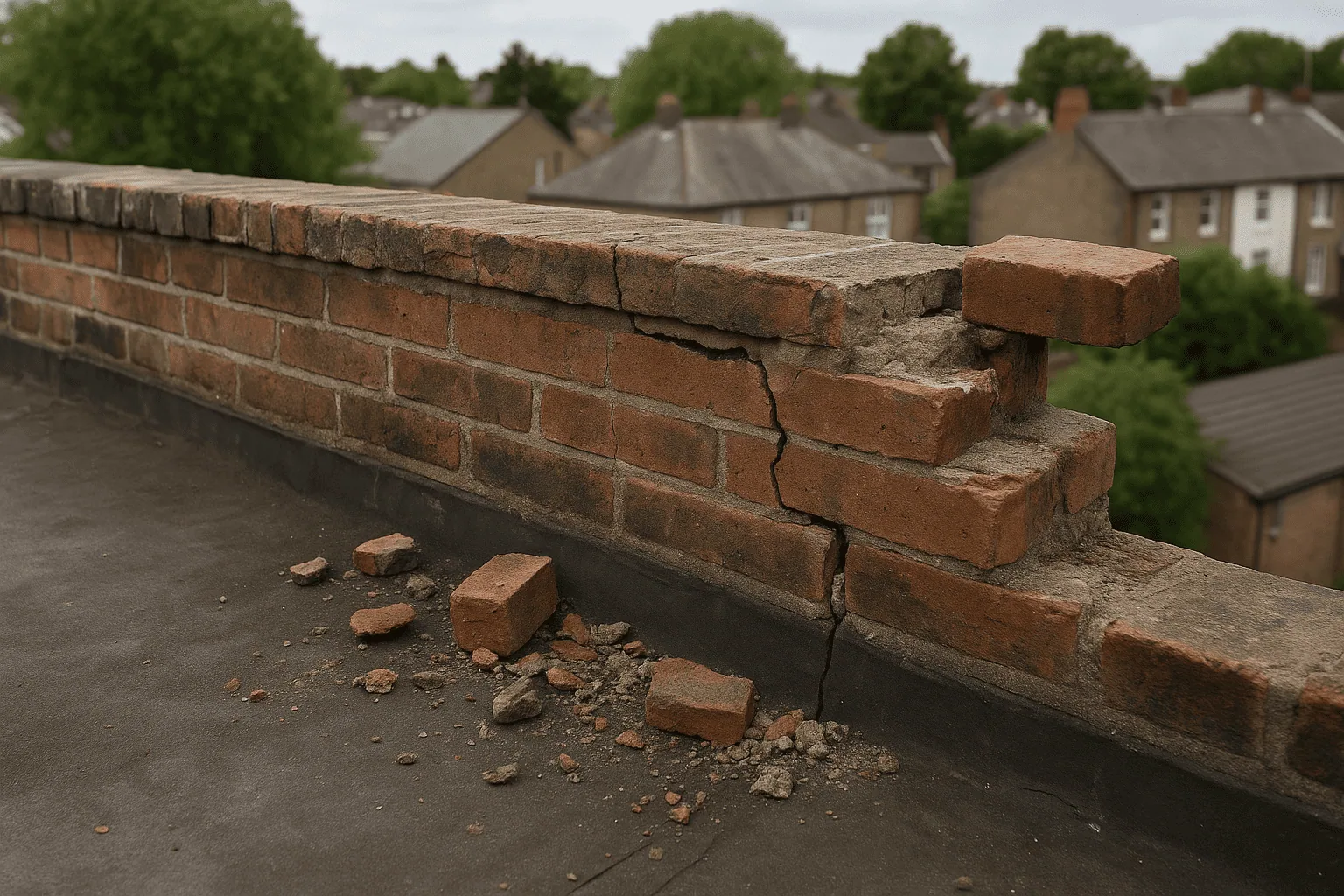
Scorched wall flashing calls for flashing repair with sound backing and a proper top termination. A small burned spot in otherwise sound membrane may only need a localized membrane repair. We tell you why we picked the scope we did, so you can compare options by what each one actually fixes.
Scheduling around the building and the other trades
We confirm who our site contact is, where material can be staged and lifted, and any rules for working on the property. Jobs in Downtown Plano often mean tight streets and limited staging, so the access route and any engineering findings go into the plan before crews show up. You or your manager coordinate the other trades on site.
Every opening we make needs a clear path to being closed up permanently. If the electrician or mechanical contractor has to finish first, we say so before the job is scheduled. We can set up emergency temporary protection at night, on weekends and on holidays once the area is safe to work, and we keep that temporary work separate from the permanent rebuild.
The closeout report
We photograph the repaired deck, new insulation and finished flashing before they're covered and mark each on the roof plan. A roof condition report lists the work completed and anything still waiting on another trade, so finished roofing and unfinished items never get confused.
If a new problem shows up later, it gets its own inspection. The closeout report tells you what was removed, kept and rebuilt in the repaired area, but it doesn't vouch for parts of the roof we never opened. It's a useful history for the next decision, which still rests on what the roof looks like at that point.
Commercial Roofing Questions
What has to happen before we get a roofing recommendation after a fire?
The roof needs to be safe to walk, and any structural, electrical or mechanical concerns need to go to the right trade. We inspect the areas we can safely reach and list the ones we couldn't. The permanent repair scope comes once those open questions are answered.
Does damaged membrane tell you the condition of the deck and joists?
No. Surface damage doesn't tell us what's happening to the deck, joists or beams beneath it. We use test cuts or cores to check the insulation and deck, and structural members go to an engineer. Our rebuild starts from a sound deck.
How do you decide how much roof to tear off?
We mark where we inspected and what the test cuts showed, then draw the tear-off line around the damaged layers. The estimate includes the prep needed for a complete rebuild. Areas we couldn't open are flagged rather than assumed sound.
What should be included alongside the replacement price?
The estimate should list damaged walls, drains, edge metal and equipment curbs, plus any work other trades must finish first. We state what our roofing scope includes and what it depends on. That way you're comparing jobs that actually end with a watertight roof.
What do we get when the work is finished?
You get photos of the deck prep, new layers and finished flashing, marked on a roof plan. The report lists anything still waiting on another trade. It covers the repaired area only; other parts of the roof need their own inspection.
Get the fire-damaged roof inspected
Schedule a commercial roof inspection in Plano once the building is safe to access. We'll inspect what we can reach, flag what needs an engineer or another trade, and give you a clear rebuild scope.
Request a Roof Assessment in Plano
Tell us about the building, the roof and what you are seeing. Send a request or call 555-555-5555.