
Commercial Roof Repair in Lucas
Home / Service Areas / Lucas
Lucas is mostly residential, with a smaller number of commercial buildings: offices, churches, small retail and service buildings. When the owners of these buildings ask about roof coatings, they are usually trying to get more years out of a roof without paying for a replacement. That can be a smart move, but only if the roof underneath is ready. A coating sitting on top of wet insulation, open seams or failed flashing will not solve the problem and may hide it.
We also work in Parker and Fairview. On every coating request, we inspect first, fix what needs fixing and give you an honest opinion about whether coating is worth it for your roof.
Inspect the area you want coated
We start with the area you want coated. We look at the membrane surface, seams, flashing, penetrations, drains and any areas where water ponds after rain. We also look at how the existing roof is attached, because a loose or billowing membrane needs to be secured before any coating goes down.
With roof coating restoration, the inspection decides whether a coating makes sense at all. Some roofs are great candidates: sound, dry and well-drained, just aging on the surface. Others need repairs first. And a few are too far gone, with widespread wet insulation or membrane that is coming apart, where a coating would be a waste of money.
We tell you which category your roof falls into. If it is not a good candidate, we will say so and explain what the better options are, even if that means we do not sell you a coating.
Repair failures before coating
A coating will not fix a failed seam, a split pipe boot or a curb flashing that has pulled away from the wall. Those need proper repairs first, using materials that match the existing roof.
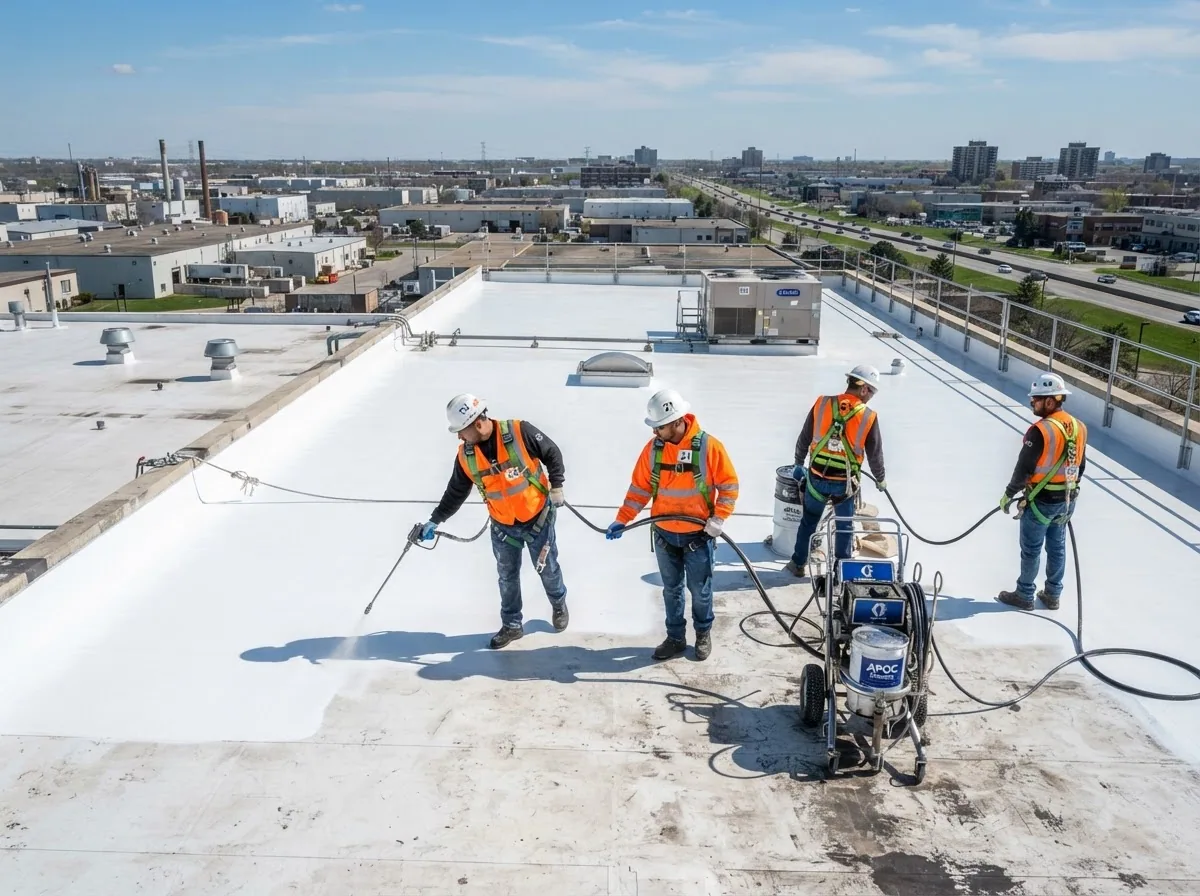
For a silicone roof coating, the prep is especially important. Silicone sticks well to many surfaces, but it does not stick well to dirt, oil or loose material, and very little sticks to silicone later. That means repairs need to be done right before the coating goes down, because patching a silicone roof afterward is harder.
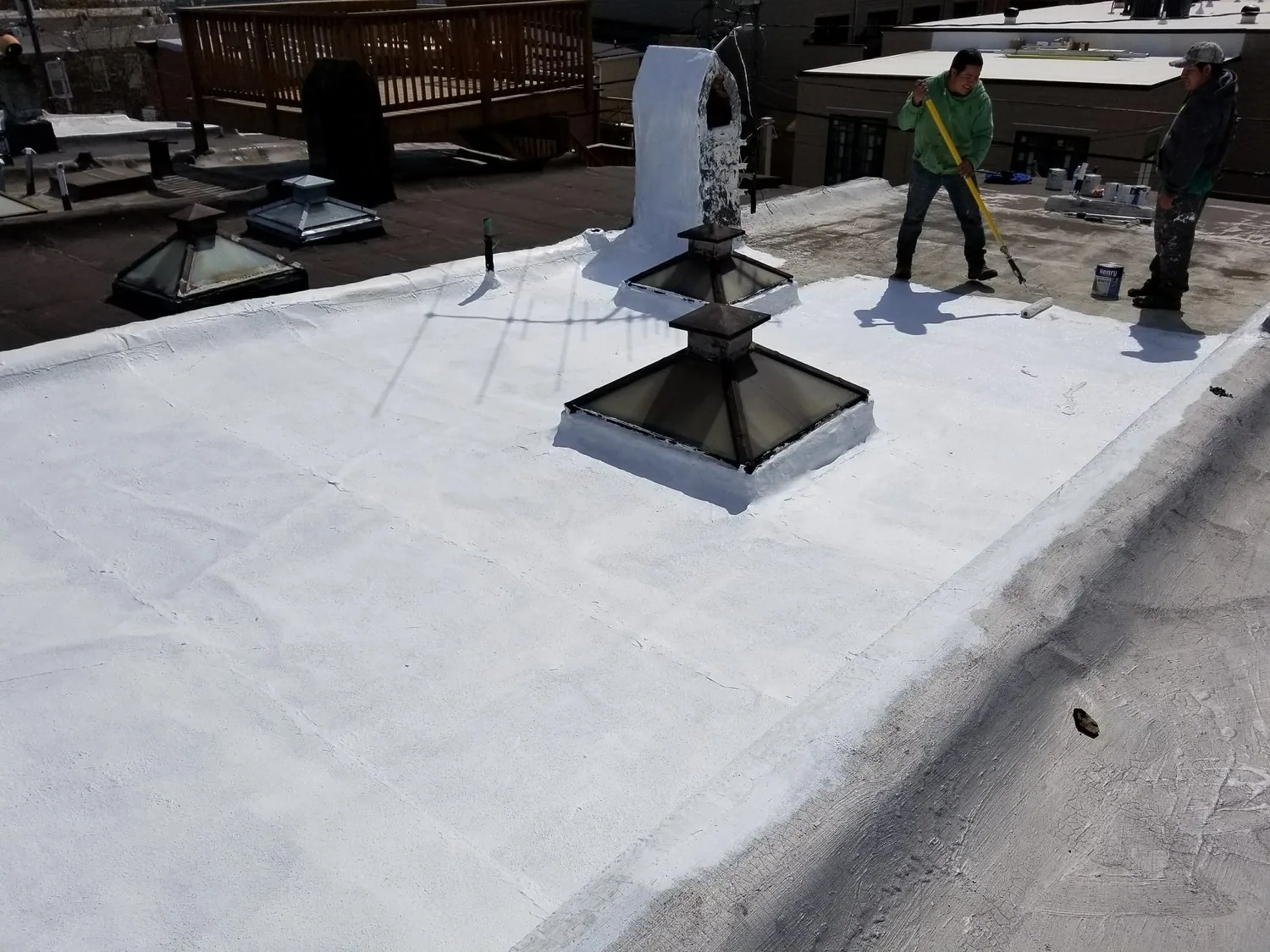
We repair seams, flashing and penetrations, then clean the entire surface. Where the manufacturer calls for it, we prime. We also do an adhesion test patch in a small area before coating the whole roof. If the coating does not bond to the test patch, we figure out why before going further.
Each repair is listed separately in our proposal, so you can see what it costs to fix the roof and what the coating itself adds.
Where seams have opened on an older roof, we often reinforce them with fabric set in base coat before the field coat goes on.
Check what stays under the coating
The biggest risk with a coating is trapping water underneath. If the insulation is wet, sealing it under a new coating means the water stays there, slowly ruining the insulation and rusting the deck.
Before we coat, we check for moisture with test cuts, cores or an infrared scan. A roof condition report can map wet areas across the whole roof so we know where insulation needs replacing before the coating goes on.
If wet areas are small, we cut them out, replace the insulation and patch the membrane. If they are spread across much of the roof, we will tell you that a coating is probably not the right choice and explain your other options, such as a recover or replacement.
We put all of this in writing, with photos and a sketch showing where the wet areas are. That way the decision is based on what we found, not on a guess.
Plan around an occupied building
Lucas commercial buildings are often small offices, churches or community spaces, and the people inside need the building to keep working during roof work. On an office building, we ask about work hours, parking, deliveries and any days the building is especially busy.
Coating work can produce odors, especially solvent-based primers. We locate rooftop air intakes and work with your HVAC contractor to shut them down or shield them while we apply products near them. We also ask whether anyone in the building has sensitivities we should know about.
Weather is a big factor. Most coatings need dry conditions and certain temperatures to cure properly. If rain is coming, we hold off. We would rather move the date than put down coating that will not cure right.
Before we start, we agree on the work schedule, the access point, where materials are staged and how debris and empty containers are removed.
Record what is under the finished surface
Once a coating is on, nobody can see what is underneath. That is why we keep a detailed record of every step: repairs made, insulation replaced, how the surface was cleaned and primed, adhesion test results and the coating product and thickness applied.
Photos show each stage. If you ever need to file a warranty claim, sell the building or plan a recoat, that record is what the next person will need.
We also note any areas we did not coat and why, such as a section with wet insulation that was set aside for a later project.
If you are weighing a coating against another option, such as a recover or full replacement, we price them side by side with the same level of detail. Each option shows what it includes, what it assumes and what still needs to be confirmed.
Coatings need periodic inspection and eventually a recoat. We describe that maintenance in general terms so you can plan for it.
Commercial Roofing Questions
What should be checked before a coating is proposed?
The membrane surface, seams, flashing, penetrations, drains, ponding areas, how the roof is attached and whether there is wet insulation underneath.
Can coating prep fix failed flashing?
No. Failed flashing, seams and penetrations need proper repairs first with materials that match the roof. Cleaning and priming prepare the surface; they do not fix leaks.
How do you check for moisture under the roof?
With test cuts, cores or an infrared scan. Wet insulation is replaced before coating, and if wet areas are widespread, we tell you a coating may not be the right choice.
What do you need from us to plan the work?
Work hours, parking and delivery details, busy days and the location of air intakes. We plan around odors and weather so the building keeps working.
How should I compare a coating with other options?
Look at what each includes, what it assumes and what still needs confirming. We price a coating, recover or replacement side by side with the same detail.
See if your Lucas roof is ready for a coating
Tell us what you want the roof to do for the next several years. We will inspect the roof, check for trapped moisture and tell you honestly whether a coating makes sense.
Request a Roof Assessment in Plano
Tell us about the building, the roof and what you are seeing. Send a request or call 555-555-5555.