
Commercial Roof Repair in Little Elm
Home / Service Areas / Little Elm
Little Elm has grown fast, and with it a mix of retail strips, offices and apartment buildings, many with low-slope roofs that are starting to need their first real repairs. A common call goes like this: a leak shows up, someone patches it in a hurry, and a few weeks later nobody is sure whether the patch was meant to be permanent. We help sort that out. We tell you what the temporary work did, what the permanent fix needs and when it can happen.
We also serve The Colony and Frisco. Whether the patch was ours or someone else's, we inspect it, explain where things stand and give you a clear price for a lasting repair.
What temporary protection does and does not do
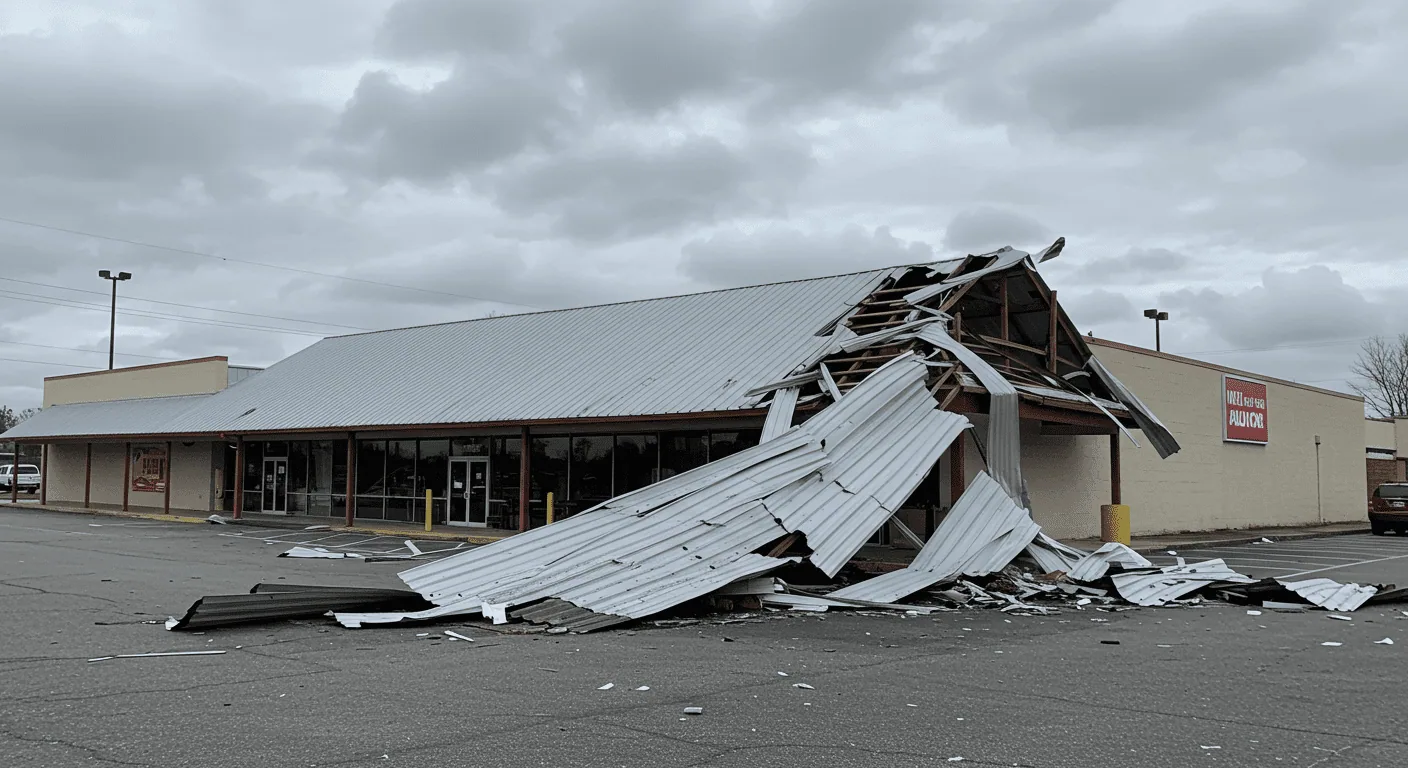
Temporary protection is meant to keep water out until a proper repair can be made. It might be a strip of peel-and-stick membrane over a split seam, a tarp weighted with sandbags or roofing cement smeared around a pipe. These measures can work for days or weeks. They are not built to last through a season of Texas sun and storms.
If you had emergency roof repair done, ask for a clear note of what was installed and where. If we did the work, you will get that note from us. It should say what the temporary measure is, how long it can reasonably stay and what the permanent repair will involve.
We also explain what the temporary work did not check. During a storm call, the crew may not have been able to look under the membrane or inspect nearby seams. Those questions stay open until the follow-up visit, and the note says so.
If a temporary patch has been on your roof for months, it is time to have it looked at. Sealants harden and crack, tarps blow loose and peel-and-stick strips lose grip in the heat.
Rebuild the detail that failed
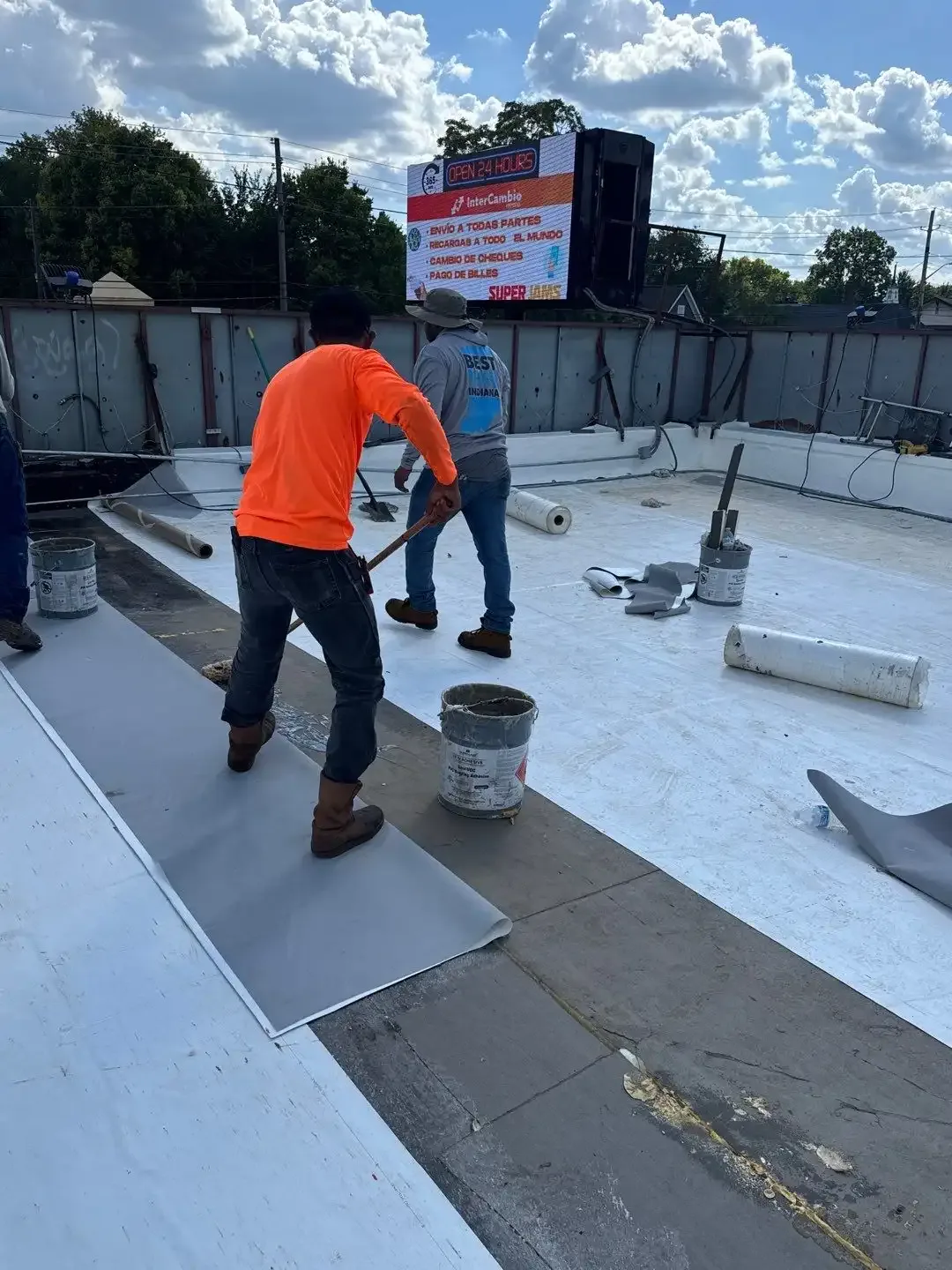
A permanent repair starts by removing the temporary material and looking at the damage underneath. On a modified bitumen roof, we cut out the damaged area back to sound material, replace any wet insulation, then install new base and cap sheets lapped properly onto the existing roof. Wall and curb flashings get new plies, not just a coat of mastic.
We match the new material to what is already on the roof. If the original was torch-applied, we use a torch-applied or compatible repair with proper fire-safety precautions. If it is a self-adhered or cold-process system, we use matching products. Mixing incompatible materials is one of the most common reasons repairs fail early.
We also look for the cause. If the original failure came from ponding water, a loose curb or foot traffic to a rooftop unit, we address that too: a cricket to move water, better curb attachment or walk pads along the service path.
Check the insulation under the repair
A leak that has been running for a while usually means wet insulation below. Wet insulation does not insulate well, it adds weight and it can rust a metal deck or rot a wood one. Before we close a permanent repair, we cut a small opening and check.
If the insulation is wet, we replace it. If the wet area looks bigger than the repair, a roof condition report or moisture survey can show how far it goes. That helps you decide whether to expand the repair now or plan a bigger project later.
We photograph everything we find and explain any added cost before doing the work. You will not get a surprise line item on the invoice for something you never saw.
If we find deck damage, such as rusted metal or soft plywood, we stop and talk with you. That may need a structural look before roofing can continue, and we will not hide it under new membrane.
Agree on the work schedule
On apartment buildings, the people underneath the roof are residents, not employees. They need notice before work starts, quiet hours respected and parking areas kept safe. We work with your property manager to send notices, schedule noisy work during the day and keep debris away from walkways and cars.
For retail and office buildings, we ask about business hours, delivery times and any events. Noisy tear-off or torch work may need to happen before stores open. We also ask where the crew can park, where materials can be staged and how they get to the roof.
Weather matters too. Some products should not go down in rain or on a wet surface. If the forecast changes, we let you know and move the date rather than install a repair that will not hold.
All of this goes into the schedule we agree on before the crew arrives.
Close out the permanent repair
When the permanent repair is done, we remove all temporary materials, clean the area and send you a short report. It shows the temporary work we found, the damage underneath, any insulation or deck we replaced and the finished repair, with photos.
If the repair addressed a root cause, such as ponding water or a loose curb, the report says so. If there are other problems nearby we did not fix, they are listed with their locations.
We also want to be clear about what a local repair does not tell you. Fixing one area does not mean the whole roof is in good shape. If other parts of the roof show signs of age or wear, we will note them, and a full condition report may be worth considering before your next budget cycle.
File the report with your property records. If a leak shows up in the same area later, the next roofer will know exactly what was done and when.
If you are not sure whether an old patch on your roof was ever made permanent, call us and we will check it.
Commercial Roofing Questions
What does temporary protection leave undecided?
The permanent repair. Temporary work keeps water out for now, but the damage underneath still needs to be inspected and properly repaired with matching materials.
How do you choose the permanent repair material?
We match the existing roof. A modified bitumen roof gets compatible base and cap sheets; a single-ply roof gets matching membrane. Incompatible patches are removed first.
What if the insulation is wet under the repair?
Soaked boards come out and new ones go in, and you see photos before we do it. If the wet area is large, we may recommend a moisture survey to see how far it extends.
What do you need from us to schedule the work?
Tenant or resident notice requirements, business hours, parking and staging areas and roof access. We plan noisy work around your building's schedule.
Does one repair tell you the condition of the whole roof?
No. A local repair fixes one area. If other parts of the roof look worn, we note them, and a full condition report can give you the bigger picture.
Turn your Little Elm patch into a permanent repair
Tell us about the building and the temporary fix in place. We will inspect it, explain what the permanent repair needs and schedule the work around your tenants.
Request a Roof Assessment in Plano
Tell us about the building, the roof and what you are seeing. Send a request or call 555-555-5555.