
Commercial Roof Repair in Garland
Home / Service Areas / Garland
Many Garland buildings we visit have more than one leak. A warehouse might have water near the dock doors, a drip over the office area and a stain near a skylight. It is tempting to treat them as one roof problem, but they often have different causes and need different repairs. We trace each one separately and price each fix on its own terms.
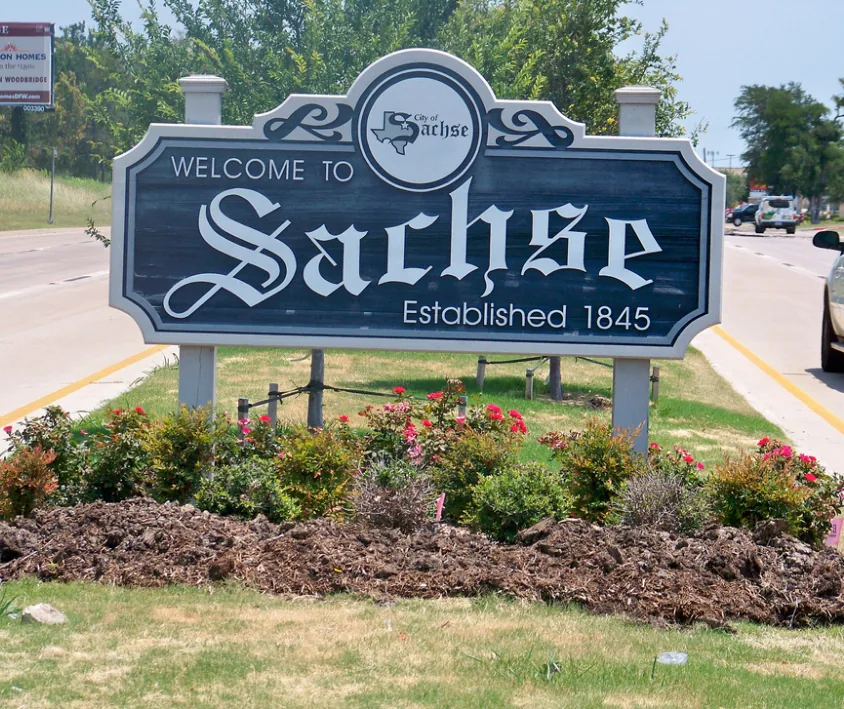
We also work in Sachse and Rowlett. On every job, our goal is the same: find where each leak starts, fix it with the right materials and give you a record you can use when the next stain appears.
Treat each leak as its own problem
We start by getting a list of every leak your team has noticed, with locations and photos if possible. On the roof, we trace each one separately. One might be a torn pipe boot. Another might be a seam that has opened along the edge of a skylight. A third might not be the roof at all, but a clogged condensate line or a wall crack.
Each leak gets its own commercial roof leak repair line in our proposal, tied to a number, a location on the roof and a photo. That makes it easy for your maintenance team to match roof repairs to interior spots and confirm each one is fixed after the next rain.
If we cannot find a source for one of the leaks, we say so. A leak with no clear cause may need a water test or a second visit, and we will not pretend a nearby repair fixed it.
We also look at how the leaks relate to each other. Three stains along the same wall can point to one failed wall flashing rather than three separate holes. When that is the case, one proper repair is cheaper than three patches, and we will tell you so.
Size the repair to the damage
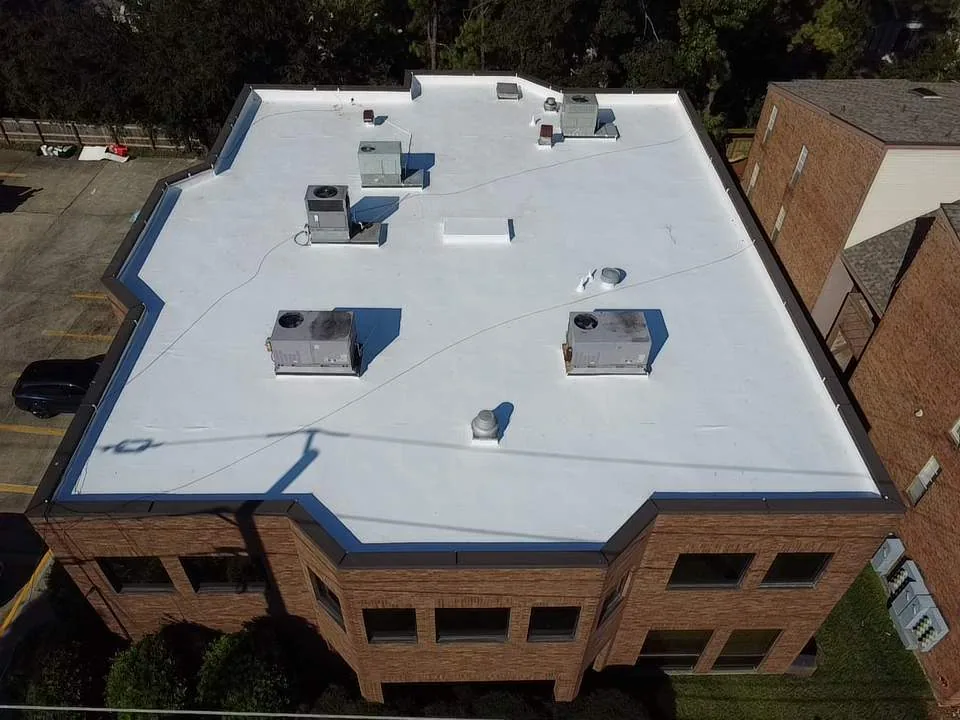
Sometimes the repair is bigger than the visible crack. On an EPDM roof, a small split often means the rubber around it is shrinking or the seam tape has let go along a longer stretch. Patching only the visible split leaves the weak area next to it ready to fail.
We check the membrane around each leak and extend the repair to sound material. We explain that in the proposal, so you understand why a two-inch tear can need a two-foot patch, or why a whole seam may need to be stripped in rather than spot-patched.
We also check for old patches near the leak. If a previous repair used a product that does not belong on EPDM, such as an asphalt-based mastic, we remove it before applying new material. Layering a new patch over an incompatible one is a common reason repairs fail.
Check the layers under the repair
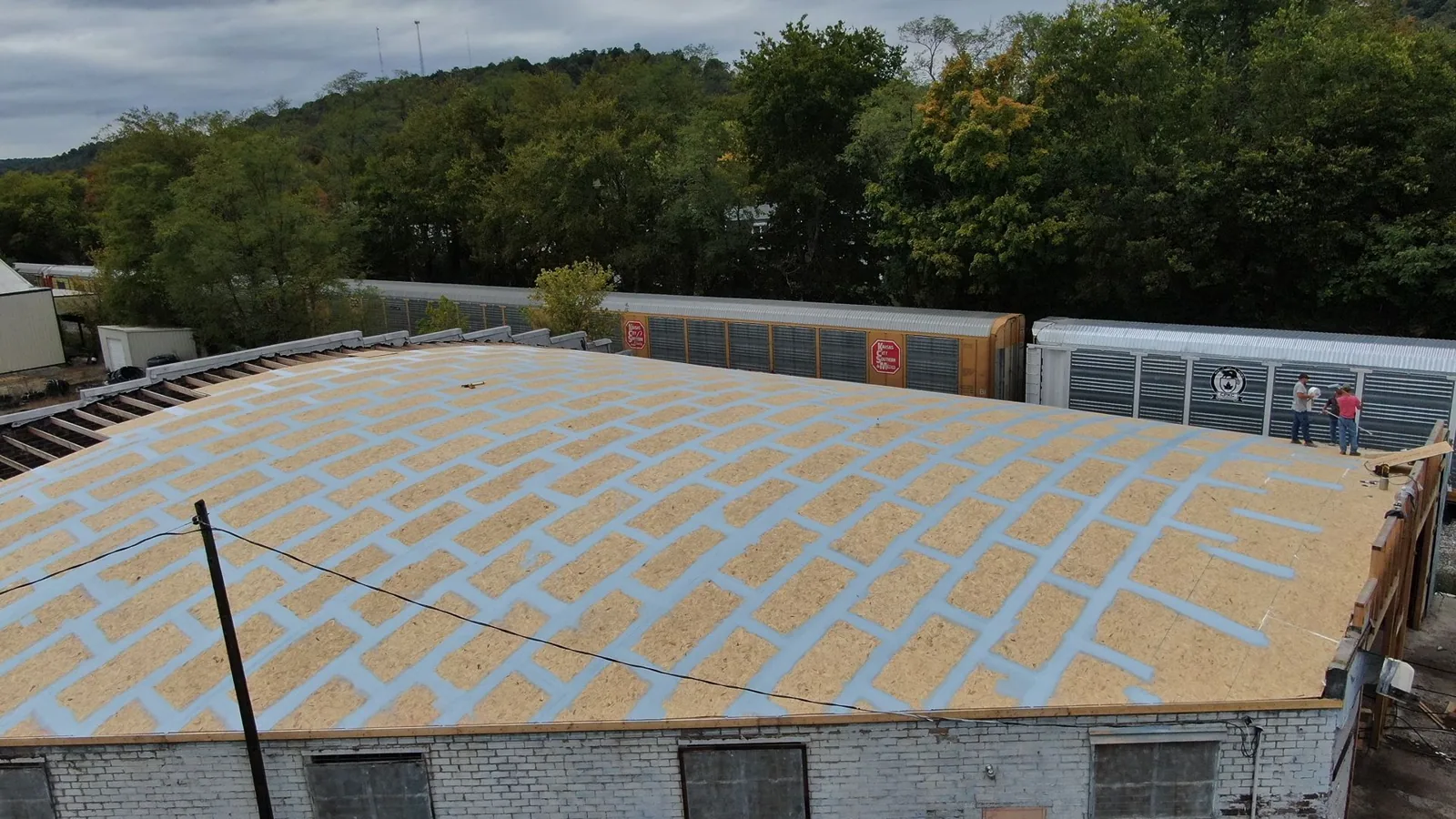
Before we close a repair, we check what is underneath. On many flex industrial buildings, the roof has insulation boards over a metal deck. A long-running leak can soak those boards, which then hold water and rust the deck from above.
We cut a small test opening at each repair. If the insulation is wet, we remove it and replace it with new board before installing the membrane. If the deck is rusted through or soft, we photograph it and talk with you before going further, because deck repair is a bigger job.
These hidden repairs add cost, but skipping them shortens the life of the repair. We explain each one with photos before we do it, so you approve the work knowing why it is needed.
Schedule the work areas
With several repair locations on one roof, scheduling matters. We plan the order of work so the most active leaks get fixed first and the crew is not moving materials back and forth across the roof. We also coordinate with your team about the areas below each repair, especially if there are racks, offices or equipment that need protecting.
For larger buildings, roof capital planning can help decide whether to fix all the leaks now, fix the worst ones first or start planning a larger project. If the leaks are spread across a roof near the end of its life, a series of repairs may cost more over time than a planned restoration.
We give you the numbers for each path. You decide.
On a busy site, we also agree where the crew stages materials, how debris comes down and which doors or docks need to stay clear. If repairs over an office or showroom have to happen before opening hours, we schedule those first and leave work over storage areas for later in the day.
Keep each result on record
When the work is done, we give you a report that lists each leak by number, its roof location, what we found, any hidden damage we fixed and photos of the finished repair. If a leak was traced to a non-roof source, the report says so.
This helps after the next rain. Your team can check each interior spot against the list. If one of them is still wet, we know exactly where to look.
We also note any areas we did not repair that looked weak, such as aging seams, cracked flashing or a drain holding water. These are not emergencies, but they belong on your maintenance list.
Keeping each result separate also means that if a repair ever needs warranty attention, there is a clear record of what was done and where.
If a repaired area leaks again within a reasonable time, call us. We would rather come back and find out why than have you wonder whether the repair was done right.
Commercial Roofing Questions
How do you handle a building with several leaks?
We trace each one separately, number it, tie it to a roof location and photo, and price its repair as its own line item. Some may turn out not to be roof leaks at all.
Why would a repair be bigger than the visible damage?
Because the material around a crack or split is often weak too. We extend the repair to sound membrane so the leak does not just move a few inches over.
Why check the roof material at an old patch?
Previous patches may use products that do not bond with the existing roof. We remove incompatible patches before applying new material.
What if you find wet insulation under the repair?
We photograph it, explain the extra work and replace the wet boards with your approval before closing the roof.
How do I keep track of other problem areas after the repair?
Our report lists areas we saw but did not repair, such as aging seams or slow drains, so they stay on your maintenance list.
Get every Garland leak traced and fixed
Pass along every leak your team has logged, plus the building. We will trace each one, price each repair separately and leave you a clear record.
Request a Roof Assessment in Plano
Tell us about the building, the roof and what you are seeing. Send a request or call 555-555-5555.