
Commercial Roof Repair near Collin College Spring Creek Campus
Home / Service Areas / Collin College Spring Creek Campus
Opening a roof on a school or college building means two things have to be settled: what we find on the roof and when the building can handle the work. Near Collin College's Spring Creek Parkway campus in Plano, we mark the area to be inspected and ask the building contact which campus or building rules apply. A small flashing repair may be simple, while further investigation can leave an area temporarily sealed while waiting for a decision. The repair price should explain those stages before the owner chooses the work.
For a property near the campus, tell us the building, the problem and how we get onto the roof. We also work along the Spring Creek Parkway office corridor and in Allen, where every roof gets its own access plan and inspection. An inspection can justify fixing a proven defect while another part of the roof still needs more information before a bigger job is defined.
Confirm the applicable work period
We ask the building contact about rules for the job, including access, noise, dust and which spaces will be affected. We go over the inspection area together and agree on a work window that fits the opening and protection needed. We also confirm who can approve coordination and who should hear about any change. The schedule follows the arrangements confirmed for that building.
For college and university roofing, we explain which tasks involve opening the roof or tearing off material. We confirm delivery and debris routes, the staging area and how we'll get on the roof. If one option is a short local repair and another needs several phases, we show the different arrangements next to each price.
When the job will take more than one visit, we spell out how the roof is left between them: the temporary protection, the permanent work still owed and who gets status updates. The manager can judge each option by its real sequence instead of assuming every job goes straight from inspection to finished roof.
Separate the investigated areas
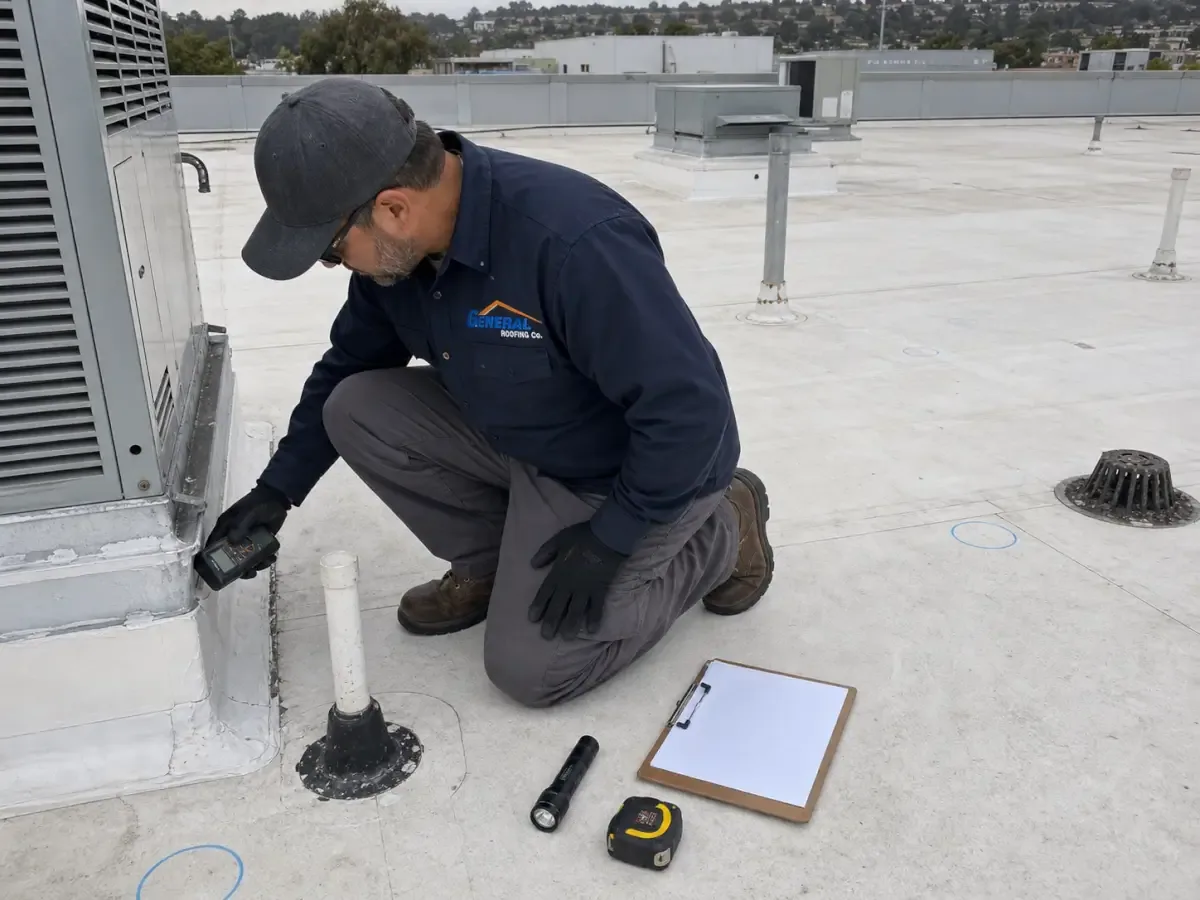
We locate each reported problem and inspect the membrane, seams and flashing in the agreed area. Failures are noted where we find them. A leak inside tells us where to start, but the entry point on the roof may still be unknown. That question stays open in the findings until the inspection gives us a solid basis for the permanent repair.
Our commercial roof inspection notes what we reached and any part of the roof outside the job. We compare old repair records with current patches and equipment changes. If the membrane at a repair can't be identified, we say what testing is needed before choosing permanent materials.
A bigger project needs its own inspection. We explain which roof areas and findings support each recommendation, rather than stretching one detail into a conclusion about hidden layers elsewhere. The owner and finance team work from the same picture of which repair is ready and which still needs more information.
Connect the amount with its scope
We list the new detail, the nearby repairs it needs and any testing included in the chosen option. If equipment work has to be finished before the roof can be sealed, we say so. If the building contact needs another trade to approve that work, the dependency stays next to the affected detail. The option shows a workable order instead of leaving an open roof waiting on someone else.
A roof capital plan explains how the inspection findings support the spending. We compare the repair boundaries, testing and coordination that differ between options. Finance can evaluate the prices when the owner can point to the work each one delivers and the questions still open.
If opening the roof reveals wet or damaged layers, we photograph them and explain what has to be removed or rebuilt for a proper repair. The change is recorded before the area is covered. Any revised price stays tied to its purpose, so the manager can explain why the extra work was needed.
Build through identified materials
We identify the membrane and nearby details at the edge of the repair before choosing a method. Old roof records help, but later patches and pipes may not match them, so we check those changes directly where they affect the repair. The permanent fix needs sound existing material and any nearby repairs done first.
For PVC roof repairs, we check the existing membrane, seams and flashing where the new work will tie in. Failed nearby details are fixed before cleaning and prep. If the membrane turns out to be different from the original description, we explain the method that suits what's actually there.
Where keeping the insulation or deck matters, we confirm it's dry and sound, and replace anything that isn't. The existing roof is cleaned and prepped only after those repairs are done. Prep alone can't close an open seam or fix wet insulation, so the proposal lists each step in order.
Document the handed-back condition
We photograph hidden repairs before the roof is closed up. Photos of exposed layers and prepped membrane are tied to the finished detail and the original finding. Any change in scope is explained by the condition that caused it. The owner can see what the job delivered at each spot instead of relying on a photo of the finished surface.
We review the finished repair area with the building contact, along with the coordination completed and any inspection still outstanding. Areas outside the job and any unresolved leak are listed separately. If an area is still under temporary protection, we note the permanent work owed and the next decision rather than calling it finished.
Management and finance get the same clear account: what we inspected, the repair chosen, the supporting work done and what's still open. A bigger project still needs its own inspection. This record helps with that discussion while staying clear about the limited work and the arrangements it covered.
On a school or college building near the Spring Creek campus, we define the exact work area before setting up protection. Any planned opening gets a secure temporary seal, a clear note of who's responsible and a permanent tie-in ready for the next work window.
Commercial Roofing Questions
What campus or building rules should we ask about before roof work?
Access, work hours and any dust or noise limits for the specific job. We also confirm deliveries and who approves coordination before scheduling any opening or phased work.
What's the difference between a local repair and a bigger project?
A local repair fixes a defect we've inspected within a defined area. A bigger project needs its own inspection of the additional roof before it can be priced.
How does another trade's work affect the roofing schedule?
We identify the equipment repair and who can approve it, then plan the order of work and temporary protection before the roof is sealed permanently.
When are hidden repairs photographed?
Before the roof is closed. Wet or damaged layers and the repair work are photographed and tied to the finding and location, so the owner can see why the scope changed.
What should the final work record include?
The finished detail, hidden repairs, prepped membrane and coordination completed, plus a separate list of areas not included and any leak still under investigation.
Plan the Spring Creek campus area correction
Tell us the building, the problem and the roof area involved. We'll plan the inspection, confirm the building's rules and explain the repair, work stages and any decisions behind the price.
Request a Roof Assessment in Plano
Tell us about the building, the roof and what you are seeing. Send a request or call 555-555-5555.