
Commercial Roof Repair in Celina
Home / Service Areas / Celina
Many buildings have more than one roof level, and a leak report needs a location the next person can follow. On Celina commercial buildings, we identify the right roof section before describing any repair. An upper roof, a lower roof next to it and an equipment opening can each have different details and access needs. The inspection shows which area we checked, what failure we found and what still needs investigating before any bigger job is defined.
From buildings near Celina City Hall on North Ohio Street to newer commercial properties on the edges of town, we inspect each roof on its own. We also work in Prosper and Anna, where each building gets its own roof map and access review. You can use our findings to schedule a repair we can support, while any other roof area stays on the list as a separate decision.
Map the reported position
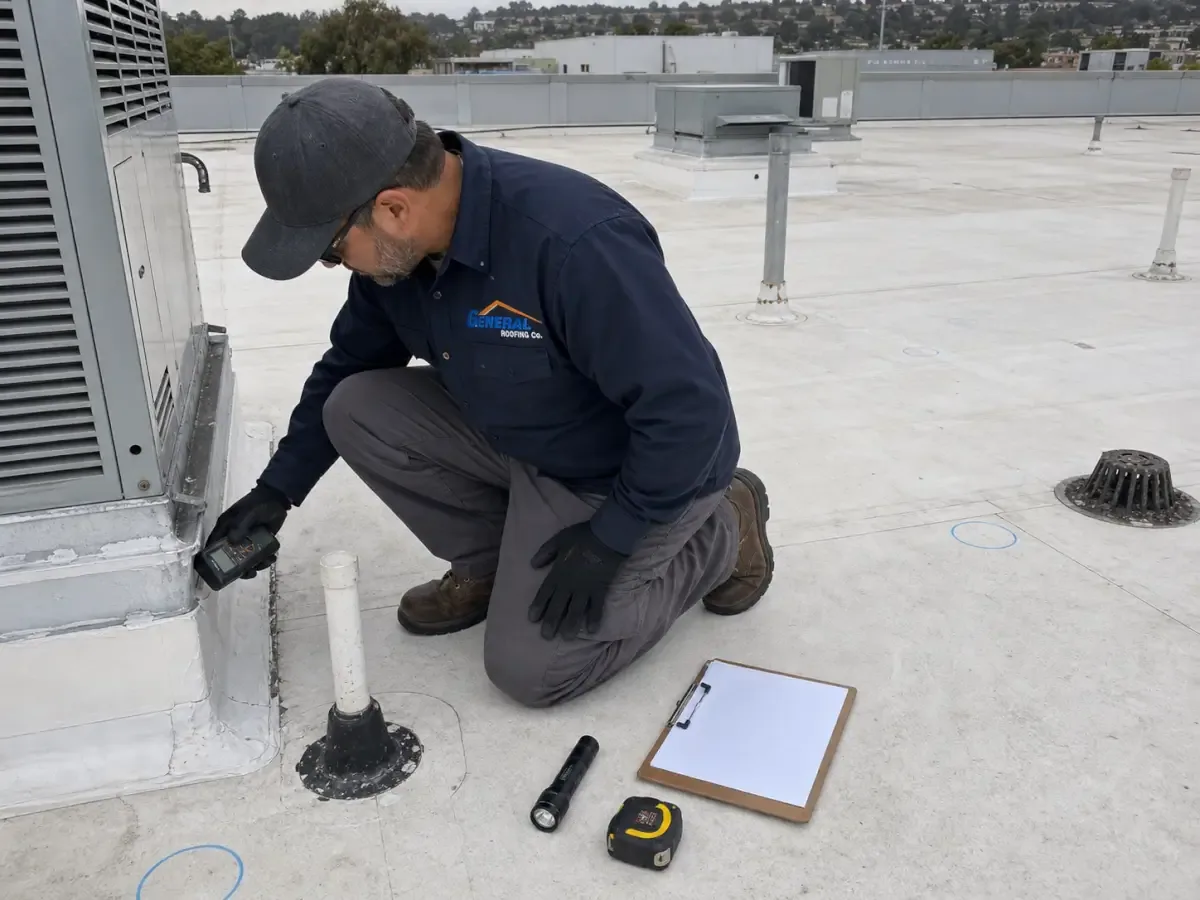
We ask the property manager to show us where the leak appears inside and any equipment or past roof work nearby. Photos or a quick roof sketch help connect that report to spots on the roof. A room name alone often doesn't tell us which roof level we're dealing with. We note the area we actually reached and the detail we checked, so the repair recommendation has a clear location for management and the crew.
Our commercial roof inspection shows any area we couldn't get to. If another level or blocked detail needs access, we explain what it'll take. A suspected leak path is kept separate from a seam, membrane or flashing failure we can actually see. You'll know why one spot has a repair scope while another still needs investigation.
We compare past repair records with the roof as it is now. A photo of an old patch helps us find it, but it won't tell us how it was attached or what's underneath. We inspect the actual detail and the areas around it. The recommendation is most useful when someone can come back later, find the same spot and understand what we found.
Treat details individually
An open seam means checking both sheets and the membrane around them. A torn sheet needs sound roofing around the tear for a proper patch. A failed flashing may need to be torn out and rebuilt at the pipe or wall. We explain the difference in terms of the repair each one needs, with the location noted next to each item.
For TPO roof repairs, we confirm the membrane where the repair will attach. An old patch or a change in roof level may need a second look at the material. Failures that would stop the repair from holding are fixed before we clean and prep the surface. The method follows the roof that's installed and the detail being repaired.
At a drain, we inspect the flashing and the drain itself. Clearing debris lets us look closer, but it doesn't fix torn membrane or a failed seal. At a rooftop unit, we identify any equipment work needed before the flashing can be finished, and who handles it, so the property manager can schedule each opening in the right order.
Connect support findings to the scope
Where the repair depends on insulation or deck staying in place, we check them. Wet or rotted material is located and we explain what has to be removed or rebuilt. The repair area can grow when bad material extends past the visible damage. We show you the exposed condition before asking for approval so you can judge the added work for yourself.
A roof condition report identifies the areas behind each recommendation. Layers we couldn't reach and other roof sections stay open for later inspection. Findings from one area can guide the next visit, but the scope for a different area is based on its own inspection.
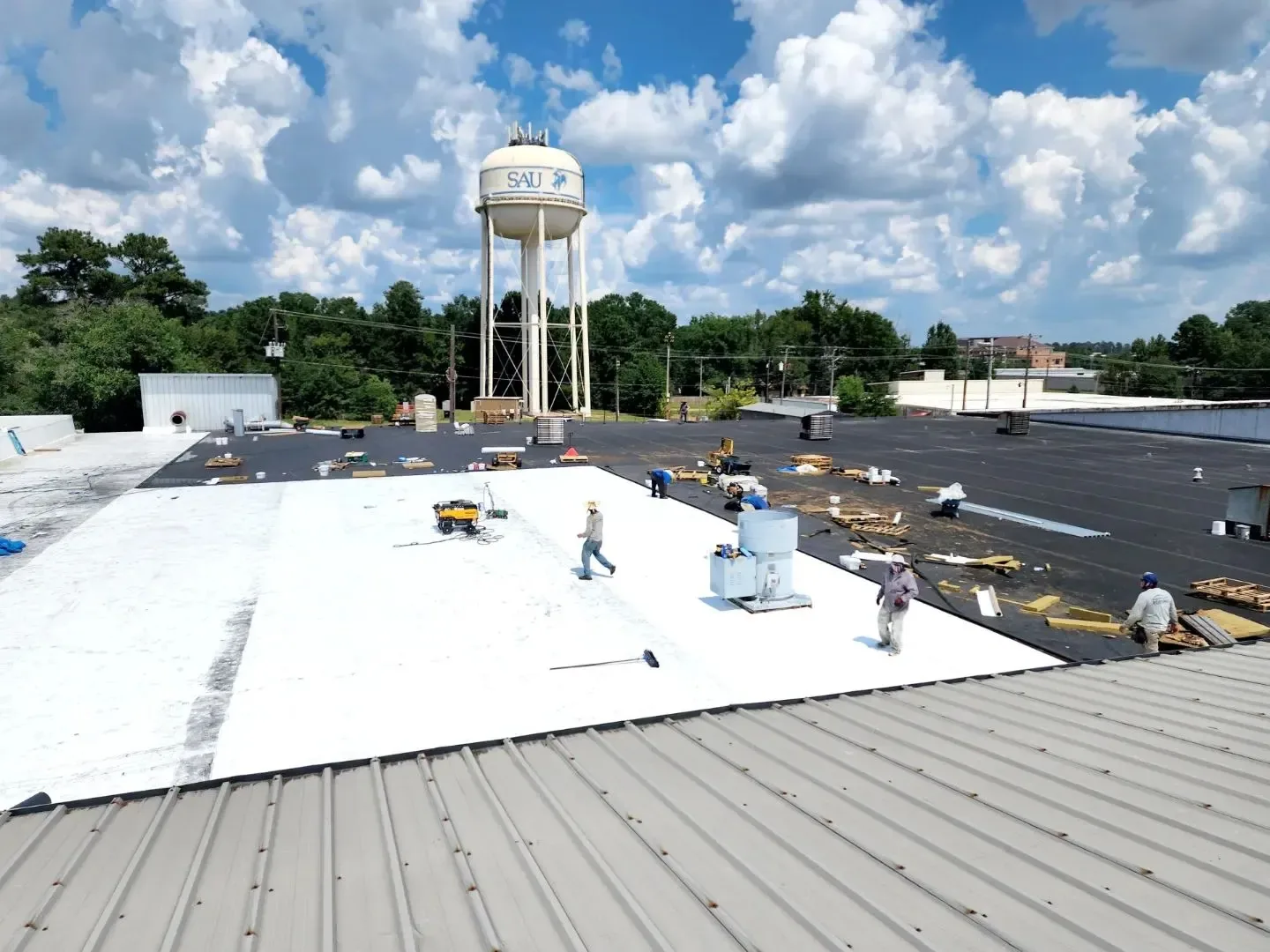
If a recover or replacement is on the table, we define which roof section it covers and check the construction there. Different membrane, fastening or details can change the option and the order of work. We explain the tear-off and rebuild before pricing it. Finance can compare a local repair with a bigger job when both clearly state the areas and findings they cover.
Plan the route between roof areas
We confirm access to the work area with the site contact. If the job covers more than one roof level, we ask how the crew and materials will reach each one. Staging and debris routes are planned without assuming that access to one roof means access to another. The plan shows where we'll work and which spaces inside the building may be affected.
On office building roofing jobs, we ask about noise, dust and air-intake rules and locate any entrances or equipment near the work. We ask who the property manager needs to notify and who can approve a change that affects another area. A roof sketch helps keep everyone talking about the same spot.
We agree on how the roof will be left between visits. If an opening is waiting on equipment work, we confirm who's responsible for it and how it's protected in the meantime, who reports problems and who tells us the equipment is ready for roofing. A finished detail is kept separate from work still pending elsewhere, so the whole roof isn't treated as one unfinished job.
Hand back each corrected position
We photograph hidden repairs and rebuilt flashing before they're covered and tie each photo to the roof area and the original problem. Management gets a finished photo that matches the earlier record. A completed repair can look simple even when hidden tear-out explains the price, and we keep that information for whoever reviews it later.
The closeout lists the work completed, approved changes and areas outside the job. We note any other leak or unreachable spot that still needs investigation, and if temporary protection remains anywhere, we mark it and who's responsible. Management can schedule the next visit without guessing what's left.
When a new leak is reported, the roof area descriptions show whether it's at a repaired spot or somewhere else. That helps plan the right inspection and gives finance a clearer basis for any further work. A good repair record carries the roof locations forward, with finished work and open questions easy to find.
For a Celina property with several roof levels, a simple sketch keeps upper and lower sections from being treated as one repair area. We mark each drain and transition the inspection actually reaches.
Commercial Roofing Questions
What location information helps the roof inspection?
The property address, where the leak shows up inside and a contact who can point us in the right direction. Photos or a roof sketch help match the leak to the right roof area.
Can one repair description cover different problems on the roof?
No. Seam, membrane, flashing and drain repairs each need their own description, because the materials and prep differ.
How do you handle work on another roof section?
We inspect that section's materials and details before defining a larger job, and keep its findings separate when comparing the price with the original repair.
What if another trade has to work at a roof opening?
We confirm the equipment repair needed, who's responsible and how the opening is protected, then check it's done before sealing the roof permanently.
What should the final photos show?
The original problems, hidden repairs and finished details by roof location, plus areas not included and any open questions, so the next person can pick up where we left off.
Locate the Celina roof concern
Send us the building address and the area that needs attention. We'll inspect the roof, explain the permanent repairs and flag any material or access questions before you choose the work.

Request a Roof Assessment in Plano
Tell us about the building, the roof and what you are seeing. Send a request or call 555-555-5555.