
Grocery Store Roofing in Plano, TX
Home / Property Types We Roof / Grocery Store Roofing
Grocery stores tend to have long parapet walls, a tall wall where the sales floor meets the back room, and a lot of refrigeration equipment on the roof. Leaks along those walls are common, and the fix depends on what is behind the flashing. If the wood nailer or sheathing has rotted, new flashing won't hold until it's replaced. At a grocery store in Plano, TX we open the flashing where the leak shows up, check the backing and price the repair from what we find. We also plan how to protect the aisles below before anything is cut.
Before the visit, we ask for roof drawings if you have them, past repair invoices and a note on where water has appeared, whether that's over produce, the frozen aisle or the stockroom. That history points us to the right wall, but it can't tell us what the backing looks like now. We also need to know how the store runs. Repairs over the sales floor are often scheduled early in the morning or overnight, when aisles can be protected and shoppers kept clear. Delivery times at the dock affect where we can park a lift or a dumpster.
Checking the wall flashing
Our wall and penetration flashing check follows the membrane from the roof up the wall to its top termination: counterflashing, a termination bar or the underside of the coping. We look for split corners, open laps, gaps where sealant has pulled away and fasteners that have backed out. We also check refrigeration line sets where they pass through the wall or roof near the leak. A drip on a display case points to an area, but water can run along the deck before it falls. If we need to open the flashing to see the backing, we mark the spot and include patching it.
If the nailer or sheathing behind the flashing is soft, it gets replaced before new flashing goes on. Wood blocking is usually ours to replace; damaged masonry or framing may need a mason or an engineer first. We take photos while it's open because the finished wall will hide the reason for the extra work. A bad spot at one end of the parapet doesn't mean the whole wall is bad, so we price what we opened and flag other sections we'd want to check. That keeps the estimate tied to what's actually there instead of a guess.
Using a moisture scan, then confirming it
An infrared moisture survey can map wet insulation across a large grocery roof. Rooftop condensers, exhaust from the bakery or deli and recent rain can all throw off readings, and a scan can't see the wood behind wall flashing at all. So we treat the scan as a map. It tells us where to pull core samples and where to open the wall. We confirm with cuts and a moisture meter, and patch each test spot, before deciding which insulation stays and which gets replaced.
We also keep what we found separate from why it happened. Rotted wood behind a wall joint tells us the joint has leaked for a while; it doesn't say whether the cause was hail, an old sealant joint or a refrigeration line that was run through the roof and never flashed. When we can't tell, we say so. If the decision on what to keep depends on an area we haven't opened yet, the estimate shows that as a separate step. That makes bids easier to compare, because one contractor may have priced checking the backing and another may have simply assumed it's fine.
What the repair estimate should list
A complete commercial roof repair at a grocery wall lists the old flashing and wet insulation coming out, any rotted nailer being replaced, the new base flashing and the top termination. The method follows the roof. TPO and PVC flashings are heat-welded, EPDM uses seam tape and primer, and modified bitumen or built-up roofs need compatible plies. The wood repair and the flashing should appear together on the estimate. A coating line item may look cheaper, but it doesn't replace rotten backing or a missing termination, and the leak tends to come back.
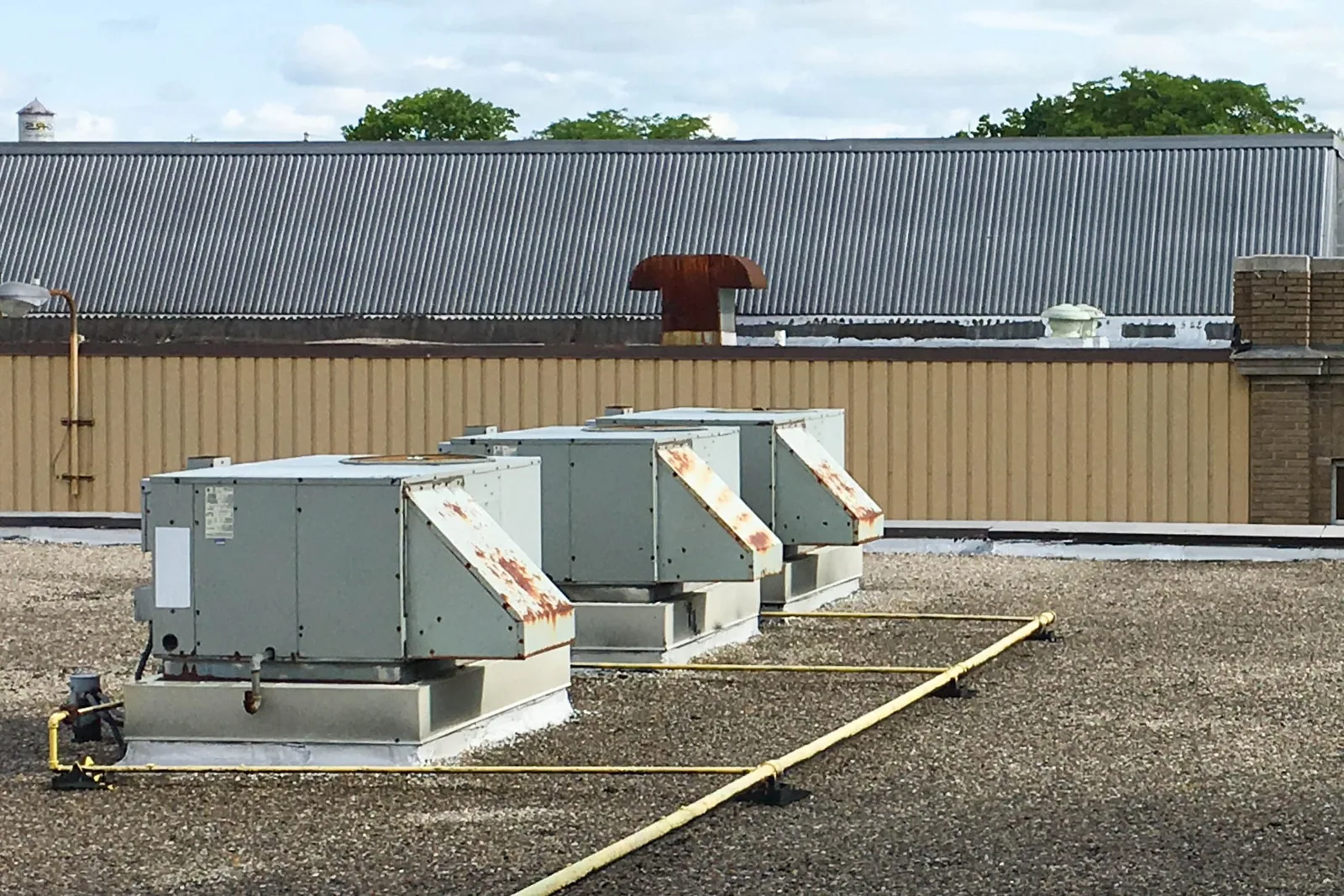
Grocery roofs carry condensing units, rooftop HVAC and long runs of refrigeration piping on stands, and those curbs and equipment supports often sit close to the wall. If a unit needs to be shut down, disconnected or raised for us to flash correctly, the store's refrigeration or HVAC contractor handles that, with an engineer reviewing any structural change. Losing refrigeration puts product at risk, so that work gets scheduled carefully. Drain flashing in the work area is ours; the drain line inside is the plumber's. We list each trade so nothing gets left out.
Protecting the sales floor during the work
Most grocery repairs are roofing over an open store. Before we cut into anything, we walk the area underneath with the store manager or facility contact. We go over what's below the opening, which might be shelving, display cases, the deli or the stockroom, and where the lift, hoist and dumpster will go. The store decides what gets wrapped in plastic, what gets moved and which aisles close. We keep debris and dust away from open food, and we time the noisy work for the hours the store chooses.
If the wall opens up worse than expected, with rot running further or the deck rusted under it, we stop and send photos with a revised price before going further. The revision shows the extra tear-off, the new wood or deck and the flashing that goes back. If the larger area now sits over a different part of the store, we review protection there with your team. When the refrigeration contractor or a mason needs to finish first, we put down a temporary seal so the store stays dry until we can complete the flashing.
Your record of the repair
When the work is finished, you get a short record: which wall section we repaired, photos of the backing before it was closed up, the wood we replaced and how the new flashing ties into the existing roof. Test cuts we patched are noted, and any work still open for another trade, like a refrigeration line that needs reinsulating, is listed separately. Areas we flagged but didn't open stay on the list with their locations. That way the next store manager or roofer can see what was done and what still needs attention.
We serve stores all over Plano, including the Collin Creek area. If your portfolio includes other retail, the issues change a little: big box retail roofs often come down to drains and long membrane runs, and restaurant roofs deal with grease exhaust and kitchen equipment. For the grocery store, send us the address, where the leak is showing up and who can let us on the roof, and we'll start at that wall.
Commercial Roofing Questions
What should a grocery wall flashing repair include?
Removal of the old flashing, replacement of any rotted nailer or sheathing behind it, new base flashing tied into the roof, and a secure top termination. A price that covers only new flashing or a coating leaves the backing question unanswered.
Can a moisture scan show whether the wall backing is good?
No. Infrared helps locate wet insulation in the roof, but it can't see wood behind wall flashing. We open a small section to check it, then patch the opening.
How do you protect the sales floor below the work?
We walk the area with your store team before cutting. You decide what gets protected or moved and which aisles close, and we schedule the noisy and dusty work for the hours you choose.
What if the damage is bigger once the wall is open?
We stop, send photos and a revised price, and review protection for the larger area before going further. If another trade has to work first, we leave a temporary seal to keep the store dry.
Schedule a grocery store roof inspection
Tell us where the leak is showing up and when the store can work with us. We'll check the wall flashing and backing and give you a clear repair estimate.

Request a Roof Assessment in Plano
Tell us about the building, the roof and what you are seeing. Send a request or call 555-555-5555.