
Big Box Retail Roofing in Plano, TX
Home / Property Types We Roof / Big Box Retail Roofing
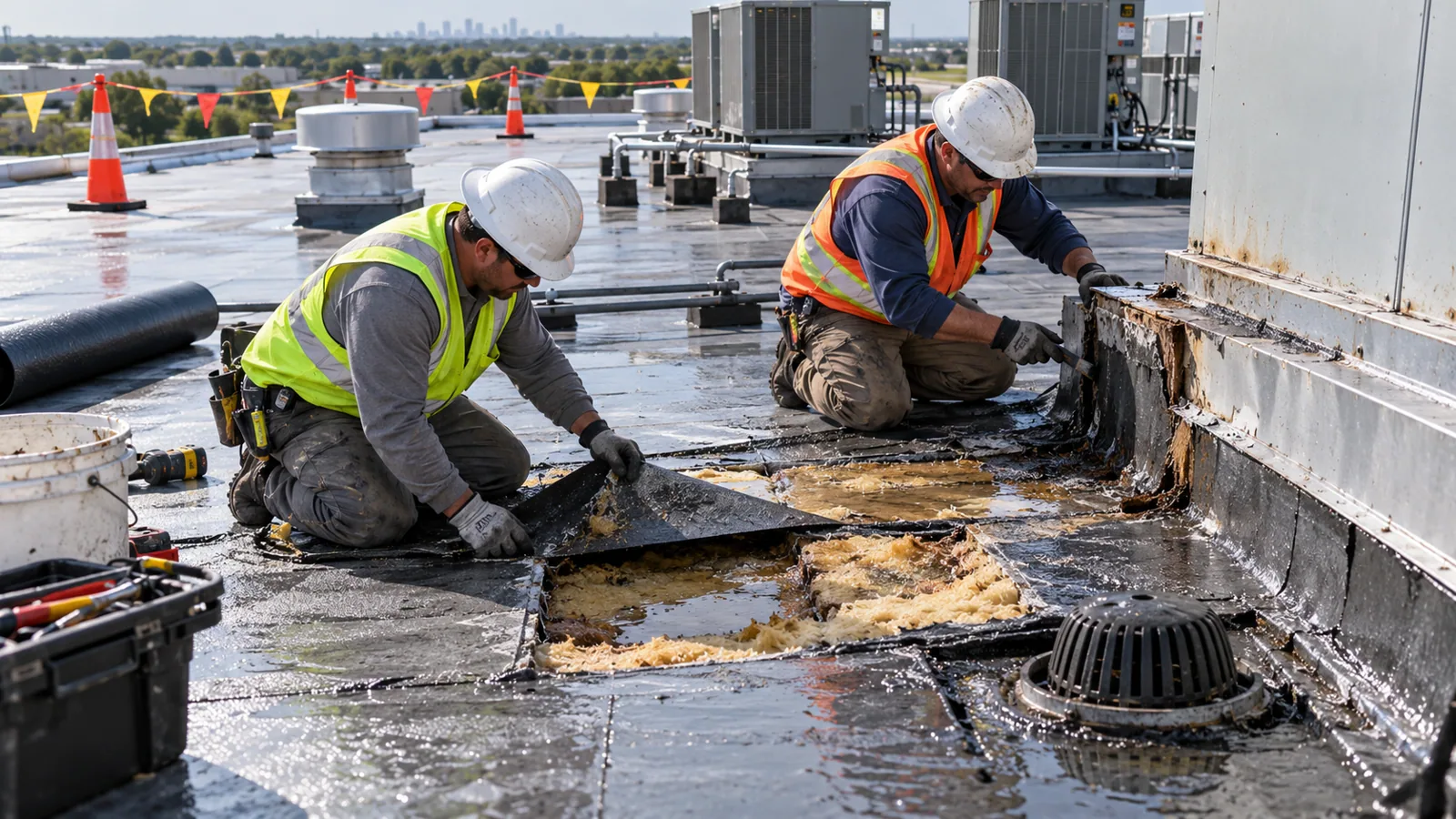
On a big box store, most of the leaks we get called about end up at a drain. These roofs are huge, nearly flat, and rely on a handful of interior drains to carry all the water off. When a drain bowl is cracked, the clamping ring is missing bolts, or the membrane has pulled away from the flange, water sits around the opening and works its way into the store, usually over a sales floor or a stockroom. On a Plano, TX building, a lasting fix is often more than a patch. We may need to cut out wet insulation around the drain, replace a corroded bowl or ring, and tie new membrane into it properly. The estimate should spell all of that out so you can see what you're paying for.
Some of the work belongs to other trades. If the drain line under the deck is cracked or a leader pipe has separated, that's a plumber's repair, and we'll list it as such instead of burying it in our price. Before we visit, it helps to have the roof's age, any drawings, past repair invoices, and a note of where staff have seen drips inside. We'll also need to know who manages the space under the drain so we can plan any roof opening with them.
Inspect the drains before pricing
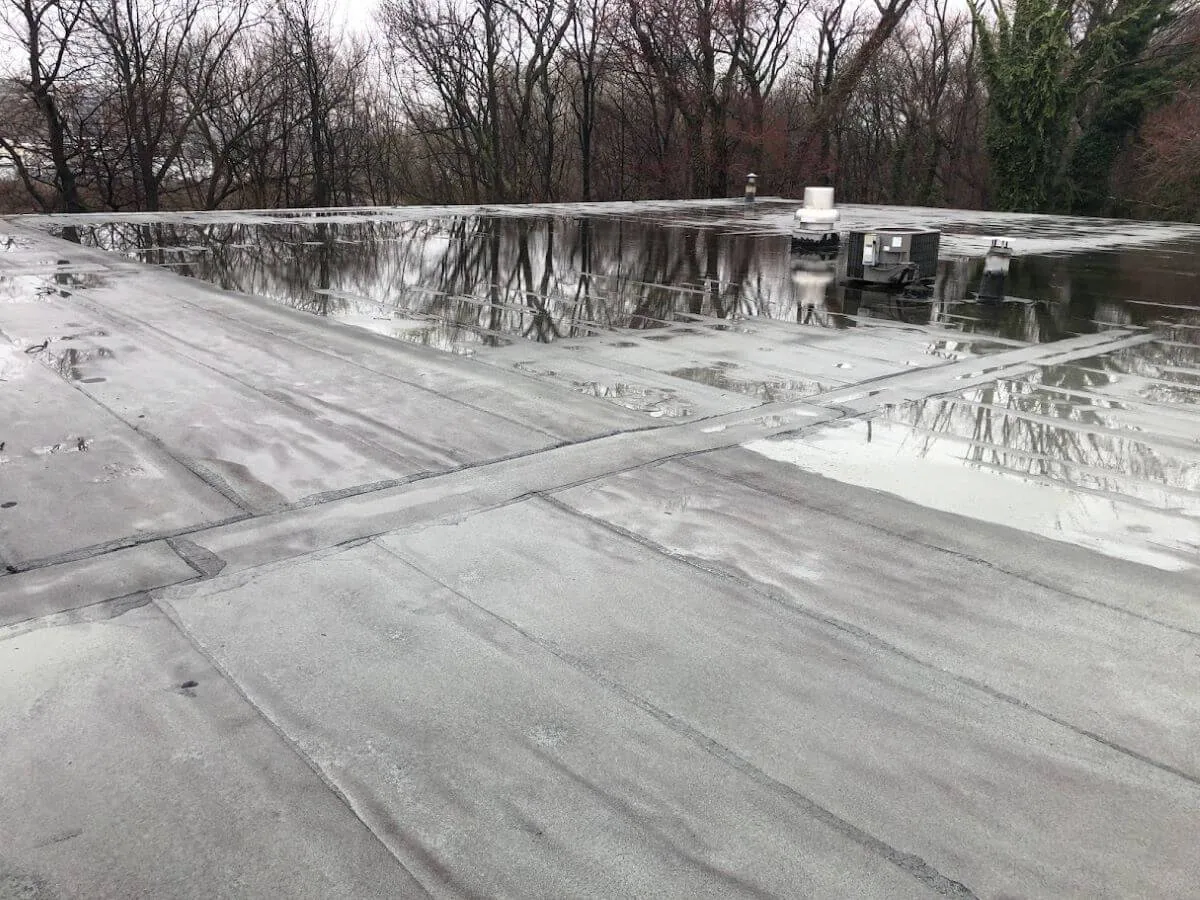
A drain and scupper inspection starts at the reported leak and works outward. We check the membrane at the drain flange, the clamping ring and its bolts, the strainer, and whether the bowl itself is cracked or rusted through. We also look for ponding around the drain, which usually means the insulation has crushed or the drain sits higher than the surrounding roof. If the bowl needs replacing, it goes on the estimate as its own line next to the roofing work, and anything inside the pipe below the deck goes to your plumber.
We're upfront about what an inspection can and can't tell you. A wet ceiling tile shows roughly where to look, but water can run along the deck a long way before it drips. If we need to cut a core to see whether the insulation is wet, we tell you where and patch it the same day. Each drain gets photographed before it's sealed up again. One bad drain doesn't mean every drain on the roof is failing, and we won't price it as if it were.
Deciding what insulation can stay
An infrared moisture survey is a practical way to map wet insulation across a big box roof without cutting dozens of holes. It works best on a dry evening after a sunny day, and the results still need checking. Warm spots on the scan point to insulation that is probably wet, and a few core cuts confirm it and tell us how deep it goes. That matters because wet insulation around a drain has to come out. Laying new membrane over it just traps the water, and the roof fails again in the same spot.
We're careful not to guess at cause. A split at the drain flange tells us the detail needs rebuilding, but it doesn't always tell us when it started or why. What we report is what we found, how far we opened the roof, and what's still unknown. If the deck around the drain is rusted or the drain sump needs reframing, an engineer may need to look at it before we finish. We'll flag that early rather than hide it under new membrane.
What a complete drain repair includes
A commercial roof repair at a drain should list the wet material removed, the new insulation and cover board, any new drain bowl or clamping ring, and the new membrane flashed into it. The method depends on the roof. On TPO or PVC we heat-weld a new target sheet around the drain; on modified bitumen or built-up roofs the flashing plies are set in hot asphalt or cold adhesive. A coating around the drain won't fix a cracked bowl or a sagging sump. When two estimates are far apart, check whether both include the drain parts and the wet insulation, or whether one is just a patch.
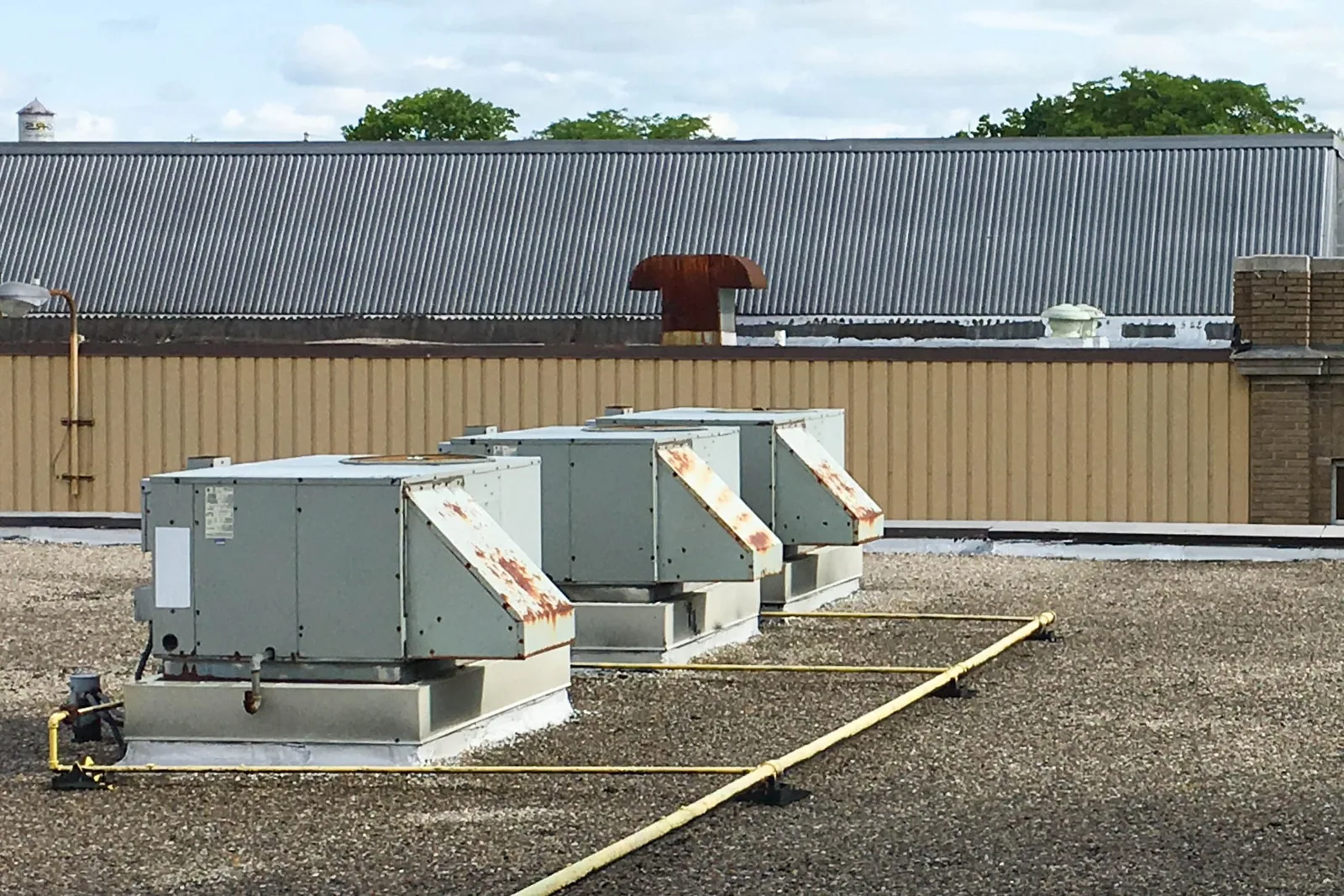
Big box roofs are also crowded with rooftop units, and some leaks near a drain actually start at a curb or equipment support. If a unit has to be disconnected or lifted so we can flash its curb, your HVAC contractor does that, and any change to the framing under it may need an engineer. We schedule our work around theirs. If a parapet wall drains toward the same area, we check its flashing too, because a new drain won't help if the wall above it is letting water in.
Planning around the sales floor
Opening a roof over a working store takes planning with the store manager. Before any work over an occupied building, we walk the area below with them: what merchandise, racking, registers or refrigerated cases sit under the opening, whether anything needs to be moved or wrapped in poly, and where we can stage materials and run a hoist without blocking customers or the loading dock. Loud cutting often happens early in the morning, before the doors open. The store decides what moves and when. We don't assume the floor is clear just because we were allowed up to inspect.
Sometimes the wet area turns out bigger than the cores suggested. When that happens, we stop, mark the new limits, and call you before cutting further. You'll hear what we found, what the larger repair costs, and whether a plumber or HVAC contractor needs to come back. At the end of each day the roof gets a temporary dry-in while we wait on parts or other trades. If the opening now reaches over a different department, the store manager needs to know so that area can be protected too.
Keeping a record of the drain work
When the job is done, you get photos of each drain before and after, a list of what was replaced, and the spots where we cut and patched cores. If the plumber still has a drain line to fix or the HVAC contractor has a unit to reconnect, that's listed separately so nobody assumes it's finished. Anything we couldn't see, such as the deck in an area we didn't open, is noted by location. The next facility manager will know exactly what was fixed and what still needs watching.
We work on retail roofs across Plano, including stores near the Shops at Willow Bend. Multi-tenant strip centers bring different problems, which we cover under shopping center roofing, and grocery store roofs add refrigeration equipment and longer operating hours. Each building gets its own inspection and its own estimate. We don't price your store based on what another roof needed.
Commercial Roofing Questions
What should a drain repair estimate include?
It should list the wet insulation removed, any new drain bowl, clamping ring or strainer, and the new membrane flashed into the drain. If the drain line below the deck needs work, that should appear as a separate plumbing item. A price for a patch alone usually won't stop a drain leak for long.
Does a leak inside the store tell you where the roof is damaged?
Not always. Water often runs along the deck or insulation before it drips through a ceiling. We start at the leak and trace it back on the roof, and we'll tell you how far we were able to check.
Who decides what gets moved below the work area?
The store manager or whoever runs that space. We walk the area together, agree on what needs to be moved or protected, and plan around store hours. Being allowed on the roof to inspect doesn't mean the space below is ready for us to open the roof.
What happens if you find more damage once the roof is open?
We stop, mark the larger area, and call you with what we found and a revised price before cutting further. The roof gets temporary protection while you decide or while other trades finish their part.
Schedule a big box roof inspection
Tell us where leaks are showing up inside the store. We'll inspect the drains and surrounding roof, then give you an estimate that keeps roofing separate from plumbing or HVAC work.

Request a Roof Assessment in Plano
Tell us about the building, the roof and what you are seeing. Send a request or call 555-555-5555.