
Commercial Roofing for Public Agencies in Plano, TX
Home / Industries We Serve / Public Agencies
Before a public agency can approve roof work, the reviewer needs to know exactly what the price covers. A leaking drain, a question about wet insulation and a broken rooftop unit may each need a different next step. We keep those items separate on every Plano public building we inspect. The agency contact gets the evidence behind each repair and a description of the complete permanent fix, so the reviewer can see what the work includes instead of approving a vague "roof repair" line.
Plano's public buildings range from city facilities like the Plano Municipal Center on K Avenue to college buildings such as Collin College's Spring Creek Parkway campus. Each roof is assessed on its own. Our roof condition reports mark what we inspected and where the inspection stopped, written so agency staff can review them without having been on the roof.
The request defines the area to assess
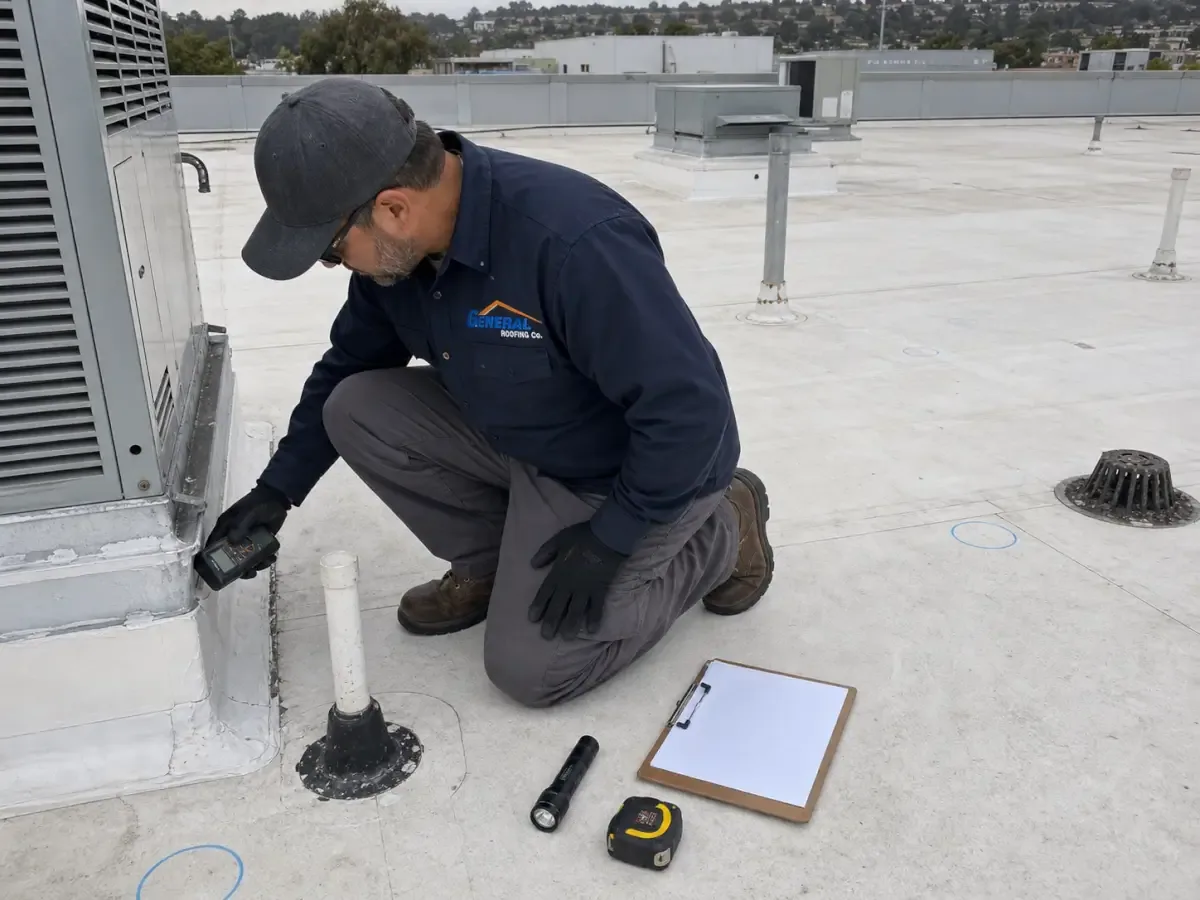
We start by confirming the building, the roof section and the problem. A facility name alone often isn't enough to match an interior leak to the right part of the roof. We tie our photos and plan marks to the area in question, so the reviewer can find the evidence behind each line item without a phone call.
The report says what we could inspect during the visit and what we couldn't. An area we couldn't reach stays an open question until someone gets eyes on it, and we note what that will take. That keeps the next decision practical without pretending we checked something we didn't. A gap in access shouldn't show up as a clean bill of health in an otherwise polished proposal.
Our commercial roof inspection keeps the building's leak history separate from what we find today. Where a leak showed up inside tells us where to look, not necessarily what caused it. We record the membrane and flashing conditions that drive the permanent recommendation, so the agency is reviewing the real roofing question and not just the original complaint.
Component responsibilities stay identifiable
We inspect the membrane and the nearby walls, drains and equipment. Sometimes a failed flashing can't be fixed until another trade repairs the wall, pipe or unit it ties into. We name that work and who does it. Structural, plumbing and HVAC assessments belong with those trades. A look at the membrane isn't a full review of everything underneath or beside it.
For roof drain and scupper repairs, we describe how the membrane will be flashed into the drain. A broken drain body or a clogged leader may need a plumber first. Our price says whether that's included or handled separately, so the agency contact can line up every step needed to seal the roof for good.
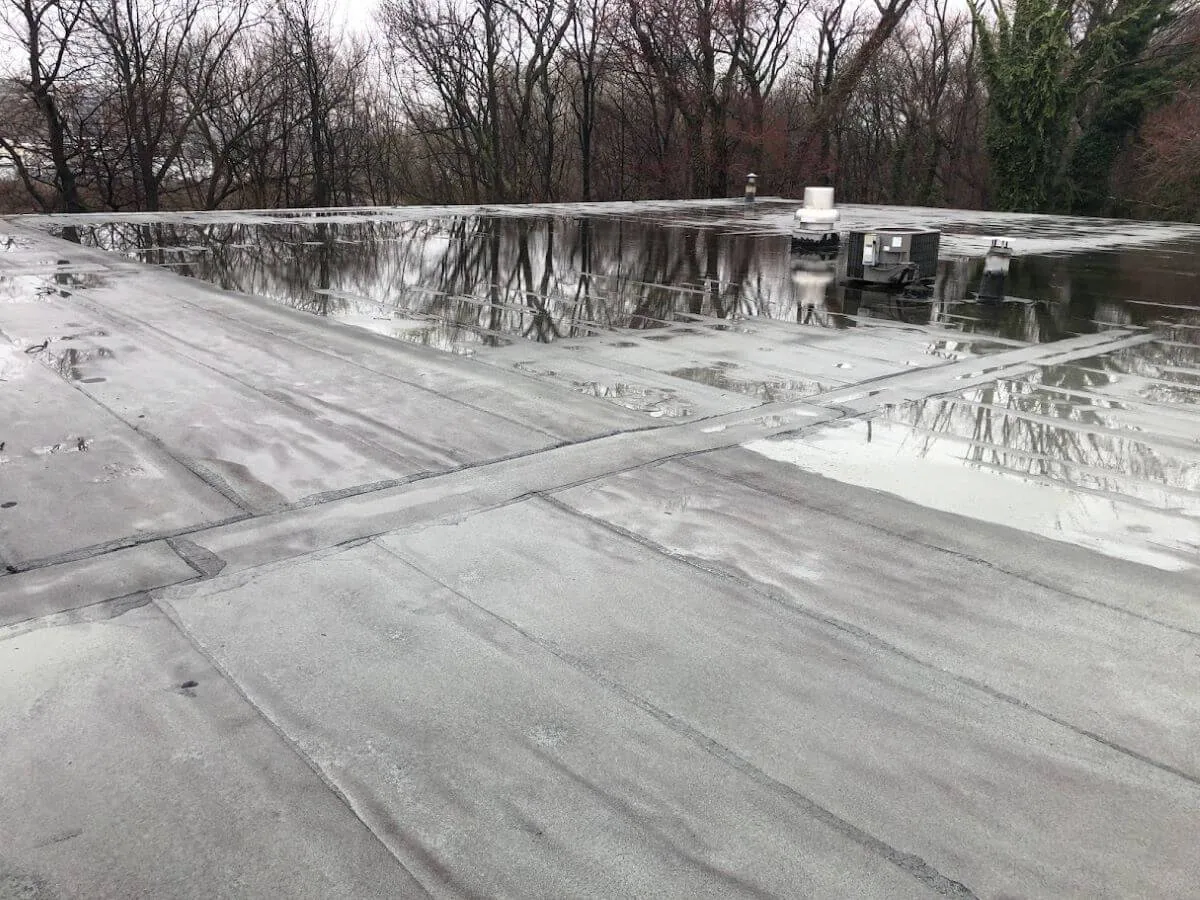
Each finding applies to the spot we inspected. A bad drain in one corner doesn't mean every drain on the roof is the same. Other areas keep their own testing needs. That lets the reviewer compare line items without assuming the whole building is in the same shape.
The amount describes preparation and finish
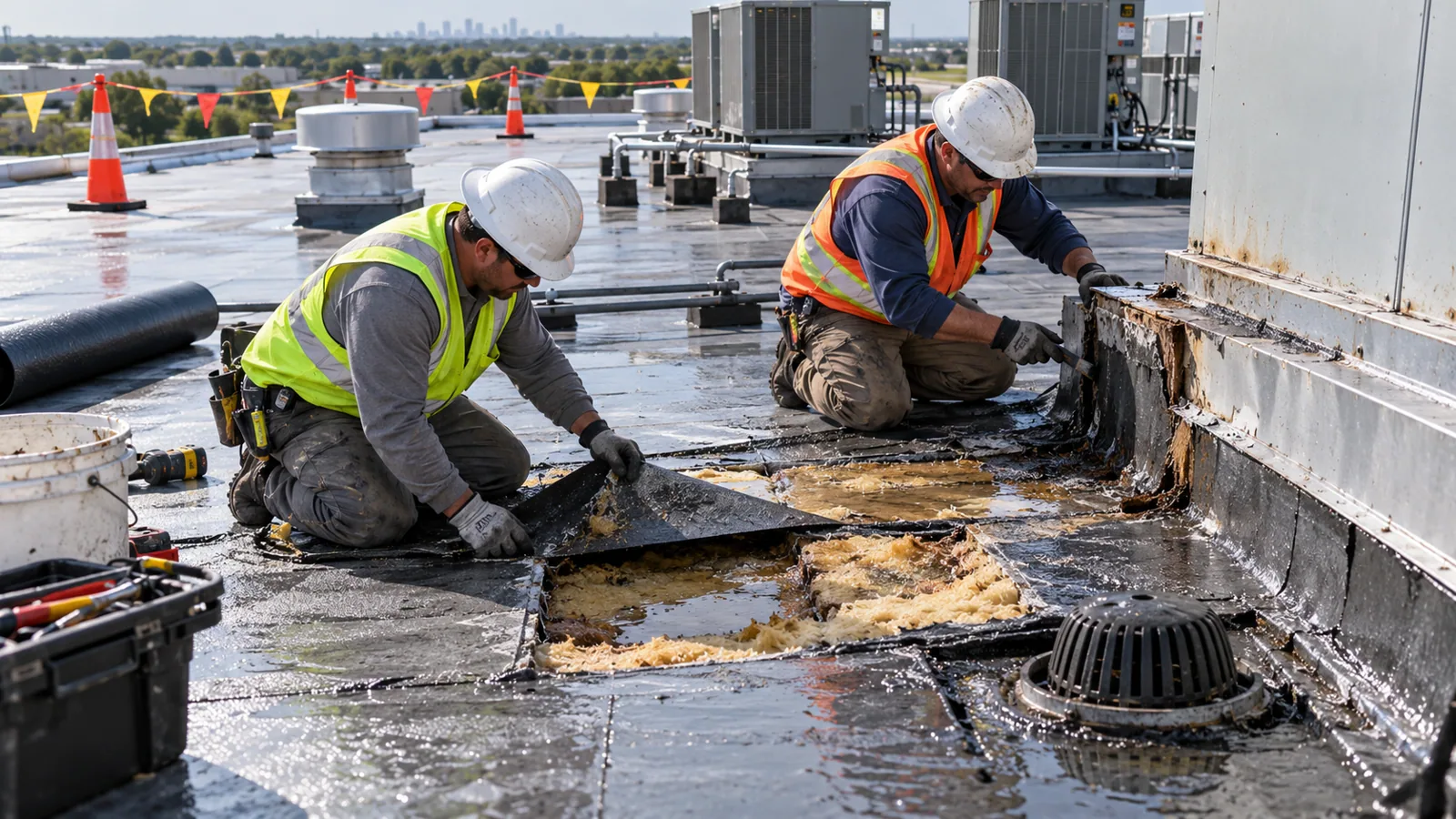
Before setting the repair boundary, we confirm which existing material is sound enough to keep. The repair method has to match the existing membrane, with proper prep and seams. A patch price may need insulation replacement or a new edge detail to become a complete repair. Our commercial roof repair scopes list that work alongside the surface patch.
Where hidden conditions affect the recommendation, we recommend a core or moisture test. We note where we tested and what the results mean for tear-off or reuse. The agency contact can see whether the repair price is based on confirmed conditions or still waiting on a test. Testing and construction are listed separately when both need approval.
When the findings support it, we compare a local repair with a larger rebuild. We explain what stays and how the new roof ties into walls, drains and equipment. A bigger membrane area doesn't automatically include every flashing or curb repair. The reviewer gets complete, comparable scopes for each option, with any open questions listed.
Agency arrangements follow the actual project
We confirm the authorized agency contact and the rules that apply to the job. We tell them how we'll access the roof, how materials will be handled and which other trades are involved. Building staff set the actual access and operating requirements. We note who receives the scope and the agreed work dates for that site, and give the agency the construction details it needs to run its own process.
For public buildings in Downtown Plano, we keep approved routes and any space restrictions with the building's file. A start date only works if the other trades are ready for the roof to be finished. The agency contact sees what has to be ready and can schedule each trade accordingly.
A roof capital plan tracks future work beyond the current repair. Each area keeps its own condition notes and limits. A finished repair in one section is useful history, but it doesn't prove the rest of the roof is dry. Future approvals should rest on findings from those areas.
Exposed changes need a construction reason
If opening the roof reveals new damage, we document it and explain how it changes the prep or rebuild. The revised work goes through the agreed review before we close the roof, and the area stays protected in the meantime. The reviewer can tie any added cost directly to what we found.
We provide emergency roof protection on weekends, at night and on holidays, following the building's access rules. We note what the temporary fix covered and what still needs to be inspected before a permanent repair. A temporary patch isn't reported as a full inspection, and the agency contact knows exactly what's still open.
The record explains the completed work item
We keep located photos of the prepared deck, replaced layers and finished flashing. The record notes what was kept and any work still owed by other trades. The final report explains what was done, not just what the new membrane looks like. Areas outside the inspection stay flagged, and a finished roof doesn't erase another trade's open item.
When we coordinate with general contractors on public projects, we record who did what and when. For school districts managing their own roof work, the same records support future decisions. Each new leak gets its own inspection, and the earlier records show exactly what was repaired before.
Commercial Roofing Questions
What does an agency need before reviewing a roof repair proposal?
The location of the problem, the finding behind the recommendation and a complete description of the repair, including prep, replaced layers and flashing. Any other trade's work should be listed separately so the reviewer sees the whole job.
How do you report areas you couldn't inspect?
We mark the roof area we couldn't reach and note what's needed to inspect it. Its condition stays unknown. We never treat a lack of access as proof that the roof there is fine.
Who handles the drain itself versus the roof around it?
We flash the membrane into the drain. A broken drain body or blocked line may need a plumber first. Our scope says which work comes first and who does it, so the roof can be sealed for good.
What happens if new damage is found once the roof is open?
We document where it is and explain how it changes the work. The revised scope goes through the agency's review before we close the roof, and the area stays protected while it's reviewed.
What records do you provide after the repair is finished?
Located photos of the prep and finished work, a list of what was replaced and kept, any work still owed by other trades and the areas outside the inspection. Future work can build on that record.
Prepare the agency roof work request
Have your agency contact schedule a commercial roof assessment in Plano. We'll document what we find, describe the complete repair and list any testing or other trade work needed before approval.

Request a Roof Assessment in Plano
Tell us about the building, the roof and what you are seeing. Send a request or call 555-555-5555.