
Commercial Roofing for Insurance and Restoration Work in Plano, TX
Home / Industries We Serve / Insurance and Restoration
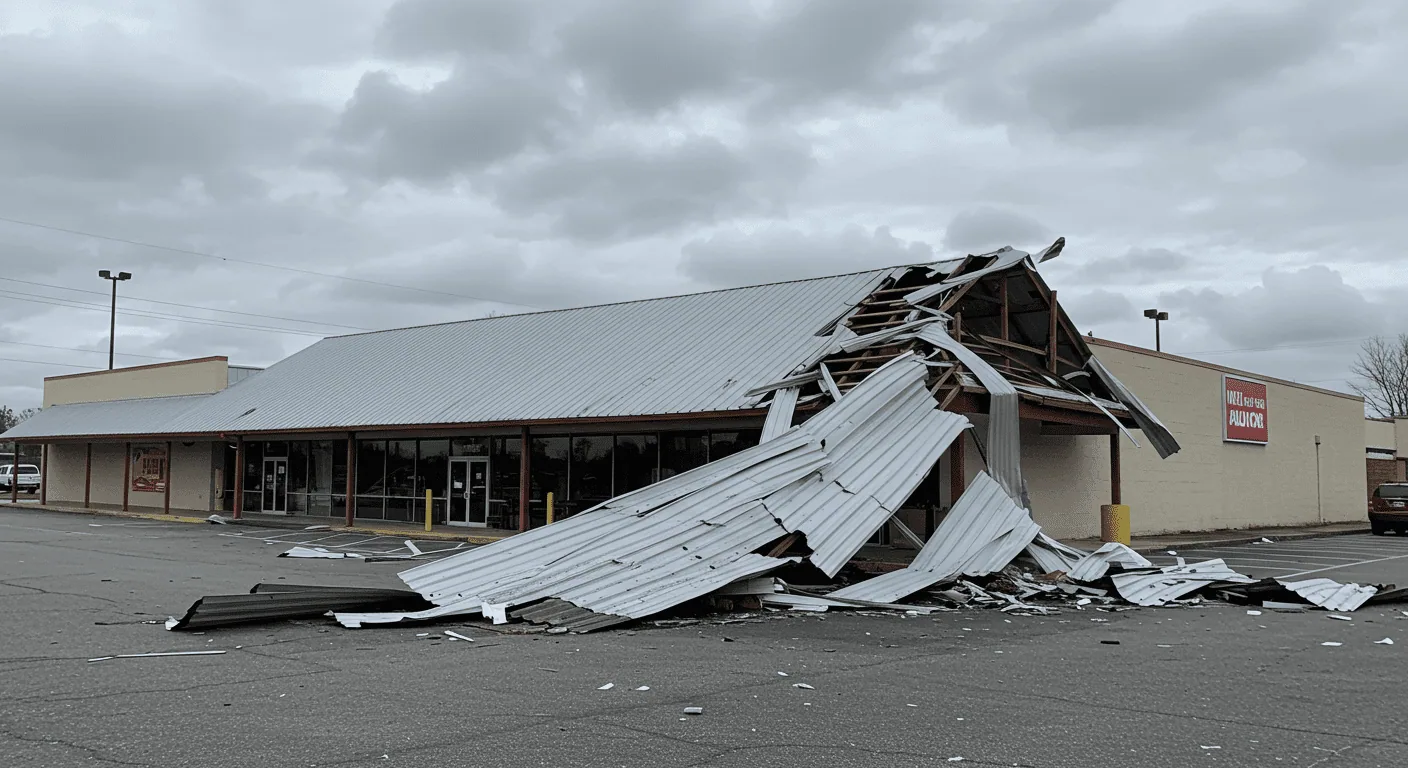
The April 11, 2016 hailstorm hit Plano, Wylie, Frisco and Allen among the hardest in North Texas. Storms like that set off a wave of commercial claims, but a storm date only tells you when to start looking. The roof still has to show where it was hit, what's damaged underneath and how much needs repairing on that building.
A photo of a bruised membrane or a dented coping cap proves something happened. It doesn't tell anyone how to rebuild the roof. For that, you need the location, the roof system installed and the condition of the insulation and deck under it. We inspect the affected areas on Plano roofs and describe the work the damage actually calls for. Temporary protection, further testing and the permanent repair are each listed on their own, so an adjuster or restoration contractor can follow the work without treating a first damage report as a finished scope.
Whether the building is near the Plano Municipal Center or out by Granite Park, send us the address, the problem you've seen and any photos. Our commercial roof inspection focuses on that building and its roof. The report explains what we found, what we couldn't check and what prep the permanent repair needs.
The observation remains separate from the report
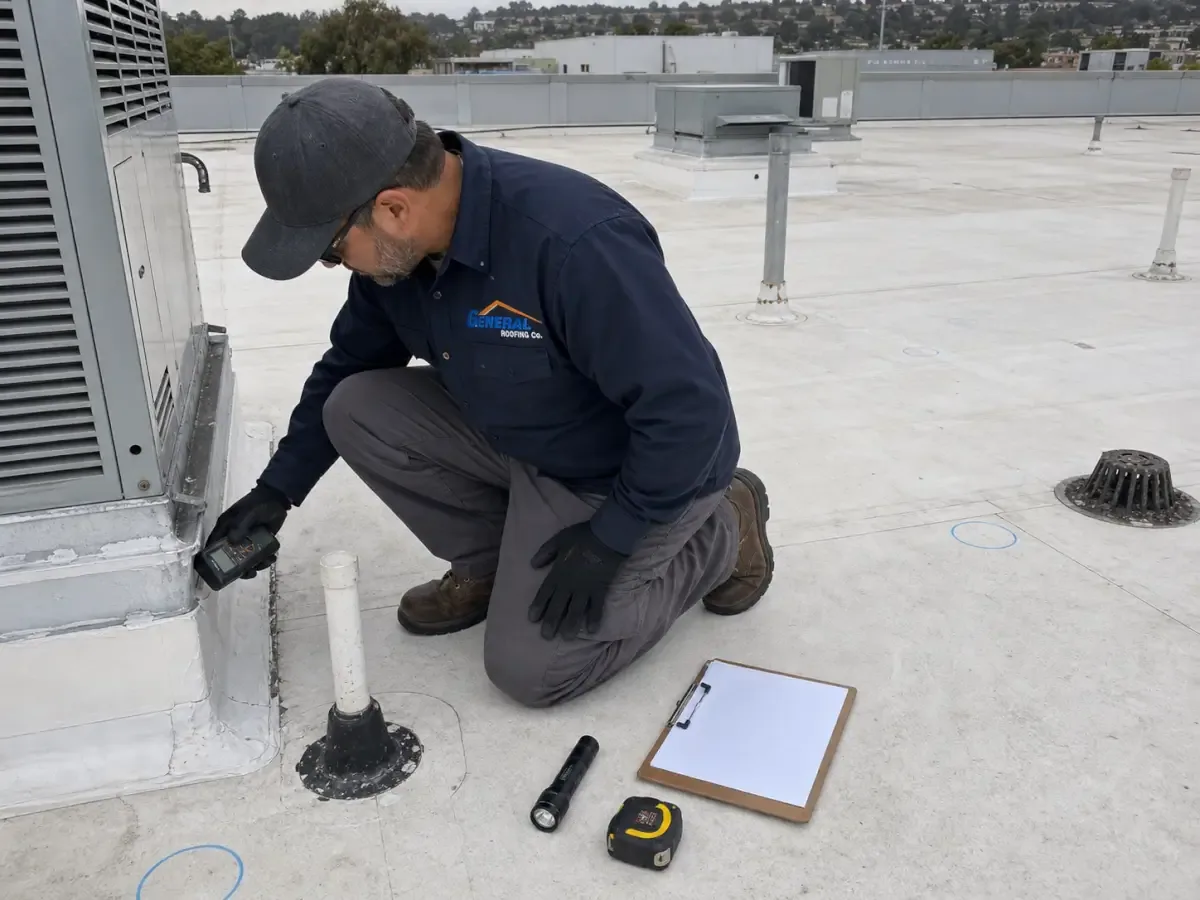
We note the leaks or interior damage you've reported and who reported them, then mark the roof area we inspected. What people tell us and what we see on the roof are kept separate. A stain or a leak report is a good reason to inspect, but it doesn't prove where the damage started or how far it goes. Our report explains what supports each repair decision and lists any questions still open.
With commercial roof leak repair, we locate the openings and the nearby flashing, seams and curbs that need checking. Every close-up photo gets a wider shot or a plan mark so the spot can be found again. A tight picture of a split seam shows the damage but not how it relates to the repair.
We don't turn a storm date into a finding about your specific roof. Weather records help line up the timeline, but your roof needs its own evidence. We report what we observed and where our inspection stopped, rather than assume the whole roof matches the worst spot.
Protection has a defined temporary purpose
We provide emergency roof protection at night, on weekends and on holidays. Our report says which opening we covered, what we used and what still needs to be decided about the permanent repair. The restoration contact can tell at a glance that a tarp or temporary patch was installed, not a finished repair. Temporary protection doesn't tell us what's under the membrane or take the place of another trade's work.
Our emergency roof repair crews work within the building's access rules. We confirm who at the property can authorize work and which area we're cleared to be on. A restoration assignment doesn't automatically give access to every part of the building, so we explain what we need to open and move so the right people can arrange it.
Later records keep temporary protection and permanent work clearly apart. If another visit is needed to check the deck or prep a curb, we list that as the next step. The emergency visit record stays useful without claiming more than it showed.
Removal follows the examined assembly
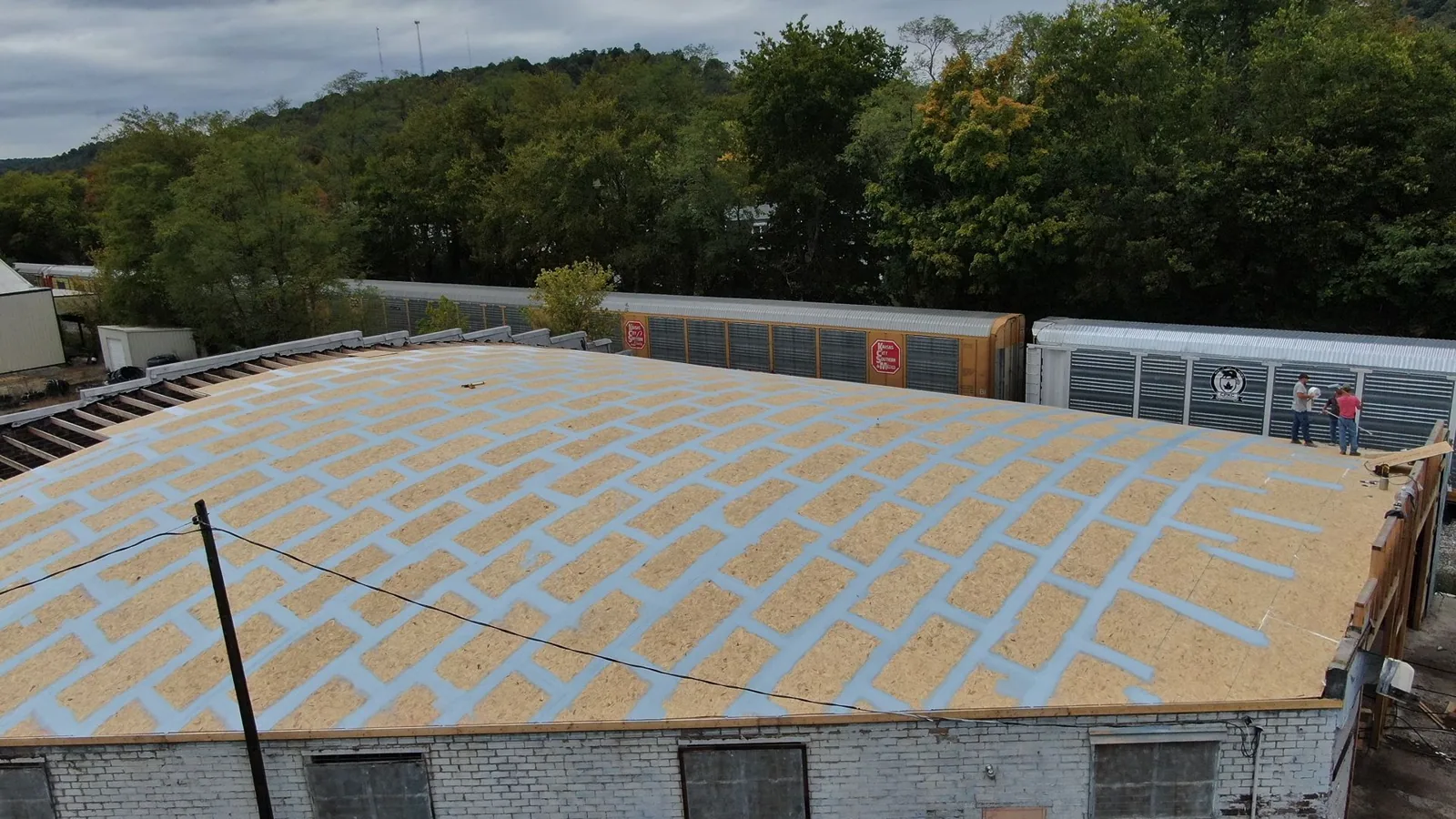
At each repair area we identify the membrane and the insulation and deck under it. Where moisture or rot decides whether material can stay, we take cores or moisture readings, note where and mark the tear-off line. The permanent price follows what can stay and what has to be rebuilt, and any open question about the deck is settled before new membrane covers it.
Membrane puncture repair can be a very different job from replacing a whole section. We list the prep and the seams needed to tie the repair into the existing roof. Simply covering a visible hole can miss wet insulation or a damaged flashing nearby. Each price is shown next to the work it includes.
Confirmed damage is kept apart from areas we haven't inspected. Another part of the roof may need testing before it can be priced. One restoration job doesn't mean every section of the building has the same hidden damage.
Adjoining duties remain in the reconstruction sequence
We locate any wall, HVAC or drain work that has to be done before the roof can be sealed, and we identify who does it. An HVAC service visit can finish the unit work and still leave a curb that isn't ready for flashing. The restoration schedule shows how each piece of equipment ties into the roof work, so the project contact can line up each trade.
For Granite Park properties, we base the work on that building's own inspection and contacts. A hotel down the street tells us nothing about your roof, and it doesn't grant access to it. Site rules and the repair boundaries are confirmed before we move materials or open the roof.
If a structural or design question comes up, such as whether a curb needs to be raised or a deck section reinforced, we note it next to that item. A bigger membrane allowance won't solve it. We show which permanent repairs can be finished now and which wait on that review.
The amount describes construction rather than coverage
Our proposal lists tear-off quantities, deck and insulation repairs, seaming and any return visits needed. Options we've fully inspected are marked differently from work that still needs testing. That gives adjusters a clear construction basis to review, while coverage and payment decisions stay with the insurer and the policy. We don't promise an insurer will accept a certain price or method.
A roof condition report supports that review with located findings and clear limits. It separates the emergency protection from the permanent repair. An approved roofing scope and an insurance decision are two different things, and the property contact should know where each one stands.
We coordinate with general contractors and property management companies on the same building through their own contacts. Each party knows where the roof work starts and stops and what has to happen before it, without anyone assuming approvals they don't have.
Exposed changes and completion stay traceable
If opening the roof uncovers damage beyond what we inspected, we show where it is and explain how it changes the repair. A revised quantity and price go through the agreed approval process before we expand the permanent work, and the roof stays protected while you review it. Any added cost ties back to a physical finding.
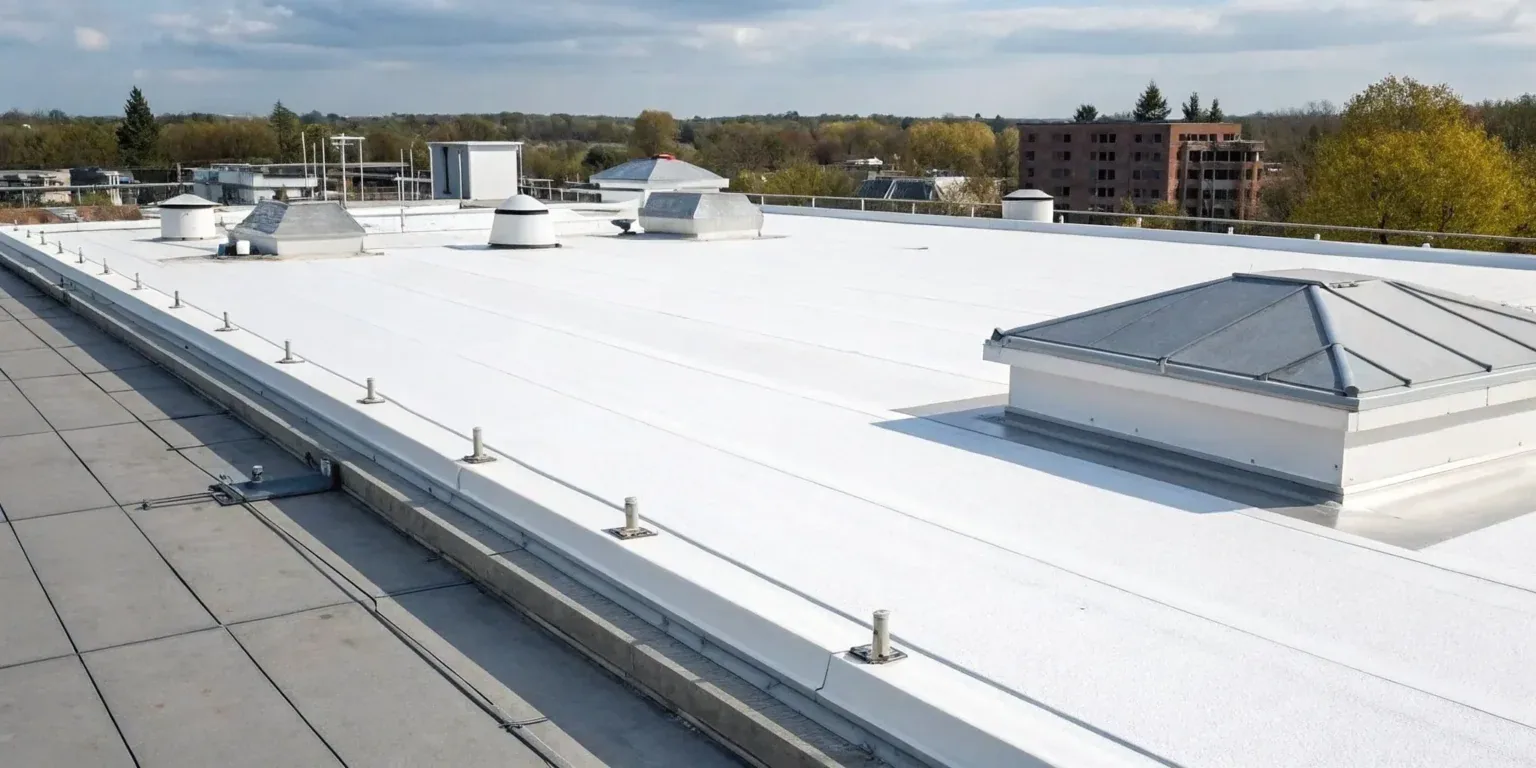
We keep photos of the prepped deck, replaced layers and finished flashing and seams. The closeout says what was completed and what work is still owed by other trades. That gives adjusters and future contractors a clear record of the repair, while areas we never inspected stay flagged as open.
Commercial Roofing Questions
What's the difference between a damage report and a roof inspection finding?
A damage report is what someone noticed or was told. An inspection finding is what we saw on the roof, with located photos and clear limits. A storm date or interior stain alone can't define the permanent repair.
How is temporary roof protection documented?
We note which opening was covered and why, and list the testing, deck repair and permanent work still to come. Temporary protection is never recorded as a finished repair.
Does your roofing proposal mean the insurer will approve the claim?
No. Our proposal describes the damage we found and the work needed to fix it. Coverage and payment are decided by the insurer under the policy, and we keep those decisions separate from the roofing scope.
What happens if tear-off reveals more damage?
We document where it is, explain the extra work and quantity, and get approval before expanding the job. The roof stays protected while the revised scope is reviewed.
What should the final restoration roof record include?
Located photos of the prepped deck, replaced layers and finished details, plus any work still owed by other trades and the areas we didn't inspect. That keeps later reviews tied to what was actually repaired.
Document the permanent restoration roof task
Schedule an inspection of the damaged roof area in Plano. We'll document what we find and lay out the temporary protection, testing and permanent repair so adjusters and owners can see exactly what the roof needs.
Request a Roof Assessment in Plano
Tell us about the building, the roof and what you are seeing. Send a request or call 555-555-5555.