
Commercial Heat and UV Roof Damage Repair in Plano, TX
Home / Roof Damage Repair / Heat and UV Roof Damage Repair
The National Weather Service's Dallas/Fort Worth records list August 2023 among the hottest Augusts on record by average air temperature. That's air temperature at a regional station, not a reading from any Plano roof, and it doesn't prove a roof was damaged. Years of North Texas sun do wear membranes down, though: TPO can craze, EPDM shrinks and pulls at the edges, and modified bitumen and built-up roofs dry out, crack and shed granules. We inspect what's actually on your roof and tell you what can still be repaired, based on the membrane and the prep it needs.
Hilton Dallas/Plano Granite Park sits on Granite Parkway, and Collin College's Plano Campus is on East Spring Creek Parkway; we mention them as landmarks only, not as roofs we've worked on or found damaged. At your building, a roof inspection of the worn areas tells us what the membrane needs.
What sun damage looks like up close
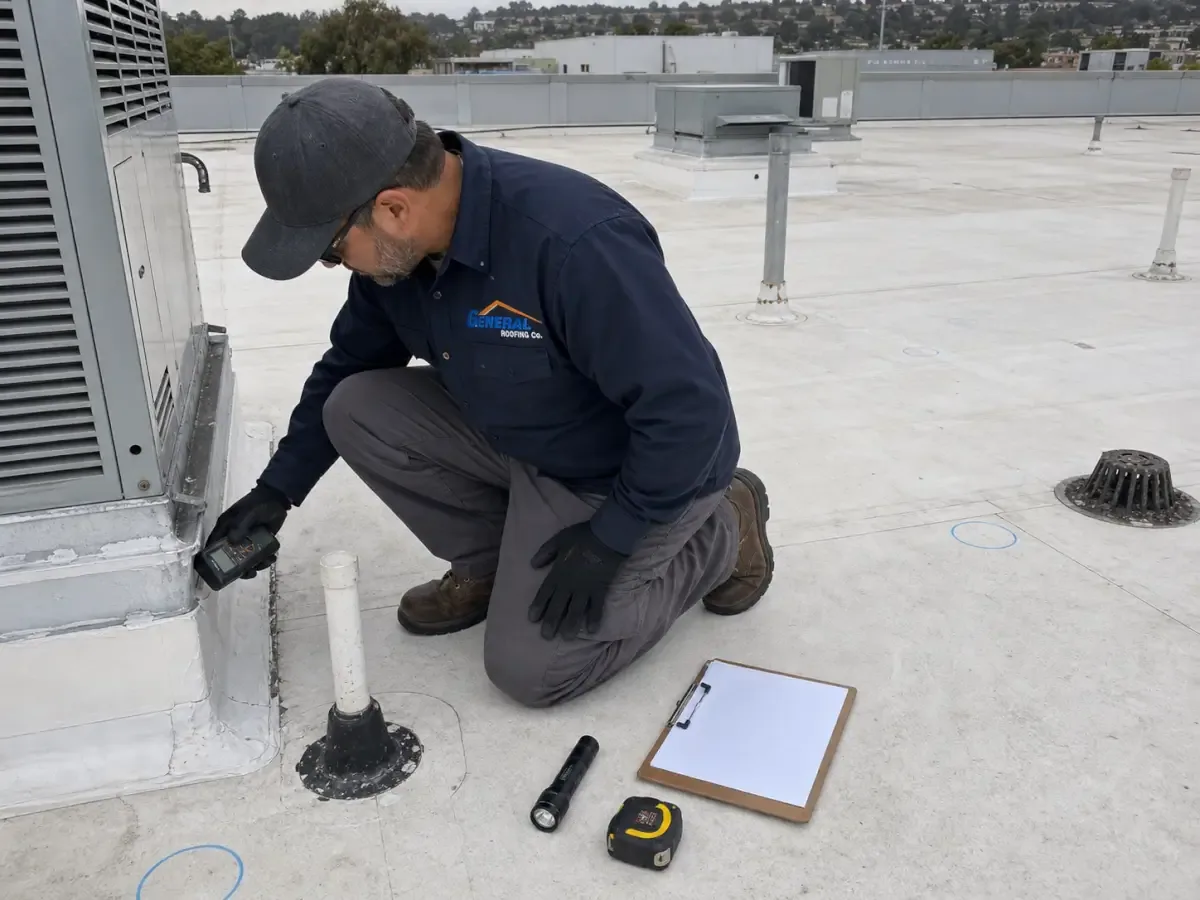
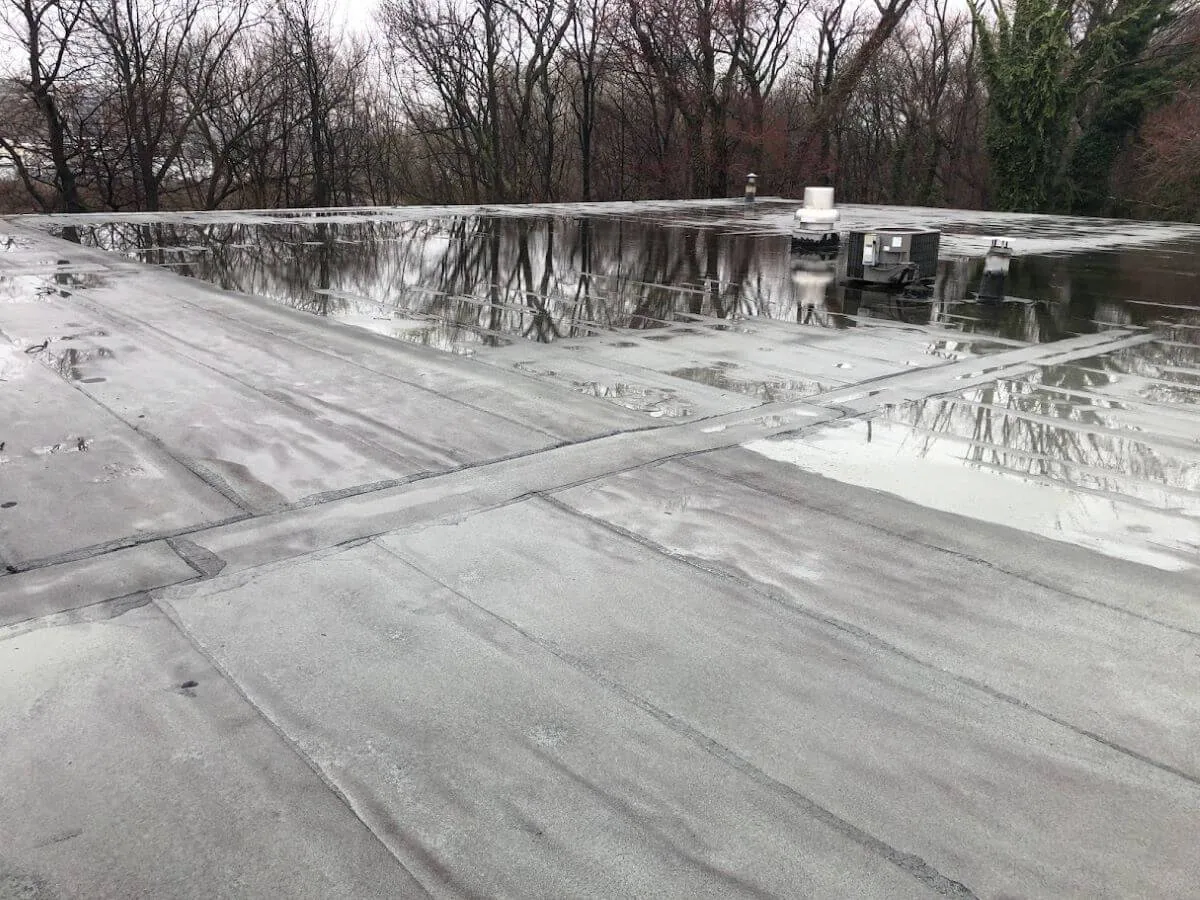
We confirm the roof system and mark the areas you're worried about. Then we look for crazing, cracking, chalking, exposed scrim, shrinkage, open laps and alligatoring, depending on the membrane. Heat isn't the only possible cause. Ponding water, foot traffic and exhaust from rooftop units also age a roof, so we report what we see rather than blaming the weather. The recommendation says which areas need work and what still needs testing.
Photos include enough of the roof to find the spot again. A close-up of cracking won't tell you how far it runs, so we note the boundaries we actually checked. That tells you whether the proposed work is a local repair or a sign the rest of the roof needs a closer look.
Is the surrounding membrane still good?
Before choosing a repair, we check the membrane at the edge of the damaged area. Patches and new flashing need sound material to weld or bond to, and that material has to be cleaned and primed the right way. Aged TPO sometimes won't take a weld until it's scrubbed back to fresh material, and dried-out mod-bit may crack when it's bent. If the wear runs past what you first pointed out, we move the repair line out to where the membrane is good. You'll know that before you compare a small repair with a bigger one.
With commercial roof repair, the estimate states what gets replaced and what stays, along with any seams or flashing that are part of the job. A new patch tied into brittle membrane will just crack again at its edge. The scope follows your roof system and the shape of the area, not just the visible worn spot.
Sun-baked seams often open at the same time. Seam failure repair gets its own check, since one bad area doesn't mean every seam on the roof failed for the same reason. Each problem is marked on the plan so you approve only the work the inspection supports.
Checking the layers underneath
Cracked or crazed membrane lets water reach the insulation, but a worn surface alone doesn't tell us whether the insulation is wet. Where the repair depends on it, we take cores or use moisture scanning and note where we tested and what it showed. Those results apply to the tested area. You see the reason for any tear-off instead of a depth guessed from a hot summer.
If insulation or cover board has to be replaced, we walk you through how the new layers will sit under the finished membrane. Rebuilding can change the roof height at curbs, drains and walls, so any flashing changes are priced with it. A membrane or coating on top can't fix wet insulation underneath, and the estimate makes clear what's being done below the surface as well as on top of it.
Once we open the roof, the conditions underneath may call for a different approach. If they do, we mark what we found, tell you what it changes and get your sign-off before closing the roof up. Temporary protection and any work by other trades stay on the list while you decide. The final scope follows what the roof needs, even if that's more or less than we first planned.
When a coating makes sense
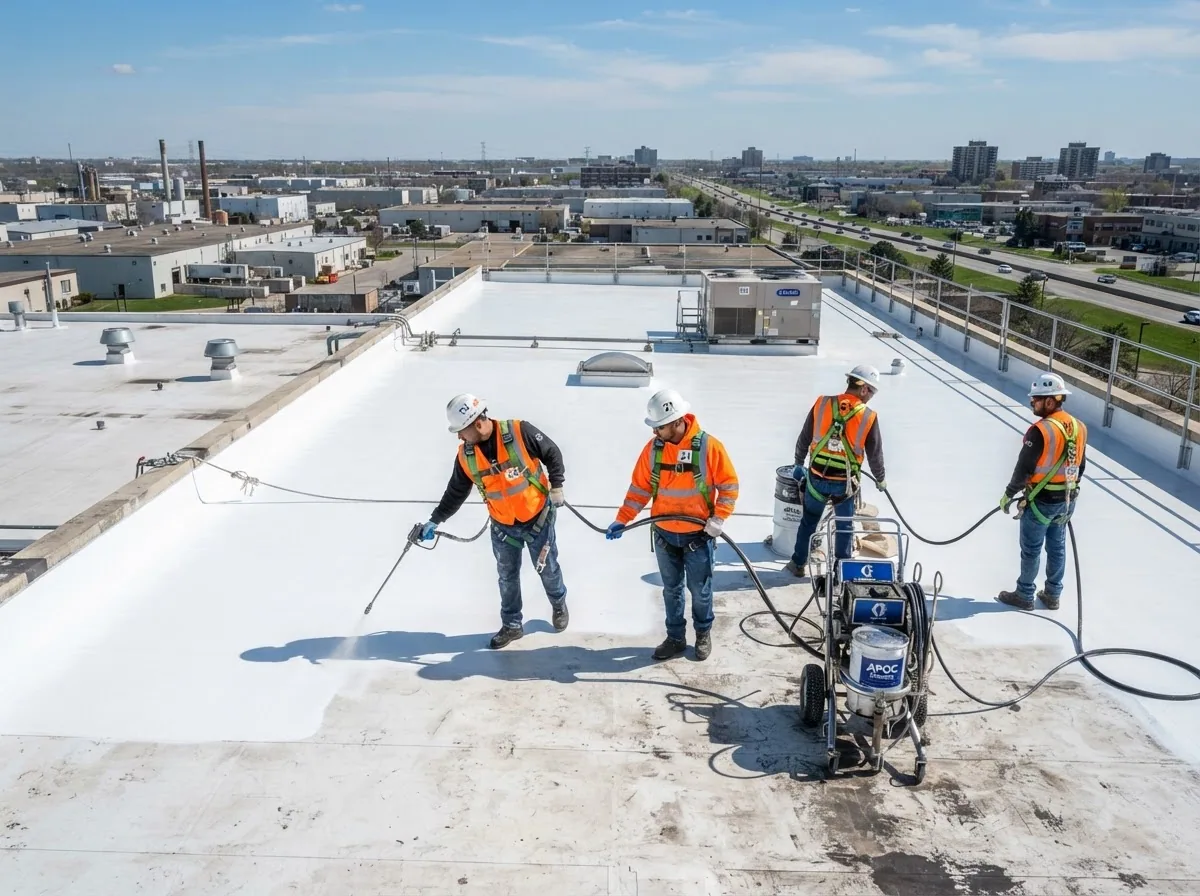
A coating can add years to a roof whose membrane and seams are still basically sound, but it doesn't fix wet insulation, failed flashing or a split seam. Those get repaired first. With roof coating restoration, we check whether your existing roof is a good candidate, list the prep work and repairs needed beforehand, and tell you plainly what the coating will and won't do. It isn't a substitute for repair where the roof needs real work.
When the findings support it, we compare coating with targeted repairs or a full replacement. For each option we state what stays and which details get fixed. A bigger coating job isn't more complete if it leaves the same bad flashing in place. You get side-by-side prices with the inspection findings and open questions listed next to each one.
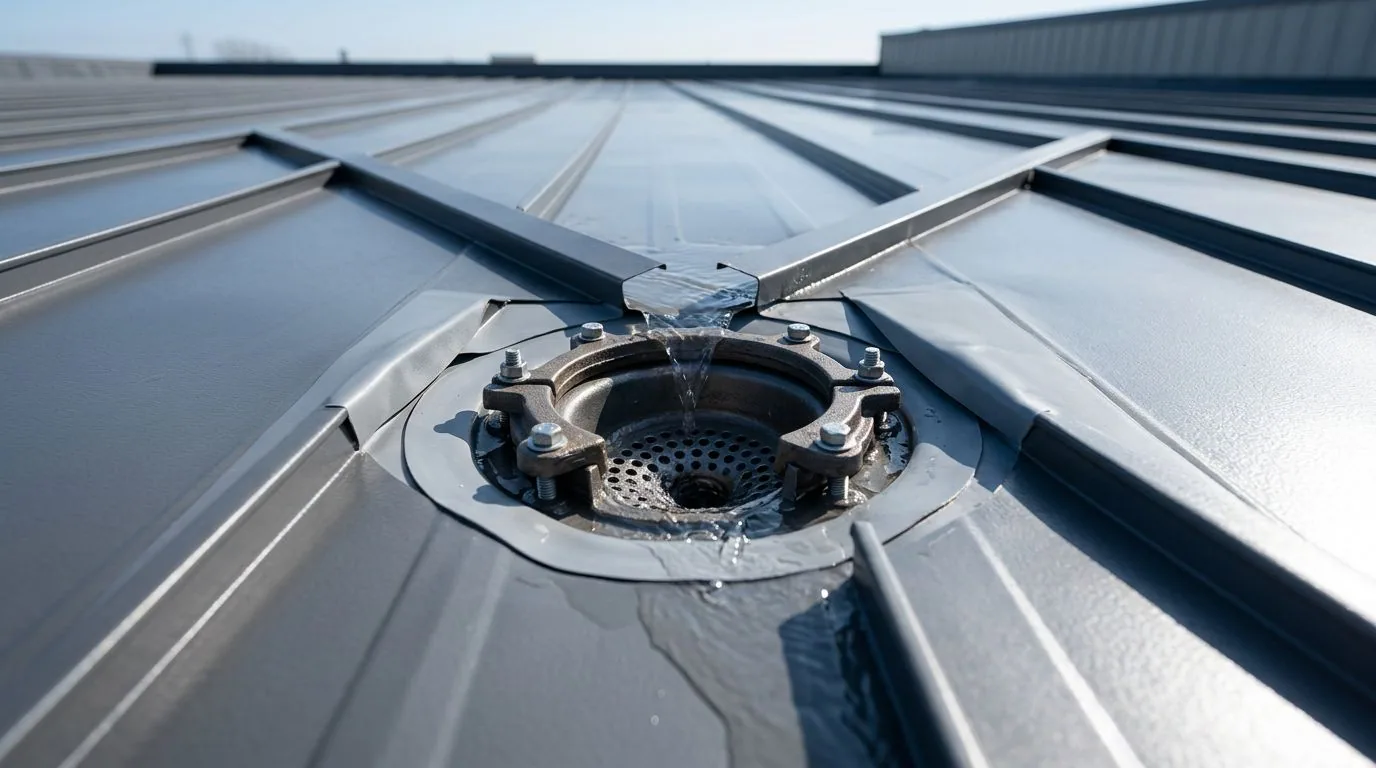
If flashing repair is needed to finish the job at the walls or curbs, we check the top termination and the backing. The mason or HVAC contractor may need to fix a wall or unit first. We note that in the estimate so you can schedule the work in an order that ends with a watertight roof.
Planning the work at your property
We confirm who our site contact is, how we get onto the roof and where material can be staged. Offices and retail around Legacy West often have strict delivery windows and busy parking garages, so we go over the work dates and the affected roof area with whoever arranges access. The property's own manager sets the site rules.
Primers, adhesives, welding and coatings all depend on temperature and surface conditions, and on a Texas summer roof that can mean early-morning starts. We schedule around what the materials need and when other trades are done, and we flag anything unresolved before opening the roof, so the timeline you get is one the crew can actually meet.
Closeout and follow-up
We photograph the prepped surface and any replaced layers before the finished membrane or coating covers them. The repaired areas and new seams and flashing are marked in the work record. A roof condition report states what we did and what we checked. If another trade still has open work, it's listed as open, not lumped in with the finished roofing.
We can install emergency temporary protection at night, on weekends and on holidays. The record notes what that fix addressed and what still needs to be inspected for a permanent repair. A problem reported later elsewhere on the roof gets its own inspection. The report covers the repaired area only and doesn't label the whole roof as heat-damaged.
Commercial Roofing Questions
Does a DFW temperature record tell us how hot our roof got?
No. The NWS record is air temperature at a regional station. It doesn't measure your roof surface or prove damage. Our recommendation is based on what we find on your membrane, seams and flashing.
How do you know if a worn area can just be patched?
We check the membrane around it. A patch needs sound material it can weld or bond to and room to finish properly. If the wear runs further than it looks, we move the repair line out to good membrane.
Will a coating fix problems under the membrane?
No. A coating doesn't dry out wet insulation or fix failed flashing and split seams. We test the layers where it matters and repair those problems first. A coating only makes sense on a roof that's otherwise sound.
How should a coating be compared with repair or replacement?
Each option should list the prep, the membrane that stays and the flashing and seam work included. We keep open questions next to each price. A bigger coating job isn't better if it leaves the same bad details in place.
What records do we get after the work?
Photos of the prep and any replaced layers, plus a report marking the repaired areas, new seams and flashing. It lists what we checked and anything still open with other trades. Problems elsewhere on the roof need their own inspection.
Get worn roof areas inspected
Schedule a commercial roof inspection in Plano for cracking, shrinkage or sun-worn membrane. We'll check the surface and the layers underneath, then price a repair, coating or replacement with everything included.
Related Roofing Work
Request a Roof Assessment in Plano
Tell us about the building, the roof and what you are seeing. Send a request or call 555-555-5555.