
Commercial Hail Damage Roof Repair in Plano, TX
Home / Roof Damage Repair / Hail Damage Roof Repair
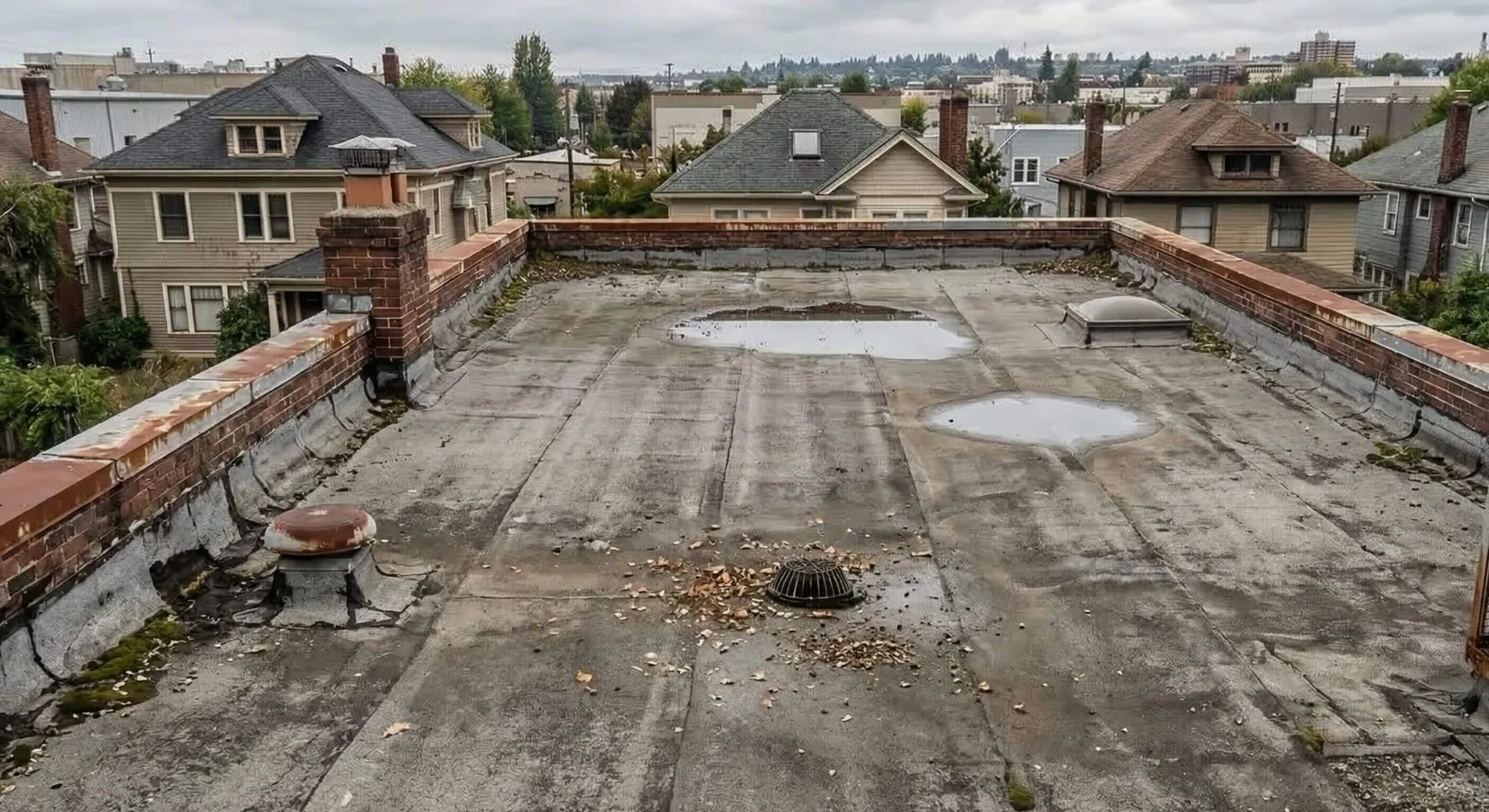
The National Weather Service documented a North Texas hailstorm on April 11, 2016, with major hail impacts in Wylie, just east of Plano. A storm report like that tells you hail fell in the region. It doesn't tell you whether your roof was hit or how badly. That has to come from the roof itself: bruised or cracked membrane, dented metal, fractured coping caps, damaged rooftop units. We inspect what we can reach and tell you what we found and where, before anyone starts talking about replacing the roof.
Collin College's Plano Campus on East Spring Creek Parkway and the Plano Municipal Center on K Avenue are local landmarks, not hail claims; we aren't suggesting either building was damaged. On your building, storm damage roof repair depends on how your roof is built and what we find on it. A regional storm record is background, not an inspection.
Storm dates versus roof evidence
We note when you think the storm hit and what you've seen since, such as new leaks, granules collecting at the scuppers or dents in rooftop units. Then we inspect and keep the two apart. A storm date and a photo of a mark on the membrane are different kinds of information. Not every defect on a roof came from the same storm. Old blisters, foot-traffic damage and worn seams look different from fresh hail hits, and we say which is.
Each finding is photographed with enough of the roof around it, or marked on a roof plan, that you can find it again. A close-up of a dent with no location doesn't help anyone. We pair each photo with a written note so you can tie every repair item back to the damage behind it.
Checking the membrane for hail damage
Hail affects roofs differently depending on the system. TPO and PVC can show fractures or bruising that isn't obvious until you press on it. Modified bitumen and built-up roofs lose granules or crack the felts beneath. Metal panels dent and can open at their seams. We confirm the roof type first, then look for punctures, splits and fractures. A spatter mark on a unit cabinet doesn't, on its own, tell you how much roof needs replacing.
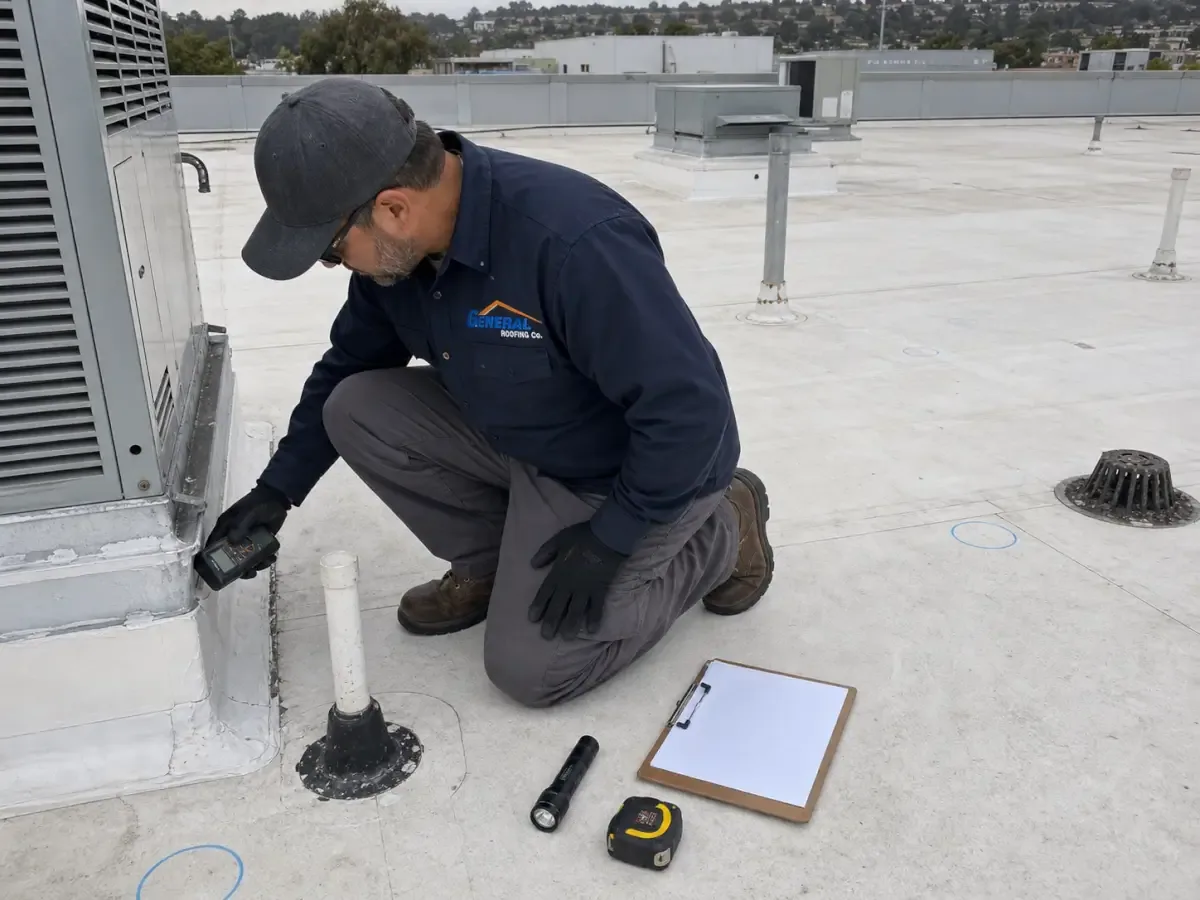
Our commercial roof inspection is clear about what we could and couldn't check. If a walk-over can't settle whether the membrane is fractured underneath, we say so and recommend the next test, such as a core sample or a manufacturer's field assessment. We won't write a confident-sounding report to paper over a question we haven't answered.
We also check seams, flashing, curbs, skylights and edge metal in the inspected area, and each problem gets its own spot on the plan. One damaged curb doesn't mean every curb is damaged. You'll know which repairs rest on confirmed damage and which parts of the roof still need a closer look.
What's happening under the membrane
Hail can crush insulation and crack cover board under a membrane that looks intact. Where the repair depends on what's underneath, we take cores or test cuts and note exactly where we took them and what we found. A hail report doesn't tell us how much insulation is damaged, and we don't price the whole roof as if every board were crushed.
A core in one spot tells us about that spot. It may support replacing insulation in that section while another section still needs testing. We tell you what it would take to settle that area before widening the repair, and we price testing and permanent repair as separate items so you can see what each one is for. A lump-sum allowance with no explanation doesn't help you decide anything.
If tear-off reveals wet insulation, a damaged deck or other surprises, we photograph and mark them and walk you through how they change the work. You approve any change under the terms we agreed to, and the roof stays protected in the meantime. We'd rather adjust the scope than hide a problem to keep the original number.
Comparing repair and replacement
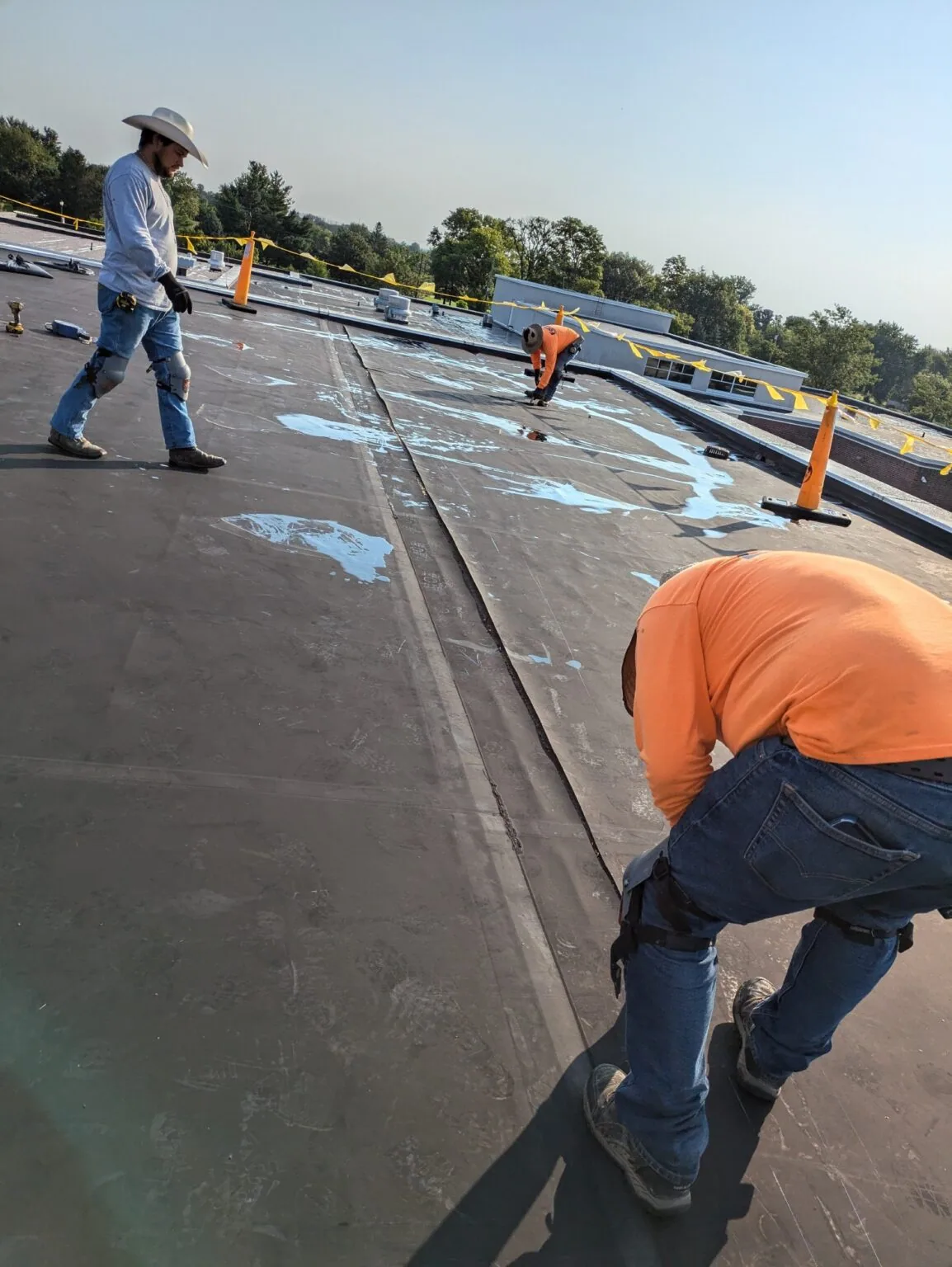
Where the surrounding membrane is still sound, a local repair can hold. Membrane puncture repair includes the prep, the patch and any nearby flashing that was hit, after we've checked the layers below. We tell you what stays and why the patch boundary works. A small repair price can be misleading if it skips wet insulation underneath.
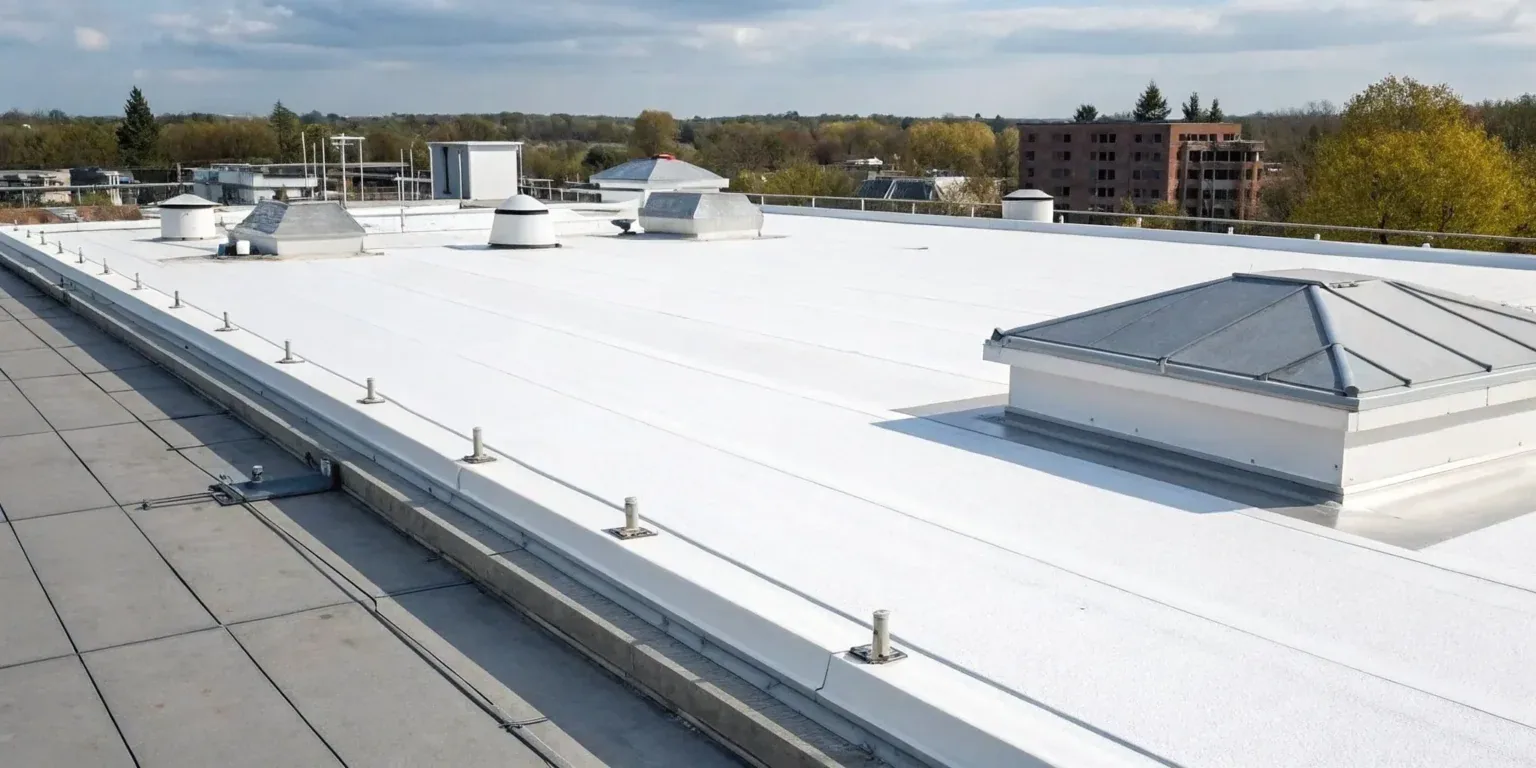
When commercial roof replacement makes more sense, the estimate states how deep the tear-off goes and which walls, drains, edges and equipment curbs are included. Work by the HVAC or sheet metal contractor is listed separately. A bigger membrane area doesn't automatically include every curb and edge, so we compare both options by what each one actually fixes, with any open questions listed next to each price.
Hail often opens seams too. Seam failure repair follows the welding or adhesive requirements of your membrane, and it's listed as its own item in the combined scope. That way a repair that touches several details isn't buried under one "storm damage" line.
Insurance claims and the roofing scope
We'll share our findings and the proposed scope with your insurance adjuster or public adjuster. Our report describes what the roof needs; it doesn't promise what your policy will pay or set claim deadlines. With roof insurance claim assistance, we provide located photos and clear notes on what we inspected, and the coverage decision stays with your insurer.
For work near the Collin College Spring Creek area, access is arranged by your property's own manager. We let them know which part of the roof we'll be on and what the work involves so they can plan for tenants and parking. The schedule follows when the roof and the other trades are ready.
After the repair
We photograph the prepped insulation and deck before they're covered and mark the new layers and flashing on the roof plan. The finished work is checked with the method that suits the membrane. The closeout lists what we did and anything still waiting on another trade, so you can trace each repair back to the damage we found. It doesn't speak for parts of the roof we didn't repair or inspect.
We can provide emergency temporary protection at night, on weekends and on holidays. The work record notes what that temporary fix was for and what still needs inspection. The permanent repair follows the evidence, and keeping that order clear helps when the insurance decision and the roofing work run on different timelines.
Commercial Roofing Questions
Does a regional hail report prove our roof was damaged?
No. A storm report shows hail fell in the area. Whether your roof was damaged depends on what an inspection finds on your membrane, flashing and equipment, marked at specific locations.
How should hail damage be photographed?
Each photo should include enough of the surrounding roof, or a roof-plan reference, that someone can find the spot again. We pair every photo with a written note. Damage at one curb or seam doesn't mean every similar detail is damaged.
How do you decide how much insulation to replace?
We take cores or test cuts where the repair depends on what's under the membrane and note where we took them. The tear-off depth follows those results for that area. We don't assume the whole roof is crushed because a storm passed through.
How do you compare a repair with a full replacement?
For each option we list the prep, the membrane that stays, and which flashing, curbs, drains and edges are included. Work by other trades is priced separately. Open questions are noted next to each price so you can compare fairly.
Does your repair recommendation decide our insurance claim?
No. We report what the roof needs based on what we inspected. Your insurer decides coverage under your policy. Our photos and notes can support that review, but the decision is theirs.
Get a hail damage roof inspection
Schedule a commercial roof inspection in Plano after a hailstorm. We'll mark the damage we find, recommend any testing needed and price repair or replacement with everything included.
Request a Roof Assessment in Plano
Tell us about the building, the roof and what you are seeing. Send a request or call 555-555-5555.