
Commercial Roof Warranty Management in Plano, TX
Home / Roofing Capabilities / Commercial Roof Warranty Management
A seam pulling apart next to a rooftop unit leaves a Plano property manager with two questions: what has to happen today to keep water out, and does the roof warranty cover the permanent fix? The first is answered on the roof. The second is answered by reading the warranty that was actually issued for that roof. Both can move at the same time, but having a warranty on file does not mean this particular leak is covered. We pull together the roof findings and the construction records so the owner can see both sides and decide what comes next.
Collin College's Plano Campus sits on East Spring Creek Parkway, and Hilton Dallas/Plano Granite Park is on Granite Parkway. If your building is near either one, send us the warranty paperwork you have and tell us where the leak showed up. With roof asset records for the property, we can match roof sections and past repairs to the right documents. Your building's own records and its warranty language are what the review rests on.
Match the warranty to the right roof
First we look at which warranty the owner has and which roof area it describes. Many buildings have more than one roof section, installed or repaired at different times. We keep the covered area, the names on the warranty and the related job records together. A street address alone may not tell you whether a later equipment addition or repair falls under it. The manager should be able to tie the document to the roof section in question before leaning on it.
Warranties are not all alike, so we read the one that was issued instead of assuming. A manufacturer's material warranty and a contractor's workmanship warranty can cover different things. We note the contact listed and any claim steps written in the document. Questions about what the language means or whether something is covered go to the warranty issuer or the owner's adviser. Our roof findings help tell the story of the leak; they do not settle the contract.
What we document at the equipment
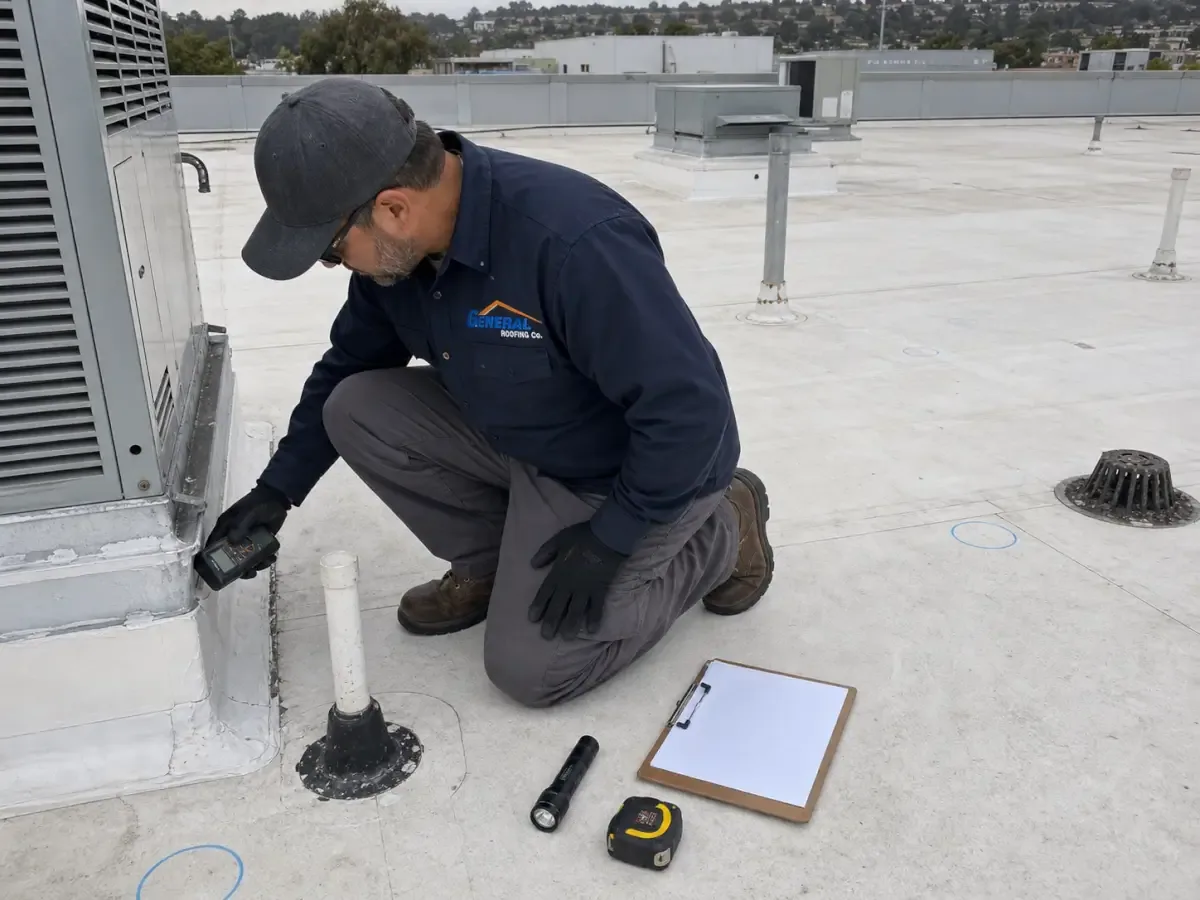
At the leak, we photograph the membrane and flashing around the unit, the curb itself and the roof right around it. What we see is kept apart from what the building engineer or tenant tells us happened. The manager gets a clear record of what was visible that day and what we could not confirm. A warranty naming the roof system does not explain why the flashing at that curb let go.
A commercial roof inspection provides photos and written findings. Each photo has enough context to tell which curb and which roof section it is. We note what we could not see, especially where wet insulation or another contractor's equipment might affect the permanent repair. The warranty holder gets our actual findings, not a blanket statement that every curb on the roof has the same problem.
If we need to look under the membrane, we propose the test cut or core first so the owner can check whether the warranty process requires notice before the roof is opened. We note where we cut and what we found. A finding at one curb stays tied to that curb when the report goes in for review.
Notice follows the warranty's own steps
The warranty itself tells the owner who to contact and what information to send. We keep the leak location, photos and inspection notes ready for that call or letter. We never assume a deadline; the issued terms decide that. The manager should know which steps are part of the warranty process and which are just repair decisions. A clean record also shows when the leak was reported and what has been done since.
The warranty issuer makes its own call under its terms. We report what we saw on the roof and the repair we would do. Recommending that a curb flashing be rebuilt is not a promise that someone else will pay for it. We keep those two things apart in writing. The owner can read the warranty correspondence alongside the repair need without mistaking our proposal for an approved claim.
Emergency patches are logged as their own task
When a leak needs attention right away, we walk you through the temporary fix and what it is meant to stop. Emergency roof protection is available at night, on weekends and on holidays. The owner handles any notice or approval the warranty requires. We log what went on the roof and why. A good temporary repair leaves a clear trail for the permanent fix and the warranty review that follow.
With emergency roof repair, we list the questions the patch did not answer. A patch stops water; it does not tell anyone what caused the leak or what is wrong underneath. The manager can see what the emergency visit did and what still needs looking into. That keeps later decisions tied to the real condition of the roof instead of guesses made during a storm call.
The permanent repair has to fit the roof
Before picking a repair method, we check the roof system and the condition of the membrane that will stay. At a curb, the mechanical contractor may need to reset or repair the unit before new flashing can be finished. We note that task and who is handling it. The flashing detail has to suit the actual membrane and the shape of the curb. With penetration flashing work, we lay out the prep and the finished flashing together.
Jobs around the Collin College Spring Creek area follow each property's own rules. We confirm the site contact, roof access and any equipment shutdowns before opening the roof. Those instructions, and the name of the person who will accept the finished work, go into the repair file. Any approval from the warranty issuer is recorded exactly as it stands, whether pending or granted.
Tear-off sometimes uncovers more, like wet insulation past the curb. We photograph it and note how it changes the repair before new material covers it. Related warranty correspondence is kept with the change order, so the manager can review both together.
The file shows what was done
The leak report, the warranty correspondence and the repair records stay in one file. We photograph the prep work before it is covered and mark where new flashing went in. Anything another trade still owes is listed separately. The final roof condition report covers the work done and what was inspected, without claiming anything about roof sections we never looked at.
We keep the issuer's actual reply, with its date and what it covers. A claim that was submitted, a request for more information and an approved repair are three different things, and the owner should be able to tell which one applies by opening the file. When equipment changes or new repairs come up later, the earlier documents are right there. Decisions rest on real terms and finished work, not on assumed coverage.
Commercial Roofing Questions
Which document should we check first when the roof leaks?
The warranty that matches the roof section and roof system where the leak is. Keep the names on it and the original job records together. Material and workmanship warranties often cover different things, so the issued wording decides the claim steps.
Can an inspection decide whether the warranty covers a leak?
No. An inspection documents what we see, what we found and what we could not reach. The warranty issuer decides coverage under its own terms. We keep our repair recommendation separate so the owner knows where each one stands.
How should an emergency patch appear in the warranty file?
As its own entry: what was leaking, what temporary repair went on and why. Open questions are noted for the permanent repair. The owner handles any notice the warranty requires, and our record shows what the emergency visit actually did.
What should we keep when another contractor changes rooftop equipment?
The equipment contractor's records, tied to the roof location and the warranty paperwork. Sort out who handles the unit and who handles the flashing before the new curb is flashed. Check with the warranty issuer about any required approval rather than assuming the change is covered.
How can a manager tell where a warranty claim stands?
Keep every reply from the issuer with its date, the repair it refers to and its status. A submitted claim, a request for more information and an approved repair are different stages. Filing the repair records next to those replies keeps the picture accurate.
Get a leak documented for your warranty
Book a roof inspection in Plano and have your warranty paperwork handy. We will photograph the problem, write up the repair it needs and give you a clean file to send to the warranty holder.
Request a Roof Assessment in Plano
Tell us about the building, the roof and what you are seeing. Send a request or call 555-555-5555.