
Multi-Site Commercial Roof Programs in Plano, TX
Home / Roofing Capabilities / Multi-Site Commercial Roof Programs
Two buildings in the same portfolio can both report leaks around rooftop units and still need very different fixes. At one, the membrane around the curb is in good shape and only the curb flashing needs replacing. At the other, wet insulation around the unit has to come out and be rebuilt before new flashing can go on. Sharing a property manager does not make those jobs the same. In a Plano multi-site roof program, we keep each building's findings and each trade's tasks with that building, so the owner can compare work across the portfolio without losing what makes each repair complete.
Plano Municipal Center sits on K Avenue and Hilton Dallas/Plano Granite Park is on Granite Parkway. We mention them as local landmarks only; neither is part of any program we describe here. Your buildings supply their own findings. With roof asset records kept by building, a manager can pull up a roof's system, the reported problem and past repairs before approving the next one.
Each building gets its own file
Before a task goes on the shared schedule, we pin down the property, the roof section and the reported problem. When we are chasing a leak, we tie the stained ceiling tile inside to a spot on the roof above it. Suite 200 at one building and Suite 200 at another should never end up mixed together in the repair log. The manager needs the work order, photos and proposed repair connected to the right address.
We note the roof system at each building. One site may have a newer TPO roof over cover board, another an older modified bitumen roof with a second layer underneath. A flashing method that works on one may need different prep on the other, and the estimate reflects that. Shared management paperwork keeps things organized, but the materials on the roof decide what the repair takes.
What the tenant or building engineer reports is kept apart from what we find. A report of water at a window tells us where to start looking, not what caused it. We note what we inspected and any question still open. The owner can see which tasks fix a confirmed defect and which are still under investigation.
Inspections make the work comparable
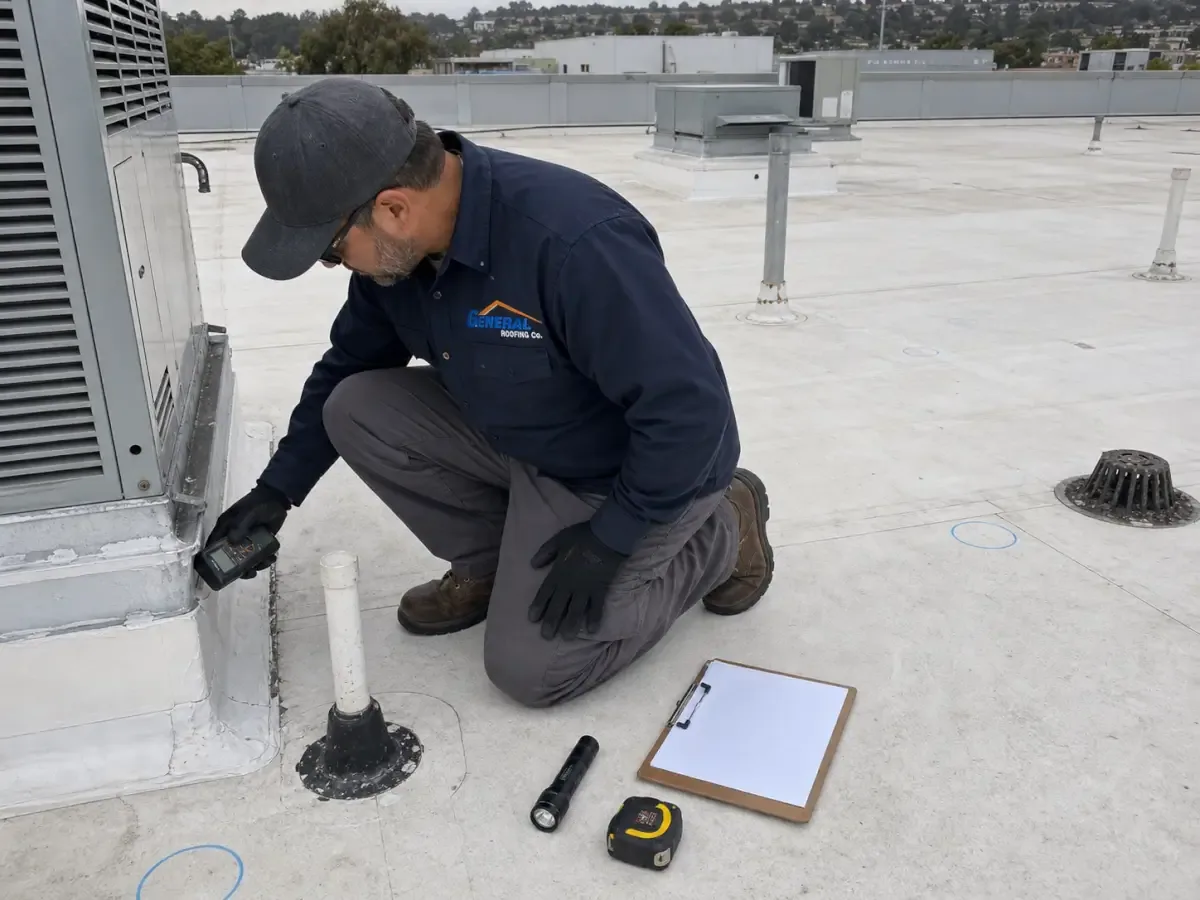
A commercial roof inspection at each location backs up the recommendation for that building. The report notes which areas we could reach and which we could not. Where hidden wet insulation could change the scope, we propose core cuts or a moisture scan before deciding what comes off. A finding at one building is never used as a stand-in for checking another.
We compare tasks by what they actually fix. A small seam repair and a rebuild of wet insulation at a drain can cover the same square footage and still need very different labor and materials. Those differences sit next to the prices. The owner can then read the program total knowing what each line buys, instead of assuming every item is the same kind of repair.
Other trades are tracked task by task
Some roof repairs cannot finish until another trade does its part: an HVAC contractor disconnecting a unit, a plumber extending a vent stack or a structural fix to a curb support. We list that task with the roof repair it affects and confirm the timing with the people doing it. A mechanical crew being ready at one building says nothing about the next one. The manager sees those dependencies on each task, not buried in a general program note.
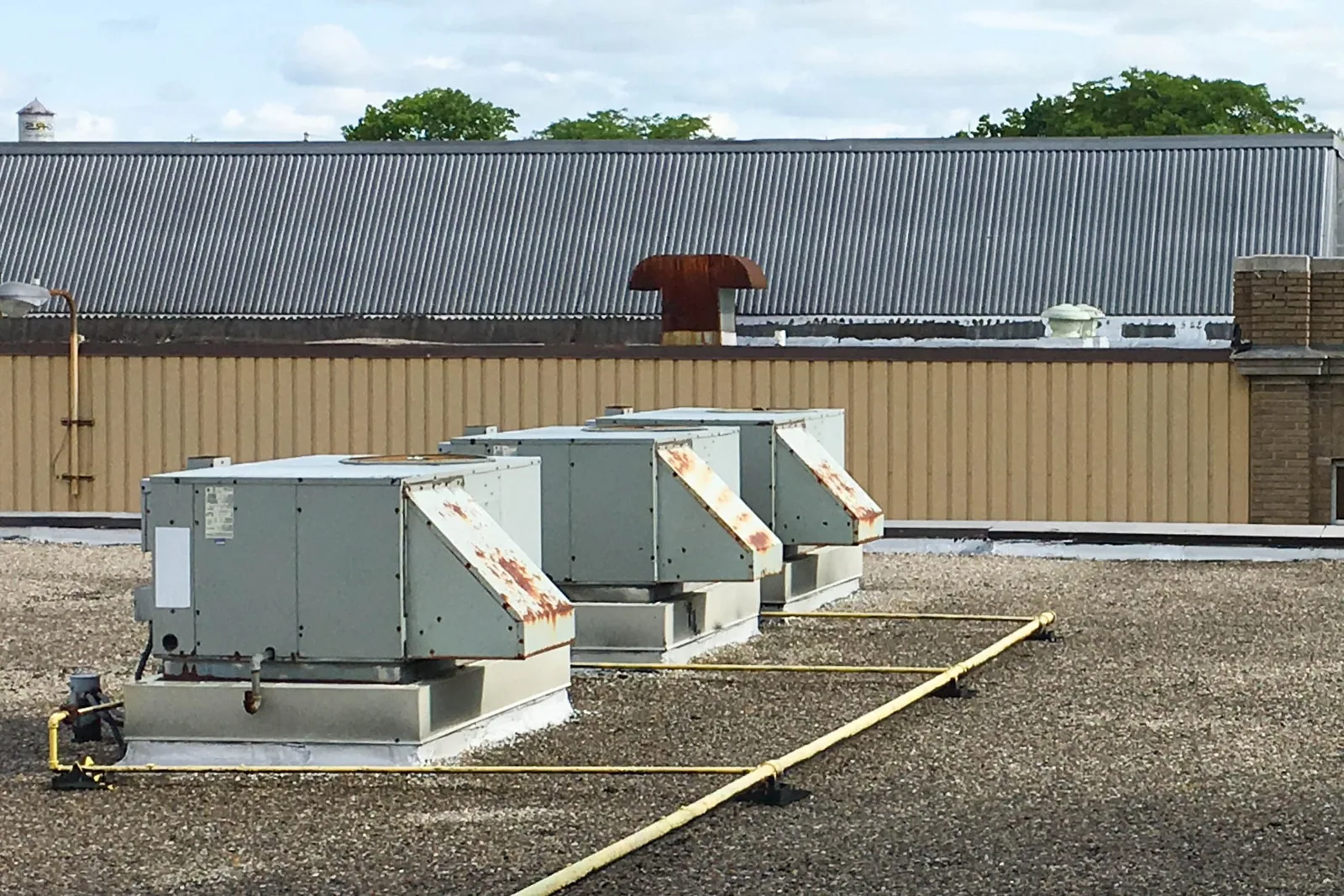
For equipment curbs and supports, we lay out the prep and the membrane flashing we plan to install, using materials compatible with the roof at that building. If a support looks structurally questionable, it gets checked by the right person before we flash it. The roofing schedule follows when each building is actually ready, rather than assuming new membrane solves problems underneath.
If tear-off uncovers something new, such as rotted deck, we photograph it and spell out how it changes that building's scope. The owner approves the change through the agreed process, and the roof stays protected in the meantime. Other buildings on the schedule keep their own scopes unless an inspection there gives a reason to revisit them.
Scheduling follows each building's rules
For each location, we confirm the site contact, the roof access point and where materials can be staged and hoisted. Tenant hours and operating rules vary from building to building. Jobs near Legacy West and Legacy Business Park get their own access plan. We keep a note of the approved route and the person on site who directs our crew.
We only open as much roof as we can protect and close up properly. A shared finish date helps the manager line up approvals, but it does not mean every rooftop unit or trade will be ready at once. We note what each detail is waiting on. The owner can schedule work in sensible phases instead of leaving a roof opened up just to hit a calendar date.
Emergency repairs stay separate
When a building needs an emergency patch and a permanent repair, we treat them as two tasks. Emergency roof protection is available at night, on weekends and on holidays. We log what was leaking, what temporary fix went on and what still needs to be checked. A tarp or patch is never listed as if the wet insulation underneath had been looked at. The manager knows the real next step for that building.
A commercial roof repair for that building starts at sound roof and follows any work other trades have to finish first. Where the findings call for tear-off and rebuilding, we spell that out. Each finished repair stays traceable within the program, so a combined invoice never hides which flashing was rebuilt or which item belongs to another trade.
Past work guides the next budget
We keep photos of new insulation, cover board and flashing before they are covered, filed under that building. The record shows what we did and which areas we did not inspect. A similar repair at another location stays in its own file. Managers can use the history to understand past spending without assuming a finished repair says anything about roof areas nobody looked at.
The roof capital plan draws on those findings and completed repairs, building by building. Before the next round of approvals, we check whether new rooftop equipment or a fresh leak changes the scope at any site. We note what changed and keep the earlier record. The program stays useful because each building's recommendation follows its own roof, while the owner still sees one combined budget.
Commercial Roofing Questions
Can similar leak reports at several buildings share one repair scope?
Usually not. Leaks that look alike can come from different causes and need different prep, insulation replacement or help from another trade. We schedule them together for efficiency but price and track each repair against what we found at that building.
What information identifies each program task?
The building, the roof section and the spot on the roof, along with the reported problem and what we found. Photos and the proposed repair go with it. That keeps the schedule and the closeout records tied to the right property.
How does another contractor's work affect the schedule?
If an HVAC, plumbing or structural task has to happen first, we list it next to the roof repair it affects and confirm timing for that building. Another site being ready does not mean this one is.
How are emergency repairs shown in the program records?
As their own entry: what was leaking, what temporary fix went on and what still needs inspecting. The building and roof location stay attached, and the permanent repair is listed separately so nobody mistakes a patch for a finished fix.
How do completed-work records help with later budgets?
They list what was installed at each building, including the layers under the membrane, and which areas were not inspected. Future requests can then follow current findings while the owner sees what earlier money paid for.
Set up a roof program for your Plano buildings
Send us the list of buildings and we will schedule inspections, price each roof on its own and lay the work out on one schedule, with rooftop equipment coordination noted building by building.
Request a Roof Assessment in Plano
Tell us about the building, the roof and what you are seeing. Send a request or call 555-555-5555.