
Commercial Roof Repair in Rockwall
Home / Service Areas / Rockwall
Rockwall sits on the east shore of Lake Ray Hubbard, and storms coming across the open water can hit buildings here with strong wind and hail. Commercial roofs along I-30 and around the Harbor district take a lot of weather. After a storm, owners usually notice one of two things: a new leak inside, or a roofer knocking on the door offering a free inspection. Either way, the first step is the same: find out what actually changed on the roof.
We also work in Rowlett and Wylie. On every call, we look at the roof as it is today, separate new damage from old wear and recommend a repair that fits what we found.
Be cautious with storm chasers. A legitimate roofer will show you photos of the damage, explain it in plain terms and give you a written scope. If someone pushes you to sign a contract on the spot, take a step back and get a second opinion.
Record what the roof looks like now
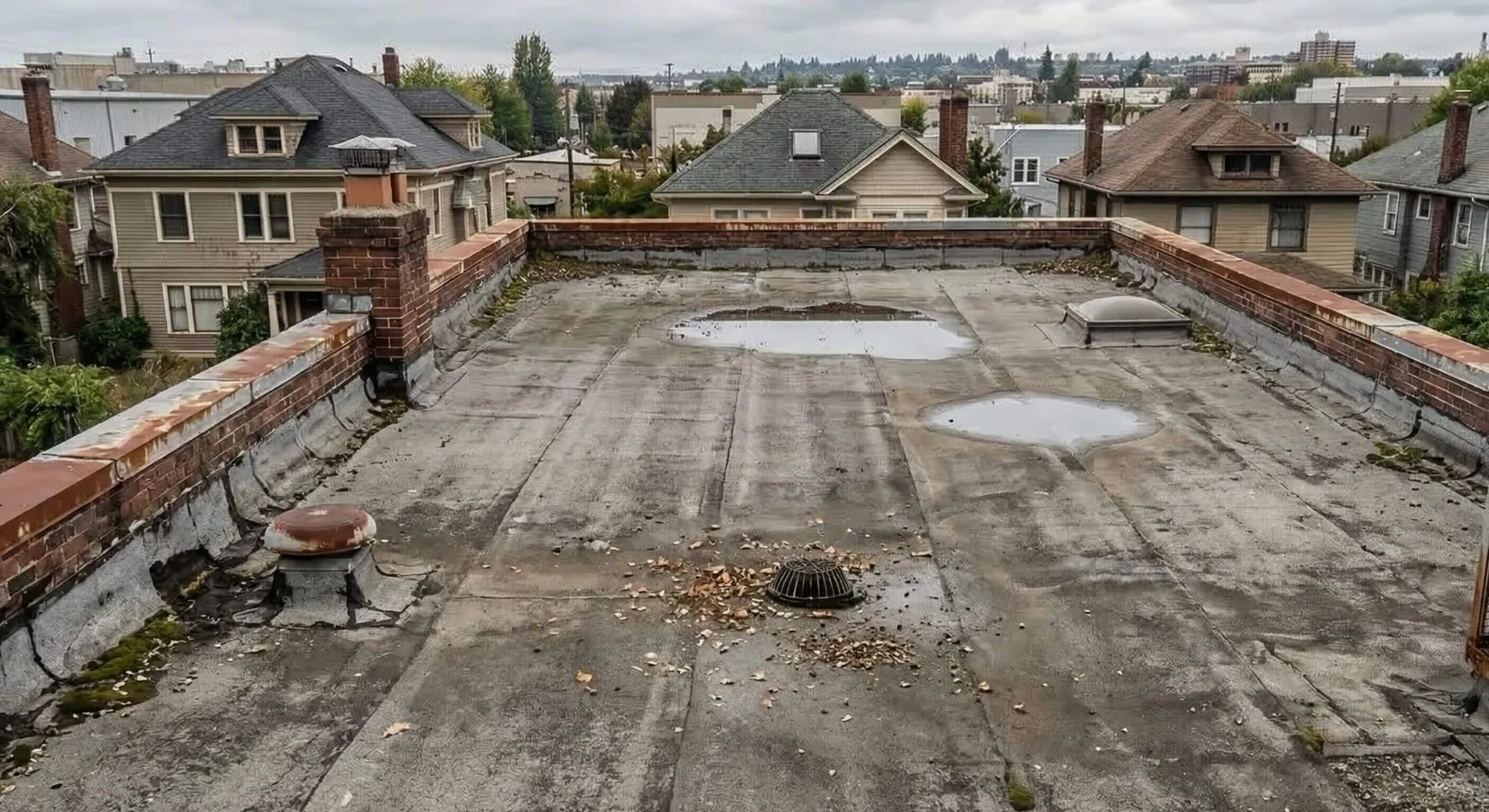
After a storm, we walk the whole roof, not just the spot where water showed up inside. We look for torn or punctured membrane, bruised or cracked areas from hail, loose or missing edge metal, damaged flashing, dented equipment and debris that blew onto the roof.
With storm damage roof repair, good photos are essential. We take wide shots to show where on the roof each item sits and close-ups to show the damage itself. We mark each item on a simple roof sketch so you, your insurance adjuster or another contractor can find it again.
We are careful to separate new damage from old wear. A split seam that has been weathering for years is different from a fresh puncture from wind-blown debris. We describe what we see and leave coverage decisions to your insurance carrier.
If you have photos or reports from before the storm, they help a lot. They show what the roof looked like and make it easier to tell what changed.
Match the repair to the damaged material
Many Rockwall commercial buildings have EPDM roofs. Hail and wind damage EPDM in specific ways: punctures, tears at seams, flashing pulled loose at the edges, and in some cases the whole sheet lifting where adhesive or fasteners let go.
A proper EPDM repair starts with cleaning the rubber around the damage, priming it and applying compatible patch material, seam tape or new flashing. Every seam is rolled to make sure it bonds. Sealant alone is not a lasting fix.
If wind lifted part of the roof, the repair includes re-securing the membrane, not just patching the tear. We also check the edge metal, since loose edges are often where wind gets under a roof in the first place.
If old patches near the damage used incompatible products, we remove them before installing new material.
Hail can also crack older EPDM that has lost its flexibility with age, so we test how pliable the rubber is near the damage.
Find out how far the damage goes
Storm damage on the surface can hide more damage below. A puncture lets water into the insulation. A lifted membrane can let wind-driven rain spread under a large area. We cut test openings near the damage to see whether the insulation is wet.
If wet areas look bigger than the visible damage, a roof condition report or infrared scan can map how far the moisture has spread. That helps you and your adjuster understand the full extent of the damage, and it helps us size the repair properly.
If wet insulation is limited, we replace it during the repair. If it is widespread, we explain whether a larger repair, a recover or a replacement makes more sense.
Every finding is photographed and located. You approve any extra work, with its price, before it starts.
Protect an open business while we work
Rockwall has a lot of retail, restaurants and service businesses that stay open while we work. On a shopping center roof, we coordinate with your property manager about tenant hours, deliveries and customer parking. Ladders, lifts and debris stay clear of shop entrances and sidewalks.
After a storm, the roof may also have loose debris or damaged edge metal that could fall. We secure those hazards first, before starting repairs, to keep people below safe.
If a repair is over a restaurant kitchen, a salon or another business with exhaust fans or air intakes, we coordinate with the tenant about odors and timing.
We also plan for weather. Storm season tends to bring more storms. We only open what we can close the same day and keep temporary protection ready.
Keep a complete repair record
When the repairs are done, you get a report: the storm damage we found, any hidden damage underneath, what we repaired and photos of each stage. Each item is tied to its location on the roof sketch.
If insurance is involved, the report gives your adjuster a clear record of what was damaged and what was fixed. We separate storm damage from older wear so the record is accurate.
We also list anything we noticed but did not repair, such as older wear, a drain that holds water or flashing that is near the end of its life. Those are items for your maintenance plan.
Hold on to the report. After the next storm, it will make it much easier to see what is new.
If a repair we made ever leaks, call us and we will come back to check it.
Commercial Roofing Questions
What should we tell you about a new roof problem after a storm?
When you noticed it, where water is showing inside and any photos or reports from before the storm. That helps us separate new damage from old wear.
How do you choose the permanent repair?
We match the existing roof. On EPDM, that means primer, compatible patch material, seam tape and flashing, plus re-securing any membrane the wind lifted.
What can make the repair bigger once the roof is opened?
Wet insulation spreading beyond the visible damage, or membrane that lifted over a wider area. We photograph it and explain the extra work before doing it.
What matters most when working on an open retail property?
Keeping customers and tenants safe, securing loose debris first, coordinating around business hours and managing odors near air intakes.
When should a bigger roof option be considered?
When test cuts or a moisture scan show widespread wet insulation, or when storm damage is spread across most of the roof. Each option gets its own price for a fair comparison.
Have your Rockwall roof checked after a storm
Tell us about the building and what you have noticed. We will document the damage, separate it from old wear and recommend the right repair.
Request a Roof Assessment in Plano
Tell us about the building, the roof and what you are seeing. Send a request or call 555-555-5555.