
Commercial Roof Repair in Lewisville
Home / Service Areas / Lewisville
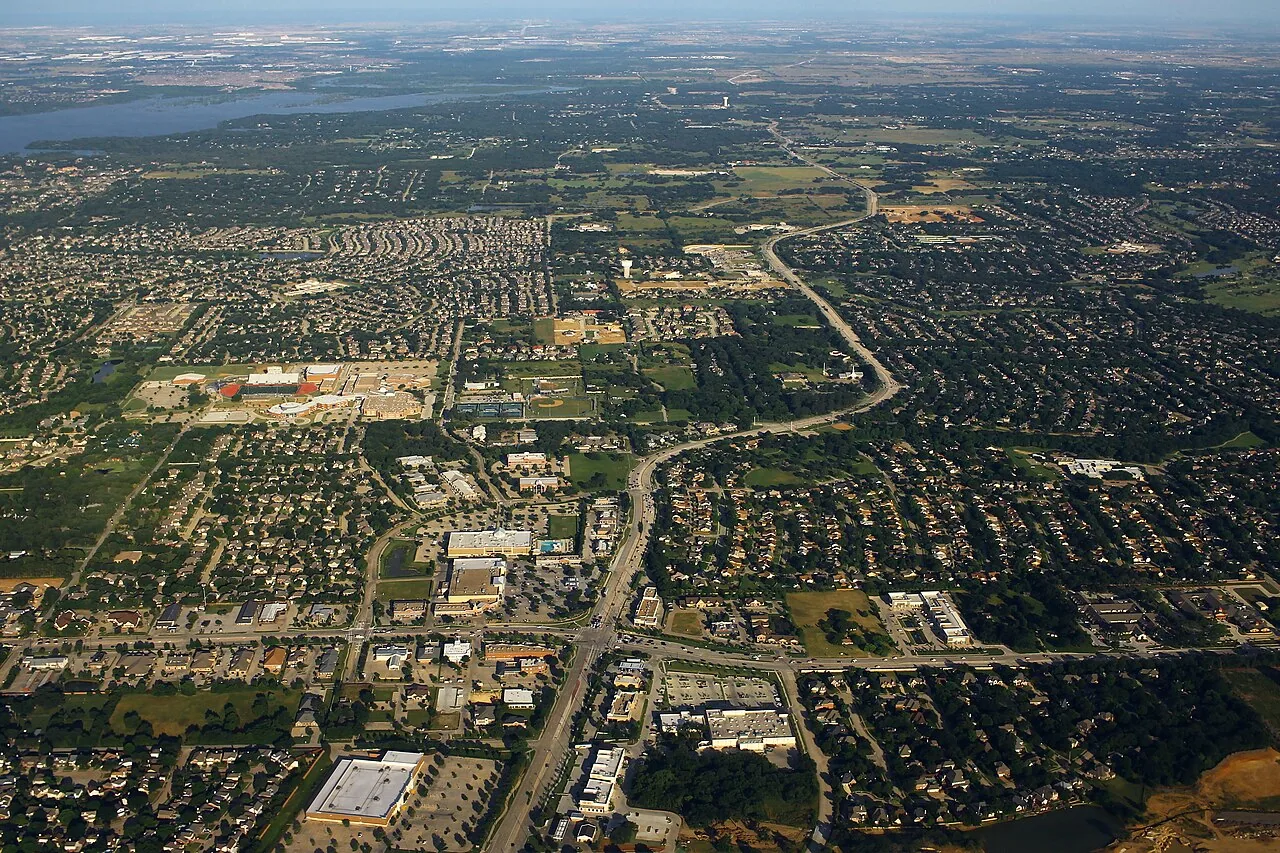
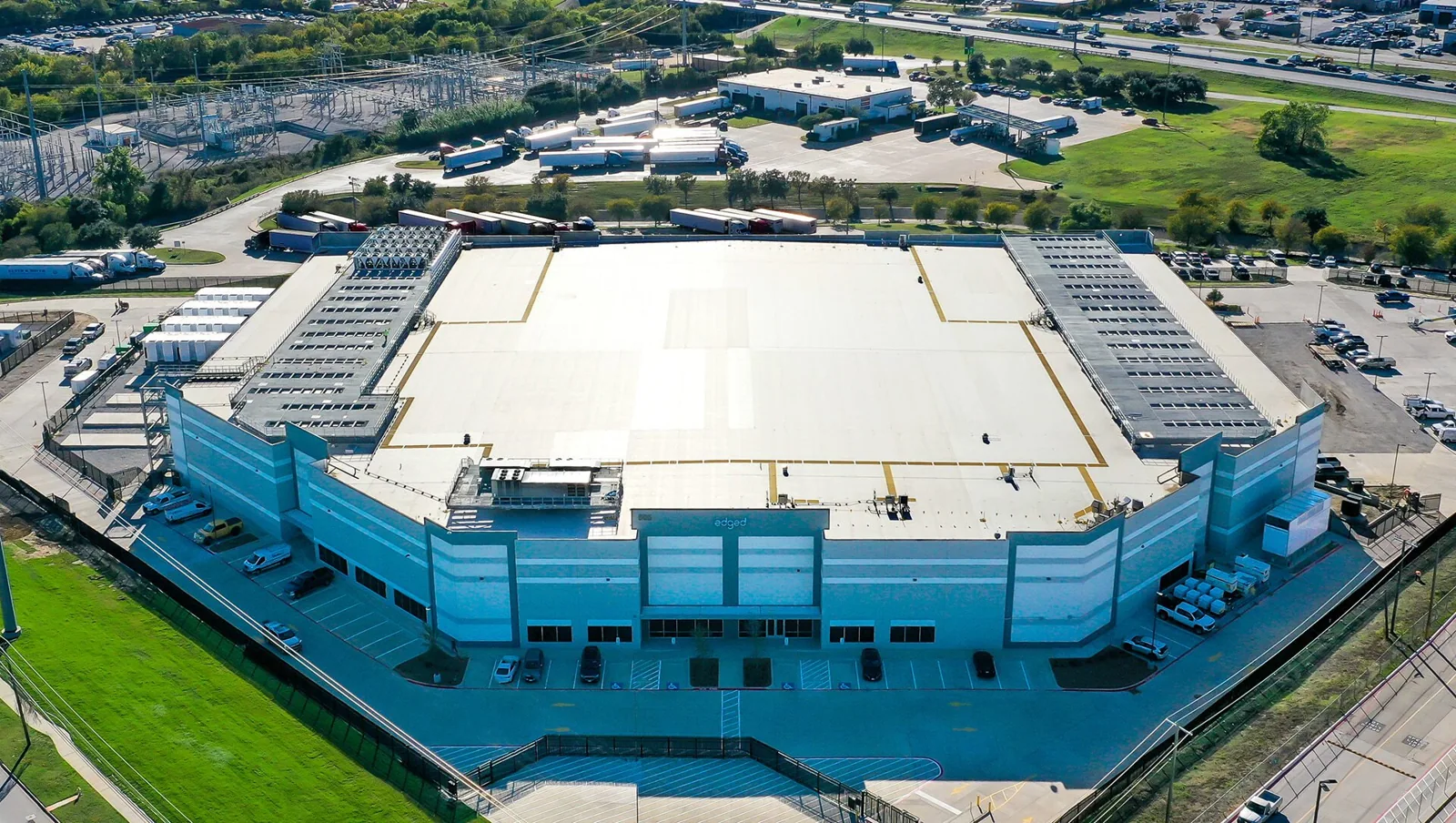
Lewisville sits along the I-35E corridor, and a lot of its commercial roofs cover distribution centers, light industrial buildings and retail that run long hours. When those roofs need repair, the work often has to happen in stages so operations can keep moving. That means the roof may be partly open, partly protected and partly finished on any given day. Clear communication between stages matters as much as the roofing itself.
North Texas hail is a real factor here. The March 2016 hailstorm hit Plano and Lewisville hard, damaging hundreds of homes and thousands of vehicles and shattering skylights. Storms like that can leave commercial roofs with damage that is not always obvious from the ground, so a careful inspection after severe weather is worth the time.
We also work in Flower Mound and The Colony. On every staged job, we tell you what each stage covers and what state the roof is in when the crew leaves.
Agree on what each stage delivers
On a distribution center, the operations manager usually sets the schedule. Some areas of the floor can only be worked over at night. Some docks have to stay open no matter what. We plan the roofing stages around those rules.
Before each stage, we agree on what it will deliver: which area gets inspected, which gets temporarily protected and which gets the permanent repair. At the end of the stage, we tell your contact what was done and what comes next. If the roof is left with temporary protection, we say where it is and how long it can safely stay.
We also ask about anything that might affect our work, such as a planned equipment install, a seasonal rush or a building inspection. Changing the schedule ahead of time is easier than changing it mid-job.
Safety rules on these sites are strict, and we follow them: sign-in, high-visibility gear, staying out of forklift lanes and keeping the roof edge protected wherever the crew is working.
Inspect what is behind the problem
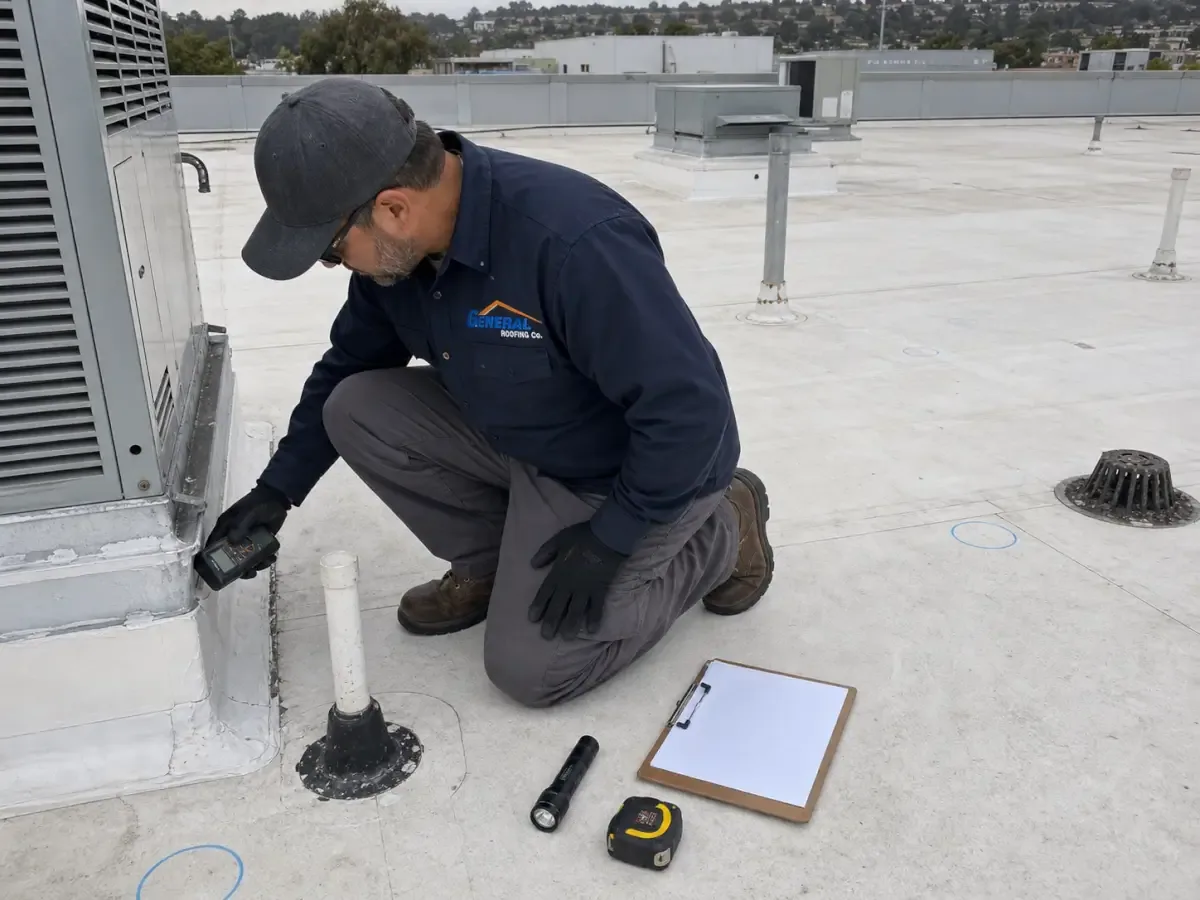
A leak or storm damage report gives us a starting point, but we need to see what is behind it. A commercial roof inspection looks at the membrane, seams, flashing, drains and penetrations around the problem, and checks for hail bruising or punctures in the surrounding area.
We cut test openings where needed to see whether the insulation is wet. On older roofs, a leak that has been dripping for months may have soaked a much wider area than the stain inside suggests. If so, we tell you and recommend how far the repair should reach.
If an area cannot be fully checked until another stage of work opens it up, we note it as an open question. The proposal says plainly what we know and what we will confirm later, so nobody assumes the whole roof has been cleared.
Choose the permanent repair
Many Lewisville industrial buildings have modified bitumen roofs. On a modified bitumen roof, a proper repair means cutting out damaged material, replacing wet insulation, installing new base and cap sheets and lapping them correctly onto sound existing material. Flashing at curbs and walls gets new base and cap plies, not just a coat of mastic.
We match the repair method to the existing roof. If the roof is torch-applied, we follow suitable fire-safety practices. If it is self-adhered or cold-applied, we use compatible materials. Old patches with incompatible products are removed first.
If the permanent repair needs another trade first, such as raising a curb or moving a unit, we include that in the stage plan and do not close the roof until that work is done.
After the new material is down, we check every lap and flashing by hand and look again after the first good rain if you want us to. A repair that holds through a North Texas thunderstorm is a repair you can stop worrying about.
Price the job stage by stage
Staged jobs need staged pricing. We break the work into stages so you can see what each one costs and what it delivers: an inspection stage, temporary protection, the permanent repairs and any follow-up items.
For roof capital planning, this breakdown helps your team decide how much to do now and how much to defer. If the inspection finds that the roof is nearing the end of its life, we may recommend a phased replacement instead of continued repairs. We price that option too, with each phase described the same way.
If something we find changes a stage, such as more wet insulation than expected, we explain it with photos and give a revised price for that stage before continuing. You approve changes stage by stage; nothing gets added quietly at the end.
Finish the job completely
When the last stage is done, we remove every bit of temporary protection, clean up the roof and confirm with your team that all repair areas are closed. A temporary patch left behind can trap water and fail months later.
Your final report covers the whole job, stage by stage: what we inspected, what we found, what we repaired and any changes along the way, with photos of hidden conditions and finished work. It also lists anything still pending, such as an equipment fix by another contractor.
If storm damage was part of the job, the report separates storm-related repairs from normal wear. That can help with insurance, though coverage decisions are up to your carrier.
We also list areas of the roof we noticed but did not work on. Those notes help you plan the next round of maintenance before another storm season starts.
Commercial Roofing Questions
What should I hear when a stage of roof work ends?
What was finished, what is temporarily protected and where, how long that protection can safely stay and what the next stage will cover.
How do your operations affect the roofing schedule?
We plan stages around your docks, shifts and peak periods. Some areas may only be workable at night or on weekends, and that is built into the plan and the price.
What do you check before choosing a permanent repair?
The membrane, seams, flashing and insulation around the problem, plus any hail damage nearby. The repair matches the existing roof material.
What if hidden damage changes a stage?
We photograph it, explain the extra work and give you a revised price for that stage before continuing. Temporary protection stays in place until then.
How do I know the job is fully complete and not just paused?
All temporary protection is removed, every repair area is closed and the final report lists any items still pending with another contractor.
Plan your Lewisville roof repair in stages
Tell us about the building and your operating schedule. We will plan the work in clear stages and keep you informed at the end of each one.
Request a Roof Assessment in Plano
Tell us about the building, the roof and what you are seeing. Send a request or call 555-555-5555.