
Fitness Center Roofing in Plano, TX
Home / Property Types We Roof / Fitness Center Roofing
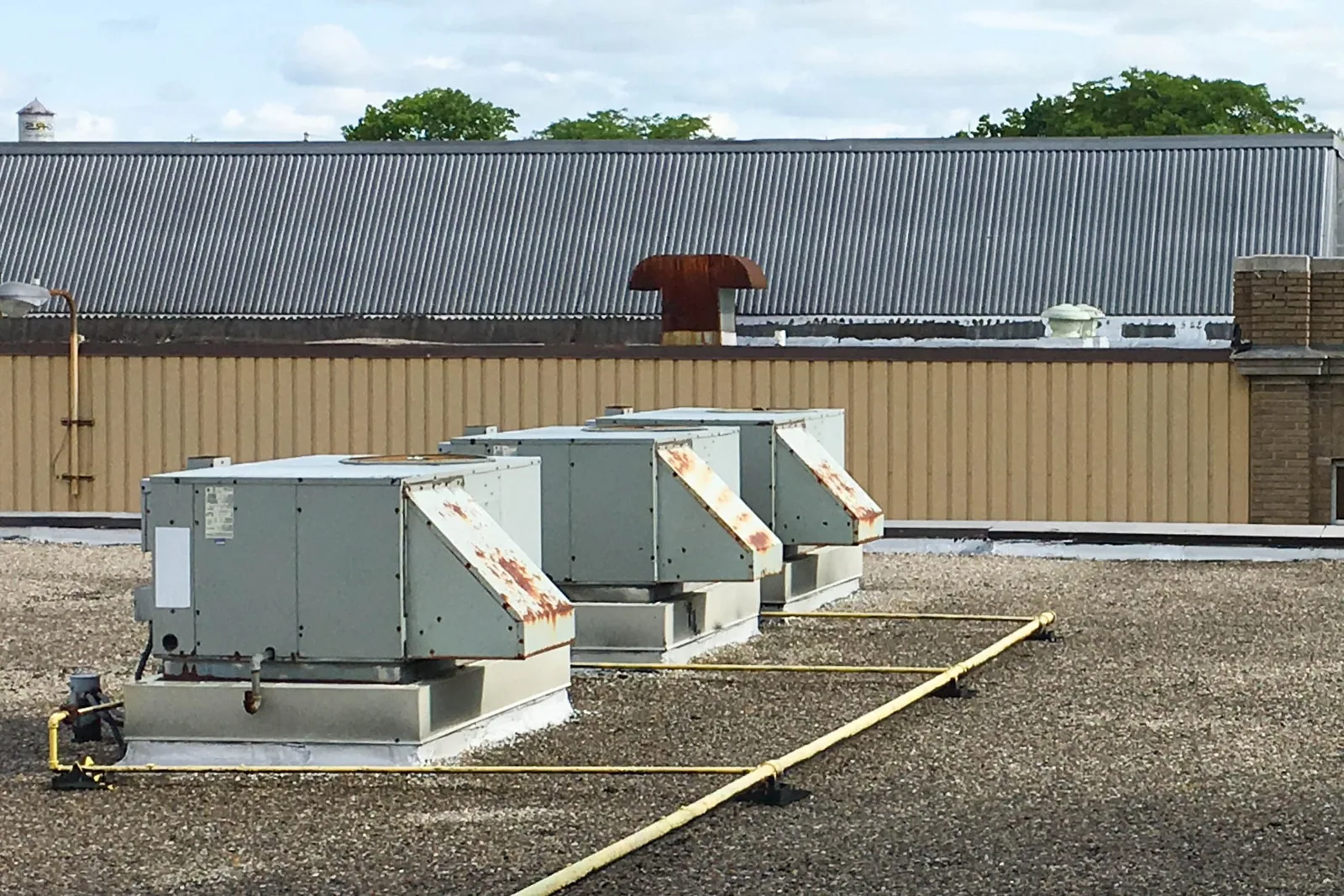
Gyms and fitness centers put a lot through their roofs. Big crowds and hot showers mean heavy air conditioning loads, so the roof usually carries several large HVAC units, makeup air units and exhaust fans from the locker rooms, each one a hole cut through the membrane. In Plano, most of the fitness roof leaks we chase start at one of those penetrations: a curb flashing that has pulled away, a pipe boot that has cracked, or an exhaust fan whose base was never flashed right. Fixing it properly sometimes means the mechanical contractor has to disconnect or raise a unit first, or a carpenter has to rebuild a rotten curb. When that's the case, the estimate should name that step and who does it. Sealant smeared around the base of a unit is cheap, but it doesn't rebuild anything and usually comes back the next summer.
Whether your gym is a freestanding building, a suite in a retail center or a studio on the top floor of a mixed-use building, we need the street address, the person who handles roof access, and any past repair invoices or mechanical drawings. Those point us to the right unit faster, though we still have to look at the flashing and the insulation around it. We'll also ask about your hours, classes and busy times, because cutting into a roof over a packed spin class needs a different plan than working over storage.
Checking the penetrations
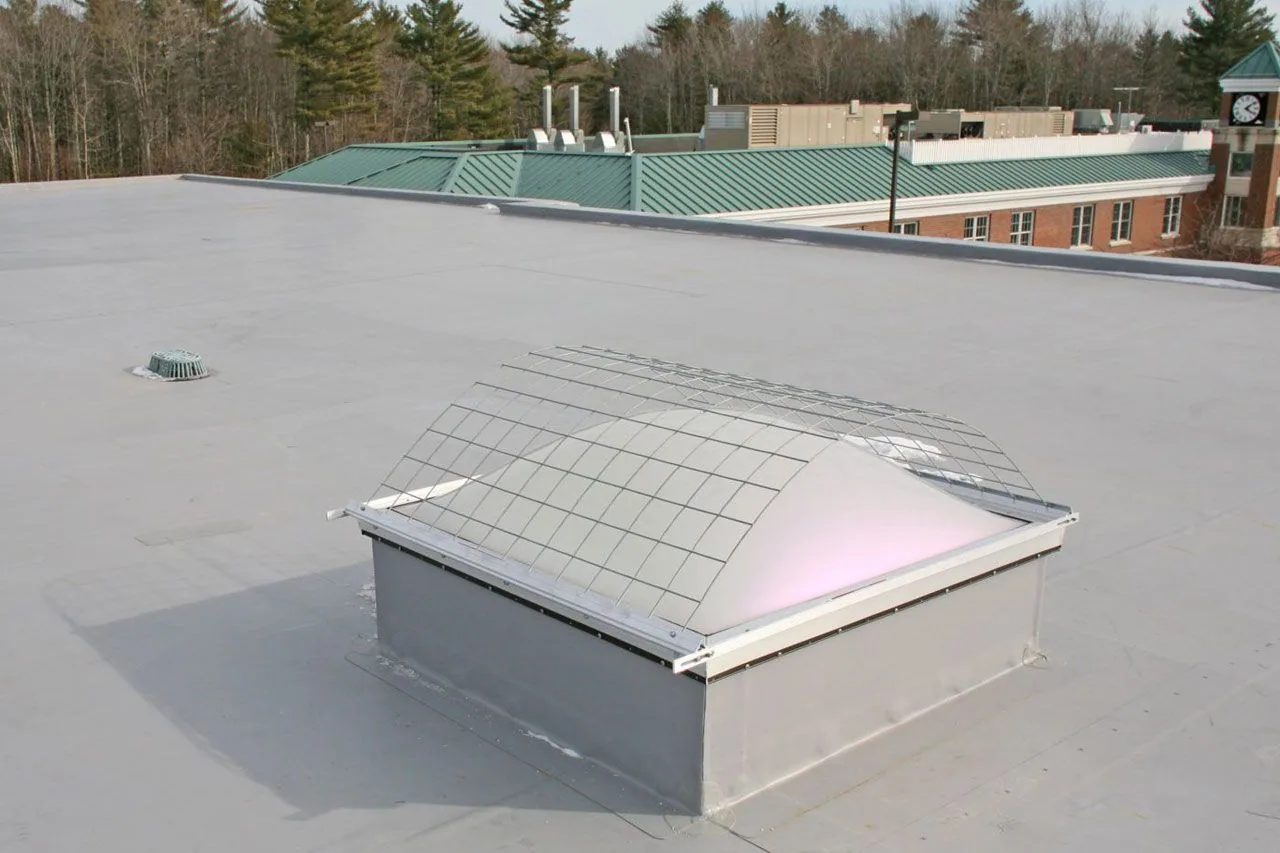
A penetration and skylight flashing inspection starts at the unit or pipe closest to the leak. We check the curb height, the base flashing, the metal counterflashing, the pitch pans and the pipe boots, plus any skylights over the workout floor. Water that shows up over a treadmill row may have entered several feet away and run along the deck, so we work back from the roof side. If we can't tell what's going on without opening the flashing, we'll say where we want to cut, what we're looking for, and include sealing it up again in the price.
When we lift the flashing and find the wood curb or nailer rotted, we replace it before new membrane goes on. If the change involves the unit's structural support, an engineer may need to weigh in. We take photos of what we found so you can see why the extra work was needed after the new flashing hides it. One bad curb doesn't mean every unit on the roof is leaking, so we price what we actually saw. If another curb nearby looks questionable, we'll recommend checking it rather than assuming it's fine or bad.
Is the insulation still dry?
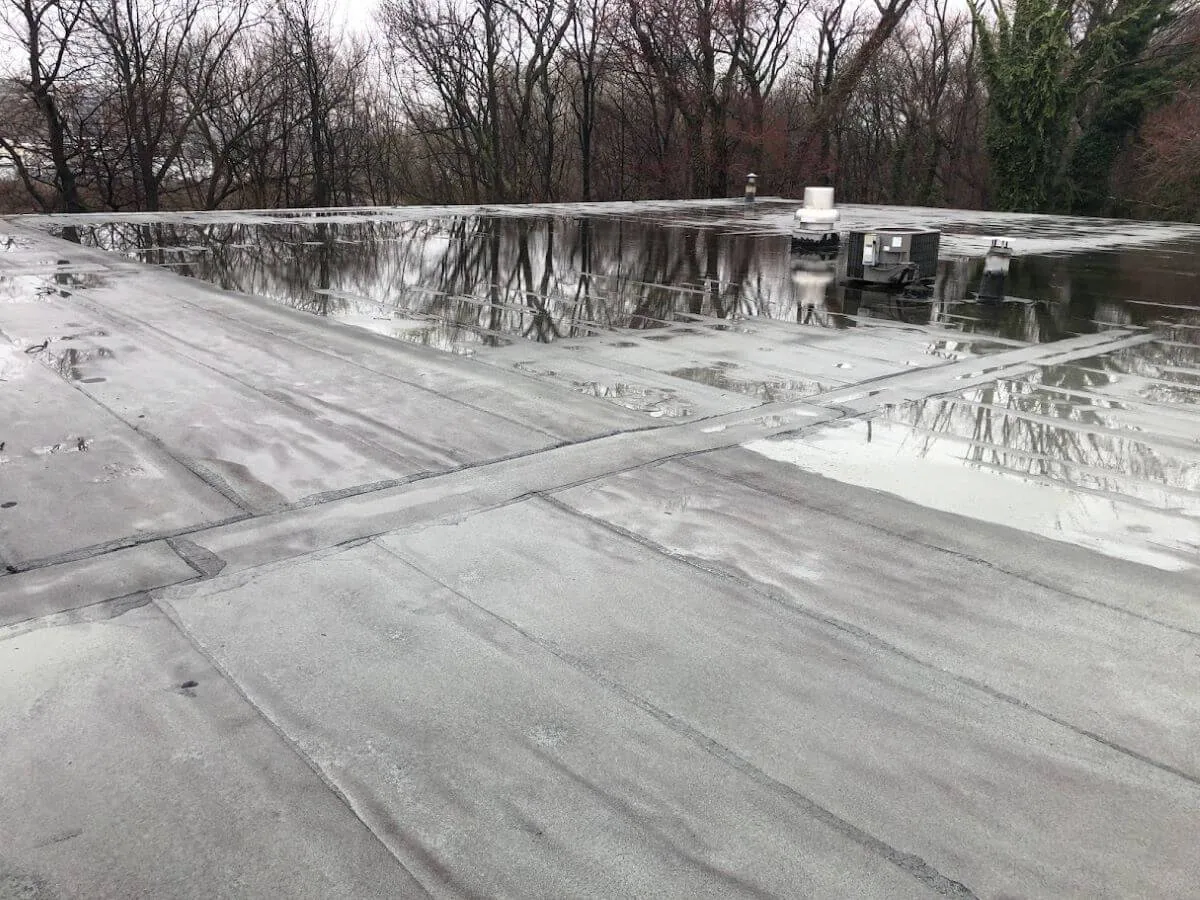
An infrared moisture survey can map likely wet insulation around penetrations and across the rest of the roof. It's especially helpful on gyms because locker-room humidity and long-running HVAC can hide slow leaks for months. Still, the image is only a starting point. A warm area could be wet board, a patch, a change in insulation thickness or heat from the space below. Where the survey decides whether insulation stays or goes, we pull a core sample to confirm and patch it the same day.
We'd rather tell you what we found than guess at why. A split seam beside a makeup air unit needs fixing whether it came from age, foot traffic from service techs or a hailstorm, and the roof doesn't always say which. What matters for your budget is whether the insulation and deck around the leak can stay. If they're wet or soft, they come out, and the estimate should show it. If one bid prices new flashing but doesn't check the insulation, that's a real difference from a bid that includes cores, even if the totals look close.
What the HVAC contractor and the roofer each do
Good equipment curb and support work depends on your HVAC contractor doing their part. They disconnect and lift or move the unit if needed, handle refrigerant lines and electrical, and restart and test it once we're done. If a curb has to be raised or replaced, an engineer may need to check the change. We list that work on the estimate with their name next to it, so it's clear that a finished roof seam doesn't mean the unit has been serviced or approved to run.
The commercial roof repair itself follows whatever roof you have. TPO and PVC get hot-air welded flashing; EPDM uses tape and primer; modified bitumen gets compatible base and cap plies. We remove the damaged flashing and wet insulation, replace rotted wood, and tie new membrane into the existing roof. If the leak is near a wall, we check the wall behind the counterflashing too, and if a roof drain is involved we handle the membrane tie-in while a plumber handles any pipe below the deck. Comparing bids is much easier when every quote lists those pieces.
Scheduling around members and classes
Before any roof work over an occupied building, we walk the plan with your manager: where we'll open the roof, where the hoist and dumpster go, and which rooms sit underneath. Your team knows whether that's the weight floor, a group fitness studio, locker rooms or the front desk. Roofing is noisy and can bring dust down through ceiling tiles, so we'll talk about working before opening, during slow hours or behind plastic. The equipment underneath may need to be tarped or moved. An inspection visit isn't a green light to start tear-off; your staff decide when the space is ready.
Sometimes we open a curb and find the rot or wet insulation runs further than we hoped. When that happens, we stop, photograph it, and show you how far it goes and what it adds. If the HVAC contractor or a carpenter needs to do their part before we can finish, we keep the opening sealed so a rainstorm doesn't make things worse. We'll also go back over what needs protecting below the larger area. The change order covers all of it, not just extra feet of membrane, so you know what you're paying for.
Keeping a record of the work
After the new flashing goes on, nobody will see the curb or insulation underneath it again, so we keep photos and notes on the penetration we fixed, the wood we replaced, what membrane went in and where test cuts were patched. Anything still waiting on another trade, like an HVAC restart, a wall repair or a plumber's pipe fix, gets listed separately from the roofing we finished. If a question about hidden layers is still open, we note where. The next manager, or the next landlord walkthrough, can see exactly what was done without assuming the whole roof was checked.
We work on gyms and studios around Legacy West and Legacy Business Park and throughout Plano. Send the building address and whoever handles access. Rooftop units cause similar trouble on office buildings and medical offices, and we see plenty of both, but your gym's roof gets priced on what we find on it, not on another building's roof or on guesses about where your units sit.
Commercial Roofing Questions
What should a penetration repair estimate include?
It should list the flashing and insulation being removed, any rotted curb or nailer being replaced, and the new flashing tied into the roof. If the HVAC unit has to be disconnected or raised, the estimate should say who does that. Without those items you're not comparing like with like.
Can an infrared survey tell me if all my insulation is dry?
It gives a good map of likely wet areas, but it isn't proof. Patches, insulation changes and heat from below can look the same on the image. We confirm the spots that matter with core samples.
Who decides when you can work over the gym floor?
Your manager or staff do. We go over where we'll cut and how materials get up, and you tell us which rooms, equipment and hours to work around. An inspection doesn't mean the space is ready for tear-off.
What if the damage is bigger than expected?
We stop, photograph it, and show you how far it goes and what it adds. The roof stays sealed while any other trade does its part. Then we update the plan for protecting the rooms below.
Ask for a roof inspection at your gym
Tell us which unit or area is leaking and who can let us on the roof. We'll check the flashing, curbs and insulation, then give you a plain estimate that names every trade involved.

Request a Roof Assessment in Plano
Tell us about the building, the roof and what you are seeing. Send a request or call 555-555-5555.