
Commercial Roof Repair in Addison
Home / Service Areas / Addison
When a rooftop unit is swapped out or a new pipe goes through the roof, the flashing around it often has to be rethought, even if there are old repair records on file. On Addison commercial buildings, we check the current membrane, the equipment and the flashing where the leak or change is. The scope explains what the roofer can finish and what another trade has to do first. A price that leaves that order unclear doesn't give the owner the full picture of what it takes to seal the roof for good.
From offices near Addison Town Hall on Addison Road to retail and restaurant buildings across town, tell us the building and the part of the roof involved. We also work in Carrollton and Farmers Branch, where each building gets its own inspection and repair plan. Sometimes the findings support fixing one spot now while another area still needs a closer look before a bigger repair can be priced. We spell out which work is ready and which part of the roof is still waiting on an inspection.
Identify the present detail
We find the pipe, curb or flashing that needs repair and check the membrane around it. Old repair records are compared against what's actually there. A later patch or equipment change may mean the surface we'll be bonding to isn't what the old paperwork says. We confirm the surrounding roof is sound before choosing the permanent fix at that edge.
For modified bitumen roof repairs, we identify the membrane and the nearby details that need to tie in. We check the seams and transitions the repair depends on. If we find a different material or a changed setup, we explain the right method for what's there now rather than sticking with a plan written before anyone looked.
Failed nearby details are fixed before prep. The owner should be able to see why those repairs belong next to the original leak. A bigger job needs its own inspection; one curb doesn't tell us what's hidden across the rest of the roof. The local repair and any other material question stay tied to their own areas.
Line up the equipment work first
We ask the property manager who can authorize work on the equipment that affects the roof. We list the equipment work that has to happen first and the roofing that follows. If the other trade can't get there right away, we explain how the opening will be protected in the meantime. The plan shows a workable order before permanent work is scheduled.
On office building roofing jobs, we ask for building rules and equipment information for the work area. We confirm roof access, where materials will be staged and who to call if we find something unexpected. Those arrangements follow what the building tells us and the actual detail being repaired.
We note where an approval is still pending and which work it's holding up. That way the manager can line up the next decision without confusing a membrane repair that's ready to go with an equipment issue that isn't. If two options depend on different trades, those differences are listed next to each price so finance compares the real sequences.
Investigate supporting material
When the repair depends on whether the layers underneath can stay, we mark where testing is needed before deciding. We confirm the insulation and deck are dry and sound in the area we open up. Any rotted or wet material found is removed and replaced. The conclusion applies only to the area we tested; hidden material elsewhere is a separate question.
Our commercial roof inspection keeps a reported leak inside separate from a failure we can see on the roof. If the water path still needs tracking, we say so. A defect we can reach may justify a repair while another interior leak is still being investigated.
We photograph hidden damage before covering it and explain how it changes the work. Any revised price is tied to the exact spot and the work needed to fix it properly. If permanent work has to wait on a decision, we explain the temporary protection. The owner gets a clear account at each stage, not a new number with no explanation.
Compare the included construction
A small flashing repair and a larger job may involve very different supporting work. We show the area inspected and the work that has to come first for each option, along with any equipment coordination, nearby repairs and further testing that affect completion. The owner can weigh each option as a defined job instead of a vague project label.
A roof capital plan keeps open questions next to the part of the roof they affect. We note what inspection is needed before a larger area can be priced. The manager and finance team can plan future spending based on findings for those areas, rather than assuming a small repair told us about the whole roof.
We also talk through access for each option. A local repair might use one staging spot, while a phased job may need separate areas or work days. We ask the building contact for delivery and debris routes. Those differences are listed with the price so the comparison reflects the real job.
Finish and record the connection
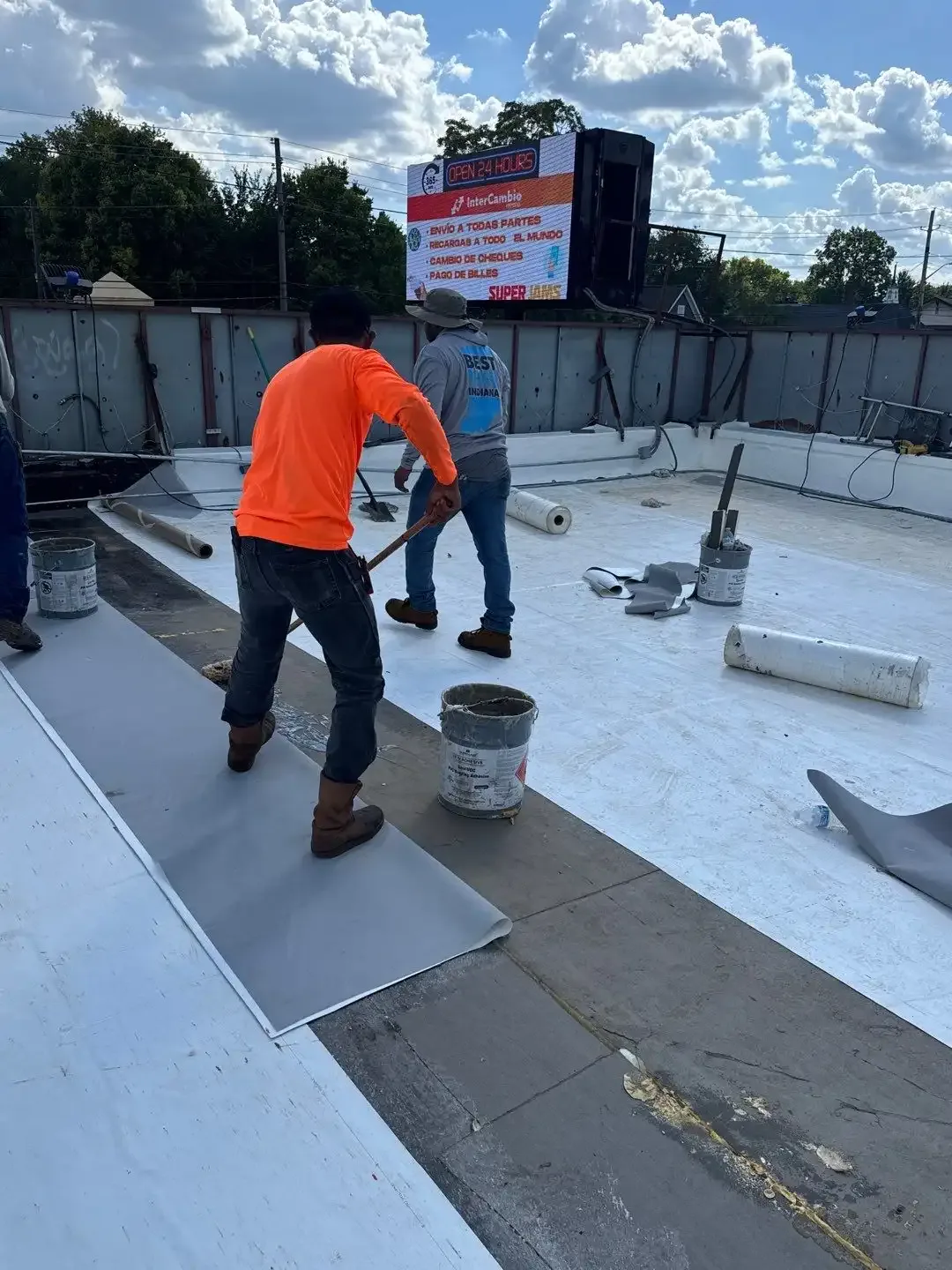
We fix any failed seams, flashing and damaged layers before cleaning and prepping the existing roof. We confirm the right surface and order of work for the repair method. Prep can't make torn membrane sound or finish an equipment repair that hasn't been done. The permanent flashing goes on after the work that makes its edge solid.
We photograph hidden repairs and prepped surfaces before the finished flashing covers them, and tie those photos to the original finding and the equipment location. Each added repair is linked to the defect that required it, along with how it changed the job. That way the owner can see the work behind the price and understand how the repair came together on site.
The property manager gets the finished repair area, the equipment work completed and any inspection still outstanding. Areas we didn't touch and any temporary protection still waiting on a permanent fix are listed separately. The next budget discussion can start from the same record, and any new option gets its own inspection rather than an assumption based on one repaired detail.
At an equipment opening in Addison, we compare the current flashing with the equipment change and the roof layers staying in place. A moved curb, cut membrane or old line of fasteners can change where the repair has to stop. We list what has to come out, how the new flashing attaches and which trade has to finish first. The price covers a complete watertight seal, not just new material over the visible hole.
Commercial Roofing Questions
Why does the roof flashing need to be checked after equipment changes?
Because the current equipment and patches may not match the old roof records. We check the membrane next to the changed unit and confirm it's sound before choosing the new flashing.
Who arranges the equipment repair that has to happen first?
We ask the property manager who can authorize work on the unit. Then we schedule the roofing after it and any temporary protection needed until the permanent flashing goes on.
How do hidden problems change the price?
We photograph the damage once it's exposed and explain what has to be removed or rebuilt at that spot, so the owner can see exactly why the extra work is needed.
How do we compare a small repair with a larger one?
Each option should show the work area, any testing and the equipment coordination involved, plus how access differs. Then you're comparing the real work each one includes.
What should we get when the repair is finished?
Photos of the hidden repairs, prep and finished flashing, the equipment work completed, and a separate list of areas not repaired or still under temporary protection.
Define the Addison roof detail sequence
Tell us the Addison property and the leak or equipment change you're dealing with. We'll inspect the flashing, sort out what has to happen first and explain the repair, coordination and any further decisions behind the price.

Request a Roof Assessment in Plano
Tell us about the building, the roof and what you are seeing. Send a request or call 555-555-5555.